
The octopus, often regarded as one of the most enigmatic and fascinating creatures of the ocean, possesses a remarkable set of attributes that set it apart from other marine species. "Octopus" is a Latinised from the Greek word "oktopus", which translates to "eight-foot". These enigmatic creatures belong to the class Cephalopoda, which also includes squid, cuttlefish, and nautiluses. With its eight distinctive arms covered in suction cups and keen intelligence, the octopus navigates its underwater world with remarkable agility and adaptability. Their unique mode of locomotion, using hydrostatic pressure, allows them to move gracefully through the water. They possess specialised chromatophores in their skin that allow them to change colour and pattern, which will not only serve as a means of camouflage but also represent an unparalleled feat in the animal kingdom. This skill is vital for communication, camouflage and hunting tactics.
Additionally, recent studies have revealed that octopuses are capable of displaying individual personalities, with some being shy and others more bold and adventurous. This insight challenges previous assumptions about invertebrate behaviour. As we continue to uncover more about these elusive cephalopods, it becomes increasingly clear that the world of the octopus is full of wonder and mystery. Being solitary creatures, they possess remarkable problem-solving skills and have been observed using tools, mimicry and even unscrewing jars with precision using their dexterous tentacles, a characteristic previously thought exclusive to humans. Octopuses vary greatly in size, with the smallest being a few inches and the largest spanning up to 30 feet.
Furthermore, the octopus's unique anatomy sets it apart from other animals as well - three hearts for circulation, blue blood due to copper-based cells (hemocyanin) instead of iron-based ones, and a decentralised nervous system that allows each tentacle to function almost independently. Unlike any other animal, it possesses nine brains, one in each arm and centralised control in its main brain, allowing for independent movement and coordination. Octopuses lack a rigid skeleton, but they are about 90% muscle, allowing them to contort and squeeze through incredibly narrow spaces with ease. This flexibility provides the octopus with unparalleled agility and dexterity when hunting for food or escaping danger. These unique attributes make the octopus a truly captivating creature deserving of further exploration and study to unlock more secrets about its extraordinary abilities.
Devilfish
Octopoda
1 inch-16 feet
1 gm-50 kg
1-5 years
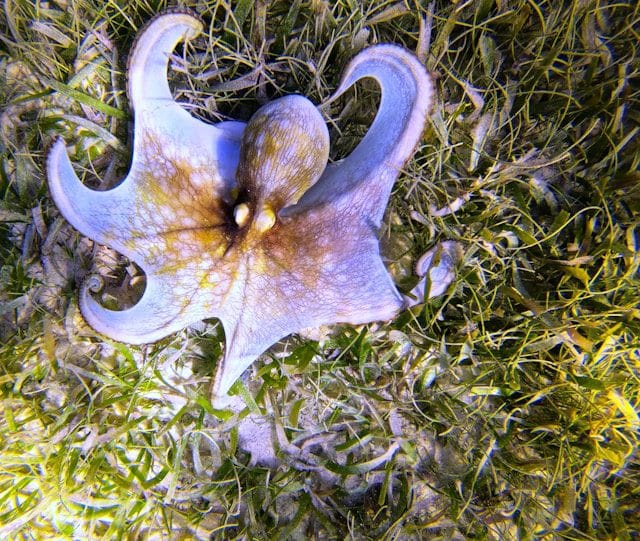
The scientific name for all octopuses is "Octopoda", which is derived from the Latin words "okto", meaning "eight" and "pes", meaning "foot". This species belongs to the family Octopodidae and the subfamily Octopodinae. This unique and captivating creature also belongs to the phylum Mollusca and the class Cephalopoda, more commonly called Cephalopods, which includes squid, cuttlefish, and nautiluses. Octopuses are characterised by their eight arms, bulbous heads, and keen intellect, which set them apart from other sea creatures. With its three hearts, blue blood, and ability to change colour and pattern for camouflage, the octopus continues to astonish scientists with its advanced capabilities. In recent years, scientists have made strides in understanding the complex nervous system of the octopus, discovering that two-thirds of its neurons are located in its arms, allowing for independent movement and decision-making. This unique neurological setup has sparked fascination among researchers striving to comprehend the intelligence and behaviour of these remarkable beings.
However, the scientific name of an "Octopus" varies by both species and their genus, because the genus "Octopus" is not the only genus for this type of animal. While "Octopus" includes the Common Octopus (Octopus vulgaris) and many common species, other genera exist:
These species vary widely in size, behaviour, and habitat, from the deep-sea Dumbo Octopus to the shallow-water Common Octopus. Additionally, the Common Octopus, use to its adaptability, can be found in a variety of habitats in various oceans. It is one of the most studied of all octopus species, and also one of the most intelligent.
From a taxonomic perspective, octopuses are part of the order "Octopoda", with approximately 300 extant species, found in all the world's oceans. Analysis of their DNA has uncovered surprising connections between different species, challenging previously held assumptions about their lineage. Their scientific classification highlights their evolutionary history and taxonomic relationships within the animal kingdom. Moreover, recent advances in genetic research have provided new insights into octopus biology and physiology, offering a deeper understanding of their fascinating traits and behaviours. As scientists continue to explore this enigmatic cephalopod, the scientific name Octopoda serves as a gateway to unravel its mysteries.
The octopus is a truly remarkable creature, possessing several incredible facts and features that set it apart from other marine life.
The appearance and anatomy of the octopus are a marvel of evolutionary adaptation. With their bulbous heads, adorned with two large, expressive eyes, beak-like mouths and eight elongated arms covered in rows of suction cups, the octopus is a sight to behold. Their soft, boneless, baggy sac-like bodies contain all of their vital organs and are comprised of a complex network of muscles covered with specialised skin.
Octopuses vary greatly in size. They range in size, from as small as the 1-inch (2.5 cm) Star Sucker Pygmy Octopus, which weighs 1 gram or less than 1 gram to as large as the Giant Pacific Octopus, which can have an arm span of about 16 feet on average and weigh about 71 kg, while a massive, recorded specimen measured about 30 feet (9 meters) and weighed about 272 kg.
One particularly intriguing aspect of the octopus's anatomy is its use of chromatophores, specialised cells that enable it to change colour, pattern and even texture in an instant. This remarkable ability allows the octopus to blend seamlessly with its environment or display vibrant hues as a form of communication with other octopuses. Moreover, their soft body allows them to squeeze through tight spaces. It lacks a skeleton; instead, it relies on a hydrostatic system composed mostly of water that enables unparalleled flexibility and manoeuvrability. They also have three hearts, two of them pump blue blood through their gills for oxygenation, while the third circulates oxygenated blood to the rest of their body. This efficient cardiovascular system helps support the high energy demands of an active predator that uses jet propulsion for swift movement.
Furthermore, octopuses have a highly developed nervous system with nine brains, the main brain, along with eight smaller ones located near each arm, allowing them to perform complex tasks simultaneously across multiple limbs. Its large brain also enables complex behaviours such as learning, memory, and even playfulness, making it one of the most intelligent invertebrates, with highly developed senses and problem-solving capabilities. This multitasking capability contributes to their agility in both hunting and evading predators. Octopuses also have the ability to regenerate their limbs. If an octopus loses an arm in a fight or as a means of escape from predators, it has the remarkable ability to grow back a fully functioning replacement. Additionally, their distinctive eight arms, which house two-thirds of their total number of neurons, are lined with suction cups, providing exceptional dexterity and grip, and granting each arm almost independent decision-making abilities. Interestingly, octopuses' large, mesmerising eyes can detect polarised light, an indispensable trait for navigating the murky depths where they dwell. Their beak-like mouth at the centre of their arms exhibits their predatory nature, capable of capturing prey with astonishing agility. The octopus's enigmatic appearance and unique anatomy continue to captivate researchers as they strive to unravel the mysteries hidden within this ocean-dwelling marvel.
The octopus is a widely distributed creature, found in the world's oceans. It adapts to a variety of habitats, from shallow coastal waters to the ocean depths and can be found at depths ranging from just a few feet to over 600 feet. Their remarkable adaptability allows them to thrive in diverse environments, including coral reefs, sandy bottoms, kelp forests, rocky shores, seagrass beds, deep-sea trenches and even intertidal zones. This adaptability also allows octopuses to take advantage of different hunting strategies and escape predation by blending seamlessly into their surroundings. Additionally, octopuses tend to favour areas with abundant food sources, such as crustaceans, molluscs, and small fish, which further influences their distribution patterns.
Octopuses include over 300 known species distributed throughout diverse marine habitats worldwide. They can inhabit extremely cold waters near the poles as well as the temperate and tropical waters regions. For example, the common octopus (Octopus vulgaris) is widespread in the Mediterranean Sea and eastern Atlantic Ocean, while the giant Pacific octopus (Enteroctopus dofleini) resides along the coasts of North America's northwest Pacific Ocean. This broad distribution may be attributed to their unique reproductive strategy - females produce thousands of small eggs which are carried by currents across vast distances before hatching. In recent years, scientific research has discovered that certain species of octopus have surprisingly specific habitat preferences. For example, some species prefer living in dens made of discarded shells or other materials on the seabed, while others inhabit crevices within rocks or undersea caves.
Octopuses are fascinating creatures that come in a variety of types and subspecies, each with its unique characteristics and habitats, with over 300 different species inhabiting various oceanic environments. However, there are twelve most common types of octopus currently recognised.
Each species has distinct physical features and behaviours that set it apart from the others.
The Common Octopus (Octopus vulgaris) is one of the most well-known species, renowned for its remarkable intelligence and adeptness in camouflage. The ability to change colour and texture to blend in with its surroundings makes it a master of camouflage. On the other hand, this ultimate escape artist is famous for exceptional problem-solving skills, opening jars, and even sneaking out of an aquarium. A common octopus, typically about 25 cm long in the mantle, with arms that can grow up to 3.3 feet long, and can weigh up to 9 kg. They can be found in a variety of marine habitats, including coral reefs, rocky shores and seagrass beds, using to their adaptability to thrive. The common octopus inhabits various oceans worldwide, ranging from the eastern Atlantic Ocean, including the Mediterranean Sea, Black Sea and the southern coast of England, to the southern coast of South Africa. It also occurs off the Azores, Canary Islands, and Cape Verde Islands. This species is also common in the western Atlantic Ocean.
The Giant Pacific Octopus (Enteroctopus dofleini) is a deep-sea-dwelling octopus. It is known for its impressive size, reaching up to 30 feet in length, weighing over 272 kilograms, and having long lifespans compared to other octopuses. It possesses remarkable intelligence, making its home along the rocky bottoms, rocky dens or crevices of the North Pacific Ocean.
The Mimic Octopus (Thaumoctopus mimicus) is a true ocean shapeshifter. It can impersonate other marine creatures, such as sea snakes, lionfish and even flatfish or flounders. The mimic octopus is found in the Indo-Pacific, and this clever cephalopod uses its disguise skills to avoid predators.
The Blue-Ringed Octopus (Hapalochlaena spp.) stands out for its vibrant blue rings and venomous bite. These small but deadly creatures can paralyse a human within minutes. They are found in tide pools and shallow coastal waters across the Indian Ocean and the Pacific Ocean, often hiding in coral reefs or sandy bottoms.
The Caribbean Reef Octopus (Octopus briareus) is a master of camouflage. This species can blend into its environment instantaneously when threatened by predators or when sneaking up on its prey. It is known for its striking blue-green colouration and nocturnal hunting habits.
The Star Sucker Pygmy Octopus (Octopus wolfi) is the tiniest in the world. This species measures just over an inch (2.5 cm) in length and is found in shallow waters. Despite its size, it is just as intelligent and capable as its larger relatives.
The Dumbo Octopus (Grimpoteuthis spp.), named for its ear-like fins that resemble those of Disney's iconic character. Lives in extreme depths ranging from 300 to 4,800 meters below sea level, where it feeds on small crustaceans and worms. These creatures drift gracefully through the ocean abyss with their large, ear-like fins while capturing their prey with long tentacles.
The Blanket Octopus (Tremoctopus spp.) has long, flowing membranes that look like a billowing cape. The female blanket octopus is much larger than the male, and the largest recorded individuals reach lengths of up to 6 feet.
The Coconut Octopus (Amphioctopus marginatus) get its name from its habit of creative use of tools, often carrying coconut shells for shelter. It is one of the few animals known to use objects for protection.
The Atlantic Pygmy Octopus (Octopus joubini) is a tiny but mighty predator. This small species inhabits the Atlantic Ocean and is known for its ability to squeeze into the tiniest crevices to hunt for food.
The California Two-Spot Octopus (Octopus bimaculoides) is easily recognised by the two blue spots near its eyes. This species is commonly found along the coast of California. It is a favourite among researchers studying octopus intelligence.
The East Pacific Red Octopus (Octopus rubescens) is another small but fierce predator. This species is also known for its ability to blend into its surroundings. It is often found in tide pools and along rocky coasts.
The deep-sea flapjack octopus (Opisthoteuthis spp.) stands out for its peculiar appearance. It is known for its round, gelatinous body, large eyes, and a webbing that connects its arms like a flapjack or a tiny umbrella. It moves through deep ocean currents by flapping ear-like fins or using propulsion. Unlike other octopuses, it lacks ink sacks and chromatophores, instead camouflaging by changing its colour to red, pink, orange (which appears black in the deep sea) or flattening itself against the seafloor to hide. These elusive creatures are found in the North Pacific Ocean and other deep waters worldwide.
The octopus is a remarkable creature with several unique characteristics that set it apart from other marine animals. One of its most notable features is its ability to change colour and pattern, allowing it to blend seamlessly into its surroundings. This impressive camouflage capability not only helps the octopus avoid predators but also enables it to sneak up on unsuspecting prey. They possess an incredible degree of flexibility due to their lack of bones, allowing them to squeeze through tight spaces and contort their bodies in astonishing ways. Furthermore, the octopus has three hearts; two of them pump blue blood through its gills while the third circulates it to the rest of its body. This efficient cardiovascular system is essential for the octopus's high level of activity and complex behaviour. They have been known to regenerate lost limbs with incredible speed and efficiency. This extraordinary capacity for regeneration gives the octopus an exceptional advantage in surviving injuries and adapting to changing environmental conditions. In addition to these physical attributes, the octopus also possesses highly developed problem-solving abilities. Its large brain and keen observational skills enable it to manipulate objects and even solve puzzles in captivity. Moreover, it displays incredible dexterity with its eight arms, each lined with hundreds of suckers that allow it to grasp and manipulate objects with precision. Octopuses adapt to diverse habitats, from shallow coastal waters to the ocean depths and thrive in a variety of environments, ranging from coral reefs and rocky shores to sandy bottoms and seagrass beds. These intelligent creatures are skilled hunters, feeding on crustaceans, molluscs, small fish and other octopuses. Octopuses are semelparous, and they reproduce only once in their lifetime before dying shortly after their eggs hatch. These captivating characteristics reveal just how fascinating and enigmatic these creatures truly are.
In terms of habitat, octopuses can be found in a wide range of environments, including coral reefs, rocky shores, kelp forests, sandy bottoms, seagrass beds, deep-sea trenches and even intertidal zones. These intelligent creatures have learned to navigate a multitude of environments with ease. They are highly adaptable creatures capable of blending into their surroundings using their ability to change colour and texture. Whether it's the larger species utilising complex den structures or smaller individuals seeking shelter within seabed crevices, their ability to thrive across diverse ecosystems speaks volumes about their resilience and adaptability in the ever-changing seas they call home. This makes them masters of camouflage as they hunt for prey or evade predators. It's also important to note that different species have specific preferences for certain habitats based on factors such as temperature, depth, and availability of food sources.
The octopus is a carnivorous animal, and its diet is incredibly diverse, including a wide range of prey. They feed on crabs, shrimps, molluscs, small fish, and even other octopuses. Their diverse diet also varies by species and habitat, reflecting the adaptability that has allowed them to survive in diverse ocean environments over millions of years. For example, the deep-sea octopus may feast on amphipods while the common octopus might prefer crabs or clams.
Octopuses are opportunistic hunters, relying on their highly developed intelligence and camouflage abilities to catch a variety of prey. Their flexible bodies, powerful suckers and sharp beaks allow them to capture and consume their prey with remarkable precision. Despite a lack of bones, octopuses are formidable predators that can overpower surprisingly large animals with their tentacles.
One interesting aspect of the octopus's hunting strategy is its ability to use tools and adapt to different environments. They have been observed using coconut shells and other objects for shelter or as hunting aids. Some species utilise camouflage techniques and agile movements, while some species forage in coral reefs, and others prefer sandy or rocky areas. This flexibility allows them to take advantage of various food sources and ensures their survival in diverse ecosystems. Furthermore, octopuses are skilled hunters, and their hunting technique involves stealth and patience. They carefully stalk their prey before launching a lightning-fast attack.
Octopuses are mesmerising creatures with a complex and intriguing behavioural repertoire. Their highly developed nervous system and ability to change colours and shape in response to their environment is not only a remarkable visual display but also serves as a crucial tool for communication, camouflage and navigation. Their exceptional skills and use of ink to escape predators showcase the adaptability and intelligence of octopuses, allowing them to thrive in varied habitats. When threatened, an octopus might take an aggressive "tall" posture and display a dark colour to intimidate an attacker. They can squirt a cloud of black ink to confuse predators and use a jet of water from their siphon to propel themselves backwards to escape quickly. These marine creatures also have a remarkable ability to regenerate their limbs. If they lose their arm in a fight or as a means of escape from predators, they have the remarkable ability to grow back a fully functioning replacement. Octopuses can also adapt their hunting strategies and have shown the ability to overcome environmental obstacles. These intelligent creatures exhibit a wide range of behaviours, from using tools to mimicry and problem-solving skills (like solving mazes and unscrewing jars) in the wild. They can engage in playful interactions with objects and even humans in captivity. Additionally, some species of octopuses can learn and recognise individual people.
Moreover, the lifestyle of octopuses is both solitary and exploratory. They prefer to live in secluded areas like coral reefs, rocky shores, sandy bottoms, seagrass beds, crevices or burrows, or a den on the ocean floor. Octopuses can be territorial and defend their space against other octopuses. Unlike many other marine creatures, octopuses prefer to live alone rather than in groups or schools. But some species exhibit social behaviours like tolerance of others in proximity and even cooperative hunting. Octopuses are predominantly nocturnal creatures, preferring to roam and hunt under the cover of darkness. This independence allows them to hunt effectively without competition from others and reduces predation risk on their vulnerable bodies. Their curious nature often leads them to investigate new objects using their dexterous arms and keen senses. Octopuses adapt to thrive in diverse habitats and environments, from shallow coastal waters to the ocean depths. They are skilled hunters, using their intelligence and camouflage for hunting to feed on crustaceans, molluscs, small fish and other octopuses.
Octopuses have also been observed engaging in courtship rituals before mating. They may engage in elaborate displays of aggression during encounters with potential mates or rivals, showcasing intricate behavioural patterns that highlight their sophisticated nature. Their reproduction usually occurs only once in an octopus's lifetime. Furthermore, the mysterious reproductive habits of octopuses add another layer to their intriguing lifestyle. Females invest enormous energy into caring for their eggs until they hatch, but often die shortly after, while males have been known to sacrifice themselves for the sake of mating, a striking example of selflessness in the animal kingdom. Additionally, the lifespan of an octopus varies greatly depending on the species; while some only live for a few months, others can survive for several years due to their unique reproductive strategy.
The reproduction in octopuses is a fascinating and complex process that varies between different species. Unlike many other species, octopuses are semelparous, meaning they reproduce only once in their lifetime before dying shortly after their eggs hatch. During courtship rituals, they may engage in elaborate displays of aggression and encounters with potential mates or rivals. The male uses a specialised arm called a hectocotylus to transfer sperm into the female's mantle cavity. The female then lays thousands of small, transparent, gelatinous eggs in protective clusters. When it comes to parenting, after laying her eggs, the female octopus meticulously cleans the area and stops eating. Then she spends her time guarding and caring for the eggs, which can be over 10,000 for some species. She gently fans the eggs with her arms to ensure they get enough oxygen until hatching. However, this devoted maternal care often comes at a cost, as the female octopus usually dies shortly after her offspring are born. In contrast, male octopuses don't contribute much; their involvement is limited to fertilising the female's eggs before they become territorial and often die within a few months after mating. This unique reproductive strategy and sacrifice serve as a poignant reminder of the delicate balance between reproduction and survival in the animal kingdom.
Once the eggs hatch, baby octopuses, known as larvae, begin life as planktonic drifters and face numerous challenges as they navigate the ocean environment. These larvae are remarkably independent and possess a surprising level of intelligence from an early age. The ability of these young cephalopods to navigate complex environments, solve problems, and communicate through colour patterns is truly astounding. It's a race for them to grow quickly and learn essential survival skills before reaching sexual maturity themselves. The entire process highlights the remarkable balance between mortality rates and reproductive efforts in the life cycle of these intelligent creatures, adding another layer of intrigue to the already captivating world of cephalopods.
Their short lifespan ranges from 6 months to 5 years, depending on the species, is filled with constant learning and adaptation. Some species live only 6 months to a year, while larger species like the Giant Pacific Octopus can live for 3 to 5 years. However, this short lifespan is not due to ageing in the traditional sense; rather, it is linked to their rapid growth and reproductive cycle.
Octopuses, despite their fascinating and enigmatic nature, face a myriad of predators and threats in the wild. From marine mammals to fish, birds, and humans, the list of predators that prey on octopuses is extensive. Marine mammals, like sperm whales, dolphins, seals, and sea otters, are major predators of octopuses. While various predatory fish, like sharks, lingcod, and wolf eels, prey on octopuses, moray eels, and conger eels are common predators of them. Additionally, seabirds also hunt both young and adult octopuses. These diverse predators have honed their hunting techniques to catch these elusive creatures, making survival a constant challenge for octopuses. Despite these threats, octopuses have developed a range of defensive mechanisms, such as ink release, jet propulsion, and colour-changing abilities to evade predators.
Apart from natural predators, human activities also present significant threats to octopuses. Overfishing in their habitats can lead to decreased food sources and increased competition for survival. The increasing demand for seafood and fishing for them as a food source has led to unsustainable fishing practices that impact not only octopus populations but also other marine species. Pollution in the form of plastic debris or chemical contaminants can harm octopus populations by disrupting their ecosystems and affecting their health. Moreover, habitat destruction due to coastal development further threatens these fascinating creatures, depriving them of vital nesting sites and refuge areas.
Furthermore, climate change poses an indirect yet substantial threat to octopuses. Rising ocean temperatures and acidification not only disrupt their natural habitats but also impact the availability of food sources, leading to potential population declines. Additionally, the illegal wildlife trade also contributes to the peril faced by these intelligent creatures, with some species being targeted for their unique capabilities and used in traditional medicine or as aquarium pets.
The population number of octopuses has long been a subject of fascination and mystery. There are around 300 species of octopus, and they are found in every ocean. Despite their elusive nature, there is no single, exact population number for all octopuses. However, global annual octopus catches are estimated to be between 350,000 and 500,000 tons, and these landings have been declining over the past several years. Surprisingly, researchers have discovered that the number of octopus individuals is much larger than previously believed, sparking a renewed interest in understanding their ecological impact and behaviour in various marine ecosystems.
Furthermore, it has been found that the population density of different octopus species varies significantly across different regions and habitats. Recent studies have revealed surprising complexities in octopus population dynamics, with some species exhibiting rapid fluctuations in abundance due to environmental factors such as temperature changes and food availability. There is also evidence to suggest that human activities, such as fishing for them as a food source, overfishing and habitat destruction, may be impacting octopus populations in ways that are not yet fully understood.
The octopus is a fascinating creature that holds immense importance in marine ecosystems and research fields. Known for its remarkable intelligence, camouflage abilities, and problem-solving skills, the octopus plays a crucial role in maintaining the balance of its habitat.
The mystical allure surrounding these enigmatic creatures has also captured the imagination of artists, writers, and filmmakers alike. Their intriguing behaviour and complex interactions with their environment continue to inspire creative works that showcase the beauty and wonder of ocean life through the eyes of these remarkable creatures.
The octopus, a creature of mystery and intelligence, captivates aquarium visitors with its mesmerising displays of colour-changing abilities and graceful fluid movements. As they navigate through their watery enclosures, these enigmatic creatures reveal their remarkable problem-solving skills and inquisitive nature, leaving onlookers in awe of their complex behaviours. Observing an octopus interact with enrichment activities provided by dedicated caretakers, such as puzzle feeders or hidden objects, offers a glimpse into its remarkable cognitive abilities and adaptive intelligence.
One cannot help but be enthralled by the way octopuses use their tentacles to explore every nook and cranny of their environment, exhibiting a sense of curiosity akin to that of humans. Their ability to contort and mould themselves into various shapes makes them truly captivating creatures to observe within the contained setting of an aquarium. The aquarium provides a unique opportunity to witness the fascinating dynamics of these ocean dwellers, from their intricate camouflage techniques to their curious interactions with visitors.
Furthermore, showcasing an octopus in the aquarium setting serves as an educational tool, allowing spectators to learn about the diverse marine ecosystems where these animals thrive. By highlighting conservation efforts and environmental challenges faced by octopuses in the wild, aquariums can inspire visitors to take action toward preserving these incredible creatures and their habitats. This immersive experience fosters a deeper connection between people and the ocean, encouraging stewardship and empathy for marine life beyond the confines of the aquarium walls.
The classification and evolution of the octopus are fascinating subjects that shed light on the incredible adaptability and intelligence of these enigmatic creatures. From a taxonomic perspective, octopuses belong to the class Cephalopoda, which also includes squid, cuttlefish, and nautiluses. This group of animals is characterised by their prominent head and tentacles, as well as their highly developed nervous systems. However, octopuses are further categorised into the order "Octopoda", with over 300 recognised species inhabiting diverse marine environments around the world. This species belongs to the family Octopodidae and the subfamily Octopodinae.
Recent genetic studies have suggested that they may belong to the order "Vampyromorphida" or even to their separate order "Incirrata". This reclassification challenges our understanding of the evolutionary history of these fascinating creatures and emphasises the need for further research into their genetic makeup and evolutionary relationships.
In terms of evolution, octopuses have undergone remarkable adaptations to thrive in various marine environments. Fossil records suggest that these intelligent creatures have been inhabiting Earth’s oceans for over 500 million years, demonstrating their resilience in the face of changing environmental conditions. They are thought to have diverged from other molluscs, leading to their unique biological characteristics such as eight tentacles and highly developed intelligence. One interesting aspect of octopus evolution is their ability to manipulate tools and solve complex problems, traits that hint at the incredible cognitive abilities that have emerged during their evolutionary journey.
The relationship between humans and octopuses has long been shrouded in mystery and fascination. While some may view octopuses as creatures to be feared or simply avoided, recent insights into their intelligence and adaptive abilities have sparked a new wave of interest in understanding and appreciating these enigmatic creatures. Despite their otherworldly appearance, researchers have uncovered various instances where octopuses have demonstrated complex problem-solving skills and even displayed playfulness. This challenges our preconceived notions of cephalopods as mere primitive beings and instead invites us to consider them as sophisticated denizens of the ocean.
One aspect that has brought octopuses into closer contact with humans is the rise of marine aquaculture. As demand for seafood increases, so does the cultivation of species such as cuttlefish and squid, which share habitats with octopuses. With this growing proximity, interactions between humans and these intelligent animals are becoming more frequent, both in commercial contexts and in encounters by everyday divers and beachcombers.
Their interactions with humans in captive settings also reveal their curiosity and adaptability; many have been known to exhibit playful behaviours when provided with novel enrichment activities. Yet despite this intriguing potential for connection, the commercial fishing industry poses a threat to these remarkable creatures. As such, recognising the intricacies of the octopus-human relationship can inspire newfound respect and compassion for these incredible animals.
The conservation status of most octopus species is not considered endangered, with many common types listed as "Least Concern" by the IUCN Red List, which demands more attention and action. But some specific species, like the Roughly Umbrella Octopus (Opisthoteuthis chathamensis), are facing decline due to threats like overfishing, pollution and habitat loss. It is a species of Cirrate Octopus restricted to demersal habitats surrounding the Chatham Rise in New Zealand. However, despite their fascinating and intelligent nature, octopuses face numerous threats in the wild, including climate change and illegal wildlife trade. These factors have contributed to declining populations of various octopus species worldwide.
One key challenge in addressing the conservation status of octopuses is the lack of comprehensive data on population sizes and distribution. Many octopus species are elusive and difficult to study in their natural habitats, making it challenging for researchers to assess their current status accurately. Additionally, illegal poaching and bycatch add another layer of complexity to the conservation efforts.
Furthermore, the unique reproductive lifecycle of octopuses makes them sensitive to environmental changes and human disturbances. Their short lifespan and low reproductive rate make it difficult for populations to recover from overexploitation or habitat degradation. Implementing sustainable fishing practices and establishing marine protected areas can play a crucial role in the safeguarding of these intelligent and ecologically important creatures. Raising public awareness about the significance of octopuses in marine ecosystems can help garner support for conservation efforts aimed at protecting these enigmatic cephalopods.
The octopus and squid are two fascinating creatures of the sea, both belonging to the class Cephalopoda. While they may look similar at first glance, several key differences set them apart.
These distinctions not only contribute to the intricate diversity of marine life but also provide a fascinating insight into how different evolutionary paths have led these remarkable creatures to adapt and thrive in distinct ways within our oceans.