
Introducing an ox into a community is an event filled with excitement and anticipation. This majestic creature, known for its strength and endurance, has been a symbol of hard work and productivity throughout history. As the ox steps into its new surroundings, it brings a sense of tradition and connection to our agricultural roots. An ox, also known as a bullock or steer, is a castrated male cattle over four years of age. It is necessary to mention here that "all oxen are steers, but not all steers become oxen (not all steers are trained for work)". When an ox or a castrated male cattle is trained to do work and used as a draft animal, it is called a bullock (a castrated older male), and when an ox or a castrated male cattle is raised for beef production, it is called a steer (a castrated male calf). The tender and flavorful beef from steers is highly sought after by consumers worldwide. Although some breeds are better suited to it than others. They belong to the Bovidae family and are members of the subfamily "Bovinae", with the most widespread species of the genus "Bos".
Oxen are commonly castrated adult male cattle because castration inhibits testosterone and aggression, which makes the males docile and safer to work with. Oxen, or adult castrated males that have been domesticated or tamed, typically do farm work. For centuries, oxen have played a vital role in farming communities around the world. They were used as draft animals to plough fields, pull carts, and transport goods. Their immense power allowed farmers to cultivate vast stretches of land and increase their yields. Oxen are generally desexed bulls, so they are not always males. In some places in the world, cows or castrated female cattle (typically called a spayed heifer or simply a heifer) do their share of the pulling and carrying, too. The introduction of an ox signified not only the arrival of a valuable asset but also the promise of prosperity for the entire community. In addition to their physical capabilities, oxen have been revered for their gentle nature and loyalty. They are large, strong-looking animals with two horns and four legs. Oxen are considered to be adults around the age of four years old, and they usually live for 15 to 20 years.
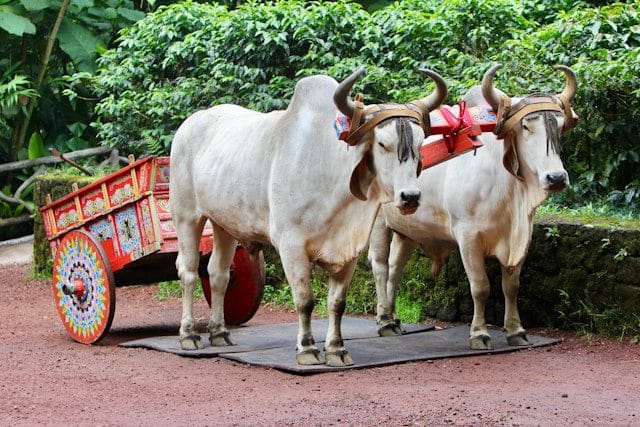
The scientific name of a castrated ox is generally "Bos taurus", the same as its species name for all domestic cattle from which oxen are derived. "Bos taurus" belong to the family Bovidae, which encompasses a wide range of hoofed mammals, including cattle, bison, buffalo, antelopes, goats, sheep, and muskoxen. The genus name "Bos" refers to a group of large mammals in the subfamily "Bovinae" that includes several species of cattle, such as bison, yak, banteng, and wild or water buffalo.
An "ox", also known as a bullock or steer, is a castrated adult male bovine that has been trained and used as a draft or working animal, or raised for meat. These types of animals are specifically managed by humans, which are not found roaming in the wild in this capacity. "Ox" comes in various types or subspecies, but only two main species in the genus "Bos" are used for work, and they are called "oxen".
However, the scientific name of a castrated ox is generally "Bos taurus", because "Bos" is a Latin word for "cow", "ox" or "bull", and the species name "Taurus" is also derived from the Latin word that refers to "bull" or "ox". It follows the binomial nomenclature system, where the genus "Bos" is capitalised and is shared by all domestic cattle species, while the specific epithet "taurus" is lowercase and is specifically used for the common European or humpless breeds of cattle. The "Bos taurus" species encompasses a wide range of breeds that have been selectively bred by humans for thousands of years and are an essential part of agriculture worldwide. From dairy cows like Holsteins to beef cattle such as Angus or Herefords, Charolais, Galloway, and Ayrshire, each breed falls under this all-encompassing scientific classification.
On the other hand, the name differentiates these cattle from "Bos indicus", the scientific name for humped cattle, where the genus name "Bos" is a Latin word for "cow", "ox" or "bull", and the species name "Indicus" is derived from the Latin word, meaning "Indian", referring to the geographic origin. The "Bos indicus" also encompasses a wide range of zebu cattle and other breeds. From the Brahman, Gir (or Gyr), Kankrej, Nelore, Sahiwal, and Red Sindhi to the Hariana, each breed falls under this all-encompassing scientific classification. Moreover, the species from Bos taurus and Bos indicus descended from the extinct wild aurochs (Bos primigenius).
Oxen have been an integral part of human history for thousands of years, serving as beasts of burden and food sources. These incredible creatures possess a range of fascinating facts and features that make them truly remarkable. Here is about them:
The appearance and anatomy of an ox are truly remarkable. These majestic creatures, commonly known for their massive stature, formidable strength, endurance and ability to pull heavy loads. An "ox" possesses unique features that set them apart from other animals. With a towering height of up to 6 feet at the shoulder and reaching lengths of up to 9 feet while weighing well over a ton, oxen showcase an impressive physical presence. They have a rounded, somewhat less muscular body than a bull that is covered in a thick layer of coarse hair. Their presence of a more elongated and "cow-like" body structure, especially if they are castrated early. But for late castration, an ox will have a more muscular "bull-like" shape and retain its bull-shaped physique. An ox's head is broad and powerful, adorned with a wide muzzle, large horns or hornless, and often drooping large ears (depending on the breed). They have a cervicothoracic hump or humpless and large dewlap (depending on the breed), four-hooved, strong legs, and long tails. Oxen's less pronounced hump is located on their back between the shoulders. Their bodies are covered in a thick coat of hair, and the colouration of their hair can vary widely among different breeds, ranging from solid black or brown to combinations of white and black patches or solid white, grey and red, with ample variation in shade and colour pattern. Furthermore, they have a shorter, wider skull than a horse, a prominent rib cage, a large abdomen, and a strong back.
One of the defining features of an ox is its impressive size. They can range from 5 to 6 feet tall at the shoulder and 8 to 9 feet in length, including the tail, with a weight of anywhere between 545 to 907 kg or more. The average weight of the ox is 450 to 1,180 kg, but some oxen can weigh significantly larger, and they reach a weight of 1,360 kg or more. On the whole, oxen will be larger because they are bred to be the largest, strongest animals capable of doing work.
In terms of their overall anatomy, oxen are typically castrated males, which makes them more docile and less aggressive than bulls, as they produce less testosterone by the removal (via surgical or bloodless methods) of the testes, which are the primary site of testosterone and sperm production. The accessory sex glands, such as the vesicular glands (which produce the majority of seminal fluid), are significantly smaller in an ox (or steer) than in a bull due to the lack of hormonal stimulation. Their scrotum may still be present but will be empty or atrophied, depending on the age and method of castration. The length and diameter of the pelvic urethra may be slightly different compared to an uncastrated male. Additionally, oxen are often castrated later in life and, as a result, may developed the strong shoulder and chest muscles like bull, making them physically large and powerful for work, but lacking aggression, while their castration before puberty can lead to slightly longer limbs and overall greater height because the closure of the long bone growth plates (osseous maturation) is delayed in the absence of sex steroids.
However, their specialised musculature allows for great strength and endurance, with a well-developed buccinator muscle in the lips, jaw and a strong nuchal ligament in the neck to support the heavy head and yoke. Oxen's formidable horns serve as both weapons and tools for defence and grazing. These horns can grow up to 2 to 3 feet long and have a curved shape that gives them a menacing look, while their eyes are positioned on the sides of their head, giving them a wide field of vision essential for detecting potential dangers while grazing in open fields or navigating narrow paths. Additionally, the eyes of an ox are specialised for hearing and balance, while the ox's nose and upper lip form a wide, hairless, and moist surface called the muzzle. This area has unique individual surface markings, similar to human fingerprints, which are used for identification. Moreover, oxen's thick coat of hair helps protect them from extreme weather conditions, such as heat or cold, while their long tails are used for balance and swatting insects. Oxen's strong legs with cloven hooves also allow them to carry heavy loads while working in fields or pulling carts. The major joints include the hip, stifle, and hock. Furthermore, they use their broad, flat molars for grinding plant materials and their strong tongues to pull grass into their mouth. Unlike humans, they lack upper incisors, using a hard dental pad instead. Oxen are ruminants, and they have a complex digestive system designed to break down coarse vegetation like grass. The digestive system of a castrated ox is essentially the same as that of other cattle (cows, bulls, steers), because the digestive system is not affected by castration.
Owing to their adaptable nature, oxen can be found across a wide range of habitats worldwide. In the wild, they are often associated with pastoral landscapes, primarily inhabiting regions that offer vast grazing lands, including grasslands, savannas, open woodlands, and even mountainous terrains. Additionally, they have been domesticated for centuries and can be found in agricultural landscapes where they are used as working animals. Oxen are often raised in farms situated near rivers or fertile valleys, optimising their feed intake and supporting local agricultural practices. While there are wild oxen, the majority of the populace live in human-built habitats. The structures are usually sheds, stables, and open fields where the animals are fed and cleaned, rest and congregate in small groups, and graze or walk freely in herds.
These resilient animals can thrive in varied climates, and their adaptability is remarkable. For example, in regions with colder climates, such as the Arctic tundra or high-altitude mountain ranges, certain species of oxen have evolved thick fur coats to protect themselves from extreme temperatures. On the other hand, in warmer regions, such as the African savannahs or Southeast Asian rainforests, oxen have adapted by developing sweat glands that help them cool down their bodies during hot weather conditions.
The distribution of "ox" varies by species. Domesticated oxen are found globally. They are a domesticated form of the large-horned wild mammal that once moved in herds across North America to Europe (whence they have disappeared) and Asia to Africa, but now only exist in some wild populations. For instance, Musk oxen are native to the Arctic regions of Canada and Greenland, having a once-circumpolar distribution during the Pleistocene epoch, spanning North America, Europe and Asia, while Gaur, another type of wild ox, was historically distributed across mainland South and Southeast Asia, with current populations mainly in protected areas in countries like India, Thailand, and Vietnam. However, only a few thousand oxen are used in the United States, and Tens of millions of oxen are used in Mexico, South America, India, China and throughout Asia. Nearly everywhere that large numbers of people reside, people will find cattle (or their cousins, Water Buffalo) used as oxen.
Interestingly, the distribution of oxen reflects not just environmental conditions but also cultural practices. In many rural communities, oxen play a pivotal role in traditional farming methods, often serving as indispensable labourers for ploughing and transporting goods. This symbiotic relationship enhances agricultural productivity and sustains local economies. Different breeds have adapted to specific regional challenges, showcasing the ox's ability to evolve alongside human agricultural innovations and environmental changes. As climate change continues to challenge ecosystems, understanding the habitat choices of oxen might provide insights into sustainable farming practices that can endure shifting environmental conditions.
The term "ox" can refer to both domesticated animals and wild species. Still, in common usage, it almost always refers to a domesticated animal, which is a member of the cattle species from the genus "Bos", family Bovidae, and subfamily "Bovinae". However, an "ox" is usually a castrated male cattle or a steer that has been trained as a draft or working animal to pull carts and plough fields or raised for meat. These types of animals are specifically managed by humans, which are not found roaming in the wild in this capacity. Ox comes in various types or subspecies, but only two main species in the genus "Bos" are used for work, and they are called "oxen".
The Taurine Ox (Bos taurus), also known as the European cattle, adapted to cooler climates. It has a muscular build and the ability to pull heavy loads (pulling ploughs, carts and etc). For example, Hereford, Angus, Galloway, and Ayrshire cattle originated in the British Isles. European castrated ox or steer can weigh between 500 and 1,200 kg on average, while larger breeds can weigh up to 1,300 kg or more. The European cattle encompasses several subspecies found primarily in Europe, such as the Scottish beef breed (Angus), known for its hornless appearance, the Scottish Highland cattle, known for its long-haired appearance, and a popular beef breed from England, the British White breed (Hereford), known for its white face. On the other hand, the Chianina breed originated in Italy, and the Charolais breed originated in France. However, European Oxen are typically larger compared to other subspecies and have a calm temperament that makes them suitable for agricultural work. This type of oxen is commonly found in rural areas of Europe, the Americas and temperate Asia.
The Indian or Zebu Ox (Bos indicus), also known as indicine or humped cattle, is characterised by their distinctive fatty hump on the shoulder, a large dewlap, and often drooping large ears. These resilient animals are adapted to hot climates and possess a remarkable tolerance for heat, intense sunlight, tropical parasites, and diseases, making them suitable for farming in tropical regions worldwide. The weight range for a mature Indian ox can be anywhere from approximately 280 to over 500 kg. Native to the Indian subcontinent, their ability to survive in arid regions made them vital assets to farmers in India and other parts of Asia, where they are used as drought and riding animals (ploughing fields or pulling carts), and sources of milk and meat. For example, the Brahma, Gir (or Gyr), Kankrej, Nellore, Sahiwal, and Red Sindhi breed, which originated in India, has a wide variety. Others, the Hariana breed, which is also a type of zebu cattle, originated in India. They also used their by-products, like hides and dung (fuel and manure). Some small breeds are also kept as pets. Zebu oxen have adapted to various climates across Asia, Africa, and parts of South America.
Other species in the genus "Bos", such as the Tartary ox (Bos grunniens), also known as the Domesticated Yak, are a type of "ox". It is neither a pure zebu nor a pure taurine. The "Tartary ox" is a type of domesticated cattle trained for work. This long-haired, domesticated species of cattle is descended from the wild yak. It is found in the Himalayan region and other parts of central Asia, while the semi-domesticated Gayal (Bos frontalis) is also referred to as an "ox" or "Drung ox". It is a large bovine, found in the Himalayan foothills. However, crossbreeding between Bos taurus and Bos indicus is common, creating hybrid breeds such as Sanga cattle in Africa, which combine traits from both types.
Interestingly, the word "ox" is also used as a general term for various species of wild cattle within the family Bovidae, not including true buffalo or bison in a strict biological sense. These animals live in wild states in parts of Asia and Africa, but South America and Australia have no native wild oxen.
The Aurochs (Bos taurus primigenius): It is the extinct wild ancestor from which all modern domestic cattle are descended.
The Wild Yak (Bos mutus): It is sometimes called the "grunting ox", is a distinct species from the domestic yak, which is found in the high-altitude regions of the Himalaya and Tibetan Plateau of inner Asia.
The Gaur: It is a large, extant species of wild cattle found in India and Southeast Asia.
The Musk Ox (Ovibos moschatus) is a distinct wild animal with heavy fur, found in the Arctic tundra regions of North America and Greenland. Despite its name, it is not a true ox, but a different species. It is closely related to sheep and goats, which have adapted to the Arctic tundra. While they share a superficial resemblance and both belong to the family Bovidae, musk oxen are placed in the subfamily Caprinae along with goats and sheep. Their name comes from a musky scent that the males produce and from their ox-like appearance, but not their genetic makeup. It has two recognised subspecies based on their physical and geographic differences, the Barren Ground muskox (Ovibos moschatus moschatus) and the White-faced muskox (Ovibos moschatus wardi).
Oxen are usually castrated adult males, or steers that have been domesticated or tamed, typically to do farm work, including ploughing fields, pulling carts and running machinery effortlessly, or they are raised for meat. Oxen are considered to be adults around the age of 4 years old, and they are usually muscular build, strong and dependable, which allows them to pull heavy loads and more. People have depended on oxen for about 6,000 years. They work more slowly than horses, which can be an advantage for farmers who need to keep up with them while working. Patience and honesty are the two characteristics that many people appreciate the ox for. They form strong bonds with one another and exhibit highly cooperative behaviour when working together. But the ox is very stubborn; it is hard to change its mind once they has already decided on something. They are usually calm, but when they are at their limit, they can turn into a violent animal. Oxen communicate using various vocalisations such as lowing and bellowing sounds to assert dominance or alert the herd about potential dangers. They will form a circle, especially around the young to protect them when threatened in the wild, and they then use their horns to defend the herd. Oxen have adapted to various habitats around the world and can be found in a wide range of environments, from lush grasslands to harsh mountainous regions. These magnificent creatures are herbivores, and their diet primarily consists of fresh grass, hay, and grains, which provide them with essential nutrients. Oxen possess an impressive ability to tolerate extreme weather conditions, making them ideal companions in various parts of the world where temperatures can soar or plummet drastically. Their adaptability has allowed them to thrive on multiple continents, making them a significant presence in various cultures and ecosystems.
One of the most common habitats for oxen is grassland or savannah, where they can graze on abundant vegetation. These habitats provide them with the necessary resources for survival, such as grasses, herbs, and shrubs that make up their diet. Additionally, these open landscapes allow oxen to form social groups and engage in behaviours like territorial disputes. Apart from grasslands, oxen are also well-adapted to survive in forests, woodlands and harsh mountainous regions. Forest habitats can be particularly beneficial during dry seasons when other sources of food become scarce in open grasslands.
The diet of an ox is crucial to its overall health and well-being. These magnificent creatures are known for their immense strength and endurance, which is partly attributed to their diet. Oxen are herbivores, which means that they eat plants. Their diet primarily consists of fresh grass, hay, and grains, which provide them with essential nutrients such as carbohydrates, proteins, vitamins, and minerals. Additionally, they consume other plant materials like straw, leaves, branches from trees and other similar plants that are available where they live and when the grass is scarce. These fibrous materials provide them with the necessary energy and roughage needed for proper digestion. On the other hand, wild species like musk oxen consume a variety of vegetation depending on the season, such as grasses in the summer, and roots, dwarf willow, dwarf birch, lichens and mosses in the winter. In the winter, to find their food, they dig through shallow snow with their hooves.
Apart from these plant-based foods, oxen also require a certain amount of grains in their diet that are easily found on the farms where they usually live. This helps meet their nutritional needs by providing additional carbohydrates, proteins, vitamins, and minerals. Common grains fed to oxen include corn, barley, oats, and wheat bran. To maintain their health, stamina and strength levels during heavy labour or ploughing, oxen need to consume substantial amounts of food. A single adult ox can devour up to 40 pounds of vegetation per day! Apart from grasses, these herbivores also benefit from legumes like alfalfa or clover, as they contain a higher protein content that aids in muscle development. Furthermore, they must have access to fresh water at all times to stay hydrated throughout the day. Oxen spend most of their time grazing on lush pastures or consuming harvested feed in barns during colder months.
The behaviour and lifestyle of an ox are deeply ingrained in the history of human civilisation.
In terms of lifestyle, oxen are highly social animals that form strong bonds with their fellow herd members. They have a hierarchical structure within their groups, with a dominant individual leading the rest. Oxen communicate among themselves mainly through body language and vocalisations such as low grunts or bellows. They can live in a wide range of environments, from grasslands and savannahs to forests and woodlands to harsh mountainous regions, which provide them with the necessary resources for survival. These open landscapes allow oxen to form social groups and engage in behaviours like territorial disputes. Since the males are castrated, they are not used for natural reproduction. The ox is a herbivore, so it grazes on a diet of grass, grain, hay and other vegetation only. Their lifestyle revolves around a routine that involves grazing on grasses and other vegetation during the day, taking breaks for resting and rumination throughout the afternoon, and engaging in social grooming to maintain hygiene. Ox's need about 4 hours of sleep per day also.
However, an ox's lifestyle is one of domesticated work, involving tasks like ploughing fields and pulling heavy loads, often in yoked pairs. They are typically castrated males, which makes them more docile and less aggressive than bulls, as they produce less testosterone. Oxen typically live in human-provided habitats like sheds, stables or open fields, where they are fed and cared for. These majestic creatures have been domesticated for thousands of years, serving as a vital source of labour in agricultural societies across the globe. Known for their immense strength and endurance, oxen are primarily used for heavy-duty tasks such as ploughing fields, hauling heavy loads and pulling carts for extended periods. They are also used for transport, for threshing grain by trampling, and for powering machines that grind grain or supply irrigation, among other purposes. Oxen may also be used to skid logs in forests, particularly in low-impact, select-cut logging. They possess an impressive ability to tolerate extreme weather conditions, making them ideal companions in various parts of the world where temperatures can soar or plummet drastically. Oxen can thrive on multiple continents, making them a significant presence in various cultures and ecosystems.
In terms of behaviour, patience and honesty are the two characteristics that many people appreciate the ox for. They form strong bonds with one another and exhibit highly cooperative behaviour when working together. But the ox is very stubborn; it is hard to change their mind when oxen already decided on something. They are usually quiet and peaceful, but when they are at their limit, they can turn into a violent person. Bears and wolves are the ox's only predators. When threatened in the wild, oxen will form a circle, especially around the young, to protect them, and they then use their horns to defend the herd. Oxen are easy to train and can perform chores with little supervision. Some sources say they may be as smart as dogs and can remember people and places. Their excellent memories can recognise familiar faces even after several years apart, and it also allows them to remember routes and instructions given during training sessions or previous tasks. Their sharp memory becomes a crucial asset when navigating through difficult terrains or performing complex agricultural activities. They are slower than horses, which can be an advantage for farmers who need to keep up with them while working.
Oxen do not reproduce naturally since the male bovines are castrated early. Their reproductive system and secondary sexual characteristics are affected by the removal of the testes and the resulting lack of testosterone. For reproduction, the female cattle are artificially inseminated, or a herd bull with desirable traits is reserved. Oxen have been an integral part of human civilisation for thousands of years. Understanding their reproduction, babies, and lifespan is not only essential for farmers and ranchers but also provides a glimpse into the fascinating world of these magnificent beasts. Oxen are resilient animals that possess unique reproductive traits, ensuring their continued presence in agricultural practices.
The reproductive process, caring for newborns and maintaining the longevity of oxen are crucial for farmers and enthusiasts alike. The reproductive cycle of oxen begins with sexual maturity, typically reached at around two years old, with the cow entering estrus, commonly known as heat. During this period, which typically lasts 24 to 30 hours every three weeks, the cow exhibits behavioural changes like restlessness and mounting other animals. Once a bull successfully mates with a cow during her heat phase, fertilisation occurs internally, and then the cow gives birth to a calf after a gestation period that lasts around nine months or roughly 280 days. These majestic creatures often have one baby at a time but may occasionally have twins.
When it comes to babies, they are born weighing approximately 40 to 50 kilograms (88 to 110 pounds) and can stand up within an hour after birth. Once born, the mother nurtures her offspring by providing milk until the calf can consume solid food independently. However, male calves are usually castrated at a young age, often between a few weeks and a few months old, or at branding time, to minimise stress and make them more docile and manageable for future training. Before reaching maturity at around 4 years old, a castrated male intended for work is called a working steer. Once fully grown and trained, he is referred to as an "ox". These castrated adult male cattle are less aggressive than bulls as they produce less testosterone and are safer to work with. They have been domesticated or tamed typically for their strength, endurance and trainability to do farm work, such as plough fields, haul, pull carts, and transport goods. Their immense power allowed farmers to cultivate vast stretches of land and increase their yields.
The average lifespan of this animal is about 15 to 20 years, and the lifespan of an ox can vary depending on several factors such as breed, diet, healthcare and workload.
Oxen, with their massive stature and formidable strength, have long been revered as symbols of power and hard work. Despite their seemingly docile nature, these giant herbivores are not without their fair share of threats and predators.
One of the main predators threatening oxen is the lion. Lions are powerful hunters known for targeting large herbivores like zebras and wildebeests. Oxen, with their impressive size and strength, can also become targets for these apex predators. A pride of lions working together can bring down even the largest of prey, making it essential for oxen to stay on high alert whenever they roam through lion territories. Additionally, large cats such as tigers and dire wolves also pose a significant threat to their well-being, utilising their agility and ambush techniques to bring down an unsuspecting target. Other notable adversaries of a wild ox are the cunning and agile wolf and bear, which prey on calves, older or weaker individuals, and those caught off guard. These stealthy predators often attack during twilight hours when visibility is low, making it difficult for the ox to defend itself.
Interestingly, when oxen are threatened, they stand shoulder to shoulder to form a protective circle or line, with calves in the centre. They may also charge at predators and then use their horns to defend themselves or the herd. Additionally, oxen will run to higher ground if possible before turning to face the threat, which helps them escape predators like wolves and bears.
However, the significant threat to an ox comes from humans who engage in illegal poaching activities, especially of musk oxen. The demand for various products derived from oxen, such as meat, hide, horns, and fuels, drives this illicit trade. Poachers employ ruthless tactics, including setting traps or using firearms to capture or kill these majestic creatures. Furthermore, climate change can impact an ox's ability to find food by creating conditions like deep snow or icy crusts that are difficult to break through. For instance, dumped snow, freezing rain, or high temperatures can make it difficult for musk ox to survive. Other major threats come in the form of diseases and parasites that oxen face. These animals are susceptible to various illnesses caused by bacteria, viruses or parasites found in their surroundings.
The term "ox" generally refers to any castrated male bovine (or sometimes a trained female) that is used for work, typically after the age of four. Most male cattle are castrated for use in beef production or as draft animals, making them more docile and manageable. But there is no specific, globally tracked population number for castrated oxen. In 2022, there were over 940 million cattle in the world. However, this number includes bulls, cows, heifers, steers, and calves.
The population of oxen, a crucial animal in agriculture and transportation, has been steadily declining over the past decade. While oxen are still used for farming in many parts of the world, particularly in developing nations, their use has declined significantly in mechanised agriculture regions like the U.S. and northern Europe, making it difficult to pinpoint specific numbers for those actively working as oxen. Once considered essential to rural economies worldwide, these gentle giants have faced numerous challenges that have contributed to their dwindling numbers. Factors such as urbanisation, mechanisation, and changing farming practices have all played a role in this decline.
One significant reason for the decrease in ox populations is the rapid urbanisation seen globally. As cities expand and encroach on rural areas, traditional farming practices are being abandoned in favour of more modern methods. This shift towards industrialised agriculture has reduced the need for oxen as machinery takes over many tasks previously performed by these animals. Additionally, with limited space available for grazing and rearing livestock in urban environments, farmers are compelled to choose smaller livestock or abandon animal husbandry altogether. But the global count of "castrated oxen" as a distinct, countable population is not readily available in public data due to these variations in terminology and tracking methods.
The ox, often overshadowed by flashier animals, stands as a pillar of agricultural communities around the world. They are castrated adult male bulls or cattle that have been domesticated or tamed, typically to do farm work throughout history.
The ox, often overshadowed by more popular zoo inhabitants like lions and elephants, brings a unique charm and fascinating behaviour to the wildlife scene. These gentle giants symbolise strength and resilience, quietly embodying the essence of agricultural communities worldwide. Observing an ox in its habitat can prompt reflections on our connections with nature and agriculture; they reminds us of the hard work behind our food systems and the vital role livestock play in supporting biodiversity.
In zoos, oxen often reside alongside other domesticated animals, which creates an enriching narrative about human-animal relationships. Visitors can witness firsthand how these animals thrive not only through natural behaviours but also within an educational framework that promotes conservation awareness. Moreover, programs featuring interactive feeding sessions or animal care talks provide insights into their daily lives while fostering empathy among attendees. When people encounter an ox calmly grazing or interacting with caregivers, it softens perceptions of these robust creatures, transforming them from mere symbols of farm life into ambassadors for sustainability and compassion across ecosystems.
The classification and evolution of an ox is a fascinating topic that sheds light on the evolutionary journey of this majestic animal. Ox is a castrated, adult male animal or a steer, which is a member of the domesticated cattle species. It is a herbivorous mammal and has been domesticated and trained as a draft animal by humans for thousands of years. Ox belongs to the family Bovidae and genus "Bos". Their classification system places them under the subfamily "Bovinae", which includes other hoofed animals such as cattle, bison, buffalo, antelopes, sheep, and goats. They come in various types or subspecies, but only two main species in the genus "Bos" are used for work, and they are called "ox".
Evolutionarily speaking, the ox can be traced back to their wild ancestor, called the aurochs (Bos primigenius), which inhabited Europe, Asia, and North Africa until it became extinct in 1627. These massive creatures roamed the earth during the Late Pleistocene period due to hunting and habitat loss. It is believed that early human societies began domesticating these formidable creatures around 6000 BC for their strength and usefulness in ploughing fields or pulling heavy loads. However, domestication efforts led to taming smaller species of wild oxen found in different regions around the world.
Taurine cattle (Bos taurus): A domestication event in the Near East (central Anatolia, the Levant, and Western Iran) around 10,500 years ago gave rise to taurine cattle, common in Europe and temperate regions today.
Zebu cattle (Bos indicus): A second, independent domestication of the Indian aurochs occurred in the Indian Subcontinent (present-day Pakistan) between 7,000 and 6,000 years ago, giving rise to zebu cattle, or humped cattle, found mostly in tropical areas.
Oxen symbolised strength and perseverance in various cultures, fostering a relationship with humans that transcends mere utility. These magnificent creatures were among the first domesticated animals, providing essential labour to agrarian societies around the globe. This companionship has shaped not only agricultural practices but also cultural narratives, myths, and folklore that often depict oxen as symbols of reliability and hard work. As we pull back the veil on this ancient partnership, it's evident that oxen have also served as pivotal catalysts for human innovation, inspiring advancements in farming techniques through their incredible power and endurance.
In a contemporary context, the bond between humans and oxen continues to evolve. While mechanisation has largely replaced them in many parts of the world, regions still uphold traditional practices that reinforce this unique connection. In places like India or rural Africa, ox-driven ploughs are not merely tools; they represent a lineage of knowledge shared across generations, each farmer learning how to communicate with their team of oxen to cultivate their land efficiently. This interplay between animal intuition and human ingenuity challenges our perceptions about progress, reminding us that modern technology isn't always synonymous with advancement but rather an evolution that can sometimes overshadow enduring connections built through tradition.
The conservation status of oxen, also known as bovines, has become a matter of concern in recent years. These majestic creatures have played an integral role in human civilisation for thousands of years, providing various services such as labour and transportation. However, due to habitat loss, overhunting for their meat and horns, and diseases (like foot-and-mouth disease), the population of oxen has significantly declined.
A castrated ox is a domesticated animal and is not an "endangered" species. It is categorised as "Least Concern" by the International Union for Conservation of Nature (IUCN). But changing agricultural practices have led to a decrease in demand for oxen as draft animals. On the other hand, the International Union for Conservation of Nature (IUCN) categorises several species of wild oxen as either "vulnerable" or "endangered". For example, the Saola, a rare and elusive bovine found only in Vietnam and Laos, is considered "critically endangered" with fewer than 100 individuals remaining in the wild. Similarly, the Banteng, also known as the tembadau, is a species of wild bovine found in Southeast Asia, and is listed as "endangered" due to extensive hunting and habitat destruction.
The distinction between an ox and a cow often confuses many, but understanding their unique characteristics reveals fascinating insights into their roles in agriculture and culture.