
Flamingos are elegant, long-necked birds with stilt-like legs and bright pink feathers. They are well-known for their graceful movements. However, not all flamingos are pink. Their diet determines the colour of their feathers. These beautiful birds are found in warm climates worldwide and often live near bodies of water. Flamingos can usually be seen wading in shallow waters looking for food. These wading birds thrive in saltwater and freshwater environments, often in shallow lakes and lagoons. They are filter feeders and eat mostly shrimp, algae and other small aquatic invertebrates.
Flamingos are social birds that live in colonies. During the breeding season, these birds engage in elaborate courtship displays characterised by synchronised movements, an enchanting dance that reaffirms social bonds within the flock. Their communal nesting habits also demonstrate the importance of cooperation among species; raising chicks together increases survival rates against predators while fostering a sense of community among them. Flamingos build their nests out of the mud and lay one egg at a time. Interestingly, younger flamingos start grey and only develop their brilliant colours as they accumulate their nutrients over time, a reminder that beauty is often a journey rather than an innate trait. Additionally, they take on roles within these communities; for instance, younger flamingos may help care for chicks while older ones gather food. Moreover, recent research suggests that climate changes influence flamingo's migration routes and breeding cycles. As temperatures rise and habitats shift, these birds face new challenges threatening their traditional nesting sites and food sources.
Flamingo
Phoenicopterus
2.7-4.7 feet tall and 2.11-4.11 feet in length
2.5-4 kg
20-30 years
Africa, Asia, Europe, North America, South America, The Caribbean
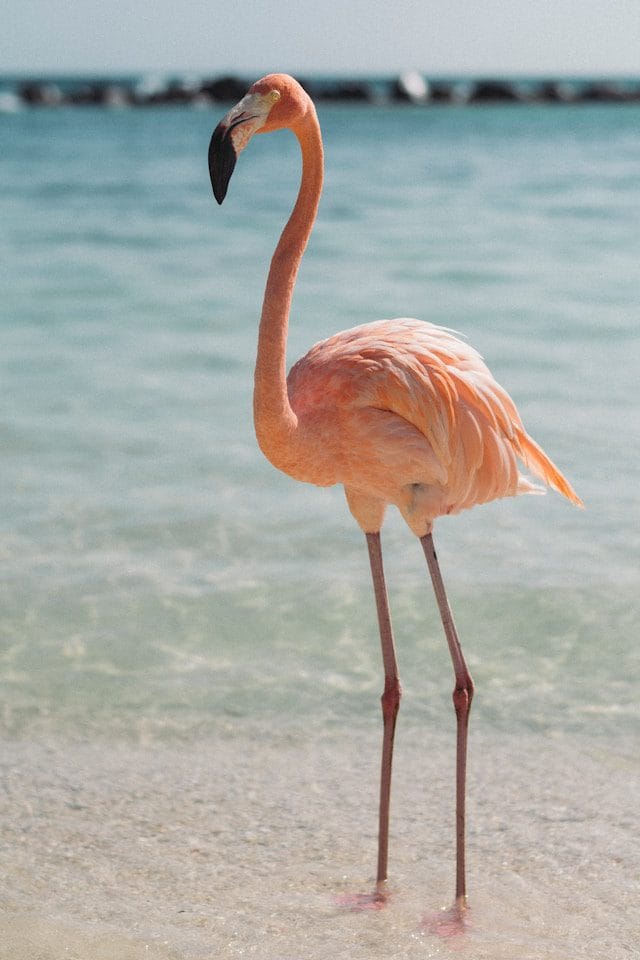
Flamingos are a type of wading bird in the Phoenicopterus genus, the only genus in the Phoenicopteridae family and the only family in the order Phoenicopteriformes. The scientific name for a flamingo is "Phoenicopterus", derived from the Greek words "phoenix", meaning crimson or purple, and "pteron", which translates to the wing. This nomenclature reflects not only their striking pink feathers, which are a result of carotenoid pigments in their diet, but also highlights their extraordinary adaptability in various ecosystems.
The unique family Phoenicopteridae includes several species of flamingo, each with its unique scientific name:
The naming convention showcases a blend of beauty and mystery that accompanies these elegant birds. However, among the four flamingo species distributed throughout the Americas, including the Caribbean and two species native to Afro-Eurasia.
Flamingos are amazing creatures that are often associated with beauty and grace. Here are some interesting facts and features about these fascinating birds:
Flamingos are iconic, tall wading birds known for their bright pink feathers with reddish hues. They have extremely long, slender, black legs, long, curved, flexible, S-shaped necks, and small heads with downward-bent bills that make them stand out in a crowd. Flamingos also have a large, muscular tongue, webbed feet, large wings and short tails. They spend most of their time wading in shallow water, looking for food. Adult flamingos' plumage ranges from pale pink to deep red, with black flight feathers, and they have yellow eyes. Younger flamingos have grey eyes for the first year of their life and start with grey or white plumage, which only develops their brilliant colours as they accumulate their nutrients over time. They are very social creatures and live in large flocks known as colonies, where thousands gather to roost together, an impressive sight that emphasises their communal nature, but they can also be found alone or in pairs. During the breeding season, these birds engage in elaborate courtship displays, when they flash their wings and form synchronised movements, which create an enchanting, graceful dance, a mesmerising spectacle of colour. In addition, when excited or feeling threatened, flamingos will raise their heads, open their beaks wide and shake their heads from side to side, which is called "head flagging". However, flamingos are excellent swimmers, but when they aren’t swimming or eating, they like to stand on one leg and rest. These birds are incredibly graceful flyers, but are not the fastest or strongest flyers. When flamingos fly, they form a V-shaped formation, and their black flight feathers are visible during flight.
Flamingos typically range in height from 3 to 5 feet, length about 2.11 to 4.11 feet, wingspan ranges from 3 to 5.4 feet, and they weigh about 2.5 to 4 kilograms.
However, flamingos' anatomy is well-adapted to their wetland habitat. Their long, strong, slender, black legs help them stand on one leg for long periods and wade through shallow water in search of food. Flamingos' long, flexible necks, with 19 vertebrae, also help them reach deep into the water to find their favourite foods. Their small heads and long, curved beaks are specially adapted to filter out tiny food items or small organisms from shallow waters. When flamingos find something to eat, they quickly scoop it up with their long, curved beaks, using comb-like plates called lamellae to filter food from water and mud, and swallow it whole. Interestingly, they get their colour from the food they eat, which contains high levels of alpha and beta-carotene pigments, and their bright pink or red feathers primarily serve to signal health and vitality, attract mates and protect from sunlight. Their colouration acts as a display of genetic fitness, with brighter birds often being preferred. Flamingos' large, muscular tongue is also used for filtering. Interestingly, they can drink extremely hot (near boiling) and highly saline or alkaline water (up to 60°C or 140°C F) due to specialised glands that remove excess salt. They can use their wings to help balance themselves, while their webbed feet also help them wade through the water and walk on soft surfaces. Additionally, flamingos' talons are sharp enough to kill an animal with one strike.
Flamingos are interesting creatures which are known to stand on one leg for long periods. Some people believe that this helps them to conserve body heat. Some scientists believe that it is an energy-saving tactic, while others suggest that the pose helps to keep a foot warm by reducing exposure to the cold ground. They often stand on one leg while resting. Their long, slender, black legs help them to wade through shallow water in search of food. A Flamingo's legs can be up to 4 feet long, which is half the length of its body. The majority of a flamingo's height comes from its long legs. A flamingo's leg consists of 4 bones:
The femur is the longest and strongest bone in the body, while the tibia is the second-longest bone. The fibula is a thin, rod-like bone that runs parallel to the tibia, while the patella is a small, flat bone located at the knee joint. Flamingos can stand on one leg for long periods due to their strong leg bones. This unusual ability is made possible by an adaptation known as counterbalancing. Counterbalancing occurs when a bird shifts its weight so that the majority of it is supported by one leg.
The habitat of the flamingo is as fascinating as the bird itself, reflecting a unique interdependence with its environment. These elegant creatures are wading birds and live in warm climates. They are primarily found in shallow, saline or alkaline wetlands like lagoons, saltpans, mudflats, lakes, rivers, coastal wetlands, estuaries, and other water bodies, with a large supply of algae, small organisms and seeds to eat. These vibrant birds prefer areas that are rich in mudflats and salt pans where they can effectively filter their food, primarily algae and brine flies, using their unique beak and tongue. The intricate ecosystems of saline and alkaline water bodies support not only flamingos but also a plethora of other wildlife that thrive in these brackish environments. They also prefer open water with soft mud for nesting, utilising diverse spots from coastal areas to man-made saltworks. Interestingly, certain species have adapted to more extreme environments, such as the high-altitude saline lakes of the Andes mountains or even the hyper-saline conditions of some Caribbean islands, while some species prefer warmer climates, and some can be spotted in temperate zones during migration when food becomes scarce, showcasing an impressive resilience to changing temperatures.
When it comes to distribution, the 6 different species of flamingos reveal an astonishing pattern influenced by geography and climate. These birds are widely distributed across tropical and subtropical regions in two main groups:
In the Americas, the range extends from Southern Canada to Northern Argentina. For example, the American flamingo (Phoenicopterus ruber) is found in Florida, the Bahamas, Cuba, parts of Mexico, Venezuela, Colombia, Brazil, and the Galapagos Islands. The other 5 species are the Andean flamingo (Phoenicoparrus andinus), which is found in the high-altitude wetlands, salt lakes and saline lagoons of the Andes Mountains in South America and spans across Argentina, Bolivia, Ecuador, Chile, and Peru (usually at elevations between 2,300 and 4,800 meters). The James’s or Puna flamingo (Phoenicoparrus jamesi) is found in the high altitude Andean plateaus (around 3,500 to 4,900 meters) of southern Peru, northeastern Chile, western Bolivia and northwestern Argentina, while the Chilean flamingo (Phoenicopterus chilensis) is found in the wetlands, high Andean lakes, and coastal lagoons throughout temperate South America. On the other hand, the Greater flamingo (Phoenicopterus roseus) is the largest and most widespread, ranging from Coastal Africa and Southern Europe to the Middle East and India. They inhabit saline lagoons, alkaline lakes and brackish wetlands, while the Lesser flamingo (Phoeniconaias minor) is found in sub-Saharan Africa, the Rift Valley lakes of Eastern Africa, Namibia, Botswana, Mauritania, and western India.
The greatest concentration of flamingos in the world is in Kenya’s Rift Valley. The largest flamingo colony inthe world is located in Kenya’s Lake Bogoria, which is home to over 2 million flamingos. However, flamingos were once found in Spain and the Canary Islands, throughout Russia and Kazakhstan, India and Vietnam, the Western Hemisphere and the Eastern Hemisphere.
There are six distinct species of flamingos, which are categorised into 3 main genera:
They are distinguished by their striking pink or red feathers, size and habitat. However, the most common types of flamingos include the:
Each species boasts unique characteristics and adaptations.
Greater Flamingo (Phoenicopterus roseus): It is the largest and most widespread species, known for its vibrant pink colouration and impressive wingspan that can reach over 5 feet. It comes from carotenoid pigments found in its diet of algae and crustaceans. Their iconic long legs and necks not only enhance their elegance but also serve practical purposes; these adaptations allow them to wade efficiently through shallow waters while foraging for food. Greater Flamingos are often found in Europe, Africa, and parts of South Asia.
Lesser Flamingo (Phoeniconaias minor): This species is the smallest of all flamingos and the most abundant. The Lesser Flamingo stands out due to its deep pink plumage, bright red eyes and a dark, maroon-coloured bill, thriving primarily in the saline lakes of sub-Saharan Africa and also found in western India. Their preference for more alkaline waters is often found in shallow lakes where blue-green algae thrive, a significant component of their diet that influences their colouring. There are more than 2 million lesser flamingos brightening skies and shores with their pink plumage.
American Flamingo (Phoenicopterus ruber): It is a large species of flamingo, also known as the Caribbean Flamingo, that graces coastal areas with their stunning pink to crimson plumage and orange hue, attributed to carotenoid pigments found in shellfish and plants. This flamingo is native to Mexico, the Caribbean, Galapagos and the northernmost tip of South America.
Chilean flamingo (Phoenicopterus chilensis): It is related to the American Flamingo and the Greater Flamingo, but smaller in size. They have mostly black on their bill, greyish legs and pink joints. The Chilean flamingo is found throughout the temperate South America.
Andean Flamingo (Phoenicoparrus andinus): This species has distinctive yellow-orange plumage on its face, legs and feet. The Andean Flamingo boast a pronounced black-tipped bill ideal for sifting through sediment in high-altitude lakes. It is a more elusive cousin of the flamingo. This flamingo inhabits the salt flats of the high Andes mountains in South America, demonstrating incredible adaptability to harsh climates where temperatures can fluctuate dramatically.
James's Flamingo (Phoenicoparrus jamesi): This species is also known as the Puna Flamingo. It has bright, red carmine spots around the eyes, a mostly yellow with black-tipped bill, and red-lined wings, like the Andean Flamingo, showcasing delicate colour gradations that reflect their lagoon habitat. James's Flamingos are also found in the high-altitudes in the Andean plateaus of Peru, Chile, Bolivia, and northwestern Argentina.
These birds are fascinating creatures that have many unique characteristics. Flamingos are highly gregarious, waterbirds known for their vibrant pink plumage that live in warm climates. They have long, slender legs, long, graceful, sinuous necks, downward-bent bills, large wings and short tails. Flamingos range from about 3 to 5 feet tall and weigh about 2.5 to 4 kilograms. They are also known for standing on one leg, which may help them retain body heat. Flamingos are frequently associated with warm, shallow coastal waters to hyper saline or alkaline lakes where they thrive in an environment rich in nutrient-dense mud. The need for saline conditions has led these exquisite birds to gracefully adapt; their specialised feeding mechanisms allow them to filter through fine sediments or mud while extracting tiny organisms like brine shrimp and algae that give them their iconic colouration. Flamingos are very social creatures and live in large flocks, but can also be found alone or in pairs. These birds create remarkable communities known as colonies, often numbering in thousands, which help to enhance breeding success through synchronised mating behaviours and communal protection against predators. Flamingos will mate for life and build their nest out of the mud near freshwater sources, where they lay a single egg. These birds play vital roles in maintaining their aquatic environments. Their feeding habits aerate sediments at the bottom of lagoons and marshes while recycling nutrients that promote healthier ecosystems.
Flamingos are wading birds that thrive in large, shallow water bodies like pans and saline or alkaline lakes. These striking birds predominantly inhabit salt flats, lagoons, mudflats and estuaries across tropical and subtropical regions around the globe, where they forage for brine shrimp, algae, other organisms and microorganisms. Flamingos inhabit every continent except Antarctica, including Europe, Asia, Africa, North America, and South America. The lush ecosystems serve not just as a buffet but also as breeding grounds; by building their nests from mud sediments on floating islands or shallow banks, flamingos ensure both safety from predators and access to abundant food sources during harsh conditions. From the vibrant pink colonies of the Caribbean to the stark white beauty of Lake Urmia in Iran, each habitat reveals a unique ecological tapestry that supports flamingo populations.
Flamingos are omnivorous birds. They are filter feeders, meaning these birds strain small organisms out of the shallow, saline or alkaline water to eat. They consume a wide variety of food, including blue-green algae, diatoms, brine shrimp, other crustaceans (like krill and small crabs), small molluscs, insect larvae, small worms, small fish, plant seeds, and other small aquatic animals from shallow water, using their upside-down beaks as nets. But flamingos' diet mainly consists of algae and invertebrates, including crustaceans (like brine shrimp, krill and small crab), other small crustaceans (like copepods, ostracods and fly larvae) and other small invertebrates (like molluscs). They get their bright pink or red colour from the pigments (alpha and beta-carotene) in the food they eat, especially algae and shrimp. Additionally, they will also eat small fish occasionally. Furthermore, these diet also helps to keep their feathers from getting stained by the mud and water they wade through to find food. At the same time, most flamingos eat small prey. There are some instances where they have been known to eat larger animals. In one case, a flamingo in Africa was seen swallowing a baby gazelle whole.
When it comes to their prey, flamingos' long necks and legs help them wade into the water to find their prey. In addition to their long necks and legs, different flamingo species have specialised curved bills that help them filter out tiny food items. During foraging for food, they employ their hunting techniques, where they submerge their heads in the water and hold their beaks upside-down, with the tips pointing backwards. They use their unique beaks and feet to stir up the water and mud or sediment at the bottom of lakes or lagoons. Interestingly, to get their food, flamingos use their beaks to scoop up water and mud, and use their large, rough tongue to pump water in and out of the beak. While water flows out, the comb or hair-like plates (lamellae) inside their beaks trap or filter those tiny organisms from mud and water. Then flamingos swing their heads back and forth to strain out the food before swallowing it. Moreover, they can generate vortexes and use "chattering" beak movements to trap agile prey. This activity not only allows them to get a meal but also cleans the waterway.
Flamingos have interesting behaviours with a unique lifestyle that makes them stand out from other birds. They are also known to be very friendly birds and will often approach humans. Flamingos are quite clumsy on land. They often trip and fall while wading in shallow water. Flamingos are filter feeders and spend most of their time wading in shallow, saline, alkaline and brackish water in search of food, where they use their webbed feet to stomp on mud or sediment, stirring up food sources like brine shrimp, diatoms, blue-green algae, and small organisms. Unlike most other birds, they feed with their heads upside down, using their specialised tongue to pump water in and out of their downward-bent bills while trapping food with the comb-like structures called lamellae. When flamingos aren’t searching for food or interacting with others, they can be found resting on one leg or taking a dip in the water, a behaviour which may help conserve their body heat in cool water and reduce muscle fatigue. They spend a great deal of their time preening their feathers with their beaks. This helps to keep their feathers waterproof. Flamingos do not have to drink very often because they are constantly wet, and it also keeps them cool. Another interesting behaviour is their "head flagging". When a flamingo gets excited or feels threatened, it will raise its head and open its beak wide while shaking its head from side to side. They often engage in playful behaviour with one another. Flamingos are excellent swimmers and can even fly. Despite their long legs, they are strong fliers, often flying in a V-shaped formation similar to geese. Flamingos are not true migratory birds, but they are highly nomadic and will fly hundreds of kilometres, often at night, to find suitable food and water levels.
Flamingos are highly gregarious social birds and often live in large colonies called " flamboyances". Flocks numbering in the thousands may be seen in long, curving flight formations and wading groups along the shore, which helps them defend against predators and maximise food efficiency. They are not the most vocal of birds, but they are noisy and make a variety of vocalisations to communicate with each other using a variety of sounds ranging from grunting and growling to goose-like honks, including cackles and screams, which are important for maintaining group cohesion, especially in the air. During the breeding season, they engage in elaborate courtship dances that involve complex, synchronised movements like head-flagging, wing-saluting, and marching displays, and even vocalisations unique to each flock, which create an enchanting, graceful dance, a mesmerising spectacle of colour and help to synchronise mating within their colony. Flamingos typically mate for life (monogamous) and build a nest together. They will build their volcano-shaped nest out of the mud near water sources, where they lay a single egg. Both parents help to incubate the egg and care for the chick once it hatches. They build their nests close to each other so that they can watch over each other’s eggs and young. Flamingos thrive in harsh and inhospitable environments, including high-altitude volcanic lakes, hypersaline lagoons, and tidal flats. They eat by scooping up water and mud with their beaks, pump water in and out and then swallow trapped crustaceans, algae, molluscs and small organisms. This diet is high in alpha and beta carotenoid pigments, which give them their characteristic pink, red or white colouration, depending on the species and food availability. A healthy, well-fed flamingo is more vibrant in colour, while malnutrition can turn them pale. They are active both day and night, but feeding often occurs at night, while resting and preening occur during the day.
Flamingos are highly social birds and often mate for life (monogamous), maintaining the same partner for several breeding seasons and residing in large, densely packed colonies called " flamboyances". However, they don't have any strict annual breeding season, but their reproduction is highly dependent on rainfall, which ensures enough food is available for both parents and chicks. When it comes time to reproduce, both male and female flamingos will carefully inspect potential mates before entering into a relationship. Once they have found a suitable partner, the pair make a courtship ritual, which involves complex, synchronised movements like head-flagging, wing-saluting, twisting their heads and marching displays, which create an enchanting, graceful dance, a mesmerising spectacle of colour. Even their vocalisations also help to synchronise mating within their colony. Then they will build a volcano-shaped nest together out of mud, sticks, stones and reeds near water bodies, which is roughly 12 to 24 inches high to protect their egg from flooding and high heat, where the female lays a single, chalky-white egg, usually between May and August. Both parents take turns incubating the egg, and it takes about 27 to 31 days for the egg to hatch. They build their nests close to each other so that they can watch over each other’s eggs and young.
Once the baby flamingo hatches, it is covered in grey or white feathers, fluffy down feathers with straight, pinkish-red bills. They can immediately stand and walk on their stilt-like legs. After hatching, the parents care for and feed the chicks a nutrient- rich red substance, called "crop milk", which is produced by both parents in their digestive tracts and is high in protein and fat. At about 2 weeks old, chicks leave their nest and join a large group called a "creche", which are large group of thousands of younglings supervised by a few adults, while parents go off to feed. They can fly and feed on their own within a few months (at about 70 to 90 days old), though they may be fed by their parents for up to 2 months, and young flamingos remain with their parents until they reach adulthood. It takes about 2 to 3 years for baby flamingos turn pink as they mature and accumulate their nutrients over time. However, flamingos reach sexual maturity at 3 to 6 years old, but often do not breed until they are around 6 years old.
Flamingos are long-lived wading birds. They can live between 20 and 30 years in the wild, though some may reach 40 years or more. Flamingos have been known to live even longer in captivity, with an average lifespan of 50 to 60 years, due to a lack of predators and consistent food. For example, a Greater Flamingo named "Greater" lived to be at least 83 years old at the Adelaide Zoo in Australia.
Flamingos are often considered to be one of the most beautiful birds in the world. However, these creatures face many predators and threats. Adult flamingos have few natural predators due to their harsh, saline habitats. The primary predators of flamingos are large raptors (like eagles, vultures, hawks), storks, hyenas, jackals, baboons, large cats (like lions, leopards, cheetahs), big snakes, alligators, and crocodiles in some regions. These animals often attack young flamingos or sick adults, while eggs and chicks are generally vulnerable to marabou storks, vultures (like lappet-faced, white-headed, Egyptian), eagles (like martial, tawny, fish eagles), and yellow-legged gulls. Flamingos may be attacked by mammals, particularly when low water levels allow access to nesting sites.
Flamingos primarily defend themselves from these predators by living in massive, tight-knit colonies that provide safety in numbers and constant vigilance. These birds can run quickly to escape predators and rely on swift flight for escape, but will also use aggressive, coordinated threat displays, such as lunging with open bills and raised feathers, to deter smaller predators.
Flamingos are under threat from human activity, including fishing, egg harvesting, tourism, and collisions with power lines. Humans are the biggest predators of flamingos because they hunt flamingos for their meat, feathers and eggs. In some cultures, flamingo meat is considered a delicacy. Due to human activity, flamingos also face the threat of habitat loss, such as pollution, development and farming. These activities have caused a decline in the population of prey species, which has led to a decrease in the number of flamingos. Additionally, climate change is causing ocean temperatures to rise and leading to rising sea levels, which is affecting the food chain and further decreasing the number of flamingos, while the drying of lakes and changing rainfall patterns can cause breeding to fail, as it also affects the food supply required for raising chicks.
The global flamingo populations vary significantly by species, with estimates ranging from roughly 38,000 to over 3 million individuals, depending on the species and reporting source. The Lesser flamingo (Phoeniconaias minor) is the most populous, estimated at 2.2 to 3.2 million. It is classified as Near Threatened, while the Greater flamingo (Phoenicopterus roseus) is estimated at 550,000 to 680,000 and is classified as Least Concern. On the other hand, the Chilean flamingo (Phoenicopterus chilensis) is estimated at 300,00 to 400,000 individuals, the American or Caribbean flamingo (Phoenicopterus ruber) is estimated at 150,000 to 205,000 individuals, the Andean flamingo (Phoenicoparrus andinus) is estimated at 34,000 to 38,000 individuals and is classified as Vulnerable, and the James's or Puna flamingo (Phoenicoparrus jamesi) is estimated at around 100,000 individuals. In some parts of the world, such as the Caribbean, they are now considered an Endangered species. There are an estimated 1 million to 2 million flamingos in the world.
The total populations are often in flux due to tracking food sources, with roughly 1.5 to 2.5 million individuals in East Africa, mainly the Lesser flamingos. The population is significant in India, approximately 650,000 individuals, where over 140,000 Greater and Lesser flamingos were recorded in 2019, with the majority in Maharashtra and Gujarat. On the other hand, the population is estimated at 89,900 and 125,000 mature individuals in Europe.
Flamingos typically live in large colonies called " flamboyances", consisting of several hundred to several thousand individuals. The largest flamingo colony in the world is located in Kenya’s Lake Bogoria, which is home to over 2 million flamingos. The largest population of flamingos in Africa, where these birds can be found near lakes and rivers. The flamingo population have declined sharply in recent years due to habitat loss and environmental degradation.
Flamingos, with their striking pink plumage and elegant posture, are more than just a visual delight; they play a crucial role in maintaining the health of their ecosystems.
Flamingos, with their striking pink plumage and elegant stance, bring a splash of colour and whimsy to zoo environments. While many may think of these birds solely as attractions due to their vibrant appearance, there’s an intriguing narrative behind why they congregate in large groups. In the wild, flamingos often gather in flocks for social interaction and breeding purposes; this instinct remains even in captivity. Observing them interact can reveal layers of communication that mirror our social behaviours, whether it’s through synchronised movements or vocalisations that echo across the aviary.
Flamingos are adaptable birds and can also live in captivity. In zoos and aquariums, they are typically housed in warm climates and large ponds with plenty of room to swim and wade. They are also given a diet of specially formulated pellets that contain all the nutrients they need. Moreover, the diet of flamingos plays a pivotal role in maintaining their hue. Contrary to popular belief, they're not born pink but rather grey; it's the carotenoids from their food, primarily algae and crustaceans, that contribute to their vivid colouration. Zoos strive to replicate this diet as closely as possible, offering enriched feeding programs that enhance not just aesthetics but also overall health.
In captivity, zoos provide an opportunity to educate the public about flamingo conservation and habitat preservation. Many species face threats from climate change and habitat destruction; thus, witnessing these vibrant birds up close can inspire individuals to become advocates for environmental causes. Zoos not only offer a refuge for flamingoes but also serve as critical hubs for research and breeding programs aimed at protecting these iconic creatures and ensuring future generations have the chance to admire their beauty.
The classification of flamingos reveals a fascinating glimpse into their biological uniqueness. Belonging to the family Phoenicopteridae, these striking birds are divided primarily into six species: the greater flamingo, the lesser flamingo, the American flamingo, the Chilean flamingo, the James's flamingo, and the Andean flamingo. Each species has adapted uniquely to its environment; for instance, while the greater flamingo thrives in various habitats worldwide, from Europe and Africa to Asia, the lesser flamingo is more specialised, often found exclusively in alkaline lakes of sub-Saharan Africa. This diversity hints at a rich evolutionary history shaped by geography and ecological niches.
The evolution of flamingos is particularly intriguing as it provides insight into their adaptive strategies. Fossil evidence suggests that ancient relatives of modern-day flamingos existed as far back as 30 million years ago. They originally emerged from wading birds that occupied wetlands, but diverged significantly due to changes in climate and habitat over millennia. With specialised feeding habits driven by their elongated necks and unique beak morphology, an adaptation that allows them to filter feed on small algae and crustaceans in shallow waters, flamingos have not only survived but flourished in environments typically challenging for other avian species. Interestingly, their unique morphological traits highlight how environmental pressures shape not only physical adaptations but also behavioural patterns as seen in their complex courtship displays. This relationship between morphology and ecology underscores how evolution continuously shapes a lineage’s trajectory in response to environmental pressures while highlighting the intricate web of life woven through time.
Flamingos have captivated humans for centuries, inspiring not just admiration but also a multitude of cultural interpretations. Their striking pink plumage and social behaviour evoke a sense of wonder that transcends mere observation; these birds frequently serve as symbols of beauty and elegance in art, fashion and even culinary presentations.
Moreover, flamingos’ unique courting rituals and communal nesting practices offer deeper insights into the complexities of social bonds in avian life, mirroring some aspects of human relationships. These birds thrive on community dynamics where cooperation enhances survival chances; similarly, humans flourish in interconnected networks that provide support and collaboration. This parallel invites us to reflect on the significance of community in our lives while fostering a stronger connection with nature.
Modern interactions between flamingos and humans frequently highlight conservation efforts towards preserving these majestic birds in their natural habitats. Ecotourism has emerged as a double-edged sword; while it raises awareness about the threats faced by flamingo populations due to habitat loss, it also poses challenges through increased foot traffic in sensitive environments. Engaging with flashes of pink at lagoons or wetlands invites us not just to marvel at their beauty but also to reflect on our responsibilities as stewards of the natural world. The relationship is evolving, filled with both celebration and urgency, a reminder that our actions today shape the legacy we leave behind for future generations of both humans and wildlife alike.
The flamingo population are in decline around the world, and the bird is now classified as vulnerable on the IUCN Red List. While many species, like the Greater Flamingo and the Lesser Flamingo, are currently classified as Least Concern by the IUCN Red List, localised populations can still face significant threats due to habitat loss due to human activity, but the birds are also hunted for their meat and feathers. Pollution, climate change, degradation of agriculture and water extraction have a significant impact on nesting sites, crucial areas that these iconic birds rely on for breeding.
Notably, in regions where salt flats and lagoons have been drained or compromised, such as along parts of Africa's Great Rift Valley, flamingos face dwindling resources. Wetlands, critical for breeding and feeding, are increasingly vulnerable to urban development and agricultural expansion. For instance, in parts of Africa and South America where industrialisation is rampant, flamingos are forced to compete for dwindling resources.
In contrast, the Andean Flamingo stands out with its endangered status. This majestic bird’s survival is tied closely to high-altitude wetlands that are under siege from mining activities and water diversion for agriculture. Interestingly, conservationists have begun integrating local communities into protection strategies; these initiatives not only help safeguard habitats but also foster cultural pride in preserving this iconic species.
Flamingos and cranes, while both graceful avians often found in wetlands, showcase striking differences in appearance, behaviour and habitat.