
The woodpecker is a unique bird that has intrigued people for centuries. With their characteristic drumming sound, these birds have become a recognisable part of the natural environment for many. This species of bird is found on every continent in the world, with over 200 different varieties. They belong to the family Picidae, and are divided into 3 main groups: Piciformes, Sapsuckers and Flickers. Each group has distinct characteristics that make it unique from the others. Some species also have colourful plumage, which is usually more pronounced in males than in females. Male Woodpeckers often have brightly coloured heads and crests that make them highly visible during mating season. Woodpeckers are commonly found across every continent except Australia, New Zealand, New Guinea, Madagascar and the Polar regions. They are generally associated with trees and forests, but many species also inhabit deserts, alpine regions, grasslands and even urban areas. Woodpeckers have amazing physical characteristics that allow them to access their favoured food sources, insects living inside tree trunks and branches. They use their long beaks to hammer away at the bark of a tree or shrub to expose hidden insect larvae or other tasty morsels. In addition to their strong beaks, woodpeckers have long tongues which can extend up to 4 inches into tiny crevices where insects hide. Their legs, feet and feathers are adapted for clinging to vertical surfaces, allowing them to reach deep crevices without falling off. Woodpeckers play an important role in the ecosystem as they help to aerate and fertilise soil through their drilling activities.
Woodpecker
Picidae
15-55 cm length, wingspan 35-75 cm
65-563 gm
4-11 years
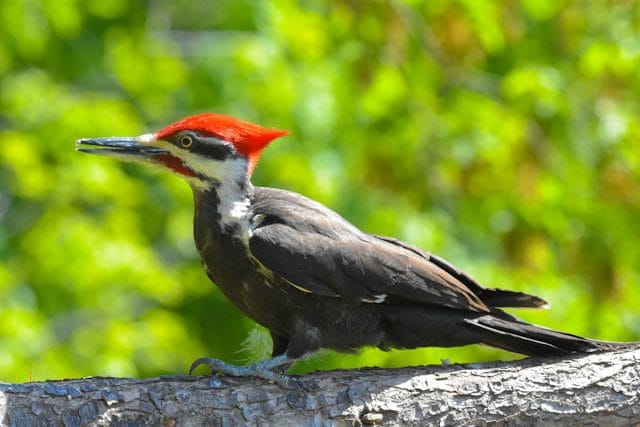
Woodpecker, often associated with its loud and characteristic drumming sound, is found worldwide. This bird belongs to the same order, "Piciformes", as toucans, puffbirds, and jacamars. Woodpecker is a member of the family Picidae, which includes its near relatives the Sapsuckers, Wrynecks and Piculets, while the subfamily of Woodpeckers is Picinae, which has a variety of 180 birds, including "true Woodpeckers". Picinae is one of three subfamilies within the family Picidae. The other two subfamilies are Picumninae (Piculets) and Jynginae (Wrynecks).
So, the scientific name of the Woodpecker is "Picidae". Woodpeckers have over 200 species, each with its own scientific name. The popular species include the Downy Woodpecker (Picoides pubescens), the iconic Pileated Woodpecker (Dryocopus pileatus), the Himalayan Woodpecker (Dendrocopos himalayensis) and the Red-headed Woodpecker (Melanerpes erythrocephalus). All woodpeckers share similar physical features. They are famous for pecking into the woods. Most of the time, they are found on the trunk of a tree, striking into the woods to find insects.
Woodpeckers are amazing creatures with features and some very interesting facts.
Woodpeckers are a species of birds, known for their specialised adaptations that allow them to peck into wood to extract insects and for nesting purposes. These birds are found in various regions of the world. They have distinctive appearances and unique anatomies that make them stand out from other types of birds. Woodpeckers have stout, rounded bodies with short necks, small heads, long chisel-like bills, short yet strong legs with sharp claws, and powerful tails with spikes at the tips. Woodpeckers also have long tongues, which sometimes extend up to a third of their body and have barbs or a sticky tip, while some species have brush-like hairs at the tip of their less extendable tongue, specialised for lapping up tree sap. They also have a wide variety of plumage across species. Their feathers are mostly iridescent black or feature spotted combinations of black and white, making them easily visible in trees or on the ground. Some species exhibit shades of brown, olive, and grey. Many species also exhibit sexual dimorphism, with males often having more prominent red or yellow feathers or crests on their heads, which gives them an eye-catching look that is absent in females. While some species can raise their crests, most species have distinctive markings on their heads. Woodpeckers also have brightly coloured wing feathers, like grey, green, red, yellow and blue, which depend on their species. For example, the Black-backed Woodpecker and Great Spotted Woodpecker have green-tinted wings. Woodpeckers' strong legs are equipped zygodactyl foot structure with sharp claws, where two toes face forward and two toes face backwards. Some species, like the Black-backed and Three-toed Woodpeckers, have only three toes. Interestingly, each species has developed distinct calls and drumming patterns used for territory defence and mate attraction. The Eurasian Green Woodpecker (Picus viridis) is known for its loud call that resembles laughter. Additionally, woodpeckers often fly with a bounding or undulating pattern, where they rise with a few flaps and then glide downward.
Woodpeckers exhibit a wide range in size, from the small 3-inch Bar-breasted Piculet to the 6-inch Downy Woodpecker and the crow-sized 20-inch Pileated Woodpecker to the possibly extinct 22-inch Imperial Woodpecker. Additionally, some woodpeckers' wings are also quite large, which can reach over 2 feet, making them capable of soaring in the sky. For example, the Pileated Woodpecker has a wingspan of 66 to 75 cm, while the Ivory-billed Woodpecker, though possibly extinct, was known to have a wingspan of roughly 76 cm, and the Black Woodpecker has a wingspan of 64 to 84 cm.
When it comes to their anatomy, woodpeckers use their long and strong, chisel-shaped bill for drilling into wood to find food and build nests. Some species have straighter bills for excavating hardwood, while others, like Northern Flicker, have slightly curved bills for probing crevices. Their skull with a specialised spongy bone structure between the bill and brain, designed to absorb shock during relentless pecking and act like a safety belt. It is a marvel of evolution that allows them to strike trees up to 20 times per second without sustaining injury. Woodpeckers' strong neck muscles also protect their brains, minimise the risk of brain injury and enable them to withstand high impact, while their long-sticky tongues help them extract insects from hidden bark or deep crevices in trees. Some species, like Sapsuckers, less extendable tongue have brush-like hairs at the tip that act like a paintbrush to absorb sugary liquid. Woodpeckers' eyes are shielded by special eyelids, called the nictitating membrane (a transparent third eyelid), that close before each strike to protect against debris when pecking into trees. Many woodpeckers have narrow nostrils and are covered with stiff feathers (nasal tufts) to protect them from inhaling wood particles and debris during pecking. Their zygodactyl feet with sharp claws also enable them to cling to tree trunks while they pound away, and help them grip onto surfaces better. Additionally, woodpeckers' stiff, pointed tail feathers act as a brace against the tree trunk as a prop when clinging to the tree and pecking at the wood, creating a tripod effect to provide stability and support.
Woodpeckers are fascinating avian engineers, carving out their habitats in a variety of ecosystems. They are found in a wide variety of habitats across the globe. Woodpeckers thrive primarily in forests, ranging from dense tropical jungles to temperate woodlands. This type of beautiful bird has adapted to many different habitats and can be seen living in mature deciduous forests, cold coniferous forests, open savannahs, grasslands, deserts, agricultural environments, mountain slopes, swamps, wetlands and other natural areas. Woodpeckers may also inhabit rivers or lakes since these conditions provide ample food sources such as fish and aquatic insects. They require trees for foraging, nesting, and roosting, with a preference for open woodlands with plenty of dead trees or snags, which provide both food sources and a safe place for them to rest in between their drilling activities. Beyond traditional woodland areas, some species have adapted remarkably well to urban environments and suburban areas with sufficient trees, tapping into the abundant resources provided by landscaped parks and street trees. Some species are more adaptable and can tolerate forest fragmentation, secondary growth, plantations and orchards, while some woodpecker species migrate within temperate zones and have evolved to specialise in different forest niches, such as ground foraging, sap-drinking, or foraging in specific tree types.
Woodpeckers have a wide distribution across the continents, except for a few isolated regions, like Australia, New Zealand, New Guinea, Madagascar and Antarctica. With over 200 different species that occupy different habitats where they can find food sources and a safe place to rest. From the rugged mountain ranges of North America to the tropical rainforests of Central America, these birds are found across diverse landscapes. It is an iconic bird of North America and is a familiar sight to many. These birds can be found as well as the subtropical forests of South America, parts of Asia and Africa. In North America alone, there are about 28 species of woodpecker that can be found from Southern Canada down to Central and Northern Mexico to the Yucatan Peninsula. They are more abundant in South America and in Southeast Asia. South America has the highest diversity of woodpeckers, with between 85 and 92 different species. However, the tropical and subtropical forests in Central and South America are major hotspots for woodpecker species richness. These birds have carved a niche for themselves by tapping into different environments. In Europe, these birds breed mainly in countries such as France, Germany, Italy and Spain, but they have also been sighted further east near Turkey and Kazakhstan. Interestingly, as climate patterns shift due to global warming, woodpeckers’ distribution may also change; species typically confined to specific habitats could expand their territorial ranges or alter their nesting behaviours in response to temperature variations and altered food availability.
The International Ornithological Committee (IOC) recognises 240 species of woodpeckers, which make up the family Picidae. They are distributed among 35 genera, seven of which have only one species.
Though there are many different species of woodpecker, the most common types include the,
Some species have subspecies that share similar characteristics or occupy similar niches in different regions. For instance, the Downy Woodpecker in North America and the Great Spotted Woodpecker in Europe are both small and common birds in these regions.
The Downy Woodpecker (Picoides pubescens) is the common woodpecker in North America. It is the smallest woodpecker, measuring about 14 to 18 cm long and can easily be mistaken for the larger Hairy Woodpecker. The downy woodpeckers have short bills and pale bellies with checkered black-and-white plumage and dappled back, while the male has a small red patch on the back of their head. It is very similar in appearance to the Hairy Woodpecker, although they are not closely related. Downy Woodpeckers nest in tree cavities and feed primarily on insects, with supplements including seeds and berries. They live in young woodlands and can be found in towns, city parks and backyards. This bird is primarily found in forested areas throughout the United States and Canada, except for deserts in the southwest and the northern tundra.
The Pileated Woodpecker (Dryocopus pileatus) is native to North America, easily recognisable by its vibrant red crest that resembles a fiery crown, white neck stripe, and solid black body. This striking bird has black-and-white underwings that flash when it flies. It is an iconic symbol of North American woodlands. Unlike many of its woodpecker cousins, this species boasts an impressive wingspan of 66 to 75 cm, making it one of the largest woodpeckers on the continent, aside from the extinct ivory-billed woodpecker. Beyond its impressive size, often compared to that of a crow, the Pileated woodpecker is known for its incredible drumming on trees. This woodpecker primarily feeds on insects and is famous for making large, nearly rectangular carvings into trees, which they use to extract prey or to make a nest. They are the third largest extant species of woodpeckers in the world, after the Great slaty woodpecker and the Black woodpecker.
The Red-necked Woodpecker (Campephilus rubricollis) is native to mainland South American countries and is fairly common in Colombia, Venezuela, across the Guianas and south through Amazonia to northern Bolivia, except for Argentina, Chile, Paraguay and Uruguay. It is a large, red-and-black woodpecker of the rainforest. Both sexes have a pale bill, a deep red head, neck, and underparts with a black back and wings. Their natural habitats are tropical or subtropical moist lowland forests and tropical or subtropical moist montane forests. The Red-necked Woodpecker exhibits its nasal "ng-kah" call and territorial double knock that resonates throughout the forest.
The European Green Woodpecker (Picus viridis), also known as the yaffle and sometimes called a nickle, is native to most of Europe and western Asia, including countries such as the UK, France, Germany, and the Balkans. It can also be found in parts of northern Iran and southwest Turkmenistan. It is a large green woodpecker with a bright red crown and a black moustache. Males have a red centre to the moustache stripe, which is absent in females. Interestingly, they use their loud laughing mating call during breeding season, while they fly with an undulating pattern, whereby they bring their wings close to their body in between two wingbeats. This species replaced the similar Iberian Green Woodpecker, while India is home to its own species of green woodpecker, such as the Scaly-bellied Woodpecker, which is found in the Indian subcontinent.
The Common Flameback Woodpecker (Dinopium javanense), also known as the Common Goldenback or Common Goldenbacked Three-toed Woodpecker, showcases a vivid tapestry of colours that reflects its vibrant personality. Its striking appearance, adorned with a golden-yellow back and captivating black-and-white patterns on its wings, transforms the ordinary landscape into an extraordinary spectacle. This small, secretive bird also has a red crown, black throat and rump, and three-toed foot structure, often found in the lush forests of South and Southeast Asia. Thriving in woodlands, this woodpecker exhibits remarkable adaptability to various habitats, including urban areas where it can frequently be seen foraging on trees in parks or gardens. It is also known for its undulating flight and rattling-whinnying call.
The African grey Woodpecker (Dendropicos goertae), a strikingly vibrant bird, is known for its captivating plumage that features mossy green and grey hues on its body contrasted by a splash of crimson or fiery reds on its cap and tail. These medium-sized birds are impressive acrobats, expertly clinging to tree trunks and branches as they forage for insects hidden beneath the bark. Their unique markings and behaviours make them an essential part of the avian tapestry across various types of African forests and open savannahs. Native to Africa, this bird also thrives in mature woodlands, fragmented forests and even suburban gardens. They nest in a tree hole, often in an oil palm, laying 2 to 4 eggs. The African Grey Woodpecker is a widespread and frequently common resident breeder in much of Sub-Saharan and Equatorial Africa.
The adaptations of woodpeckers go beyond mere physical characteristics, and their behaviour is intricately linked to their anatomical features. Woodpeckers are often black and white with patches or crests of red or yellow on the head. They have strong bills that they use for drilling and drumming on trees. Woodpeckers' bills are typically longer, sharper, and stronger than the bills of piculets and wrynecks, but their morphology is very similar. Their long, sticky tongues are an incredible adaptation for extracting food (insects and larvae) from hidden deep crevices in trees, showcasing nature's ingenuity in problem-solving. Woodpeckers have a zygodactyl foot structure; each of their feet has two toes pointing forward and two toes pointing backwards, which creates a vice-like grip on tree trunks that facilitates their acrobatic feeding habits and reinforces skull structures that allow them to peck at hard surfaces without injuring themselves. Most woodpeckers fly with short swoops. They often fly with an undulating pattern, where they rise with a few flaps and then glide downward. Each species has developed distinct calls and drumming patterns used for territory defence and mate attraction; this acoustic diversity provides insights into behavioural ecology and communication strategies within avian populations.
Woodpeckers are found on all continents except Australia, New Zealand, Madagascar, Antarctica, and some isolated oceanic islands. They occur in all types of forests, savannas and woodlands worldwide, but are most abundant in South America and Southeast Asia. Woodpeckers are incredibly adaptable birds, often found in a variety of habitats that support their unique foraging and nesting behaviours. From lush forests to urban parks and landscaped gardens, these avian artisans thrive where old or dying trees provide ample food and nesting opportunities.
Woodpeckers are primarily insectivorous birds found in many parts of the world. It is identifiable by its short body and powerful, long beak, which is used to peck at trees and other surfaces for food. Their diet primarily consists of insects, such as ants, termites, beetles, larvae, caterpillars, bugs, spiders and wood-boring insects. Some woodpeckers are opportunistic omnivorous, supplementing their insect diet with nuts, fruits, berries, seeds (like sunflower and wildflower), tree sap and sip flower nectar that they find in trees, depending on the season. Woodpeckers are attracted to suet feeders, especially those stuffed with nuts or insects. Occasionally, they also consume small animals, like small birds, bird eggs, frogs, salamanders, rodents, lizards and even carrion, especially during seasons where insects are less available. For example, the Great Spotted Woodpeckers have been seen eating carrion.
Woodpeckers have adapted to find prey both in trees, air, and on the ground. They use their powerful, long, chisel-shaped bill to hammer, chisel, tap and peel bark to find insects, while they use their long, barbed tongues to extract insects or insect larvae from burrows or small holes in branches or trunks of trees. In addition to finding food, some species have straighter bills for excavating hardwood and some species, like Northern Flicker, will often use their slightly curved bills to probe hidden insects amongst bark or crevices. While some woodpecker species are known to store acorns in holes for later to keep themselves fed when other sources of food may not be available during the winter months, like the Acorn Woodpeckers, other species, like Sapsuckers are a specialised group of woodpeckers that drill holes into trees to drink sap and consume any insects that become trapped in the sticky liquid. However, some woodpeckers, like the Red-headed Woodpecker, also catch insects in mid-air. Woodpeckers are not only beneficial for controlling insect populations, but they also play an important role in dispersing seeds when feeding on fruits or nuts that are particularly large for them to swallow whole.
Woodpeckers are one of nature’s most exciting and unique creatures. Their signature beaks and loud tapping sounds can often be heard throughout many parts of the world. Different species of woodpeckers exhibit a wide variety of behaviours, but the most common is drumming. The repeated striking of a tree trunk with its beak to search for insects living inside it. This behaviour is also used to attract potential mates or claim territory from other woodpeckers. They can hammer a hole in a tree as small as ⅛ inch wide in just 30 seconds. Woodpeckers can also drill through wood up to 2 inches thick or ⅜ of an inch of wood in an hour, and their strong beaks help them peck at the wood. These birds use their long, sticky tongues to extract food from bark or hidden deep crevices in trees, as well as gustatory grooming, which is when they use saliva to soften up hard-to-reach insects before consuming them, showcasing nature's ingenuity in problem-solving. Woodpeckers are also very clever birds and can find food or water from difficult-to-reach places and escape danger quickly. They spend much of their days searching for food. Woodpeckers can quickly hop from branch to branch while using their tail feathers as leverage for support.
Woodpeckers' lifestyle also involves a wide range of behaviours, from solitary forest dwellers to communal family groups. Though most species tend to be solitary or live in pairs, they share habitat with other species of birds during migration season. But some species live in complex social groups, where non-breeding members help raise the young. For example, the Acorn Woodpecker. Woodpeckers use body language, posturing and loud calls by drumming on trees or other objects to communicate with one another. Beyond drumming, woodpeckers use a variety of high-pitched notes, whistles, rattles, and screams to communicate warning, signal courtship, and maintain contact, while males drum vigorously to attract females during the breeding season. Woodpeckers also have unique nesting habits, making homes in tree cavities which they create by chiselling away at the bark with their powerful bills. They typically choose dead, diseased, or rotting wood, though some species may use utility poles or cacti.
While most woodpeckers inhabit forests and woodlands, their habitats can vary widely. Some species thrive in treeless deserts, carving nests into large cacti, while others nest in ground burrows. They may also inhabit suburban areas with trees that provide food sources, such as insects or fruits. Their diet primarily consists of insects, but many woodpeckers supplement their diets with fruits, nuts, seeds, and berries. Many species peck into bark and dead wood with their powerful, long bills and extract insects by using their long, barbed, and sticky tongues. But some species, like Sapsuckers, drill rows of small holes into living trees to drink sap and trapped insects. However, some woodpeckers, like the Red-headed Woodpecker, also catch insects in mid-air, while Acorn Woodpeckers hoard acorns and nuts in holes of "granary trees" for the winter. Woodpeckers' feeding habits can help to control insect populations and also help to distribute seeds throughout the tree network, which benefits both the tree itself and other wildlife in the area.
Most woodpeckers are sedentary, but some temperate-zone species migrate. For example, Northern Flicker and Red-headed Woodpecker may migrate shorter distances from the northern parts of their range, while southern populations remain year-round residents. Additionally, some mountain-dwelling species move to lower elevations during winter to find food, while some woodpecker species may roam unpredictably outside of migration, often in search of new food sources.
The woodpecker is a cavity-nesting bird, meaning it will create its home by excavating hollows in trees or sometimes using pre-existing cavities. Their breeding occurs in the spring, and they reproduce in the same manner as most other birds by laying eggs. Regarding reproduction, male woodpeckers often attract mates by tapping out a distinct beat on trees, a skilful drumming sound or other objects with their beaks. Their varied calls also help them to communicate with potential mates. Woodpeckers' courtship rituals also involve behaviours like head-swinging and slow flight. After mating, in many species, both male and female woodpeckers participate in site selection and work together to build nests for their eggs and young chicks, but the male often does most of the excavation. However, most female woodpecker species typically lay clutches of between 2 to 8 round, white eggs in the bare wood chips at the bottom of the cavity, and then both parents incubate them for around 11 to 16 days, depending on the species, until they hatch.
When it comes to the babies, woodpecker chicks hatch naked and helpless, with their eyes closed. After hatching, both parents feed their chicks insects for about 4 or 5 weeks, until they are old enough to care for themselves. When their feathers have grown in completely after 20 to 30 days or so and can fly away from the nest, they leave (fledge) their parents behind and become independent shortly after. Their abandoned cavities are vital to many other animal species, such as owls, ducks, and flying squirrels, which rely on these holes for nesting and shelter.
Woodpeckers' lifespan varies by species. The wild birds can live from around 4 to 11 years, depending on the species, but some survive 15 to 17 years in captivity. Factors like predation by other animals, disease, and habitat loss contribute to mortality in wild birds, especially during their first year. For instance, a Great Spotted Woodpecker has been recorded to live just over 11 years, while other species have an average lifespan in the single digits.
Despite their popularity and being vital parts of their ecosystems, woodpeckers face several threats from natural predators that could lead to their decline in numbers. One of the most dangerous predators for woodpeckers is birds of prey like hawks, owls, falcons and eagles, who feed on adult woodpeckers as part of their natural diet, often ambushing them in flight to avoid a confrontation with the woodpecker's powerful bill. Some mammals, such as cats, raccoons and foxes, are known to prey on adult woodpeckers when they find them out in the open or near their nests, and raid their nests for eggs and young. Some rodents, like Eastern grey squirrels and Fox squirrels, may also raid woodpecker nests for eggs and young, while even some woodpeckers, like Red-billed woodpeckers and Pileated woodpeckers, have been known to prey on the eggs and hatchlings of other woodpecker species. Moreover, snakes frequently lurk around nesting sites, presenting an unexpected danger as they can access tree cavities where eggs and hatchlings might reside unprotected. Paradoxically, even the insects that woodpeckers feast upon can turn into competition; invasive beetle species sometimes disrupt local ecosystems enough to jeopardise native bird populations that depend on them for sustenance.
However, to protect themselves from these predators, woodpeckers rely on their strong claws to hold on to trees while they search for food and build nests high up to stay safe from ground-based threats. Their feathers and alarming calls also offer protection from weather conditions and predators alike.
In addition, one of the most formidable threats to woodpecker populations is human activities. As forests are cleared for deforestation, agriculture and urban development, traditional nesting and foraging sites, like old trees with soft heartwood and deadwood, become increasingly scarce and leading to habitat loss. Even humans who may be hunting or trapping them illegally. Their population have also been affected by changes in climate that can disrupt the balance of food sources they rely on or cause them to move away from their traditional nesting spots. Increasing global temperatures can lead to more severe droughts, which increase the risk of large-scale forest fires, destroying critical nesting habitats of woodpeckers. Furthermore, pesticides also have a cascading effect on insects – woodpeckers’ primary food source – diminishing populations of crucial species like ants and beetles, and ultimately impacting woodpecker diets. Additionally, invasive species like the European starling outcompete local woodpecker species for nesting sites by usurping cavities they would typically use.
The exact number of woodpecker species is unknown, with estimates ranging from 180 to 200 worldwide, and their population numbers vary significantly by species. In North America alone, there are 28 species, although some are more common than others. The most popular among them are the Red-bellied Woodpecker and the Downy Woodpecker. Unfortunately, many other species have declining populations due to the destruction of their natural environment as well as competition with non-native birds such as House sparrows and European starlings. On the other hand, they are more abundant in South America and in Southeast Asia. South America has the highest diversity of woodpeckers, with between 85 and 92 different species.
While in Europe, the population of the Great Spotted Woodpecker is estimated to be 25 to 38 million mature individuals, the Okinawa Woodpecker has a very small population of 75 to 200 mature individuals. But the global population of the Great Spotted Woodpecker is estimated to be 73 to 110 million mature individuals, while the Great Slaty Woodpecker has seen a decline of about 90% in its global population over the last century and now has 26,000 to 550,000 individuals. On the other hand, the Bay Woodpecker's exact global population is unknown, but the Golden-Cheeked Woodpecker has an estimated population of 50,000 to 499,999 individuals. So, the total global population for most woodpecker species is also unknown.
Woodpeckers, often seen as mere visionaries of the forest with their striking plumage and intricate drumming sounds, play a vital role in maintaining the health of forest ecosystems.
Embracing the significance of woodpeckers cultivates a deeper appreciation for our natural surroundings and underscores the intricate connections among all living things.
Woodpeckers in zoos provide a fascinating glimpse into the intricate world of avian behaviour and ecology. While these birds are often known for their rhythmic drumming on trees, watching them in a controlled environment reveals new dimensions to their interactions with habitat and each other. In captivity, woodpeckers exhibit adaptability, using artificial structures to mimic their natural behaviours. This opens up discussions about the significance of environmental enrichment in zoos—how replicating aspects of their wild habitats can lead to more vibrant displays of instincts. Observers are treated to an extraordinary display of ingenuity as these birds forge new foraging habits.
Moreover, observing woodpeckers can deepen our understanding of their crucial role in forest ecosystems. As they drill holes into trees not only for food but also for nesting sites, these birds create opportunities for other species to thrive. In a zoo setting, education staff might highlight this interconnectedness, encouraging visitors to think critically about biodiversity and conservation efforts. These insights foster an appreciation that extends beyond mere aesthetics; visitors leave with a newfound respect for the delicate balance within nature’s web that woodpeckers help maintain.
The classification of woodpeckers reveals a fascinating glimpse into their evolutionary adaptations to diverse environments. With over 200 species spread around the globe, they exhibit remarkable variations in size, colour and behaviour. Woodpecker belongs to the family Picidae and is classified into several subfamilies, such as the
But there are three main subfamilies, and they are the
These classifications highlight not only their diverse habitats, from dense forests to deserts and urban areas, but also their distinct characteristics suited for specific niches, ranging from trunk-drilling specialists to sap extractors. However, molecular evidence suggests Wrynecks are the sister group to all other woodpeckers, while Piculets are also basal. Woodpeckers likely evolved in the tropics of Eurasia around 45 million years ago from a common ancestor with honeyguides, diversifying around 14 million years ago and spreading worldwide.
In terms of evolution, woodpeckers exhibit some distinct morphological traits that enhance their ability to tap into trees for both food and nesting. Their reinforced skull structure withstands the shock of pecking at high speeds at hard surfaces without injuring themselves, while woodpeckers' long, barbed tongues allow them to extract insects hiding deep within bark crevices or tree cavities. They have a thickened cranium and a specialised hyoid apparatus to support their tongues. Woodpeckers' zygodactyl feet are pivotal for climbing and gripping trees tightly while they forage with precision. Their stiffened tail feathers are also used for support while climbing. Interestingly, these evolutionary traits are not isolated; they share a lineage with other birds believed to have adapted similar adaptations for foraging, such as certain nuthatches and treecreepers. Recent studies suggest that woodpecker fossils dating back millions of years reveal not only their resilience but also how they have responded dynamically to changing climates and habitats over time. As climate change reshapes habitats globally, studying these intricate links can help us understand how future environmental shifts may influence the distribution and resilience of woodpecker populations in an ever-evolving ecosystem.
Woodpeckers have long occupied a unique niche in our cultural and ecological landscapes, intertwining their lives with human experiences. Historically, these tenacious birds have been portrayed as pests and often evoke wonder as they drum rhythmically against trees or buildings in search of insects, a behaviour that not only marks their territory but also captivates the attention of curious onlookers. As natural architects, these birds play a crucial role in forest ecosystems by excavating cavities that serve as homes for various other species once abandoned. Interestingly, many cultures have revered woodpeckers as symbols of determination and resilience, embodying the spirit of perseverance through their relentless tapping. Such connections foster respect for nature's creatures, reminding us that even small inhabitants can inspire profound admiration.
Moreover, human fascination with woodpeckers transcends mere observation; it extends into cultural realms where these birds symbolise resilience and tenacity. Indigenous cultures often hold woodpeckers in high esteem, viewing them as messengers between the earth and spirit worlds. Urban dwellers can find joy in backyard birdwatching, where strategically placed feeders offer an opportunity to witness the grace of these industrious creatures up close. Interestingly, the relationship between woodpeckers and humans isn't purely celebratory; it can sometimes veer into conflict. As urban development encroaches on natural habitats, woodpeckers may seek out homes or structures for nesting or feeding, often to the dismay of homeowners who find their wooden eaves pockmarked with holes.
Their presence can also indicate the environmental well-being of an area. Birdwatchers and environmentalists recognise that diverse woodpecker species thrive only where there’s a rich habitat full of mature trees, an indicator that broader conservation efforts are successful. Human fascination with these birds has led to initiatives aimed at creating favourable environments through tree planting and habitat restoration programs. As people begin to appreciate their quirky behaviours and contributions to biodiversity, woodpeckers transform from mere nuisances into cherished symbols of nature's resilience, a reminder that our well-being is intricately tied to the avian world around us.
The conservation status of woodpeckers varies significantly by species and region. Though many woodpecker species have been classified as either vulnerable or threatened by the International Union for Conservation of Nature (IUCN), the information is that the majority of the world’s woodpecker species have stable populations and are classified as "Least Concern" on the IUCN Red List of Threatened Species. For example, the Ivory-billed Woodpecker is classified as "critically endangered" by the IUCN, while the Great Spotted Woodpecker and the Himalayan Woodpecker are classified as "least concern". However, some species face threats from habitat loss, such as the Andaman Woodpecker, which is listed as "vulnerable", and the Red-Headed Woodpecker, which has seen population declines and is "threatened" in parts of its range.
Despite their popularity and positive reputation, many species of woodpecker are threatened with extinction due to habitat loss, pesticide use, and invasive species. The loss of habitat due to human activities such as deforestation, agriculture and urbanisation has been identified as one of the main reasons behind their declining population numbers. Pesticides also have a cascading effect on insects – woodpeckers’ primary food source – diminishing populations of crucial species like ants and beetles, and ultimately impacting woodpecker diets. Additionally, invasive species outcompete local woodpecker species for nesting sites by usurping cavities they would typically use. Furthermore, woodpecker populations face threats from climate change and disease outbreaks, which can have devastating effects on both individuals and entire colonies. As a result, it is important to take action to protect these animals so that they may continue to thrive in our ecosystems.
The conservation efforts focus on habitat management through practices like prescribed burning for specific ecosystems, retention of dead trees and large old-growth trees, with the creation of habitat corridors. These efforts also involve protecting existing habitats by establishing protected areas and creating land use agreements with private landowners. Other efforts include restoring habitats to create specific structures like cavities and understories, community engagement and monitoring to support long-term success.
Woodpeckers and Sapsuckers, while both members of the Picidae family, showcase distinct behaviours and adaptations that reflect their unique ecological niches.