
Butterflies have long captured the fascination of humans with their vibrant colours, delicate wings, and graceful flight. There are about 17,500 to 20,000 species of butterflies in the world, each uniquely adapted to its environment and exhibiting distinct behaviours. From the majestic Monarch butterfly's epic migration journey to the elusive Blue morpho's iridescent wings that shimmer in the sunlight, there is vast diversity among these graceful creatures. The wide array of colours and patterns seen on butterfly wings serves as not just markers for identification but also camouflage from predators and signals for mating purposes. Their beauty is not just superficial but serves important functions in their survival strategies.
Butterflies are creatures from the order Lepidoptera, which also includes moths. They are flying insects with large scaly wings, and they have six jointed legs and three body parts. Their delicate wings may seem fragile, but they are strong enough for long-distance migrations and intricate flight patterns. They have evolved specific adaptations to thrive in different environments. These enchanting beings fluttering through gardens or meadows can evoke a sense of wonder and appreciation for the beauty of nature's creations. As essential pollinators in various ecosystems, butterflies play a crucial role in both plant and fruit reproduction by transferring pollen from one flower to another while feeding on nectar. This mutualistic relationship benefits both butterflies and plants, highlighting the interconnectedness of species in nature.
Butterflies are not only beautiful creatures but also hold significant symbolism across various cultures worldwide. Their transformative life cycle, from egg to caterpillar to pupa or chrysalis and finally emerging as a fully formed, stunning butterfly, symbolises growth, change, and new beginnings. Their intricate wing patterns and graceful flight have inspired artists, poets, and scientists for centuries. This process offers a profound lesson in resilience, adaptability, and the beauty of embracing change. Observing a butterfly's journey from humble beginnings to gracefully soaring through the air can inspire us to embrace our transformations with grace and courage.
As climate change threatens biodiversity worldwide, understanding and protecting butterfly populations becomes increasingly important. Butterflies serve as indicators of environmental health, reflecting changes in habitat quality and ecosystem stability. Conservation efforts focused on preserving butterfly habitats can have broader impacts on biodiversity conservation. By appreciating these ethereal creatures' significance beyond their aesthetic appeal, we can contribute to safeguarding our planet's diverse ecosystems for future generations to enjoy.
Butterfly
Rhopalocera
1.27-30.48 cm
.04 - 0.3 gm
2-4 weeks
Libytheidae, Lycaenidae, Nymphalidae, Papilionidae, Pieridae, Riodinidae
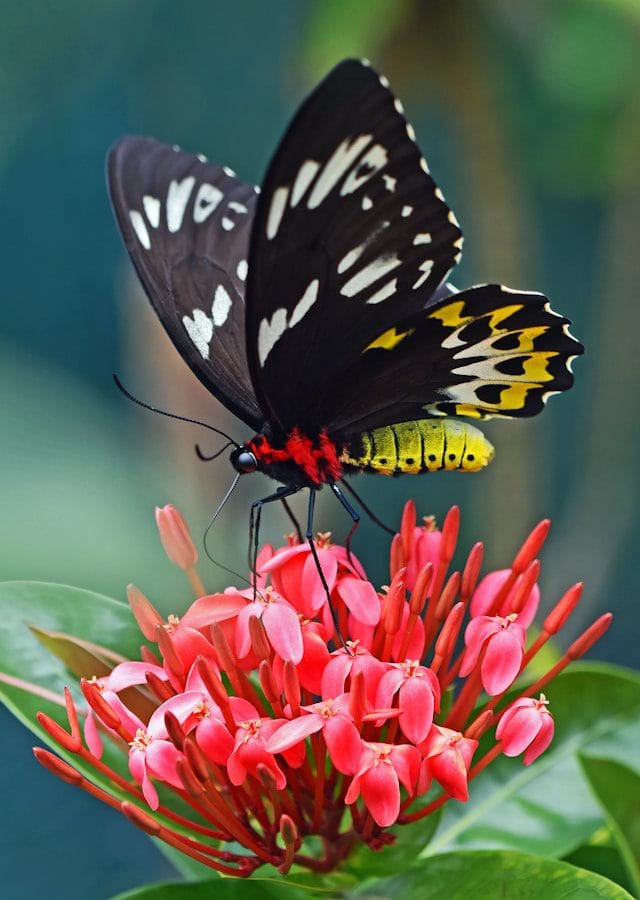
Butterflies do not have a single species-level scientific name because "butterfly" describes an entire group of insects. They belong to the biological order Lepidoptera, which also includes moths, and the traditional clade or superfamily group Papilionoidea, historically called Rhopalocera, which encompasses all true butterflies. The term Lepidoptera is derived from the Greek words that mean "scaly-winged": scale (lepis) and wing (pteron). This name perfectly describes the tiny, overlapping dust-like scales that cover their bodies and wings, while the term Papilionoidea is derived from the Latin word 'papilio', meaning "butterfly", and the Ancient Greek suffix 'oidea', meaning "resembling" or "having the form of".
Butterflies belong to thousands of different genera within the order Lepidoptera, which comprises all six major modern butterfly families:
And last but not least, Hedylidae, which includes American Moth butterflies, forms the sister group Hedyloidea.
The scientific name of a butterfly is more than just a representation of its species; it tells a story of classification and adaptation. There are only about 17,000 to 20,000 species of butterflies worldwide; each one is distinguished by its unique scientific name based on its genus and species. For example, the common Monarch butterfly's scientific name is "Danaus plexippus", highlighting its royal appearance, widespread distribution across continents and genetic makeup to accurately classify each species.
Moreover, the Latin roots of different species of butterflies' scientific names often provide clues about their physical characteristics or habitats, providing valuable insights into their biology and behaviour. For instance, the Old World Swallowtail butterfly's scientific name "Papilio machaon" references its resemblance to a swallowtail bird and helps scientists better understand its adaptive traits. Another well-known species, the Painted Lady butterfly, goes by the scientific name "Vanessa cardui". The genus Vanessa comes from a Greek mythological figure who wove her destiny, symbolising the freedom and independence of these ethereal insects. By exploring the etymology of butterfly names, enthusiasts can uncover hidden connections between different species and appreciate the intricate relationships within nature. From Morpho menelaus (the Menelaus blue morpho is one of the 30 species of butterfly in the Morphinae subfamily) to Aglais io (the European peacock, or the Peacock butterfly, is a colourful butterfly, found in Europe and temperate Asia as far east as Japan), each scientific name encapsulates centuries of research and discovery in the field of entomology. In essence, exploring the scientific names of butterflies unveils a world full of complexity and wonder waiting to be discovered.
Butterflies are not only fascinating creatures but also possess some incredible facts and features that make them truly unique in the animal kingdom.
There are 18,500 to 20,000 known species of butterflies worldwide, and the exquisite beauty of a butterfly lies in its mesmerising appearance and intricate anatomy. From their delicate wings adorned with vibrant colours and unique patterns to their slender and agile bodies, every aspect of a butterfly's physical characteristics is a masterpiece of nature's design. However, an adult butterfly is a diurnal insect with a light yet sturdy body split into three main segments (head, thorax and abdomen), compound eyes, club-tipped antennae, a straw-like proboscis, six jointed legs, four large, membrane-like, vibrant, scale-covered wings, and an exoskeleton. Butterflies have two distinct forewings (front) and two hindwings (back); the base wing membrane is completely transparent. Their visible colours come from overlapping, dust-like microscopic scales. The pigments present in these scales create an illusion of iridescence when light hits them at certain angles, giving the butterfly an almost magical appearance. These scales reflect light so that the butterfly appears to shimmer and shine as it flutters through the air. Unlike moths, most butterflies hold their wings pressed vertically over their backs when they rest. Their wing undersides are often dull or brown. Furthermore, the wingspans of butterflies vary greatly among different species, from tiny grass-blues at just 0.5 inches across to giant birdwings spanning nearly 12 inches in width.
The anatomy of an adult butterfly is fascinating in its efficiency and adaptation to flight. Like all insects, a butterfly's external appearance is built around an exoskeleton consisting of three main parts:
Each part serves a specific function in the butterfly's survival and reproduction. The antennae of butterflies play a crucial role in their sensory perception, navigating their environment, finding food sources, and locating potential mates. The two feelers on top of the head are used to smell the air and find direction, while their antennae clubs are used to track down food and pheromones. These antennae can vary in shape and size depending on the species. Their large compound eyes provide them with exceptional vision (colour and ultraviolet light that is invisible to humans), enabling them to detect movement at different angles and distances. Their specialised mouthparts are called a proboscis. A long, straw-like or tube-like tongue that they use exclusively to suck up liquids, like nectar from flowers, tree sap, and water, with precision. It can be coiled or rolled up underneath the mouthparts of a butterfly when not in use that protected by their palpi, which are also used to analyse immediate surroundings and help sense food. This adaptation allows them to feed efficiently on various flowers and essential nutrients.
The thorax supports their powerful muscles moving the wings up and down rapidly to generate lift. The thousands of intricate tiny scales that cover their wings not only create stunning visual effects but also serve multiple purposes, such as insulation, waterproofing, attracting mates and warning predators of their toxicity. Each species of butterfly is uniquely adorned with specific intricate patterns that have evolved to provide camouflage to evade predators or mimicry in their habitats. Their wing undersides are often dull or brown for camouflage, while the tops can feature bright warning colours like the orange Monarch or giant "eyespots" to startle predators. Additionally, the pigmented colours are created by chemical pigments within the scales that absorb and reflect specific wavelengths, yielding blacks, browns, yellows, and oranges, while structural colours are created when light bounces off the physical texture of the scales, producing dazzling iridescent blues, greens, and metallic shifts. The complex network of veins in their wings not only provides structural support but also helps in regulating body temperature by trapping heat from sunlight. Interestingly, butterflies' six-jointed legs are adapted to taste things. The receptors on their feet identify plant chemicals for feeding, help females find the right plants to lay eggs on, and grip surfaces while feeding, resting and flying. On the other hand, spiracles (tiny holes) located on the side of a butterfly's body are used for breathing. This adaptation showcases the incredible evolution that has shaped these beautiful creatures over millions of years.
Furthermore, the elongated body section (abdomen) of a butterfly houses internal organs, like the heart, breathing tubes, and the majority of its digestive system. Here are the reproductive organs located inside the tip of the abdomen, which are used for mating and laying eggs. The butterfly's exoskeleton, which is made of chitin, protects organs and prevents water loss. As creatures that undergo metamorphosis, butterflies embody transformation and resilience in the animal kingdom. Their appearance evolves drastically throughout their life cycle, from tiny eggs to caterpillars with voracious appetites to pupa and then finally emerging as elegant winged insects ready to take flight. This process symbolises growth and change while reminding us of nature's endless capacity for beauty and renewal. It is truly awe-inspiring to consider how every minute detail in the appearance and anatomy of a butterfly serves a specific purpose in ensuring its survival and success in its environment.
Butterflies are known for their diverse habitats and distributions worldwide. They thrive in diverse environments ranging from tropical rainforests to urban gardens. While some species prefer tropical rainforests and woodlands, others occur in grasslands and meadows, wetlands and marshes, urban gardens and parks, and even in extreme environments (like cold mountain ranges or arid regions). This wide range of habitats allows butterflies to adapt to different environmental conditions and resources. As cold-blooded insects, butterflies need the sun to warm their bodies for flight; flowering plants, which supply nectar sources for adult butterflies with essential energy; specific host plants for female butterflies (like milkweed) to lay eggs, which the caterpillars then eat; and shelter (trees, bushes, and leaf litter) to protect them from bad weather and predators. Butterflies use receptors on their feet to identify plant chemicals for feeding, which also help females to find the right plants to lay eggs on.
While many species live in tree canopies or forest edges where they find shelter and larval host plants, some species prefer grasslands and meadows, which provide open, sunny areas with a high diversity of wildflowers that have abundant nectar. Some rare butterfly species require specialised sedges and plants, which are supported by damp grounds like wetlands and marshes, while urban gardens, backyards and city parks with green spaces offer accessible flowers and shrubs. Additionally, some species are adapted to cold or arid regions, and they live in high alpine mountain ranges or deserts. This adaptability is attributed to their life cycle, which involves four distinct stages.
Butterflies are distributed worldwide on every continent except Antarctica, with roughly 17,500 to 20,000 known species. Additionally, the distribution of butterflies is often influenced by several key factors such as:
One fascinating aspect of butterfly distribution is the interconnectedness of different populations across regions through a network, including source-sink dynamics, rescue effect, and recolonisation, known as a metapopulation.
However, tropical regions tend to have higher butterfly diversity compared to temperate zones due to the year-round abundance of food sources and favourable breeding conditions. But some butterfly species are highly specialised and can survive only in specific habitats, while others are more adaptable and can be found in various environments. For instance, high-altitude species are adapted to colder temperatures, while lowland species thrive in warm climates. But certain butterfly species are migratory and travel long distances to find food sources or suitable breeding grounds, or to escape harsh weather conditions. For example, Monarch butterflies are the most dominant and widespread family across different global regions and habitats. They migrate thousands of kilometres from eastern and central regions of the United States and southern Canada to Mexico to overwinter in specific forests. This remarkable journey showcases the incredible adaptability and resilience of these delicate creatures.
Furthermore, studies have shown that butterfly movements are crucial in maintaining genetic diversity and ecosystem balance. But it is important to note that habitat destruction and climate change are major threats to butterfly populations worldwide. Loss of natural habitats due to deforestation, urbanisation, and agricultural expansion has led to a decline in butterfly numbers. Conservation efforts focused on protecting critical habitats, restoring degraded ecosystems, and addressing climate change are essential for safeguarding these beautiful insects for future generations.
There are about 17,500 to 20,000 butterflies in the world, and they belong to the superfamily Papilionoidea, which is divided into six major families, each featuring common species and types found around the world. Butterflies have a wide diversity in colours, patterns, shapes, sizes, antennae, and wingspans among different butterfly species.
The most common butterfly family in the world is the Nymphalidae. This is the largest butterfly family, which contains more than 6,000 species distributed across almost every part of the world. They are also known as the "brush-footed butterflies" because their front legs are short, covered in hair-like brushes, and not used for walking. Most species in this family stand on only four legs and rest with their colourful wings held flat. The Monarch butterfly and the Painted lady butterfly are among the most common and widely distributed species in the "brush-footed butterfly" family Nymphalidae.
The Monarch butterfly (Danaus plexippus) is known for its vibrant orange and black borders and veins on its wings. They are most widespread and widely distributed butterfly species in the brush-footed butterfly family. These butterflies are admired for their incredible migration habits, travelling thousands of miles annually to reach warmer climates. Monarchs are often found in North America, where they feed on milkweed plants as caterpillars before transforming into beautiful butterflies, with many populations migrating from eastern and central regions of the United States and southern Canada to Mexico to escape winter.
The Painted lady butterfly (Venessa cardui) is another of the most widespread and widely distributed butterfly species in the brush-footed butterfly family. It is known for its orange and black patterned wings with white spots. These butterflies are found on every continent except Antarctica and South America. They are famous for their long-distance migrations. Some years, weather patterns trigger massive population blooms, sending millions of them flying into regions like Europe or North America.
The Red Admiral butterfly (Venessa atalanta) is a medium-sized butterfly with striking black wings, bold red-orange bands, and white spots. It has a wingspan of about 2 inches. It is commonly found in gardens, parks, and woodlands across North America, Europe and Asia.
The Purple Emperor (Apatura iris) is a large, striking woodland butterfly known for its bright purple sheen on the male's dark wings depending on the light. While males have rich dark brown wings with a vibrant purple-blue sheen, white bands and small eyespots, females are brown with similar white markings and are larger. This species measures about 7.5 to 8.4 cm across. They spend most of their time high up in tree canopies and are rarely seen close to the ground. Their adults rarely drink flower nectar; instead, they prefer to feed on tree sap, rotting fruit, animal dung, and carrion. These butterflies are found in Europe and Asia.
The Peacock butterfly (Aglais io), also known as the European peacock, has four prominent eye-like spots on its wings used to deter predators. It is a colourful butterfly found in woods, fields, meadows, and gardens across Europe and temperate Asia as far east as Japan. This butterfly is resident in much of its range, often wintering in buildings or trees, and therefore often appears quite early in spring.
The Common Buckeye butterfly (Junonia coenia) is recognised by its brown wings with bright orange bars and large, prominent, target-like eyespots, frequently found as a resident or vagrant across much of North America and Central America, as well as in parts of northern South America. Its habitat includes fields, dunes, and scrub, typically in sunny environments up to 1,300 meters in altitude. They can be found in open areas with low vegetation and some bare ground.
The Menelaus Blue Morpho butterfly (Morpho menelaus) is known for its bright, iridescent blue wings with black edges that shimmer in the sunlight, but the ventral surfaces are brown. Its wingspan is about 12 cm. These butterflies are native to Central America and South America, where they inhabit tropical rainforests. Their striking colouration not only aids in camouflaging them from predators but also serves as a form of communication during courtship rituals.
The Plain Tiger butterfly (Danaus chrysippus), also known as the African queen or African monarch, is a tawny-orange milkweed butterfly. It is a medium-sized butterfly species commonly found across Asia, Africa and Australia.
The family Papilionidae comprises large, colourful butterflies known as Swallowtails and Parnassians, featuring over 550 to 600 species found worldwide except on Antarctica. Many species have tail-like extensions on their hindwings that resemble the tail of a "swallow bird". This family includes the largest butterflies in the world, specifically the Giant Birdwing butterflies of the genus Ornithoptera. Unlike some other butterfly families that have reduced front legs, all six legs on adult papilionids are fully functional and well-developed. Their caterpillars possess a special Y-shaped scent organ behind the head called an osmeterium. When threatened, they push this bright organ outward to release a bad smell and scare away predators. This family includes most common species such as the Old World Swallowtail, the Lime Butterfly, the Common Mormon, and the Eastern Tiger Swallowtail.
The Old World Swallowtail (Papilio machaon) is a striking and highly resilient butterfly of the family Papilionidae. This butterfly is also known as the Common Yellow Swallowtail or simply the Swallowtail. It is famous for its vibrant colouration and unique defence mechanisms throughout its life cycle. They feature vibrant pale yellow wings patterned with deep black veins and borders. The hindwings display a beautiful shimmering blue band, a prominent red eyespot near the base, and the signature elongated "tails" that give the swallowtail family its name. Their wingspan typically ranges from 6.5 to 9 cm. Interestingly, the larvae undergo a dramatic visual transformation. In their early stages, they look exactly like bird droppings to camouflage themselves from predators. As they mature into their final instar, they become plump, bright green caterpillars marked with crisp black bands and orange spots. This butterfly species is widespread and found in much of the Holarctic, meaning it is found all across Europe, North Africa, temperate Asia and North America. It is an incredibly versatile insect, capable of thriving in diverse environments including mountain meadows, open hills, sun-drenched city parks, and even high-altitude alpine tundras up to 15,000 feet.
The Lime Butterfly (Papilio demoleus) has black wings covered with distinct yellow or cream spots and a red-and-blue eyespot on the lower edge. It lacks the prominent tail-like extensions found on most swallowtails. This species is highly adaptable to urban gardens, groves, and open scrubs, where citrus host plants like lime and lemon trees are grown. Lime butterflies are extremely abundant across Asia, expanding into parts of the Middle East and Australia.
The Common Mormon butterfly (Papilio polytes) is a common species of Swallowtail butterfly, known for its elongated tails on their hindwings and its graceful flight patterns. The male of this butterfly species is black with white spots, while the female shows different forms that mimic unpalatable species (like toxic, red-bodied swallowtails), such as the common rose and the crimson rose. These butterflies are widely distributed across tropical and subtropical regions of Asia. With various subspecies adapted to different environments such as forests, meadows, and urban areas, swallowtails are attracted to flower-rich habitats and play a crucial role in pollination, making them essential members of their ecosystems.
The Eastern Tiger Swallowtail (Papilio glaucus) is a species of butterfly native to the eastern half of North America. Its males are always yellow with black tiger stripes, and many females share this colouring, while some females in the southern part of the range are a dark, smoky black instead of yellow. The dark phase is less common in northern areas like Canada; the species itself remains abundant overall. It is one of the most common and familiar butterflies in the eastern United States, ranging from northern to southern Ontario, Canada, and is common in many different habitats.
The family Pieridae is a large family of butterflies with about 76 genera containing about 1,100 species, mostly from tropical Africa and subtropical Asia, with some varieties in the more northern regions of North America and Eurasia. Most pierid butterflies are white, yellow, or orange in colouration, often with black spots. The pigments that give the distinct colouring to these butterflies are derived from waste products in the body and are a characteristic of this family.
The Cabbage White butterfly (Pieris rapae), also known as the Small White, is widely considered the most widespread species in the family Pieridae. They have black dots on its white wings, one for a male and two for a female. Its caterpillars feed on a wide variety of plants, including mustards and, of course, cabbage. This species is one of only two non-native butterflies in North America. It is found across gardens, farms, and roadsides worldwide, and is often the first butterfly seen in spring and flies with a steady, relaxed motion.
The Lycaenidae family is the second-largest family of butterflies, containing around 5,000 species worldwide. They make up about 30% of all butterfly species and are commonly known as gossamer-winged butterflies. Most adults are small to tiny with rapid, darting flight patterns. Their wings often display delicate, colourful, brilliant metallic or iridescent sheens created by optical light interference in wing scales. Many species have small tails and eye-like spots on the rear of their hind wings to trick predators into attacking the wrong end. Roughly 75% of species share a mutualistic relationship with ants, where slug-shaped caterpillars provide sweet sugary secretions (honeydew) in exchange for protection against predators.
The Common Copper butterfly (Lycaena phlaeas) is a small butterfly species shining with bright orange forewings with dark brown spots and a metallic copper sheen, paired with dark brown hindwings that feature an orange band. Its wingspan measures about 2.6 to 3.6 cm. The male is highly territorial, often sitting on bare ground or stones, darting out to chase away passing insects before returning to the same spot. This species is found in dry, sunny areas like heathlands, grasslands, woodland edges, and even suburban gardens across Europe, Asia, and North America (often called the American Copper in the U.S.). This butterfly is generally widespread rather than rare, though its local numbers can fluctuate from year to year.
The Riodinidae is a family of butterflies commonly known as metalmark butterflies, named for the small, shiny, metallic spots found on their wings. This family contains over 1,500 species of metalmarks globally. They are small to medium-sized species, with wingspans typically ranging from 20 to 65 mm. This species is highly diverse in colour and pattern, ranging from bright oranges and reds to dull browns, often featuring reflective metallic dashes or dots. Most males have reduced, non-walking front legs with unique segment extensions, while females possess fully functional front legs. They frequently perch on the undersides of leaves with their wings held completely flat. The vast majority (over 90% of species) are native to the Neotropical regions of Central and South America, though smaller representations exist in the Nearctic, Palearctic, Indomalayan, Afrotropical, and Australasian realms.
The Mormon Metalmark (Apodemia mormo) is a small tropical butterfly named for the metallic-looking spots adorning their wings. It is a widely distributed species found throughout western North America (Nearctic region), ranging from Mexico up to western Canada. Its caterpillars feed on wild buckwheat species.
Skippers are a group of butterflies placed in the family Hesperiidae within the order Lepidoptera. They were previously placed in a separate superfamily, Hesperioidea, but have since been placed in the superfamily Papilionoidea. These butterflies are named for their quick, darting flight habits. They have stout bodies, and their antenna tips are modified into narrow, hook-like projections, bridging the gap between moths and butterflies. Moreover, skippers mostly lack the wing-coupling structure available in most moths. More than 3,500 species of skippers are recognised, and they occur worldwide, but with the greatest diversity in the Neotropical regions of Central and South America.
The Silver-Spotted Skipper (Epargyreus clarus) is recognised by a prominent silver-white spot on its underwings. It is one of the largest and most widespread skippers in North America. They live in open woods, brushy fields, gardens, roadsides, and along streams. This butterfly is found across most of the continental United States, southern Canada, and northern Mexico. Its larvae create and reside in unique shelters stuck together with silk, which do not protect them from predators like paper wasps, sphecid wasps, and Crematogaster opuntiae ants. This species is also considered to be a perching species, meaning that adult males compete for territory to attract females. It is also considered to be a pest of a few crop plants such as beans.
While the Hedylidae family is not a major butterfly family, it is actually one of the smallest and least diverse butterfly families, which contains a single genus named "Macrosoma". This genus contains around 35 to 42 known species, found in the Neotropical regions of Central and South America. The Hedylidae family includes American Moth butterflies; it forms the sister group Hedyloidea. They look very much like moths, with slim bodies and clubless antennae, but modern scientific studies classify them as true butterflies. Like moths, they are mostly active at night, while their eggs are long and ribbed like pierid butterflies, and their pupae form chrysalises held by silken girdles.
The Macrosoma tipulata is a well-known species belonging to the Hedylidae family, which is commonly known as the American Moth butterflies. Like other American moth-butterflies, it displays a mix of butterfly-like evolutionary traits and a moth-like nocturnal appearance with clubless antennae. It is found in the Neotropical ecozone, particularly in South American regions like the Amazon. Its caterpillars have been seen to feed on plants in the malvaceous family, such as the cupuacu tree.
Butterflies have 17,500 to 20,000 known species worldwide, each with its unique characteristics and habitats. They are flying insects with three main body parts. Butterflies have four scale-covered wings, six legs, long antennae with club-shaped tips, and long, coiled, tube-like mouthparts called a proboscis. They undergo a four-stage life cycle called metamorphosis, including egg, caterpillar (larva) and a delicate chrysalis (pupa). Inside the chrysalis, a miraculous transformation takes place before emerging as a beautiful adult butterfly (imago). However, characteristics vary among different butterfly species, from specialised feeding behaviours to intricate mating rituals. Unlike most moths, butterflies are active during daylight hours, and they have developed ingenious ways to thrive in nature. Butterflies use their bright warning colours and patterns (aposematism), disguise (camouflage), or mimicry to avoid being eaten by predators or to deter predators. For example, the Pipevine Swallowtail possesses iridescent blue wings that serve as both camouflage and a warning signal to predators. Moreover, certain butterfly species exhibit unique behaviours, such as migrating over long distances. Their habitat also plays a crucial role in their survival. Butterflies can be found in diverse environments ranging from tropical and sub-tropical rainforests to urban gardens. They are not among the most enchanting creatures on Earth, but these beautiful insects also play a crucial role in pollination and ecosystem balance. These fascinating characteristics highlight butterflies' intricate evolution and survival strategies in the natural world.
Butterflies are found on every continent except Antarctica. They have different habitats depending on their species. Their habitats provide them with food sources such as nectar from flowers, tree sap, water and host plants where they lay their eggs. Some prefer open fields, meadows and urban gardens with abundant flowers for nectar and sunlight for warmth, while others thrive in tropical rainforests or coastal regions. Some species migrate over long distances each year to find suitable breeding grounds or escape harsh weather conditions. The diversity in butterfly habitats reflects their adaptability to different climates, environments, ecosystems and food sources.
Butterflies are herbivores, but they have a diverse diet. Most species primarily drink liquid foods, most commonly nectar (sugary liquid) from flowers (like lantana, coneflowers, zinnias, and milkweed), which provides fast energy for flying. However, some species also consume other substances like sugary tree sap (from maple, oak, and elm) and rich fruit juices from overripe or rotting fruits (like bananas, oranges, and melons). A tiny number of species, such as the harvester butterfly, consume honeydew (the sweet secretions of aphids), while a few rare species, like the zebra longwing butterfly, actively digest pollen for extra protein. Interestingly, many butterfly species have evolved to feed on specific host plants to sequester toxic defensive chemicals for their own protection or to deter predators. Moreover, the diet can vary among different butterfly species based on factors such as habitat and availability of food sources.
Adult butterflies use taste receptors on their feet to identify plant chemicals for feeding, and they use their long, tube-like or straw-like mouthparts, called a proboscis or siphon, to suck up liquid nutrients from deep within flowers (nectar, the main source of sugar and energy gathered from brightly coloured flowers), tree sap, and water, with precision. Their tube-like tongue can extend and siphon nectar or water into their digestive system. These specialised mouthparts are exclusive to butterflies and moths, allowing them access to a wide variety of floral food sources.
In contrast, butterfly larvae (caterpillars) have a more specialised diet that typically revolves around plant matter to sustain their growth into adulthood. Caterpillars voraciously feed on plant leaves, but they are also known to eat various parts of plants, such as stems and flowers, depending on the species. The diverse range of plants consumed by caterpillars highlights the co-evolutionary relationship between butterflies and plants. Where certain plant species have adapted defence mechanisms against caterpillars, feeding through chemical compounds or physical structures like thorns. This interplay between diet and prey underscores the intricate ecological roles that butterflies play in their ecosystems.
When it comes to prey, butterflies are not typically viewed as predators, meaning they do not hunt or eat "prey". Butterflies do not have prey because they lack teeth, jaws, and the ability to chew solid food. But they exhibit a fascinating behaviour known as mud-puddling. Male butterflies often gather in groups near puddles, damp gravel or wet mud to supplement their diet. With this behaviour, they extract vital minerals and salts (like amino acids and sodium), which they pass to females during mating; this is crucial for their mating success and overall fitness. Interestingly, some species of butterflies are known to drink animal sweat, tears, dung, the fluids of fermenting plants, and even decaying matter or dead animals for extra nutrients (such as sodium and nitrogen), which are missing in flower nectar. However, a very small number of caterpillars (larval stage) or unusual species, such as the harvester butterfly caterpillar, exhibit carnivorous behaviour by consuming other small insects like aphids, ants, brood, scale insects, treehoppers, and sometimes other caterpillars, but this happens before they transform into adult butterflies. The vast majority of butterflies are strictly fluid feeders, such as the adult harvester butterfly. These predatory butterflies use their short, sharp proboscises to pierce the bodies of woolly aphids to drink or siphon out their fluids. Furthermore, butterflies have evolved different strategies for capturing prey, including camouflage techniques and stealthy approaches. This constant interaction between diet and prey showcases the intricate balance in nature's ecosystem that allows butterflies to thrive despite facing numerous challenges.
Butterflies are known for their graceful and delicate appearance with enchanting aerial displays, but their behaviour and lifestyle hold many fascinating secrets. They are ectothermic (cold-blooded insects) and cannot fly if cold. So butterflies must bask in the sun to warm up. They can raise their body temperature by opening their body and wings to absorb heat from sunlight. But on cool or overcast days when direct sunlight is unavailable, butterflies use physical exertion. They shiver or vibrate their wing muscles to warm up their bodies for flight. However, butterflies navigate the world with precision and purpose, often using flowers to feed on nectar and some plants to lay their eggs. They use special sensors on their feet to identify plant chemicals for feeding and egg-laying. Butterflies consume only liquids like flower nectar, tree sap, rotting fruit juice, water, and sometimes animal waste, using their long, straw-like mouthparts called a proboscis. Male butterflies often gather on wet sand or mud to drink water and absorb vital salts and minerals. Additionally, butterflies rely on instinctual behaviours to protect themselves from predators. Many species camouflage with their surroundings, hide by looking like dead leaves, or use bright colours as a warning signal. Sometimes their large wings create an uneven, bouncy flight pattern that confuses birds and other predators. They also have remarkable migratory patterns, travelling thousands of miles to find suitable breeding grounds or escape harsh weather conditions. The monarch butterfly, for example, travels up to 2,500 miles from eastern and central regions of the United States and southern Canada to Mexico for winter hibernation in an awe-inspiring journey that spans generations. This incredible instinctual behaviour showcases the resilience and adaptability of these winged creatures in the face of environmental challenges.
In terms of lifestyle, butterflies exhibit interesting social interactions within their species. Some butterfly species are solitary creatures, while others form groups or clusters during migration or mating season, using chemical signals called pheromones released from their wings to communicate. They can also communicate through visual cues, such as vibrant wing patterns and fluttering movements. Additionally, butterflies exhibit territorial behaviours to defend prime feeding and breeding locations from rivals. These delicate creatures perform intricate mating rituals, with some species dancing or flashing vibrant colours to attract a suitable mate. Their courtship ritual can be observed in open fields or gardens, adding a touch of romance to the natural world.
However, butterflies undergo a remarkable transformation from caterpillars to adult butterflies through a process called complete metamorphosis. Their unique life cycle involves four distinct stages:
Each stage serves a specific purpose in their survival and reproduction. A female butterfly lays a tiny egg on a leaf, and she picks a specific plant that will become food for the baby caterpillar (larva). The female identifies the plant using the receptors on its feet that detect plant chemicals for feeding and help the female find the right plants to lay eggs on. When the egg hatches into a caterpillar, its main job is to eat leaves and grow fast. It sheds its tight skin several times in a process called moulting. The fully grown caterpillar attaches to a branch or twig and forms a hard shell called a chrysalis (pupa). Inside the chrysalis, its body changes completely into a winged butterfly. The butterfly (imago) then breaks out of the chrysalis, and it rests while its wings dry before taking its first flight.
Butterflies are active during the day, and they rest at night. Their bright wing patterns help them hide from predators or warn predators to show they taste bad. Adult butterflies use the taste receptors on their feet to identify plant chemicals for feeding, and use a long, straw-like mouthpart called a proboscis to drink liquids because they cannot chew solid food. With their primary diet of nectar from flowers, they move pollen from flower to flower, playing a crucial role in pollination that helps maintain the balance of ecosystems. Furthermore, adult butterflies live anywhere from one week to a full year. This extraordinary journey highlights the resilience and adaptability of these creatures, as they evolve from crawling larvae to elegant flyers. As symbols of transformation and beauty, butterflies inspire us to embrace change and appreciate life's fleeting moments with grace and resilience. By observing and appreciating the behaviour and lifestyle of butterflies, we can learn valuable lessons about resilience, adaptability, and the beauty of evolving into our true selves.
To fly, a butterfly must meet specific environmental, physical, and aerodynamic requirements. Most critically, a butterfly cannot fly unless its core body temperature is between 30°C and 38°C (86°F and 100°F), making ambient warmth and sunlight its primary behavioural requirement.
The essential flight requirements of a butterfly span several categories:
Butterflies have a fascinating life cycle that revolves around reproduction and newborns. Intriguingly, butterflies exhibit unique strategies to enhance their reproductive success, while female butterflies possess specialised organs for storing and releasing fertilised eggs efficiently. Some species engage in elaborate courtship rituals, dances or showing off vibrant colours to attract mates, while others rely on mimicry or chemical signals (pheromones) to communicate. During mating season, males use their sharp eyesight and sensitive antennae to track down chemical scents called pheromones released by females to signal breeding readiness. This courtship ritual can be observed in open fields or gardens, adding a touch of romance to the natural world. After copulation, female butterflies can lay their hundreds of fertilised eggs on specific host leaves using a special glue, which they identify by using the receptors on their feet that detect plant chemicals for feeding and help females to find the right plants to lay eggs on, where the larvae can feed once hatched, ensuring the survival of their offspring.
Once these tiny eggs hatch, tiny caterpillars (larvae) emerge, which voraciously consume plant leaves and undergo multiple moults to grow before entering the pupa stage. Through the incredible process of metamorphosis, these caterpillars (larvae) transform into delicate chrysalises (pupae), with a hard protective shell. Inside the chrysalis, a miraculous transformation takes place before emerging as beautiful winged butterflies (imagoes). The baby butterfly then breaks out of the chrysalis, rests to dry its wings, and takes its first flight to pollinate. This stage highlights the incredible ability of these creatures to undergo such profound physical changes, symbolising growth and renewal in nature.
When it comes to baby butterflies, newly hatched individuals start their journey by voraciously feeding on nectar from flowers to build up energy reserves. As they grow, they learn to navigate their surroundings and evade predators through intricate flight patterns. The beauty of witnessing this process unfold provides insight into the delicate balance of life and the interconnectedness of all living beings in our ecosystem.
As adult butterflies navigate their environment in search of nectar and mates, their average lifespan varies depending on their species, environmental factors, and predators. While some species may only live for a few days or weeks, others can survive for several months or live up to a year. Throughout this time, they play important roles in pollination and ecosystem health, contributing to the vibrancy and diversity of our natural world. Their ability to adapt to diverse environments and navigate challenges illustrates the resilience and beauty of these ephemeral creatures in nature's intricate tapestry.
Butterflies, with their delicate wings and vibrant colours, are not exempt from the dangers of the natural world. They face many different predators, such as birds, spiders, insects, reptiles, amphibians, and small mammals at all stages of their life cycle, from eggs to adults. Birds such as sparrows, swallows, blue jays, and tanagers are known to prey on adult butterflies, using their agile flight to catch these winged beauties in mid-air. Spiders like orb-weavers strategically lay their webs near flowers or vegetation frequented by butterflies, waiting patiently to capture them in a sticky trap, while ambush hunters like crab spiders hide inside flowers to grab visiting insects. Ants are scavengers that pose a significant danger to butterflies at every life cycle stage. From raiding their eggs on plants to attacking caterpillars feeding on leaves, ants display predatory behaviour towards these gentle insects. The caterpillar stage is particularly vulnerable to predation due to their soft bodies and slow movements. Parasitoid wasps and tachinid flies pose a serious risk to butterflies as well. They lay their eggs inside caterpillars or pupae, leading to the eventual demise of the butterfly before it can emerge from its chrysalis. Reptiles and amphibians, such as lizards, frogs and toads, eat butterflies and caterpillars that come too close to the ground, while small rodents and mammals, such as mice, shrews, and bats, occasionally prey on resting butterflies or developing pupae. Additionally, non-native plants and animals outcompete local species for vital resources or prey directly on butterfly larvae. Furthermore, newly emerged adults are extremely vulnerable right after leaving the chrysalis because their soft, wet wings prevent them from flying away immediately.
Despite facing numerous predators and threats in their environment, butterflies have developed several defence mechanisms to protect themselves. With their rapid flight capabilities, some butterfly species have evolved bright colour patterns and markings that warn potential predators of their toxic or foul-tasting nature. While some species have evolved true defensive toxic chemicals to deter predators, others exhibit mimicry by appearing similar to unpalatable species, effectively confusing predators and ensuring their safety. Camouflage is another tactic utilised by butterflies, blending seamlessly into their surroundings to evade detection. By adapting to these constant challenges, butterflies demonstrate resilience in the face of adversity and continue to grace our world with their beauty and grace.
In addition to predators, human activities also pose a significant threat to butterflies. Habitat destruction due to deforestation, urbanisation, and agriculture clears out native plants, meadows, and forests, leaving butterflies without food and breeding grounds, leading to a decline in butterfly populations worldwide. Pesticides and chemicals used in agriculture can also have detrimental effects on butterflies, directly killing them or contaminating plants and wildflowers they rely on for food, such as milkweed. Climate change is another significant threat as it alters ecosystems and disrupts the timing of key events in a butterfly's life cycle, such as breeding and migration routes, causing severe mismatches with essential host plants. Moreover, disease outbreaks have been known to decimate butterfly populations in certain regions, highlighting the fragile balance that exists between these delicate creatures and their environment.
Scientists estimate there are about 17,500 to 20,000 butterfly species worldwide, according to the Smithsonian Institution. As enchanting as butterflies are, their populations worldwide have been declining at an alarming rate. Butterfly populations can fluctuate drastically in response to environmental factors. Research has shown that human activities, such as habitat loss and urban expansion, heavy pesticide and chemical use, pollution, changes in temperature, and severe droughts, can all have a significant impact on butterfly numbers. In recent years, there has been a concerning decline in butterfly populations globally, with some species facing the threat of extinction.
A major study published in Science found that total butterfly abundance in the contiguous United States dropped by 22% between 2000 and 2020, while about one-third of individual butterfly species tracked in the study showed significant population drops. Scientists measure migratory Monarch populations by the forest area they cover in Mexico during winter, which measured 7.24 acres in recent annual counts, and most monitored regions show general butterfly numbers decreasing by about 1% to 2% every year.
One concerning aspect of this decline is the impact it has on ecosystems and biodiversity. Butterflies play a crucial role in pollination and serve as indicators of ecosystem health. A decrease in butterfly populations can disrupt the delicate balance of nature and lead to cascading effects on other species within the ecosystem. Efforts are being made by conservation organisations and researchers to address these challenges through habitat restoration, advocacy for sustainable farming practices, and public awareness campaigns. Citizen science initiatives like butterfly monitoring programs have also played a crucial role in tracking population trends and identifying areas for intervention.
Despite these efforts, more needs to be done to ensure the survival of butterflies and protect their populations for future generations to enjoy. Individuals, communities, and governments need to work together towards creating a more butterfly-friendly world where these beautiful creatures can thrive once again.
Butterflies are not just beautiful creatures fluttering gracefully in the air; they play a crucial role in our ecosystem.
By appreciating and protecting these creatures, we not only contribute to biodiversity conservation but also connect with our inner sense of growth and transformation through their symbolism.
The zoo plays a crucial role in the conservation of butterfly species, many of which are facing habitat loss and threats from climate change. Through specialised breeding programs and research initiatives, zoos help increase the butterflies' population and prevent them from becoming endangered or extinct.
Visitors to the zoo also have the opportunity to learn about these delicate creatures and appreciate their beauty. Moreover, zoos play a significant role in educating the public about the importance of butterflies in maintaining ecosystem balance and biodiversity. By showcasing these beautiful insects up close, visitors can develop a newfound appreciation for their unique characteristics and ecological significance.
Furthermore, zoos provide a safe environment for butterflies away from predators and other dangers they may face in the wild. The controlled setting allows researchers to closely monitor their behaviour, life cycles, and breeding habits, aiding in efforts to better understand and protect these fascinating insects. By working together with conservation organisations and scientists, zoos play an essential role in safeguarding butterfly populations for future generations to enjoy.
The classification of butterflies is a complex process that involves grouping them into families, subfamilies, genera, and species, based on their behaviour and various physical characteristics such as wing patterns, body shape, antennae morphology, life cycle and evolutionary relationships. Butterflies belong to the insect order Lepidoptera, which also includes moths, and the clade or superfamily group Papilionoidea, historically called Rhopalocera, which encompasses all true butterflies.
Taxonomists group true butterflies and their close relatives into six major modern butterfly families within the superfamily group Papilionoidea and related groups:
And last but not least, Hedylidae, which includes American Moth butterflies, forms the sister group Hedyloidea. The Hedylidae family is not a major butterfly family; it is actually one of the smallest and least diverse butterfly families, containing only a single genus, "Macrosoma".
This classification system helps scientists understand the evolutionary history of butterflies and how they have adapted to various environments over millions of years. Fossil records place early Lepidopterans near the Triassic-Jurassic boundary, long before modern butterflies emerged.
Evolutionarily, butterflies are believed to have evolved alongside the explosive diversification of flowering plants (angiosperms) during the Cretaceous period (roughly 100 million years ago), shifting from nocturnal, moth-like ancestors to diurnal, nectar-feeding flyers, driving the specialisation of butterfly mouthparts and sensory systems. Unlike nocturnal moths, ancestral butterflies also evolved bright pigment scales, club-tipped antennae, and complex visual communication. These insects rely on nectar for food, host plants for laying eggs, and are characterised by complete metamorphosis. Through natural selection and genetic mutations, butterflies have developed specialised traits such as wing patterns and behaviours that help them survive and reproduce in their specific habitats.
Scientists have identified about 17,500 to 20,000 species of butterflies worldwide, each with its own unique adaptations and evolutionary history. Through genetic studies and morphological analysis, researchers continue to uncover new relationships between butterfly species and gain insights into their evolution. Modern DNA sequencing supported by the Florida Museum continues to refine the evolutionary tree, confirming tight phylogenetic links between skippers and true butterflies. Studying the evolution of butterflies provides valuable insights into how species adapt to environmental changes and can help conservation efforts aimed at protecting these delicate creatures for future generations.
Butterflies have long captivated humans with their delicate beauty and graceful flight. Across cultures, butterflies are often seen as symbols of transformation, hope, freedom, joy, and rebirth. In many traditions, they are believed to bring good luck and positive energy. Their delicate wings and vibrant colours have inspired artists, poets, storytellers and even spiritual practices throughout history.
One fascinating aspect of the relationship between butterflies and humans is their role as pollinators. As they flit from flower to flower in search of nectar, butterflies help facilitate the process of pollination, aiding in the reproduction of fruits and plants. They also serve as an indicator of ecosystem health. This symbiotic relationship highlights the interconnectedness of all living beings in nature.
Despite their positive associations with humans, the relationship between butterflies and humans is facing challenges due to habitat loss, pollution and climate change. As butterflies rely on specific plants for food and shelter, human activities such as deforestation and urbanisation threaten their survival. Conservation efforts are underway to protect butterfly populations and preserve their habitats for future generations to enjoy.
Butterflies are not only beautiful creatures but also important indicators of the health of our environment. However, many butterfly species face severe population declines worldwide. As a result, they are currently classified as Threatened or Endangered on the IUCN Red List. For example, the migratory Monarch butterfly is listed as endangered due to a 22% to 72% decline over the past decade. Western populations have dropped by up to 95%. Groups like the Xerces Society for Invertebrate Conservation note that roughly 19% of all butterfly species in the United States are at risk of extinction. In the Mediterranean, assessments show at least 19 species are threatened. On the other hand, India hosts over 1,300 species (including many endemics in the Western Ghats and Himalayas), but many regional taxa lack complete IUCN evaluations and face localised pressures.
Many butterfly species face habitat threats from human activities. Deforestation, urbanisation, and the conversion of meadows into intensive agricultural land destroy vital breeding and feeding grounds. The removal of critical plants like milkweed-essential for Monarch caterpillars-via modern herbicides drastically reduces survival rates, while widespread chemical and insecticide use directly kills larvae and reduces overall insect abundance. Furthermore, unpredictable temperature extremes, severe droughts, and wildfires disrupt migration timing and dry up nectar-producing flowers.
Conservation efforts for butterflies focus on preserving and restoring their habitats by planting native milkweed and nectar-rich flowering plants in backyards, farms and public parks, as well as implementing measures to reduce pollution by limiting or eliminating the use of harsh insecticides and chemical weed killers in residential and agricultural areas and also mitigating climate change impacts by expanding designated wildlife reserves to secure critical overwintering and breeding habitats. Additionally, citizen science initiatives play a crucial role in monitoring butterfly populations and generating data that can inform conservation strategies. By raising awareness about the conservation status of butterflies and actively participating in efforts to protect them, we can help ensure these delicate creatures continue to flutter gracefully through our ecosystems for generations to come.