
A raccoon is a small mammal and one of the most common animals native to North America. They are known for being mischievous and curious animals that often get into trouble. The raccoon is most easily recognised by its characteristic black face "mask" and black "bands" on their bushy tail. It is a nocturnal creature that is most active at night, but it can also be seen during the day. They are skilled climbers and good swimmers, allowing them to access food sources that other animals cannot reach. Raccoons are also known for their dexterous front paws or hands that they use to wash their food before eating. They possess an extraordinary level of intelligence that rivals that of some domestic pets. Studies have shown that raccoons can remember solutions to tasks for up to 3 years, illuminating their remarkable memory. They can manipulate objects and have been observed opening doors, locks and jars, while they love raiding trash cans, skills that demonstrate their problem-solving prowess in urban environments. Despite their generally solitary nature, raccoons will form communal dens in the winter to keep warm. During mating season, female raccoons give birth to litters of anywhere from 2 to 5 young in the springtime, often forming small groups. They typically live in wooded areas and thrive near water, after building dense trees. Raccoons are known for their varied vocalisations and body language to convey messages within their groups, showcasing an emotional depth that often goes unrecognised. They are omnivorous scavengers, and their adaptability allows them to thrive in both rural landscapes and bustling cities alike, highlighting the intersection between wildlife and urbanisation. Raccoons are not aggressive animals, but they will defend themselves if they feel threatened. They can carry diseases such as rabies, so it is essential to avoid contact with them. These nocturnal wonders are more than mere scavengers; they play a crucial role in their ecosystems. By foraging for food across various habitats, they're effective seed dispersers, helping to propagate plants and maintain biodiversity.
Raccoon, common raccoon and northern raccoon
Procyon lotor
1.8-3.2 feet length and 9-11 inches height
3.5-16 kg
1-3 years
Africa, Asia, Central America, Europe, North America, South America
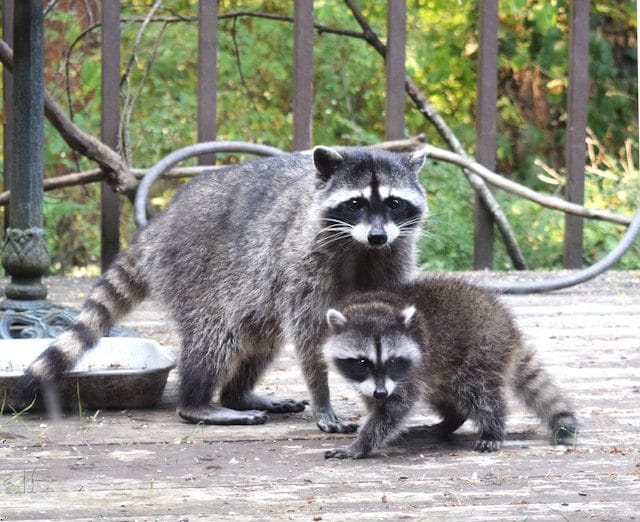
The raccoon is a North American mammal that is known for its distinctive black mask and ringed tail. They are commonly referred to as "trash pandas" due to their habit of rummaging through garbage cans in search of food. Moreover, the English term "raccoon" is derived from the Algonquian word "aroughcun or aroughcoune", which means "one that rubs, scrubs, and scratches with its hands", or the common name of the "raccoon" came from an Algonquian Indian word "arakun", which means "he scratches with his hands". During the 1700s, American colonists dropped the "a" in "arakun", and the name became "raccoon".
However, the raccoon is the largest member of the family "Procyonidae", which also includes other playful creatures like coatis, kinkajou, olingo, ringtails and cacomistle. The scientific name for the raccoon is "Procyon lotor", which means "before-dog washer" or "washer dog". The genus name "Procyon" derives from the Greek words, meaning "before the dog", reflecting the animal's close relation to canids while distinguishing it from them. This connection signifies not only a biological relationship but also highlights the raccoon’s unique adaptations, such as its dexterous forepaws and opportunistic feeding habits that set it apart in the mammalian landscape.
The name "Procyon lotor" is also derived from the Latin words "Pro", meaning 'before' and "Cyon", meaning 'dog', meanwhile, the species epithet "lotor", which derived from the Latin word "lavare" (the root of the word) means 'washer', a nod to the raccoon's unique habit of dipping or washing food before consumption, giving it an endearing reputation as nature's bandit with culinary quirks. This unique trait has captivated both scientists and casual observers alike, revealing a deeper link between raccoons and other members of the procyonid family.
Raccoons are one of the most interesting creatures in North America. Though they are often considered to be pests, there is much more to these little masked bandits than meets the eye. Here are some incredible facts and features about raccoons that we may not know:
Raccoons are small, nocturnal animals that embody remarkable adaptability with their distinctive appearance and anatomy. They have faces with "masks" of black fur around their eyes that contrast with the white fur around the mask. Raccoons also have a black stripe that runs from their forehead to their nose. They have bushy tails that are typically adorned with alternating black and light brown rings or "bands", which add to their charm. These clever animals boast rounded, stocky bodies with a thick, furry, grizzled coat that usually varies in colour from grey to brown, depending on the season and geographic location. Raccoons also have small, rounded ears, large, curious eyes, narrower snouts, long hind legs, short front legs, and black paws with five toes on each foot. Raccoons have incredibly dexterous front paws (highly sensitive front paws without opposable thumbs), similar to human hands, with highly flexible five toes equipped with sensitive tactile pads and sharp, curved claws. While raccoons are excellent climbers and good swimmers, they are also known for their varied vocalisations and complex communication methods.
Raccoons are about the size of a large cat and can weigh up to 22 kg. Adult raccoons have body lengths of 1.8 to 3.2 feet, including tail and weigh around 3.5 to 16 kg. An adult female raccoon is typically 1.8 to 2.6 feet long from its nose to the tip of its tail and weighs around 3.5 to 9 kg, while males are larger than females, typically 1.11 to 3.2 feet long and weigh around 5 to 16 kg. Raccoons are 9 to 11 inches tall at the shoulder, and their tails are between 7 and 16 inches long. The males are usually more significant than the females.
Diving deeper into their anatomical features reveals more captivating aspects. Raccoons have unusually large forebrains compared to other mammals of similar size, correlating with their keen intelligence and physical agility. Studies have shown that raccoons can remember solutions to tasks for up to 3 years. Unlike many creatures adapted purely for speed or stealth, they can skillfully manipulate objects and open containers with their nimble front paws, a trait that often leads to mischief as they explore urban environments in search of food. This adaptability has earned them a reputation as clever scavengers who can thrive in urban settings where food sources abound, whether rummaging through trash cans or sneaking into attics. Interestingly, raccoons have finely tuned senses; their keen sense of touch is especially pronounced due to many sensitive nerve endings in their forepaws. This sensitivity allows them to forage effectively even in darkness, a testament to their resourcefulness as they navigate both wooded areas and bustling cityscapes alike. Furthermore, their strong forelimbs and hind limbs are designed for climbing, while their bushy tails also help them maintain balance as they navigate through their arboreal homes. Raccoons' sharp claws are designed not just for climbing but also for gripping rather than digging; these multifaceted tools allow them to forage effectively in various habitats. Additionally, their exceptional hearing helps them detect even the faintest sounds of potential threats or food sources, while their acute sense of smell enables them to locate meals buried beneath the earth or hidden away from sight. Raccoons' excellent night vision also helps them navigate nocturnal landscapes expertly. Their dark face"mask" is not just for show; it helps reduce glare and enhances their nighttime vision, making them skilled nocturnal foragers. Their sharp teeth are suited for an omnivorous diet because they can thrive on everything from fruits to small animals alongside discarded human food. With a stocky build and a dense coat designed for insulation against changing weather conditions, raccoons are equipped to navigate both cold winters and warm summers confidently. Additionally, each raccoon has a unique voice, enabling individuals to convey specific emotions or alerts about potential threats in the environment. So, their anatomy enables them not only to survive but also to thrive in urban settings by employing curiosity as a form of exploration and survival innovation.
Raccoons are incredibly adaptable creatures and can be found across North America. They originally lived in wooded areas, like deciduous or mixed forests, but due to their adaptability, they can be found in a variety of habitats, such as mountainous areas, woodlands, grasslands, and farmlands. Raccoons can also thrive in rural, suburban and urban areas, demonstrating an extraordinary capability to live harmoniously alongside humans while simultaneously keeping their wild instincts intact. Their remarkable adaptability allows them to make homes in tree hollows, dense vegetation, burrows, caves or hollow logs close to human settlements. From dense forests to rural areas, these clever mammals tend to favour environments that offer both shelter and abundant food sources, often bordering with water sources, such as wetlands, shallow streams, ponds, swampy areas, rivers, lakes, and coastal marshes, where they hunt for aquatic invertebrates, plant matters, fruits, and small vertebrates, which can readily forage, while in urban areas, they often live in chimneys, attics or storm drains, sheds, and sewers for dens, where their notorious dexterity allows them to manipulate objects with their paws, enabling them to exploit human-created areas such as garbage bins and compost piles in search of food.
The raccoon’s geographic distribution extends beyond North America. They are also native to Central America and South America, and have been introduced in parts of Europe and Asia. While they are found throughout North America, from southern Canada down to central Mexico, making them one of the most widespread mammals on the continent, except for parts of the Rocky Mountains and southwestern states like Nevada, Utah, and Arizona, raccoons have also been introduced to Germany, Russia, and Japan.
Interestingly, the raccoon's distribution reflects a fascinating interplay between its natural behaviours and emerging human landscapes. As cities expand and green spaces diminish, raccoons have become experts at navigating the complexities of urban ecosystems. This has led to a surprising increase in their populations within city limits. They often exhibit nocturnal foraging techniques that highlight their adaptability, with keen senses and excellent problem-solving skills. Raccoons navigate both natural terrains and urban landscapes under the cover of night, making them elusive yet fascinating neighbours in our ecosystems. However, this proximity comes with challenges; as they invade densely populated areas, they can lead to conflicts with humans over property damage or disease transmission. In some regions where they have settled, raccoons compete with native species for food and habitat resources. The intricate dance between raccoons and humanity underscores their resilience and the broader implications of wildlife adapting to changing environments worldwide.
Raccoons are fascinating members of the family Procyonidae, including ringtail cats, cacomistles, kinkajous, coatis, mountain coatis, olingos, and olinguitos, which are closely related to raccoons, but are not the same species as the Common Raccoon. However, there are three main raccoon species found throughout the Americas, including:
The most widespread species is the North American raccoon, also known as the Common raccoon or Northern raccoon (Procyon lotor), widely recognised by its greyish-brown coat, black "bandit mask", and ringed tail with 5 to 10 black bands. The common raccoons are stocky animals with short legs and small, rounded ears. It is often seen as a mere scavenger, rummaging through trash bins with its dexterous paws. This keen ability also enables them to manipulate objects skillfully, a trait that not only aids in foraging but also makes them adept at escaping enclosures. These intelligent creatures' remarkable problem-solving skills rival those of some primates. Researchers have discovered that raccoons can remember solutions to tasks for at least 3 years, showcasing their capacity for long-term memory. These species are also observed to employ their eight sensitive whiskers to detect vibrations in their environment, allowing them to navigate even the most complex urban landscapes with ease. It is one of the most common and adaptable species native to North America. Variations also exist across other regions, ranging from northern Canada and southern Canada to Panama and most of the United States, southward into South America. They have been introduced to continental Europe and the Japanese archipelago. Furthermore, within the widespread North American species, 3 common subspecies include those that showcase unique characteristics and adapt to diverse habitats:
They share a comparatively dark coat with long hair, but the Upper Mississippi Valley raccoon is known for being larger with a darker, denser coat than the Eastern raccoon.
The Crab-eating raccoon (Procyon cancrivorous) is an inhabitant of both Central and South America's wetlands, marshes, jungles and coastal areas, and it is found in Costa Rica, Panama, Brazil, northern Argentina and Uruguay. It has a similar appearance to the common raccoon, but its semi-aquatic, arboreal lifestyle equips it with shorter fur, narrower, sharper claws and webbed toes for efficient swimming as it hunts along tropical riverbanks. This species effortlessly navigates brackish waters in search of food, showcasing not only physical adaptability but also remarkable intelligence in hunting crustaceans, such as crabs and shrimp. These raccoons utilise their tactile abilities to feel prey hidden within muddy substrates or rocky crevices. With this behaviour, the crab-eating raccoons help control shellfish populations while simultaneously serving as prey for larger carnivores. Unlike its North American counterpart, this agile forager has adapted uniquely to coastal mangroves and riverine environments. As climate change continues to alter riverine landscapes, the adaptability of the crab-eating raccoon becomes even more critical for ecosystem resilience. Their ability to thrive in changing environments faces challenges due to habitat loss from deforestation and pollution.
The Cozumel pygmy raccoon (Procyon Pygmaeus), also known as the pygmy raccoon, found exclusively on Cozumel Island and the eastern coast of Mexico's Yucatán Peninsula, showcases unique adaptations that set it apart from its mainland counterparts. This species has a smaller body, a black throat band and a golden yellow tail. Known for their playful demeanour, these creatures have developed a diet rich in the island's flora and fauna. Unlike their mainland relatives, they have learned to forage among coastal vegetation and rocky shores, even exhibiting a penchant for sea crustaceans, an unusual dietary staple among raccoons. What makes the Cozumel raccoon truly captivating is its adaptability and role as an indicator species for the island’s ecosystem health. It is a critically endangered "dwarf" species. As it thrives or struggles due to environmental changes, it reflects larger ecological shifts caused by factors such as tourism and climate change.
But raccoons have 22 subspecies also, and 4 of these subspecies, including
These subspecies are found across North America and Central America, with several unique, smaller subspecies living only on small islands of the Caribbean and Central American islands, was often regarded as a distinct species after their discovery.
It is often seen as a mere scavenger, rummaging through trash bins with its dexterous paws. Their fur is grey and brown or black, with black markings around their eyes that contrast with their white face and brown or black bands on their tail.
Raccoons are characterised by a greyish-brown or black coat (coarse, medium-length fur), a black "mask" of black fur around their eyes that contrasts with their white face, shorter, erect ears, shorter legs, black, dexterous paws with curved claws that walk with a bear-like shuffle, and bushy ringtails with 5 to 10 brown or black bands. The raccoon's belly and muzzle are lighter coloured, while the feet are darker grey. Interestingly, variations in coat colour and size can be observed across different regions. While city-dwelling raccoons tend to be larger due to abundant food sources, those in rural areas may exhibit more subdued colours. Raccoons have well-developed senses of hearing, vision and smell. They are curious and intelligent creatures. Studies reveal that raccoons can solve complex puzzles and remember solutions for up to 3 years. While they are known to wash their food before eating it, their nimble front paws also allow them to manipulate objects with impressive dexterity. Raccoons also have a highly developed sense of touch; their front paws are especially sensitive and contain thumbs, which enable the raccoons to pry open food and climb easily. In urban settings, they are often spotted rifling through garbage cans or scavenging around restaurants, demonstrating an uncanny intelligence that enables them to thrive alongside humans while maintaining a wild spirit.
However, raccoons are typically solitary but exhibit fascinating interactions during breeding and when foraging in groups for food sources. They often form loose groups, including mothers and their young. Additionally, nocturnal by nature, raccoons often prefer wooded areas near water bodies for their cover during daylight hours. They can thrive in diverse ecosystems, from bustling urban backyards filled with refuse bins to pristine forests rich in succulent berries and streams teeming with crayfish or frogs, an instinctual adaptation that underscores their omnivorous diet. These characteristics help them survive in the wild, but can also make for annoying neighbours in urban areas. Beyond their nimble physicality, raccoons hold a special place in many ecosystems. Their diverse diet supports multiple layers of the food web; they control insect populations while dispersing seeds and nuts through foraging activities. Moreover, raccoons serve as indicators of environmental health; fluctuations in their populations can offer early warnings about changes in habitat quality or food availability.
Raccoons are native to North America. They can occupy diverse environments as long as water sources are present nearby. The common raccoon is often associated with urban areas due to its ability to navigate human habitats. However, raccoons are incredibly adaptable creatures and can also be found in a variety of habitats, such as dense forests, grasslands, wetlands and mountainous regions throughout North America, from parts of Canada to the tropical regions of southern Mexico. Additionally, they are also found in Central America and South America, and have been introduced to parts of Europe and Asia.
Raccoons are highly adaptable omnivorous creatures, exhibiting a culinary curiosity that allows them to thrive in diverse environments, from dense forests to bustling urban landscapes. As opportunistic feeders, they have a varied diet that includes a wide range of foods such as 40% invertebrates, 33% plant matter, insects, frogs, fish, 27% small vertebrates (rodents, reptiles, bird eggs), fruits, berries, acorns, nuts, corn, seeds, vegetables, overripe fruits, carrion, and even human scraps when available. They will eat just about anything they can get their paws on. Interestingly, raccoon diets can shift with the seasons. During warmer months or in the fall, they may consume more nuts and fruits to build up fat for winter, while winter sees a tilt toward protein-rich sources as fruits become scarce. They are also known to store food in caches for later consumption.
In urban areas, where their natural prey is scarce, raccoons have been known to raid or scavenge through garbage cans and dumpsters for leftovers, pet foods and human food waste (fruits, vegetables, bread, fast food and meats), an adaptation that illustrates their incredible resourcefulness. Raccoons possess dexterous front paws that enable them to manipulate objects with surprising skill, often seen rummaging through trash cans or deftly opening containers in search of food. Additionally, they engage in behaviours reminiscent of washing their food before eating, a behaviour thought to help remove toxins or simply clean off debris before eating. This washing behaviour is more about tactile exploration than culinary preparation; raccoons often dip food into water to enhance the sensory experience during feeding. However, this flexible feeding habit showcases their intelligence in exploiting various food sources in an ever-changing world.
Raccoons are nocturnal predators that feast on a wide variety of foods, from fruits to small creatures. Their highly developed sense of touch also plays a significant role during foraging activities in water, under bark, or inside containers. Exploring textures helps raccoons identify edible items by feeling alone. Their sharp claws and nimble hands search through the underbrush for food. After catching their prey, they kill it with a bite to the neck or back. Raccoons are very good climbers and often climb trees in search of prey. They are also skilled swimmers and will dive underwater to hunt and forage. Coupled with their nocturnal lifestyle and heightened sensory perception at night, these clever creatures outmanoeuvre many prey animals while simultaneously staying alert to potential threats, making them both fascinating and formidable scavengers of the wild. Furthermore, raccoons' varied diet means they play an important role in seed dispersal and in pest control, while their scavenging habits prevent the spread of disease, maintaining the balance within the ecosystems they inhabit.
Raccoons are known for their playful and mischievous behaviour with unique physical features. Though they may seem cute, raccoons can be a nuisance to homeowners in rural and urban areas. These creatures sleep during the day and are active at night when they often rummage through a trash can or garbage in search of food. Known for their intelligence and dexterous front paws or hands with a well-developed sense of touch, which are reminiscent of our hands, these creatures possess a remarkable ability to manipulate objects, which they use not only for foraging but also for playfully exploring their surroundings. Raccoons have been known to solve complex puzzles, opening latches, doors, locks, and unscrewing jars, while they love raiding trash cans in urban environments, exhibiting remarkable problem-solving and immense skills that surpass those of many other mammals. They have also been observed using tools in the wild to access food or water sources. Studies show raccoons can remember solutions to tasks for up to 3 years, demonstrating a capacity for long-term memory that is both awe-inspiring and essential for survival in urban environments where food sources vary widely. Moreover, raccoons are even known for their ability to wash their food before eating it. They are also very clean creatures and spend a lot of time grooming themselves. These masked bandits do not hibernate, but they do sleep for long periods in winter, living off stored fat.
Observations of raccoon behaviour reveal a playful side; they engage in mock fights or tumbles with one another, reinforcing social bonds within family groups. Raccoons are excellent climbers and can climb up the sides of vertical walls and trees with ease. They are also considered good runners and swimmers. While raccoons can swim up to 5 km/h and can stay underwater for several minutes without coming up for air, they can stay afloat for several hours. Additionally, they are quite fast for their size, capable of reaching speeds up to 24 km/h. Interestingly, raccoons can adapt remarkably well to urban environments by developing patterns of behaviour akin to those found in humans; they've been observed using routes through city streets reminiscent of alleys and paths frequented by pedestrians. They are also known to be very curious and clever animals, which often gets them into trouble. Despite their cute appearance, they can be aggressive animals if they feel threatened or cornered. Raccoons can also carry diseases that can be harmful to humans, such as rabies.
Raccoons have a complex social structure that varies based on habitat and availability of resources, which is a crucial insight into their lifestyle. They are generally solitary animals, but they may form groups called "braces" during the breeding season. Raccoons also form intricate bonds during upbringing and share information about food sources, exhibiting a communal aspect to what might otherwise seem like an independent existence. Interestingly, raccoons possess rich social interactions within their groups based on mutual grooming and playful interactions that reinforce bonds and aid in raising young ones together in a communal setting. Yet, when competition arises for food sources or during mating seasons, these amiable relationships may give way to territoriality and aggression. They communicate through a vast array of vocalisations; over 20 different sounds have been documented, which helps them establish territories, facilitate strong bonds within family groups and coordinate social interactions. Each raccoon has a unique voice, enabling individuals to convey specific emotions or alerts about potential threats in the environment. Their vocalisations range from purring sounds when content to sharp screams when threatened, adding layers to their communication repertoire.
When it comes to urban settings, they often form loose groups or 'nurseries', including mothers and young, where raccoon mothers engage in strong maternal care, fiercely protect their young and teach them essential survival skills during the early months of life through playful exploration rather than direct instruction. However, raccoons thrive in diverse habitats ranging from dense and pristine forests rich in succulent berries and streams teeming with crayfish or frogs to bustling urban backyards filled with refuse bins and city streets. They live in wooded areas near water sources and can adapt remarkably well to urban environments where they make homes in tree hollows, dense vegetation, burrows, caves or hollow logs and human settlements (chimneys, attics, storm drains, sheds, and sewers). Raccoons are nocturnal by nature, spending their day sleeping in a den and their nights exploring territories in search of food, which not only helps them avoid predators but also maximises their chances of finding food during the quiet hours when human activity subsides. Their diet is diverse and resourceful; they consume invertebrates, plant matter, and small vertebrates, including fruits, nuts, insects, fish, and even human leftovers when available, an instinctual adaptation that underscores their opportunistic omnivorous diet, which makes them vital seed dispersers and helps control populations of various pest species. Furthermore, their scavenging habits are capable of cleaning up waste; it's essential to recognise the intricate ecological role they play in local ecosystems.
Raccoon reproduction is fascinating, unique and certainly interesting. They are one of the few animals that can mate regardless of the time of year. This means that raccoons can have babies any time they want, and there is no set breeding season. But they indeed mate in the late winter or early spring (January through March, though it can extend to June) with females entering a short oestrous period. Additionally, females are monestrous, meaning they only have one litter per year, although they may mate again if the first litter is lost. During this time, males actively seek out females, often engaging in vocalisations and displays to win mating rights that highlight their agility and strength. Interestingly, female raccoons will only mate with one male. However, the male will mate with multiple females. Once mating occurs, the female will chase the male away and raise the babies on her own. She will usually give birth in late spring or early summer. After a gestation period of about 63 to 65 days, mother raccoons typically give birth to litters that can range from 2 to 7 adorable babies at a time, with the average litter being 3 or 4. This nurturing phase is critical; mothers will often create dens in chimneys and attics from various materials like leaves or in tree hollows to ensure their young are protected from predators and harsh weather.
The tiny creatures are born blind, deaf and helpless, but they grow rapidly under the watchful care of their fiercely protective mothers. The babies (kits) are born without fur, but they already possess their distinctive, faint mask pattern and weigh only about 3 ounces each at birth. Their eyes open at 18 to 24 days. Observing a raccoon mother interact with her kits offers a glimpse into her remarkable nurturing instincts; she not only feeds them but also teaches them essential survival skills during the early months of life through playful exploration rather than direct instruction, like foraging and climbing. The mother raccoon will care for her young until they are old enough to fend for themselves, which is usually around 3 months of age. They are weaned between 70 and 80 days old, but they remain with their mother until they are about a year old. The babies have cute little faces, bushy tails and a playful nature. As these young raccoons mature over the months, they embody an intriguing blend of independence and curiosity, traits that serve them well in urban environments where food is often abundant yet fraught with danger. Roughly 50% of baby raccoons may die within their first year due to disease, malnutrition, or predators. However, raccoons generally reach sexual maturity by around 1 year old, continuing the cycle of life as they begin reproducing themselves.
In terms of lifespan, wild raccoons typically live around 1 to 3 years due to various threats from predators or human activity, with few living beyond 5 years; however, those fortunate enough to find refuge in less perilous habitats can thrive for much longer, sometimes living 10 to 20 years in captivity with proper care, food, and no predators. This resilience showcases their adaptability, a hallmark feature that makes raccoons one of nature's most resourceful inhabitants.
Raccoons are one of the most common predators in North America. They are a major threat to small animals and can cause significant property damage. In some areas of the United States, raccoons are known to carry the rabies virus. Rabies is a deadly disease transmitted to humans and other animals through a bite or contact with saliva from an infected animal. In recent years, have seen an increase in the number of attacks by raccoons.
However, raccoons are often portrayed as clever foragers and adaptable scavengers, but they face an array of predators and threats that challenge their adaptability in the wild. The raccoon has few predators due to its size and agility. Their primary predators include coyotes, bobcats, foxes, fishers, bears, and large owls (great horned owls and eagles). These animals often target young, sick, or vulnerable raccoons. In some cases, entire litters of young raccoons have been wiped out by a single predator. Coyotes, the most widespread predators of raccoons, represent a formidable threat. These adaptable canids have expanded their range in rural and urban areas, competing for food sources and preying on smaller mammals like raccoons. Likewise, in wooded and mountainous regions, bobcats pose a direct threat to juvenile raccoons that wander away from the protective watch of their mothers. In addition to these predators, which exploit their relatively small size and cleverness, Great horned owls, with their silent flight and keen eyesight, can be a significant threat to young raccoons venturing too far from the safety of their dens. Additionally, larger predators like bears are known to prey on raccoons, showcasing the complex web of interactions within ecosystems. Other predators like mountain lions, wolves, lynx, and American alligators may also kill raccoons. On the other hand, stray dogs or aggressive cats can attack unsuspecting raccoon kits that venture too far from their dens. One might be surprised to learn that even domestic pets can pose risks to raccoons. However, these natural predators highlight a vital balance in ecosystems where even the most cunning creatures must remain vigilant.
When it comes to defending themselves, adult raccoons are vicious fighters, often forcing predators to avoid them, which leaves them with few natural enemies in some areas. Despite these natural threats, the raccoon’s adaptability plays a crucial role in its survival. For instance, urban environments offer a unique haven that shelters them from traditional predators while providing abundant scavenging opportunities. People might spot one rummaging through trash cans or dexterously unfastening latches on outdoor bins, an impressive display of intelligence that also serves as a defensive manoeuvre against larger foes.
Though humans often pose a greater threat to these masked bandits than their natural predators. Habitat destruction due to urbanisation diminishes safe nesting sites, while pollution can lead to compromised food sources. Vehicle collisions significantly impact raccoon populations as expanding urban areas encroach on their territories. Raccoons often scavenge through the garbage in search of food, a behaviour that ironically leads them into danger when they encounter traps set for other animals or become victims of poisoning from toxic waste. In some regions, disease stands as a pronounced threat to raccoon populations. The rabies virus particularly looms large; while it affects a variety of wildlife species, its prevalence in raccoons can lead to population dips and heightened fear among humans towards these misunderstood mammals. In addition to rabies, parasitic infections like sarcoptic mange can devastate local populations if left unchecked. Despite such adjustments, obstacles persist, and disease outbreaks caused by parasites like Baylisascaris procyonis further complicate their existence as environmental shifts alter predator-prey dynamics. Conservation efforts must consider the multifaceted challenges facing raccoons, not just from natural predation but from our ever-increasing intrusion into their ecosystems, if people wish to ensure that future generations can still revel in the sight of a raccoon’s playful curiosity under the moonlit sky.
Raccoons are one of the most common animals that are found in cities and towns of North, Central and South America, and their numbers are only increasing. Though they are often considered pests, raccoons can be interesting and even amusing creatures. There is an estimated range of 5 to 10 million raccoons in North America today. The number may even be upwards of 20,000,000. Up to 700 raccoons were counted in a single square mile in some areas of the United States. Raccoons are most dense in urban areas, and their densities reach up to 333 individuals/square km, far exceeding rural densities of roughly 5 to 20 per square km, compared to forests, up to 8 per square km. Their population is growing because of their adaptability to human environments and the lack of predators. However, the raccoon population in Germany is estimated to be between 200,000 and 400,000 and in Toronto is estimated to be between 60,000 and 100,000.
Raccoons, often seen as mischievous scavengers, play a crucial role in their ecosystems beyond their charmingly masked faces.
Raccoons in the zoo offer a unique glimpse into the lives of these often misunderstood creatures. It's not every day that people see these little creatures in a place where exotic animals such as lions and elephants are typically found. But raccoons have become a common sight in zoos across North America. Typically known for their nighttime escapades and clever foraging skills, raccoons up close reveal their complex social structures and curious personalities. Unlike other wildlife that might shy away from human interaction, raccoons are naturally inquisitive; they engage with visitors through glass barriers, peering back with those signature masked faces that seem to invite curiosity rather than fear. This interaction fosters an unexpected connection between humans and wildlife, transforming our understanding of these urban scavengers.
Some might scratch their heads about why these urban critters would be found in an enclosure, but there is a good reason for it. Raccoons are highly adaptable animals and have been known to thrive in urban environments. Due to increasing human development, raccoon populations face threats from habitat loss, and encounters with humans can result in conflicts such as disease transmission or property damage. However, these animals can be quite dangerous. Raccoons have been known to attack humans. By keeping them safe within the confines of the zoo enclosures, they can be protected while still providing visitors with an opportunity to learn more about them. Their popularity in zoos can be traced back to the early 1900s. The first recorded shipment of raccoons to a zoo was in 1992, when six raccoons were sent from the United States to the London Zoo. Today, there are hundreds of raccoons in zoos around the world.
Enrichment programs in zoos enhance the welfare of raccoons by encouraging natural behaviours like problem-solving and play. Keepers often create intricate puzzles filled with food treats or hidden toys, showcasing the animals' intelligence while simulating their natural habitats. Such activities not only keep the raccoons mentally stimulated but also highlight their dexterous paws as they manipulate objects, much like a child playing with building blocks. The zookeepers often use this inquisitive nature to promote conservation messages, highlighting that these urban dwellers are simultaneously adorable yet misunderstood victims of human encroachment on their natural habitats. By showcasing raccoons’ playful personalities alongside educational insights about wildlife preservation, zoos create a bridge between entertainment and advocacy that resonates long after visitors leave the grounds.
Moreover, the role of raccoons in educational programs cannot be overstated. Zoos provide an opportunity to shed light on their ecological importance as nocturnal scavengers who help maintain healthy ecosystems by controlling pest populations and dispersing seeds. Engaging storytelling through keeper talks can alter perceptions of these masked bandits from mere trash diggers to crucial cogs within their habitats, fostering a deeper appreciation among visitors for conservation needs and rehabilitation efforts for wildlife affected by urbanisation. Ultimately, viewing raccoons at the zoo becomes more than just entertainment; it transforms into an invitation to rethink our relationship with local wildlife.
The classification of raccoons falls under the Procyonidae family, which includes a diverse group of small to medium-sized mammals, such as coatis, kinkajous, olingos, mountain coatis, and olinguitos. They are primarily found in the Americas, where the raccoon, with its black facial mask, ringed tail, and highly dexterous front paws, stands as one of the most recognisable members. Classified in the genus Procyon, the raccoon (Procyon lotor) is closely related to unique species such as the ringtail cats and cacomistles (genus Bassariscus). Despite their similar facial markings, they are not related to red pandas or Japanese raccoon dogs (tanuki). However, their opportunistic omnivorous diet has played a pivotal role in shaping their ecological niche, allowing them to thrive in varied habitats from dense forests to urban environments. This adaptability has resulted not only in their widespread distribution across North America, parts of Europe (Germany, Russia) and Japan, but also in intriguing behaviours of their dexterous front paws, which resemble human hands in manipulating objects and foraging.
The evolutionary journey of raccoons dates back approximately 30 to 50 million years, during which they diverged from the common ancestor shared with weasels and otters. They are closely related within the superfamily Musteloidea, which includes the families Procyonidae (raccoons) and Mustelidae (weasels and otters). Fossil evidence suggests that the masked bandit originated in Europe during the late Oligocene epoch, about 25 million years ago, before early procyonids migrated across the Bering land bridge into the Americas. They became established in Central America before spreading across North America, eventually adapting traits that made scavenging a preferred strategy. On the other hand, genetic studies suggest that the raccoon (Procyon lotor) diverged from their closest relatives, the ringtail cats and cacomistles (genus Bassariscus), about 10 million years ago.
Their black "mask" around their eyes acts as an anti-glare device to see better in the dark, dexterous front paws for manipulating objects and high intelligence highlight an evolution tailored for opportunistic feeding patterns, allowing them to adapt to diverse environments, including wilderness and urban challenges alike. Unlike many solitary mammals, raccoons demonstrate complex social structures that allow them to communicate effectively and cooperate when foraging. Recent studies suggest that urban raccoon populations have developed innovative strategies to navigate challenges posed by city life, such as opening trash bins or crossing busy streets, demonstrating cognitive flexibility akin to that of some primate species. This adaptability invites us to reconsider human-wildlife interactions; rather than mere pests, raccoons may represent resilient survivors navigating the pressures of a rapidly changing world.
Raccoons, often referred to as the masked bandits of the animal kingdom, share a complex and surprisingly intimate relationship with humans that extends beyond neighbourhood antics. These highly intelligent nocturnal creatures have adapted remarkably well to urban environments, where they thrive in the shadows of our bustling lives. The allure of garbage bins filled with scraps has not only provided raccoons with sustenance but has also sparked a unique cohabitation dynamic; they are both fascinated by us and reliant on our wasteful habits. This duality allows them to exhibit behaviour that can be endearing yet frustrating, as homeowners often find themselves playing an unintended game of hide-and-seek.
However, as cities expand and green spaces diminish, raccoons have become experts at navigating the complexities of urban ecosystems. This has led to a surprising increase in their populations within city limits, where their notorious dexterity allows them to manipulate objects with their paws, enabling them to exploit human-created areas. Their habit of invading trash cans and homes makes them common nuisances, but they are recognised for their ingenuity. This proximity comes with challenges; as they invade densely populated areas, they can lead to conflicts with humans over property damage or disease transmission. Raccoons are not aggressive animals, but they can be quite dangerous if they feel threatened. They can carry diseases such as rabies and have been known to attack humans, so it is essential to avoid contact with them.
Interestingly, this intricate relationship often elicits mixed emotions from humans. While many view raccoons as adorable and clever creatures deserving of protection, others see them as pests encroaching on their living spaces. By foraging in our neighbourhoods, they also assist in seed dispersal and pest control, contributing valuable ecological services often overlooked by residents. As urban environments continue to expand into raccoon territories, the challenge lies in finding a balance, fostering an appreciation for their ecological role while managing the challenges posed by their proximity. In addition to their ecological significance, raccoons also spark curiosity and inspire storytelling across cultures. Often seen as tricksters in folklore, they teach us valuable lessons about resourcefulness and survival in challenging circumstances. Moreover, this relationship has sparked myriad cultural interpretations, from folklore characters indicating mischief to modern mascots promoting environmental conservation efforts.
There is a burgeoning recognition of raccoons as urban wildlife ambassadors. As they navigate the intricacies of city life, raccoons highlight the importance of coexistence and biodiversity within our metropolitan landscapes. Their behaviours inevitably prompt us to rethink how we manage waste and foster green spaces, leading to innovative community initiatives aimed at creating more harmonious living conditions for both people and animals. Furthermore, these remarkable problem solvers with an innate curiosity intrigue researchers studying animal intelligence. In this sense, raccoons are not just opportunistic scavengers; they serve as unwitting catalysts for environmental stewardship and echoes of nature's resilience amidst human expansion.
The conservation status of the North American raccoon is currently stable. However, some subspecies of raccoons are considered to be "endangered" or "threatened", but the International Union for Conservation of Nature ( IUCN) Red List categorises the raccoon’s conservation status as "Least Concern" due to its widespread distribution, high adaptability, and large population. Now their population is increasing across North America. These clever critters have thrived in various environments, from dense forests to urban landscapes, while acting as an invasive species in Europe and Japan. Their ability to forage successfully in human-dominated areas underscores a unique juxtaposition: while humans often disrupt wildlife habitats, raccoons have found ways to coexist amidst our expanding cities.
However, this success story is not without challenges. Raccoons are increasingly facing threats such as habitat fragmentation and road mortality, which can erode their populations over time. Urbanisation not only reshapes their habitats; it also increases the risk of disease transmission among both raccoon populations and humans. With rising instances of rabies and other health threats linked to close contact with these curious creatures, managing wildlife-human interactions has become more critical than ever. Climate change poses a looming threat; shifts in weather patterns could disrupt food availability and breeding cycles. Additionally, as they expand their range into suburban areas, raccoons may inadvertently outcompete native species that struggle against habitat loss. Engaging local communities in conservation efforts can foster coexistence while emphasising the importance of preserving natural habitats that fulfil all species' roles in our shared environments, underscoring that even seemingly common animals like raccoons play essential parts in ecological networks.
While raccoons and raccoon dogs (tanukis) share a name and some physical similarities, they belong to entirely different families within the animal kingdom and have some key differences: