
The Boa Constrictor, a large and powerful snake, is undoubtedly one of the most intriguing creatures in the reptile kingdom. Found across Central and South America, as well as some Caribbean islands, these snakes can grow up to 18 feet long and blend beauty with danger. With their sleek, powerful bodies, these non-venomous constrictors are renowned for their mesmerising patterns and striking colours. Their distinctive patterns and earthy tones make them a marvel to behold. In contrast, their docile nature in captivity has made them popular exotic pets among reptile enthusiasts and experienced reptile keepers, who have the knowledge and resources necessary to provide proper care for these magnificent serpents. This variation has led to the development of numerous subspecies, each with a unique appearance and characteristics.
As skilled hunters, boa constrictors leverage their strategic ambush tactics combined with stealth and patience to capture prey, an aspect of their behaviour that highlights their remarkable predatory instincts. Unlike venomous snakes, they rely on their incredible strength to subdue their prey. Their method of hunting involves seizing their victim with powerful coils and then using constriction before swallowing them whole, which has earned them a fearsome reputation. These majestic snakes are equipped with heat-sensing scales on their lip and a keen sense of smell that enable them to locate their prey with remarkable precision.
Unlike many other snakes that lay eggs, female boas give birth to live young. This ovoviviparous (meaning that their eggs develop and hatch inside the mother's body rather than in an external nest and give birth to live young instead of laying eggs) reproduction sets them apart in the reptile world and adds another layer of intrigue to their already mysterious allure. Some may view boas as solitary creatures, but they possess complex social behaviours that are worth exploring. As adept climbers and proficient swimmers, boas are well-adapted to a wide range of habitats, from dense tropical forests to savannas and semi-arid regions, showcasing their versatility as a species. While their intimidating appearance may instil fear, their existence is crucial for controlling populations of birds, rodents and small mammals in their natural habitat. With adaptability to various environments, these snakes deserve appreciation for their pivotal role in the ecosystem.
Moreover, boa constrictors have long been associated with myths and legends, often depicted as symbols of power or fear in different cultures. Their presence in ancient folklore has contributed to these magnificent reptiles' mystique, further adding to their allure.
Common Boa
Boa Constrictor
8-15 feet
10-45 kg
20-30 years
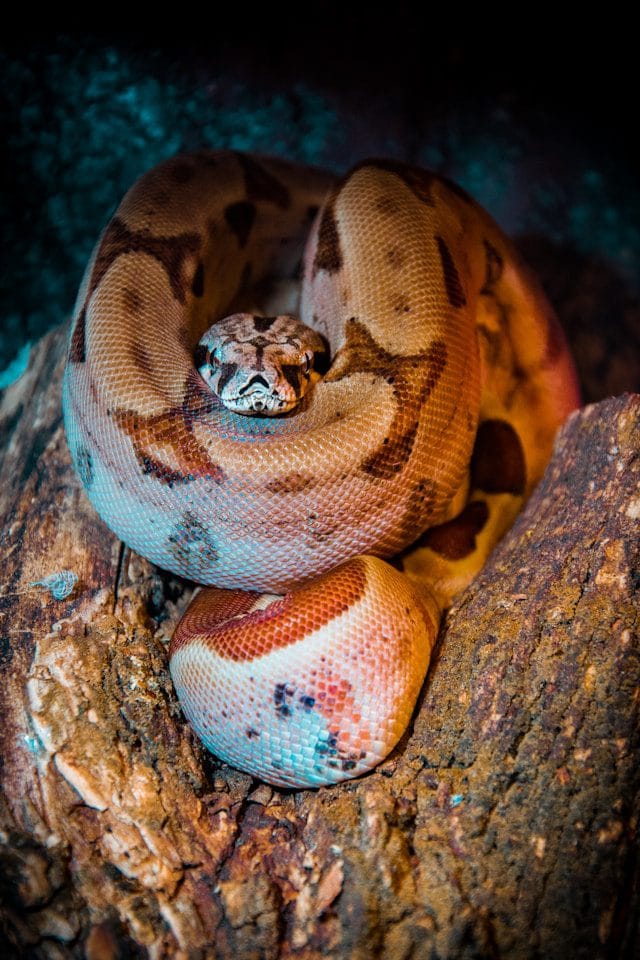
The scientific name of the Boa Constrictor, a fascinating and powerful species of snake, is Boa Constrictor. This Latinized name represents the robust nature of this large, non-venomous constrictor snake and its ability to subdue prey. The Boa constrictor is a member of the Boidae family, which includes various species of non-venomous, constricting snakes. The genus name "Boa" originated from the Taino language, which means large snake, reflecting the imposing size of these creatures. The species epithet "Constrictor" highlights their unique method of hunting and killing by suffocation through constriction, reflecting the snake's formidable presence in the natural world.
Boa Constrictors are further classified into various subspecies based on their geographic distribution, with several former subspecies, which are now elevated to independent species, like Boa imperator, Boa sigma, and some separate island-endemic species, each with its
There are several recognised subspecies of boa constrictors, with several former subspecies which are now elevated to independent species, like Boa imperator, Boa sigma, and some separate island-endemic species, each carrying different morphological traits and adaptations with its own distinct binomial names or specific two-part scientific names. For example, the scientific name of the Argentine Boa Constrictor is "Boa constrictor occidentalis". The genus name Boa comes from the ancient Latin word boa, used by Pliny the Elder to describe a large serpent, while constrictor comes from the Latin verb constringere, meaning "to draw together" or "to bind/squeeze", and occidentalis comes from the Latin word occidens, meaning "the west" or where the sun sets, combined with the suffix-alis, meaning "western". However, it was named occidentalis because this subspecies represents the westernmost and southernmost ranging population of the Boa constrictor complex in South America.
On the other hand, the scientific name of the Central American boa is "Boa imperator", which is derived from two Latin words:
These regional variations provide researchers with valuable insights into evolution, genetics, and environmental influences on this species. Understanding the intricate details behind the scientific classification of Boa Constrictors elevates our appreciation for their diversity and ecological significance within their natural habitats. By delving into their taxonomic nomenclature, we gain a deeper understanding of these impressive reptiles and their essential role in maintaining balanced ecosystems across diverse regions.
Boa constrictors, often portrayed as menacing giants, are amazing creatures with incredible facts and features.
The appearance and anatomy of the boa constrictor is truly a marvel of nature. These large, heavy-bodied snakes have a distinct and powerful body structure. They have a long, sleek, cylindrical, muscular build that showcases their strength and adaptability, helping them to be powerful predators. Their large, flat, triangular head is much wider than their neck, while their small, piercing eyes also give them an intense and intimidating presence. They have three distinct dark stripes running from the eyes back to the jaw, and a stripe along the crown or top of the snout. These impressive snakes' streamlined bodies are covered in beautifully patterned skin (saddle-shaped blotches or ovals) with dark brown, reddish-brown, or black markings on a lighter background, ranging in colour from cream, light brown, tan, grey, or pinkish. Their diverse colouration and patterns vary based on their specific geographic location. However, these snakes' beautiful, glossy scales give them a striking appearance, while their earthy colouration helps them blend seamlessly into their natural surroundings.
Adult Boa constrictors can grow between 7 and 10 feet, though some can reach up to 13 feet in length, and some individuals rarely exceed 18 feet. They typically weigh between 10 and 15 kg, with large females reaching up to 27 kg. Females are generally larger in both length and girth than males.
Boa constrictors have an impressive anatomy that contributes to their prowess as predators. Their eyes have vertical pupils and are covered by a transparent scale called an eye cap instead of movable eyelids, which is suited for nocturnal hunting. Boa constrictors have heat-sensing pits (they lack deep, visible heat-sensing pits on their face like pythons or pit vipers, but they possess heat-sensing nerve receptors) located in and around their lip scales, which enable them to detect warm-blooded prey even in darkness or dense vegetation, showcasing the intricate nature of their sensory capabilities. Furthermore, their sense of smell, combined with their forked tongues, enables them to track down prey with remarkable accuracy. They flick their forked tongues to gather chemical and scent particles from the air and touch them with a specialised organ called Jacobson's organ, located in the roof of this snake's mouth, allowing them to "smell" their environment for hunting and navigation. Moreover, their long, cylindrical bodies with flexibility and agility enable them to move with grace and efficiency, making them formidable hunters in both terrestrial and arboreal environments. Boa constrictors have powerful jaws and over 100 sharp, aglyphous (non-fanged), backwards-curving teeth that continuously replace themselves to grasp, hold and secure prey before wrapping around them. Their powerful muscles enable them to constrict their prey with incredible force, demonstrating the impressive strength within their slender frame, while their prehensile tail serves multiple purposes, not only aiding in climbing but also providing additional support when coiling around prey. Additionally, these snakes' flexible jawbones and stretchy ligaments also help them to swallow large prey whole, a remarkable feat that allows them to survive on long intervals between meals in the wild, showcasing the incredible adaptability of these formidable reptiles.
However, they possess two functional lungs, though the right lung is significantly larger than the left lung to accommodate their slender body shape. These reptiles are also capable of shifting ventilation to unused trunk segments and ribs while swallowing large prey whole. They have specialised cardiac muscle fibres that directly link the cell membrane to the contractile system. The boa constrictor retains tiny vestigial pelvic spurs (hind-limb remnants) near the cloaca, which are larger in males and used during courtship. Their intricate smooth scale patterns not only serve as camouflage but also play a crucial role in thermoregulation by absorbing sunlight to maintain optimum body temperature. As mesmerising as they are from the outside, it's equally intriguing to consider how these physical attributes have evolved to help Boa Constrictors thrive in diverse environments. This intricate combination of appearance and anatomy truly sets the boa constrictor apart as an awe-inspiring predator in the animal kingdom.
The Boa Constrictor lives in diverse environments across Central America and South America, spanning from humid tropical rainforests to semi-arid regions. They thrive in a variety of habitats, including rainforest clearings and edges (for warmth and cover), jungles, dry tropical forests, savannas (shrublands, thorn scrub, and open grasslands), woodlands, rocky foothills or mountainous regions, and even arid semi-deserts. These elusive snakes prefer dense vegetation near water sources, such as rivers, streams, springs, and wetlands, where their prey is abundant. Boa Constrictors frequently found in rivers and streams because they are strong swimmers. They also hide from predators inside hollow logs, fallen branches, and abandoned burrows of medium-sized mammals. While young boa constrictors tend to be arboreal, adult boa constrictors are mostly terrestrial, remaining capable climbers. They typically inhabit areas from sea level up to about 1,000 meters in elevation. However, these snakes are also known to thrive in human-modified areas, such as agricultural landscapes, farms, rural settlements, and even some urban areas, which have shown remarkable adaptability.
Their ability to thrive in such varied environments stems from their impressive hunting skills and ability to regulate body temperature with adequate access to water sources, plenty of food, ample vegetation cover for hunting prey, and cover from enemies. Furthermore, this adaptability allows them to maintain a wide distribution across their native range.
The distribution of the Boa Constrictor extends from northern Mexico through Central America and down to South America as far south as Argentina, including many coastal islands and northern Brazil. Additionally, the presence of boa constrictors on some Caribbean islands (bordered by North America to the north and also the west through Central America, and South America to the south) indicates their capability for long-distance dispersal through oceanic rafting or accidental human introduction, which highlights their unique ability to find suitable habitats that support their survival and reproductive success even across large bodies of water. While primarily associated with the Amazon basin, these snakes have also been introduced to areas outside their natural range, such as southern Florida, Cozumel, St. Croix in the U.S. Virgin Islands, and Puerto Rico. It's fascinating how these snakes have been able to thrive in such a vast range of ecosystems with varying levels of temperature and humidity. These non-native populations can have significant impacts on local ecosystems and wildlife due to their predatory nature. Additionally, this expansive range allows them to take advantage of diverse prey species and ecological niches.
In addition to its diverse habitats, the boa constrictor's distribution is fascinating due to its ability to thrive in both wild and human-altered landscapes. As adaptable ambush predators, they can exploit urban environments for prey while avoiding human contact. Moreover, their tendency to travel long distances demonstrates their resilience in navigating fragmented habitats caused by deforestation, habitat destruction and other human activities. Understanding how human interventions impact the distribution of boa constrictors is crucial for conservation efforts aimed at protecting these magnificent reptiles.
The Boa Constrictor, a popular member of the family Boidae, is one of the most well-known non-venomous snake species in the world. There were several recognised subspecies of boa constrictors, but the boa constrictor taxonomy has changed recently, with several former subspecies now elevated to independent species, like Boa imperator and Boa sigma, leaving four to nine traditional or recognised subspecies depending on the taxonomic authority.
However, the True Boa Constrictor (Boa constrictor) is native to the tropical rainforests of South America, ranging from Guyana, Suriname, Peru, and Brazil. They tend to develop a deeper, vibrant burgundy or bright red tail and more uniform patterning, and there are several recognised subspecies of the True Boa Constrictor, including:
The most common subspecies of Boa Constrictor is the Red-Tailed Boa Constrictor (Boa constrictor constrictor), known for its distinct vibrant red tail and large size; it often grows 10 feet or more. It features high-contrast, vivid bright red or salmon-coloured saddle markings along its tail, giving rise to the name "red-tailed boa", but is less common and often more expensive than Boa imperator. These incredible snakes can be found in a variety of habitats, ranging from tropical rainforests to semi-desert regions in South America.
The Argentine Boa Constrictor (Boa constrictor occidentalis) stands out for its smaller body, heavy build and striking appearance. This subspecies is characterised by lighter hues, darker, high-contrast patterns and an earthy tone, enabling it to blend seamlessly into its natural surroundings. As inhabitants of subtropical forests, marshes, and savannas of Argentina and Paraguay, these boas have adapted to varying climates and terrains over time.
The Long-tailed Boa, or the dwarf boa (Boa constrictor longicauda), inhabits more arid regions of northern Peru. They have a more slender and less bulky body in comparison to many other subspecies. It is recognised by its distinct tail length and darker colouration, which display remarkable adaptations to seasonal environments, from dry tropical forests to scrublands and semi-deserts, allowing it to thrive in areas where resources may be scarce. Their ability to survive in such harsh conditions highlights the incredible diversity within the Boa constrictor species as a whole.
The Orton's Boa (Boa constrictor ortonii) is native to northwestern Peru, adapted to arid scrub and dry local climates.
The Bolivian Boa (Boa constrictor amarali) is found in Brazil and Bolivia, typically smaller with a more compact, distinct head structure.
Two independent species, which were former subspecies of the True Boa Constrictor and formerly known as "Boa constrictor imperator", include:
Though the True Boa Constrictor (Boa Constrictor) and the Central American boa (Boa imperator) are two distinct and separate species, they are closely related and were previously grouped.
The Central American boa (Boa imperator), frequently called the Common boa or Northern boa, is the most widespread and commonly kept species of boa constrictor. It is known for its diverse colour patterns, ranging from tan, grey, to light brown base colour with darker brown, reddish-brown, or black hourglass-shaped or X-shaped saddle markings along its back, often forming a chain-like pattern and a distinct reddish-brown, orange, or bright red hues on the tail section. This species exhibits a wider variety of natural colours and designer morphs bred in captivity. It has a slimmer, more slender, and muscular build with a shorter and broader head. This snake is popular for its hardy nature with a calm, active, mellow and defensive temperament, dominating the exotic pet trade along with their close relatives, the True Boa Constrictor. The Central American boa is smaller and more manageable than the True Boa Constrictor, such as the Red-tailed boa. Adult Common boas usually grow between 5 and 8 feet long, with females staying larger than males. They live in tropical rainforests, dry savannas, and brushlands from Mexico down through Central America and parts of northwestern South America (west of Colombia and Ecuador). In the wild, Central American Boas eat small mammals, birds, and lizards, using ambush tactics and constriction. Depending on the animal, they live 11 to 50 years in the wild, but in captivity, 20 to 30 years or more.
Colombian Boas (Boa imperator) and Central American boas (Boa imperator) are the same species, but they are from different geographic localities with distinct sizes and physical traits. The Colombian Boa features a light brown to tan or greyish background with distinct darker, oval-shaped saddle markings down the back and a distinct reddish-brown or bright red tail tip. They are known for their calmer, curious, and docile temperament, making them a highly sought-after species in the pet trade. They are heavy-bodied with a stocky, thick girth, and have a slightly longer and narrower head. Adult Colombian Boas are larger and often grow between 7 and 10 feet long. These boas are native to Colombia, Central America and parts of Mexico, where they thrive in warm, humid tropical rainforests, woodlands, adjacent grasslands, and river valleys. Their adaptable nature allows them to thrive in both humid environments and drier regions, reflecting their remarkable ability to acclimate to diverse habitats. Despite being large snakes, they often prefer to stay hidden in dense vegetation or burrows during the day, emerging at night to hunt for prey such as rodents, birds, and small mammals.
Another independent species is the Mexican West Coast boa constrictor (Boa sigma), also known as the Sonoran boa or Bateman's Boa. This snake was elevated to a separate species from Boa constrictor and Boa imperator based on modern genetic and phylogeographic evidence. However, it is a captivating and enigmatic creature that has intrigued herpetologists and reptile enthusiasts for generations. With its sleek body adorned with intricate patterns and hues of rich earthy tones, this species exudes an undeniable allure. The Mexican West Coast boa, with powerful constriction abilities, holds a significant place in the diverse ecosystem of western Mexico’s coastal region, extending into the Sonoran Desert. With its native range extending from tropical dry forests to coastal thornscrubs, arid and semi-arid brushlands to wooded areas, rocky foothills to desert grasslands, and mountainous regions, this impressive serpent has adapted to thrive in various environments.
Other closely related and separate island-endemic species include:
Lastly, the Jamaican boa (Epicrates subflavus), also known as the yellow snake or Jamaican tree boa, this elusive serpent found exclusively on the island of Jamaica and boasts a striking golden-yellow colouration with dark markings that dance along its sleek body. It is not a subspecies of Boa constrictor. The Jamaican boa is a distinct, standalone species endemic to Jamaica with no recognised subspecies of its own. While both belong to the broader boa family Boidae and kill via constriction, they represent entirely separate species and genera. Boa constrictor belongs to the genus Boa, but the Jamaican boa belongs to the genus Chilabothrus (formerly classified under Epicrates). With its striking patterned scales and enigmatic reputation, this elusive creature embodies the mystique and allure of the Caribbean island (bordered by North America to the north and also the west through Central America, and South America to the south). As one of the largest non-venomous snakes in Jamaica, it plays a crucial role in maintaining ecological balance. Its mysterious nature and limited distribution make it a subject of fascination for herpetologists and wildlife enthusiasts around the world.
Understanding these diverse types of boa constrictors offers a greater appreciation for the diversity within this remarkable species.
Boa constrictors have a distinct and powerful body structure, characterised by a long, sleek, cylindrical muscular build. They are known for their distinctive patterns and colours, which can vary depending on their specific subspecies or morphs. Another distinctive characteristic of these serpents is their impressive size, as they can reach lengths between 5 and 10 feet, with some individuals even exceeding 13 feet or 18 feet in length in some cases. They possess specialised heat-sensing nerves in and on their lip scales that aid them in detecting warm-blooded prey at night in dense environments or dark conditions. These snakes also flick their forked tongues to gather chemical scent particles from the air and touch them with a specialised organ called Jacobson's organ on the roof of the snake's mouth to detect prey, predators, or mates. Their muscular build, which showcases their strength and agility, makes them formidable predators in their natural habitat. With their ambush technique (they wait quietly for animals to pass), they strike and grab the prey with their powerful jaw, which is lined with hooked teeth, before coiling around their prey and constricting it with tremendous force to subdue it before swallowing it whole. With the flexibility of their jawbones and stretchy ligaments, boas can tackle prey much larger than their heads. They are capable of consuming larger meals than almost any other snake species relative to body size. While these reptiles are primarily terrestrial inhabitants, boas are proficient climbers due to their semi-arboreal tendencies and can often be found lounging high in trees or among leaf litter on the forest floor. Despite being solitary animals most of the time, boas are known to engage in social behaviours during breeding seasons or hibernation periods. These snakes are also known for their adaptability to various environments and can often be spotted near water sources where they hunt for prey like birds, rodents, reptiles, fish, amphibians, and small mammals. They are typically found in tropical rainforests, dry forests, savannas, and wetlands throughout Central America and South America, where they thrive in warm, humid environments. These massive snakes have a reputation for being powerful yet docile creatures, making them sought-after pets for reptile enthusiasts.
In terms of habitats, Boa Constrictors are primarily found in a wide variety of environments across northern Mexico through Central America and down to South America as far south as Argentina, including many coastal islands and northern Brazil. Additionally, they can be found on some Caribbean islands. These majestic creatures have a wide habitat range, extending from tropical rainforests, dry forests, savannas (shrublands, thorn scrub, and open grasslands), woodlands, arid semi-deserts, rocky foothills or mountain areas, and even some human-modified areas. They also thrive in human-modified areas (agricultural fields, farms, and rural settlements). These snakes also stay close to water sources, such as rivers, streams, and coastal areas, because they are strong swimmers. Boas' adaptability enables them to seek shelter in hollow logs or abandoned burrowed tunnels when necessary. Their muscular bodies allow them to climb trees with ease, making arboreal habitats also suitable for some subspecies. They thrive in diverse ecosystems with adequate access to water sources, plenty of food, ample vegetation cover for hunting prey, cover from enemies, and suitable temperatures to regulate their metabolic functions. However, their long-distance dispersal through oceanic rafting or accidental human introduction highlights their unique ability to find suitable habitats that support their survival and reproductive success even across large bodies of water.
The Boa constrictors' diet is diverse, with a wide variety of prey. As strictly carnivorous animals, these magnificent hunters have been known to consume small to medium-sized rodents (mice, rats, agoutis, and squirrels), birds (ducks, chickens, and various wild birds), fish, amphibians (frogs), reptiles (lizards), bats, and even larger mammals (primates, pigs, ocelots, opossums, and young deer), depending on the snake's size. With their ability to adapt to different environments and prey availability, in more tropical regions, boas may hunt for tree-dwelling animals like birds and monkeys, while in other areas they might target ground-dwelling mammals, rodents and other small reptiles. However, their diet is not limited to tree-dwelling or land-dwelling creatures; they have also been known to hunt aquatic fish, amphibians and reptiles. While young boas eat small mice, nestling birds, lizards, frogs, and bats, adult boas consume larger rodents (rats and agoutis), monkeys, wild pigs, ocelots, opossums, and young deer. This flexibility showcases the boa constrictor's adaptive nature and how their diet varies according to their habitat.
Boa constrictors, despite their immense size and powerful coils, are stealthy hunters. They rely on their keen sense of smell and heat-sensing lip scales to locate potential warm-blooded prey in the darkness. Despite being formidable hunters, boas can exhibit patience and camouflage when stalking prey, showing a level of intelligence not commonly associated with reptiles. They use an ambush technique to catch their prey, surprising them with lightning-fast strikes and grabbing them with powerful jaws, which are lined with hooked teeth, before coiling around and squeezing them. They can constrict their prey with an astonishing amount of force to subdue it until it stops breathing before consuming it, making them formidable predators in their habitats. Their flexible jawbones and stretchy ligaments allow them to swallow prey items whole much larger than the diameter of their heads, showcasing the incredible adaptability and efficiency of these majestic predators. Boa constrictors also possess exceptional regurgitation skills that enable them to expel indigestible parts of their meals, such as bones and fur, after feeding, a remarkable feat among creatures in the animal kingdom. This incredible feeding strategy allows them to thrive in various environments and ensures they can sustain themselves on an assortment of food sources.
Another intriguing fact about boa constrictors' diet is that they have a remarkable ability to swallow prey whole due to their elastic, muscular bodies and expandable stomachs. Additionally, they can go for weeks or even months without eating after a large meal like wild pigs, monkeys and ocelots, as they have slow metabolic rates. This remarkable feature enables them to survive in harsh environments where food may be scarce. Furthermore, boas can adapt their feeding patterns based on prey availability in their environment. They are opportunistic feeders, which means they will adjust their diet according to what is accessible in a particular habitat. Despite being powerful predators at the top of the food chain in their habitats, boas play a crucial role in controlling rodent populations, an often overlooked benefit of these awe-inspiring reptiles.
The behaviour and lifestyle of the boa constrictor are truly fascinating. They prefer calm, secluded environments in tropical and subtropical broadleaf forests, where they spend their time alone, often lounging in trees and hiding in dense foliage, hollow logs or abandoned mammal burrows. These snakes are also known to regulate their body temperature through behaviours such as basking in the sun or seeking shelter in cooler areas. They have a remarkable ability to climb trees and swim proficiently, giving them a diverse range of environments in which they can thrive. While young boas are more semi-arboreal and climb trees to find food, heavier adults become mostly terrestrial and stay on the ground to hunt. Their agility both on land and in water makes them formidable predators across a variety of environments, which enables them to pursue a wide range of prey, including tree-dwelling mammals, ground-dwelling rodents and aquatic fish.
Boa constrictors are skilled hunters, using a keen sense of smell and heat-sensing nerves in and on their lip scales to locate potential prey and predators in the darkness. They move slowly on the ground at about 1 mile per hour and use camouflage patterns to hide from predators and prey. Additionally, they are ambush predators with exceptional stealth and patience. These snakes wait for unsuspecting prey to pass by before striking with lightning speed. Once they capture prey, they use powerful constriction to subdue it or squeeze to stop its blood flow and breathing before swallowing it whole without causing harm, an impressive display of control and precision in their hunting behaviour. With their flexible jawbones and stretchy ligaments, boas can tackle prey much larger than their heads and consume larger meals than almost any other snake species relative to body size. Interestingly, they possess exceptional regurgitation skills that enable them to expel indigestible parts of their meals, such as bones and fur, after feeding. Furthermore, their eyes turn milky and their vision drops when they are ready to shed their skin, which makes them defensive. When scared, they hiss loudly and puff up their bodies, or strike. Despite their impressive size and strength, these serpents are generally shy animals when not hunting or defending themselves. This placid behaviour makes them popular exotic pets for enthusiasts who appreciate their unique traits and low-maintenance lifestyles.
When it comes to their lifestyle, these large, non-venomous snakes are primarily solitary, but are known to engage in social behaviours during breeding seasons or hibernation periods. During mating season, males will engage in combat with each other to win the right to mate with a female. Once a female is pregnant, she will undergo a gestation period that can last 4 to 5 months before giving birth to live young. This unique reproductive strategy sets boas apart from many other snake species and highlights the complexity of their behaviour. Interestingly, they have been observed exhibiting maternal care towards their offspring after giving birth, showcasing a rare nurturing aspect of their nature. These snakes employ various methods of communication, such as hissing or body positioning, to express discomfort rather than resort to aggression. Furthermore, boa constrictors have been observed demonstrating adaptability by thriving in diverse habitats ranging from tropical rainforests to dry forests, savannas to arid semi-deserts, rocky foothills to wetlands, and even human-modified areas, showcasing both their resilience and versatility in the wild. Their lifestyle revolves around finding warm, humid areas to bask in the sunlight during the day to regulate their body temperature or resting in tree branches, thick plants, hollow logs or abandoned burrows. They are primarily nocturnal, preferring to hunt and move under the cover of darkness. Their method of hunting involves seizing their victim with powerful coils and then using constriction before swallowing them whole. Boa constrictors' preferred diet consists of small monkeys, birds, bats, rodents, fish, amphibians, and occasionally other reptiles. They have a relatively slow metabolism and can go extended periods without eating after a significant meal. Besides these, they also play a crucial role in maintaining ecological balance by regulating small mammal populations in their environment.
However, these magnificent reptiles are non-aggressive unless provoked or threatened. Despite their intimidating size and predatory nature, boa constrictors are surprisingly docile in captivity when provided proper care and handling, which has made them popular exotic pets among reptile enthusiasts and experienced reptile keepers.
The reproduction, babies, and lifespan of the boa constrictor are fascinating. This majestic snake species reproduces primarily through sexual reproduction and gives birth to live young instead of laying eggs. Boas breed in the dry season, usually between April and August. During mating season, female boas release a special scent from their cloaca to attract males. If attracted, male boas will approach a female in a ritualistic manner, where they will intertwine their bodies and engage in courtship behaviours. Adult males may mate with multiple females, and they use their cloaca (which is larger in males) to release sperm inside the female's body. Once the female is impregnated, she can store sperm after mating, allowing them to fertilise their eggs at a later time when conditions are more favourable for offspring survival or females have stored enough body fat and energy. Because of this, only about half of adult females breed in any given year. This unique trait contributes to the adaptability and resilience of these awe-inspiring creatures in the wild.
However, the boa constrictor is ovoviviparous, meaning that the eggs develop and hatch inside the mother's body rather than in an external nest, and it allows the mother to provide warmth and protection to her offspring before they enter the world. The embryos are nourished by a yolk sac inside the body, and they hatch from their thin membranes either right before or during the birth process. The mother boa constrictor carries her developing embryos inside her body for an average gestation period of 120 to 150 days (4 to 5 months), before giving birth to a litter that can range from 10 to 60 live babies (an average of 25), depending on her size, age, species, and temperature. This unique reproductive strategy ensures that the offspring are immediately equipped for survival, as they emerge from their mother fully formed and ready to fend for themselves. Furthermore, the size and health of the babies at birth can vary based on factors such as maternal nutrition and environmental conditions.
Notably, scientists have discovered rare cases where female boa constrictors can give birth without mating, which is called parthenogenesis. This virgin birth process produces all-female offspring with genetic traits coming solely from the mother.
Once born, the baby boa constrictors are fully independent and do not rely on long-term parental care. Newborn babies typically measure between 18 and 24 inches long. Despite their small size at birth, they possess all the instincts and abilities needed to survive in their environment. Baby boas often climb trees to stay safe while they grow. They will begin exploring their environment and instinctively know how to hunt and regulate their body temperature after being born. It is truly astonishing to witness these tiny serpents displaying remarkable predatory instincts from such an early age. After birth, these baby boas grow at an impressive rate in comparison to other reptile species, reaching sexual maturity within 2 to 3 years. Their rapid development reflects the adaptability of these creatures in the wild.
As they grow, these exquisite snakes have an impressive lifespan in captivity when provided with proper care and living conditions. On average, they can live anywhere from 20 to 30 years but have been recorded to reach up to 40 years old or more in some cases. This longevity allows for a unique opportunity to observe their behaviour and development over an extended period, offering valuable insights into their biology and ecology. This remarkable lifespan allows them to play a significant role in their ecosystems, showcasing the importance of these magnificent creatures in the natural world.
Boa constrictors, despite their formidable size and reputation as powerful predators, face several predators and threats in the wild. While adult boa constrictors have few natural predators due to their large size and powerful constriction capabilities, young and small boas are vulnerable to a variety of threats. In their natural habitats, young boas may fall victim to birds of prey such as eagles, hawks and owls. These aerial hunters can easily snatch up a juvenile boa as it navigates through trees or across open areas. Young boa constrictors also face a wide variety of predators on the ground such as jaguars, raccoons, opossums and ocelots. In the wild, coyotes, bobcats, lynx, and wild dogs regularly hunt smaller and mid-sized boas. While large snakes, caimans, and even very large spiders can prey upon newborn or juvenile boa constrictors, jaguars or large caimans may pose a rare threat to adult boa constrictors, and these animals often risk being attacked and eaten by the large snake in return.
However, one major threat to boa constrictor populations is habitat destruction due to human activities such as deforestation for agricultural expansion, ranching, mining and urbanisation. This loss of natural habitat can disrupt their hunting grounds and hiding spots, leading to increased human-wildlife conflict as they are forced into closer proximity to humans. People often kill boas out of fear or misunderstanding when human development pushes the snakes closer to towns, ranches, and livestock pens. Another significant threat to boa constrictors is the overcollection for the exotic pet trade and illegal hunting for skin or leather. Boas are often sought after for their impressive size and exotic allure, making them a popular choice for collectors. This demand fuels the underground trade in wild-caught snakes, leading to unsustainable harvesting from the wild and further endangering their already vulnerable populations. Additionally, boas face threats from climate change, which can alter their native habitats and disrupt breeding patterns. The increasing frequency of extreme weather events can also directly impact boa populations by destroying essential habitats and food sources. These combined threats highlight the delicate balance that boa constrictors must navigate to survive in an increasingly challenging environment. But in captivity, some wild populations face health risks from inclusion body disease, which is linked to reptarenaviruses.
The population number of boa constrictors in the wild has long been a topic of fascination and concern for conservationists. With their elusive nature and wide-ranging habitats across Central America and South America, accurately estimating their numbers has proved to be an intricate challenge. With this difficulty, there is still much to be learned about these iconic snakes. So there is no exact global population number for the boa constrictor.
However, recent studies have shed light on the fact that boa constrictor populations may be more resilient than previously thought. In some areas, despite threats such as habitat loss, human encroachment, illegal pet trade and the impact of climate change, these impressive snakes have shown remarkable adaptability and are persisting in surprising numbers.
Some areas have reported an increase in boa constrictor numbers, potentially due to successful conservation efforts and stricter regulations on hunting and trade. Additionally, the adaptation of some individuals to urban environments has sparked curiosity about the potential for population growth within human-dominated landscapes. As researchers continue to study and monitor these enigmatic creatures, it becomes increasingly important to strike a balance between conservation efforts and responsible management of this species' population dynamics.
The importance of boa constrictors in their natural ecosystem cannot be overstated.
The sight of a massive boa constrictor coiled up in the zoo is both awe-inspiring and slightly unnerving. As visitors gather around its enclosure, there's a mix of fascination and apprehension in the air. The majestic size and sinewy movements of this creature never fail to command attention, reminding us of the primal power and beauty of nature.
Observing a boa constrictor in the controlled environment of a zoo offers a rare opportunity for education and appreciation. Its intricate patterns and mesmerising scales offer insight into the marvels of evolution, while its predatory prowess serves as a stark reminder of the harsh realities of survival in the wild. For many, seeing this creature up close sparks an interest in conservation efforts and prompts reflection on our relationship with all living beings.
As we watch the graceful movements and deliberate gaze of the boa constrictor, it's impossible not to wonder about its place in our world. Perhaps encountering these remarkable creatures can serve as an invitation to delve deeper into understanding and protecting all species that share our planet, a responsibility that becomes undeniably vivid when face to face with such a powerful symbol of nature's complexity.
The classification and evolution of the Boa constrictor reveal a fascinating glimpse into the history of these majestic reptiles. As members of the Boidae family, boa constrictors are classified under the order Squamata, which encompasses all species of lizards and snakes. However, originally classified under the genus Boa, recent genetic studies have led to their reclassification within the subfamily Boinae, which includes the anacondas and tree boas. This classification not only places them alongside other non-venomous, constricting snakes, but also highlights their unique place in the evolutionary timeline.
Boa constrictors are one of the most ancient snakes, with evolutionary roots dating back millions of years. Their impressive lineage can be traced from Central America to South America, where they have diversified into various species with distinct characteristics. While most experts agree on the species Boa constrictor, they recognise various subspecies, such as Red-tailed Boa, Argentinean Boa, and Long-tailed Boa, etc. The True Boa constrictor is primarily found in South America. Modern DNA research shows that Boa constrictor is part of a species complex. Several former subspecies, such as the Central American boa, have been elevated to separate species like Boa imperator and Boa sigma. This new classification offers a fresh perspective on the evolutionary history of these fascinating creatures, shedding light on their relationship with other members of the Boidae family.
Examining the evolution of the Boa constrictor provides valuable insights into its adaptive traits and survival strategies. Fossil records suggest that these snakes have existed for millions of years, adapting to diverse environments and evolving alongside changes in their prey species. Their ability to adapt to diverse habitats and climates has contributed to their widespread distribution across different continents and ecosystems. Through genetic studies, scientists have uncovered insights into their evolutionary past, revealing how they have diversified and evolved into numerous subspecies across different regions. Boas possess small, external pelvic spurs (vestigial hind limbs) near their cloaca. These are tiny remnant claws from ancestral four-legged reptiles, used primarily by males during mating. Unlike many advanced snakes that have a reduced or missing left lung, boas retain two functional lungs, with the right lung being enlarged. Additionally, they evolved specialised muscular bodies to stop blood circulation through constriction to subdue prey and small, hooked teeth to grab prey rather than using venom. Furthermore, most boas incubate eggs internally and give birth to fully formed live young rather than laying external eggs. This evolving diversity has enabled boa constrictors to thrive in a variety of ecosystems, showcasing their resilience and adaptability as a species.
Boa constrictors have long been both feared and revered by humans, thanks to their striking appearance and powerful presence. However, their relationship with humans goes beyond mere intimidation. These magnificent creatures have been kept as pets and in zoological collections worldwide, admired for their impressive size and beautifully patterned skin. Their docile nature and low maintenance requirements make them a popular choice among reptile enthusiasts, fostering a unique bond between man and serpent. While some may view boa constrictors as dangerous predators, others appreciate them for their role in controlling rodent populations and maintaining ecological balance.
Furthermore, many people find joy in caring for these reptiles as pets, marvelling at their unique behaviours and the opportunity to observe them up close. Boa constrictors also have potential therapeutic benefits, as interactions with these gentle giants can promote mindfulness and reduce anxiety in individuals who suffer from stress-related disorders.
One fascinating aspect of the boa constrictor's relationship with humans is its role in cultural symbolism. In many ancient civilisations, these serpents were associated with fertility, creation, and healing rituals. Even today, they continue to hold various symbolic meanings in different cultures around the world. This rich history further adds depth to our connection with these creatures beyond simple curiosity or fear. These creatures have been an inspiration in art and culture throughout history. From ancient myths to modern literature and film, boa constrictors continue to captivate human imagination worldwide. Additionally, the economic impact of boa constrictors cannot be underestimated. They play a significant role in the exotic pet trade, leading to both positive and negative consequences for their population in the wild.
Beyond symbolism and pet ownership, boas also play a crucial role in scientific research and conservation efforts. Understanding their behaviour in captivity can provide valuable insights into wild counterparts' ecology and biology. Moreover, researching ways to protect them from habitat destruction or illegal trade helps strengthen our bond with these remarkable beings while contributing to the preservation of an important species.
Boa constrictors, while not currently considered endangered, are facing increasing threats to their survival. Though certain subspecies or isolated regional populations face greater localised threats, the overall Boa constrictor is listed as Least Concern by the International Union for Conservation of Nature (IUCN). Specific regional groups, such as the Argentine Boa Constrictor classified with higher protection needs and listed under CITES Appendix 1 due to localised habitat loss and hunting. Certain island-dwelling populations, like those off Belize, can also meet criteria for Endangered status due to tiny, isolated population sizes.
Their populations are being impacted by habitat destruction and fragmentation due to clearing of tropical rainforests, dry forests, and savannas for agriculture, ranching, and mining; overcollection for the exotic pet trade and overhunting for their skin or leather; direct killing or removal when encroaching near human settlements; and road mortality. As human encroachment continues to expand into their natural habitats in Central America and South America, the boa constrictor's ability to find suitable food and shelter becomes compromised. Additionally, climate change is also a growing concern for these snakes as it alters their habitats and disrupts breeding patterns.
However, efforts to regulate the international trade of boa constrictors through CITES (Convention on International Trade in Endangered Species) have been made, but illegal poaching still poses a significant threat. So, conservation initiatives must focus on protecting the boa constrictor's habitats and enforcing regulations to ensure sustainable trade practices. Without effective intervention, this iconic species could face heightened risk shortly.
Boa constrictors and anacondas are often mistakenly thought to be the same species due to their physical similarities, but there are many distinct differences between the two.