
A bull is an intact adult male of the species Bos taurus or Bos indicus (domestic cattle). Cattle are large, domesticated, cloven-hooved herbivores. They are bovine animals and a prominent modern member of the subfamily Bovinae, with the most widespread species of the genus Bos. The majestic mature male cattle are referred to as bulls, an uncastrated male, which is more muscular and aggressive than the females of the same species. Bulls have long been an iconic symbol of strength and power, including for sacrifices in various cultures around the world. They can weigh more than 1,000 kilograms, stand over 6 feet tall at the shoulder, and measure 7 feet in length. One of the most prominent features that sets bulls apart from other cattle is their horns. These formidable weapons are made of keratinised hair-like tissue and can grow up to several feet long in some species. Bulls are also known for their aggressive behaviour during mating season or when threatened.
With their muscular build, impressive horns and distinct demeanour, these bovine creatures have captivated human fascination for centuries and play an integral role in livestock farming. As one of the largest and most recognisable domesticated animals, the bull has played significant roles in agriculture, sports events like rodeos and even mythology. While intact bulls are mostly kept for breeding, castrated male cattle are trained to do work, used as draft animals (bullocks) and raised for beef production (steers). One primary purpose of the bull is for meat production. Their castration also helps prevent the development of certain undesirable traits often found in intact bulls, such as aggression and excessive muscle mass.
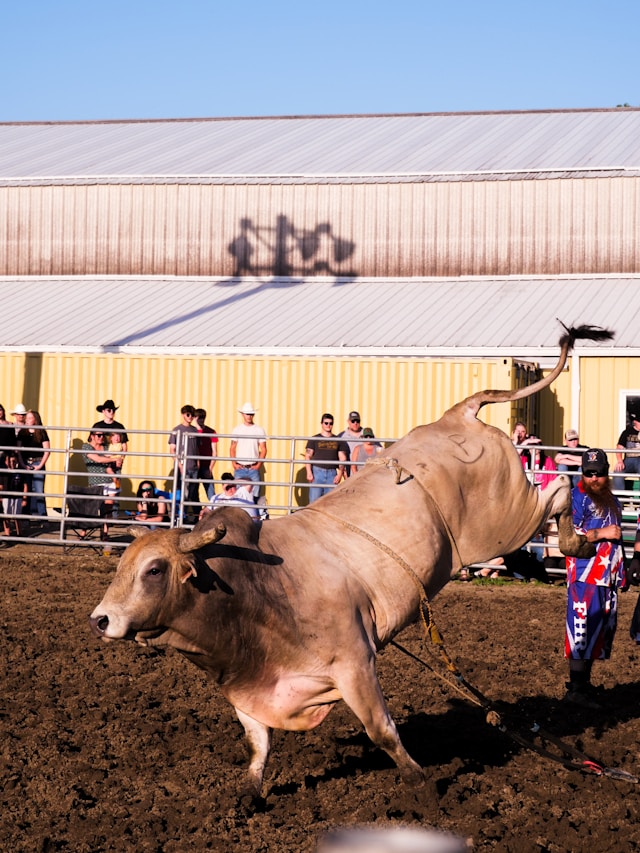
The scientific name for a bull is "Bos taurus". Bulls (Bos taurus) simply refers to the uncastrated adult male of various species, and the name depends on the animal. For instance, a male indian bison or indian wild bull is known as "Bos gaurus", while a male moose is known as Alces alces and an American bison is known as Bos bison or Bison bison.
However, the bull belongs to the family Bovidae and the genus Bos. The genus name, Bos, refers to a group of large and powerful bovines or ungulates that includes the bull, ox, cow, bison, yak, water buffalo, and gaur in general, and several species of ungulates such as goats and sheep. But it is the Taurus species that represents domesticated cattle found worldwide. The specific epithet, Taurus, is derived from the Latin word for Bull or Ox. So, this scientific classification helps distinguish this magnificent animal from other members of the bovine family.
Moreover, "Bos taurus" refers to European or taurine cattle common in Europe, North America, and South America, while "Bos indicus or Bos taurus indicus" refers to Zebu or humped cattle common in South Asia and tropical regions; both represent one of the most important domesticated animals in human history. This species has been selectively bred by humans for thousands of years to provide meat, milk, leather and labour. But intact Bulls (Bos taurus), uncastrated adult males kept for breeding, and they are known for their muscular build, strong horns (in some breeds), and aggressive behaviour during mating season or when provoked.
Bulls are fascinating creatures that have captivated human beings for centuries. They possess a range of incredible facts and features that make them truly remarkable. From their physical abilities to their social behaviours, bulls are a force to be reckoned with in the animal kingdom. Here are some incredible facts and features that make bulls truly awe-inspiring:
The appearance and anatomy of a bull are truly remarkable. Bulls are large, muscular animals with a distinct physical presence. Their larger, broader, bony heads with protective ridges over the eyes, thick muscular necks, a massive hump of muscle behind the neck, broad shoulders, powerful legs, strong hooves and thick bones exude a bull's strength and dominance. One of the most striking features of a bull is its impressive, strong, long-curving horns. These structures grow from the top of the animal's head and can reach impressive lengths, but the size and shape of the horns can differ depending on the breed of bull. Some have straight or slightly curved horns; others may have spiralled or twisted horns that add uniqueness to their appearance. Their head and neck may feature a thicker mane, while their bodies are covered in short, coarse hair that can vary in colour from black to brown and even white. Bulls have dense muscle mass, especially in the upper forequarters, while they have a strong, wide, flat back is also an indicator of good muscling. Moreover, intact bulls possess two fully descended testicles housed in a pendulous, heat-regulating scrotum located between their hind legs. Additionally, they also possess a fibroelastic penis housed in the sheath (an invagination of skin) along the lower abdomen. It remains in an S- shaped curve (sigmoid flexure) when not aroused. Most are capable of aggressive behaviour and require careful handling to ensure the safety of humans and other animals.
Bulls are usually larger and heavier than cows of the same breed. A mature bull weighs between 700 and 1,200 kg and stands between 4.5 and 6 feet tall at the shoulder, depending heavily on the breed. Additionally, the height at the withers typically measures between 4 and 5 feet. The body length of an adult bull can be 7 to 8 feet from nose to tail, which also depends on the specific breed, though this can extend up to 10 feet for larger breeds like the Gaur (Bos gaurus). It is the largest living wild bovine, with large bulls weighing up to 1,500 kg and standing over 7 feet. However, the total body length of intact adult bulls measures between 4.5 and 5 feet, while the total tail length generally ranges from 2.11 to 3.9 feet from the base to the tip of the bone, not including the length of the brush or switch. Furthermore, the length of an adult bull's horn also varies entirely by breed, and an individual horn typically measures between 1 and 3 feet long. An adult bull's testis is generally 1.9 to 3 inches in diameter, 3.9 to 5.9 inches in length, and weighs between 200 and 500 grams, while the reproductive anatomy (penis) is roughly 1.2 to 1.5 inches in diameter and 30 to 40 inches in length.
One key aspect of their anatomy is their massive shoulders and neck muscles, which enable them to charge with incredible force. These muscles allow the bull to exert its dominance and display its aggressive behaviour during territorial disputes or while defending its herd. Their neck muscles are well-developed to support their heavy head adorned with sharp horns as they engage in combat or defend against predators. Their thickened ridge above the eyes also protects them during territorial combat. The bull's robust forequarters, wide, muscular back, and strong hindquarters also assist in fighting for domination over a herd, giving the winner superior access to cows for reproduction. This time, their massive hump swells with physical or mating excitement. During mating, an intact bull's testicles and penis work together as the male bovine reproductive system, primarily responsible for producing sperm and delivering it to the female. Internally, they rely on seminal vesicles, the prostate, and bulbourethral glands to produce the seminal fluids necessary for reproduction. Like all cattle, bulls are ruminants, and their digestive system is specialised for fermenting tough, fibrous grasses and utilises a four-chambered stomach:
From the abomasum, digesta passes into the small intestine, where pancreatic secretions and bile from the liver neutralise the pH. The bulk of nutrient absorption, such as bypass proteins and fats, occurs here. The remaining waste is moved to the large intestine for final water absorption and excreted as faeces. However, their muscular, sturdy legs can also support their considerable weight while maintaining balance and agility. This allows them to navigate various terrains with ease, whether it be rocky mountainsides or grassy plains. Their strong hooves also play a vital role in supporting their massive, muscled frame, providing stability, and allowing them to grip the ground firmly when charging, defending themselves against threats or making sudden turns.
Bulls are large, powerful bovids found in various habitats across the world, displaying remarkable adaptability. They are known to thrive best in moderate to warm climates, adapting well to a wide range of environments, though various breeds have adapted to extreme climates ranging from the alpine foothills of the Himalayas to the tropical plains of South Asia. These mammals primarily inhabit grasslands, meadows and open grazing fields, pastures, and rangelands with adequate forage where they can find ample space for grazing opportunities and roam freely. Their preferred habitats typically offer abundant vegetation for grazing, such as grasses and sedges, as well as access to water sources such as rivers or watering holes.
With their origins dating back over 10,000 years in ancient Mesopotamia, bulls have played a significant role in human history, and they persist in doing so today. These magnificent creatures are primarily domesticated livestock; they rely entirely on managed agricultural and rural landscapes rather than natural wild ecosystems. They are found on farms and ranches where they are bred for various purposes such as meat production, dairy farming, and even for entertainment events like bullfighting. In rural farming villages, bulls are sheltered in barns, corrals, or designated cattle sheds.
The distribution of bulls is widespread throughout Europe, Asia, Africa, North America, South America, and Australia, with their specific populations reflecting local agriculture practices and native cattle breeds. In Europe, North America, and South America, cattle are mostly populated by Bos taurus (taurine), which are widely distributed across temperate regions for dairy and beef, while in South Asia and Africa, cattle are populated by Bos taurus indicus (zebu), which are highly heat-resistant. India, specifically, boasts over 41 registered native breeds, including Gir in Gujarat, Kangayam in Tamil Nadu, and Hallikar in Karnataka.
When it comes to the vast world of bovines, one particular species stands out for its strength, power, and imposing presence: the bull. Bulls have been domesticated for centuries due to their usefulness in agriculture, livestock and traditional festivities. However, there are several common types or subspecies of the bull, each with its distinct characteristics and appearance, that can be found across different regions worldwide. Domesticated cattle (Bos taurus) mainly divide into three primary types or subspecies:
Whether we are talking about dairy or beef breeds, they all belong to this same broad biological group.
European or Taurine cattle (Bos taurus) represent humpless cattle native to Europe and temperate regions worldwide. For example, Holstein, Angus, Charolais, Hereford, and Jersey. This type of cattle features compact bodies and thick coats. They are widely distributed in Asia, North America, South America, and Australia. Additionally, European or Taurine cattle are categorised into two types of breeds:
The Holstein is the iconic black-and-white dairy bull originating from the Netherlands and northern Germany. To create a new breed of cattle, two breeds of cattle were crossed: The black animals from the Batavians in Germany and the white animals from the Friesians in Holland. This crossbreed, Holstein, is famous for its high milk volume.
One of the most common European or taurine cattle breeds is the Angus bull or Aberdeen Angus. Originating from Scotland, Angus bulls have many desirable traits that make them ideal for farming purposes; they are fertile, have good longevity rates and produce offspring with high-quality meat and marbling. They have a solid black or red coat with a thick hide, making them resilient in harsh weather conditions. With a compact but smooth muscular build, these hornless beef bulls are often prized by ranchers and farmers for their ability to thrive in different climates and for their calm disposition. They are impressive bulls with incredible shoulder strength. They weigh up to 997 kg and, with their sleek and shiny black coats, look out-of-this-world powerful.
The Charolais or Charolaise is the large, heavy-muscled white or cream-coloured breed of taurine beef cattle, originating from France. It is named for the Charolais area surrounding Charolles, in the department of Saône-et-Loire in the Bourgogne-Franche-Comté region of eastern France.
Another popular type is the Hereford bull, which hails from England. These bulls have reddish-brown bodies with a characteristic white faces and underbellies. Herefords are admired for their docile nature, hardiness and adaptability to different environments. Their strong maternal instincts make them a popular choice not only for beef production but also as sires of crossbred cattle. These bulls possess desirable traits such as good growth rates, efficient feed conversion abilities and superior carcass quality. With their recognisable appearance and versatile characteristics, Hereford bulls have become a staple in many cattle operations around the globe.
The Jersey is a small, light brown dairy bull that originated on the Island of Jersey over 200 years ago. Jersey is the southernmost island in the British Channel or English Channel, off the coast of France. The Jersey breed is one of the oldest dairy breeds. This breed is famous for its high butterfat content.
Zebu or Indicine cattle (Bos indicus or Bos taurus indicus) are humped tropical cattle. It is a species or subspecies of domestic cattle originating in South Asia. For example, Gir or Gyr, Sahiwal, Red Sindhi, Brahman, American Brahman, Nelore, Kankraj, and Ongole. These types of cattle have hanging skin and large ears. They are highly adapted to warm to hot tropical climates, while some breeds, such as the American Brahman and Nelore, are used extensively in tropical heat. Zebu cattle are mainly found in India, but they are also found in North America, South America, and Australia.
The common subspecies of Zebu bull is the Brahman bull, which is specifically an adult, intact male (a bull) of the American Brahman breed. It hails from India but has since spread to various parts of the world due to its adaptability to harsh climates. With a reputation for being tough and resilient, they excel in hot climates where other breeds struggle to survive. Brahman bulls are easily recognisable by their distinctive larger humps on their shoulders and long, floppy-drooping ears that enhance their heat tolerance. They have darker shading on their neck and shoulders, and a heavier body weight of 725 to 997 kg. Their loose skin also helps them cope with pests such as flies efficiently. Additionally, these bulls have strong maternal instincts, making them popular choices for crossbreeding programs aimed at improving livestock production.
The Gir or Gyr cattle originates from the Gir Hills and Kathiawar peninsula in Gujarat, India and large populations are also found in Brazil. It is recognised by its distinctive rounded forehead and long, pendulous ears.
The Sahiwal is native to the Sahiwal District of Punjab province in Pakistan, and is widely distributed across the Punjab, Haryana, and Rajasthan states in India, as well as Africa and parts of Australia. It is renowned as a dairy breed with a reddish-brown coat.
The Red Sindhi is a compact dairy cattle originating from the Sindhi province and Las Bela region of Balochistan in Pakistan. Today, they are also widely reared in organised dairy farms and research stations in India, as well as in other tropical countries like Bangladesh, Sri Lanka and Brazil.
The American Brahman bull is a specific breed of Zebu cattle developed in the United States using foundational strains imported from India and Brazil, such as Gir, Nelore, and Guzera. It is an entire breed of beef cattle and an official beef hybrid breed. American Brahman cattle primarily found in the southern United States along the Gulf Coast, as well as widely distributed across tropical and sub-tropical regions worldwide, including Australia, Latin America, and South Africa.
The Nellore or Nelore cattle (derived from the Indian Ongole cattle breed) originates from the Nellore district and Prakasam region of Andhra Pradesh in India. It has a distinctive shoulder hump and white coat. The Nellore cattle is famous for heat tolerance and popular in tropical beef production. It is now primarily found and extensively bred in Brazil.
The Kankrej cattle is primarily found in the arid and semi-arid regions of western India, specifically the Rann of Kutch in the state of Gujarat and the neighbouring state of Rajasthan, as well as parts of Sindh, Pakistan. This large dual-purpose breed is recognised by its lyre-shaped horns.
The Ongole cattle are native to the Prakasam district in the state of Andhra Pradesh, India and are also found in surrounding coastal regions of Nellore and Guntur. It is a powerful working and beef breed.
Sanga cattle (Bos taurus africanus) are an African intermediate type. This indigenous cattle often exhibit a smaller cervical-thoracic hump, combining traits of both Taurine and Zebu ancestors. For example, Afrikaner, Nguni, and Ankole. But these sub-Saharan cattle represent some composite breeds, such as Zenga and Bonsmara. Sanga cattle are found primarily in sub-Saharan Africa.
The Afrikaner or Africander breed of cattle is indigenous to South Africa. Due to their hardiness, they have been used in forming several new composite breeds. It is one of the best-known and most widely distributed breeds of South Africa.
The Nguni is an indigenous, small-to-medium-sized cattle breed of eastern Africa and northern South Africa, and is well adapted to low-quality feed. This breed is docile and has a high degree of tick resistance. It is also unique to southern Africa for its early maturity and fertility, according to the Beefmaster Expo Catalogue.
The Ankole is a breed of African cattle, belonging to the broad Sanga cattle group of African breeds. This breed is distributed across East and Central Africa. These cattle are derived from two African breeds of cattle, Ankole of Uganda and Watusi of Rwanda and Burundi. Sometimes they are called a combination of both names, Ankole-Watusi. Ankole and Watusi are distinct breeds, but in the United States these breeds have been mixed.
The Tuli & Tswana breeds of cattle are hardy Southern indigenous varieties known for meat and environmental hardiness. The Tuli is a beef cattle breed that originated from Zimbabwe. It is a form of Sanga cattle closely related to the Tswana breed from Botswana.
The Red Fulani & White Fulani breeds are prominent cattle groups of West and Central Africa, sharing Sanga traits. The original habitat of White Fulani breed is in Northern Nigeria and Southern Nigeria, and the Northeastern part of Cameroon, associated with the Fulani and Hausa Lemmen; It gradually spread to the south of Chad and western Sudan, where they are called Fellata and Red Fulani.
The Zenga (Zebu-Sanga crosses) are a hybrid breed exclusively located in Eastern Africa. It includes breeds like the Fogera and Horro in Ethiopia and Nganda in Uganda.
The Bonsmara breed of cattle is found in South Africa. It is a modern South African beef breed created using five-eighths Afrikaner genetics.
Bulls are characterised by their immense, heavily muscled frame, prominent neck, and uncompromised reproductive anatomy. Their strong, muscular build often boasts a broad chest and powerful hindquarters. Bulls typically have a large head with prominent horns that vary in shape and size among bull breeds. They also possess impressive physical endurance, enabling them to pull heavy loads or participate in vigorous sports such as rodeo events and bullfighting. Another common characteristic of bulls is their territorial nature. They establish dominance within their herd by displaying aggressive behaviour towards other males, especially during mating season. This territorial instinct can also be observed when bulls fiercely protect their offspring from potential threats. Alongside this protective nature comes a heightened sense of vigilance, as bulls are constantly on alert for any signs of danger that could potentially harm themselves or their herd. Lifestyle-wise, bulls follow a predictable daily routine that revolves around grazing and resting periods. Additionally, bulls exhibit remarkable intelligence and adaptability to various environments.
The bull can survive in various habitats like arid and semi-arid areas, scrub, grassy plains, dry deciduous open forests, rugged mountains and agricultural areas. They can be found inhabiting various corners of the world. These creatures have adapted to a range of habitats across continents, showcasing their resilience and versatility. From the grassy plains of Africa to the rugged mountains of Europe, from the open forests or agricultural areas of Southeast Asia to Australia, and from the sprawling prairies of North America to South America, bulls have carved out their place in diverse ecosystems.
Bulls are large, powerful mammals, and their diet plays a crucial role in their overall health and performance. These magnificent creatures, known for their strength and power, require a well-balanced diet to meet their nutritional needs. Bulls are herbivores, primarily consuming a diet consisting mainly of grasses, hay, other plant materials, sedges and wild foliage, just like cows. They eat a rather limited range of foods. The basis of their diet in captivity is silage (corn or sorghum silage), grass, long-stemmed hay (like Bermudagrass or Bahiagrass), and other vegetation. This often involves a combination of fresh, high-quality pasture grasses along with hays such as alfalfa or timothy. These types of forages offer a balanced mix of proteins, carbohydrates, vitamins and minerals necessary to support muscle growth and overall health.
These large bovines also require a careful balance of 70 to 80% (grain-based) concentrates in their diet in captivity, consisting of wheat, sorghum, barley, rice and other ingredients, which supply energy and protein for their growth and muscle development. While roughages provide no nutrients, they give bulls enough fibre for good digestive health. They promote chewing, which produces saliva to buffer the rumen and prevent acidosis. As such, they will keep the animal's tissues healthy. Therefore, these substances should represent the majority of the bull's diet. To maintain optimal health, bulls should have access to fresh water at all times. Water is not only important for hydration but also aids in digestion and nutrient absorption. It is recommended that bulls consume around 10 to 15 gallons of water per day, depending on weather conditions and activity levels.
All bulls will eat the same diet of roughages, grains, oilseeds and by-products, but the percentage of each may change. A 1,500-pound bull gaining 2 pounds per day requires a diet consisting of around 34 pounds per day of dry matter intake that includes 2 pounds of CP and 21 pounds of TDN. Daily nutrient requirements of growing bulls and 2-year-old bulls are presented in Tables 1 to 5. Furthermore, it is crucial to provide bulls with mineral supplements to ensure they receive essential vitamins and minerals such as calcium, phosphorus, zinc, copper, selenium, and vitamin E.
A bull, like all cattle, utilises a complex four-chambered stomach (Rumen, Reticulum, Omasum and Abomasum) to ferment and digest tough plant fibres. This process relies on millions of microbes and continuous regurgitation and re-chewing, a signature mechanism that efficiently extracts critical nutrients.
Bulls are fascinating creatures that have captured human attention for centuries. Their behaviour and lifestyle offer a glimpse into the intricate dynamics of these majestic animals. In terms of behaviour, bulls are known for their dominance and unpredictable aggression, often exhibiting aggressive behaviour during mating seasons or when defending their territories. They use their large, muscular bodies and sharp horns as weapons to establish dominance within the herd or may fight other bulls to show dominance. Some bulls may mount others, and these may respond with aggression. Such fights can end with serious injuries and even death, especially if the bulls are horned. Dairy bulls are larger, heavier and commonly more aggressive than beef bulls. They establish a hierarchy within their herd through displays of power, such as headbutting or charging at each other. This dominance is crucial in ensuring access to resources like food and mates. Bulls also use various forms of communication to convey their intentions and emotions to other members of the herd. Vocalisations, body postures, and even subtle movements help them express dominance or submission. Despite this powerful exterior, bulls also exhibit a gentle side when interacting with other members of the group, especially calves.
In terms of lifestyle, both feral and domesticated bulls are gregarious and live in closely knit herds where they form strong social bonds with other members. These herds typically consist of one dominant bull along with several females and their offspring. The dominant bull assumes the role of protector and leader, guiding the herd to grazing areas and ensuring its safety from potential predators. This territorial instinct can also be observed when bulls (sires) fiercely protect their offspring from potential threats. Bulls communicate through various vocalisations, such as bellowing or snorting sounds, to establish authority or warn others about potential threats, while body postures and even subtle movements also help them express dominance or submission. They are active during the day, and as a gregarious species, they synchronise their behaviour, foraging or resting at the same time as others in the herd. They spend most of their time feeding on grasses or other vegetation to meet their nutritional needs. However, this behaviour coordination is more common on pasture than in confinement housing. When it comes to reproduction, the behaviour of bulls changes dramatically during mating season or rutting season. This season, they start exhibiting signs such as increased libido and mounting behaviour towards other cattle. After birth, intact bulls (uncastrated males) are primarily raised for breeding, while steers (castrated males) are raised for beef and utilised for draft labour, which are called bullocks. A bull that has fathered offspring is referred to as a sire. In agriculture and animal breeding, "sire" is the specific term used for a male parent, just as a mother is called a "dam". It is necessary to mention here that "all sires in a cattle herd are bulls, but not all bulls are sires yet; a young, unbred male is simply called a bull calf".
In Europe, they can be found in countries such as Spain and Portugal, where they are prominent in bullfighting culture, while in South Asia, bulls thrive in countries like India, where they hold cultural significance and often play a role in religious ceremonies.
Reproduction is crucial to any species' survival, and bulls, as the male counterpart in the bovine species, play a vital role in reproduction. Bulls are uncastrated male cattle that are specifically bred for their ability to mate with cows and produce offspring. They are polygamous animals and can mate with multiple females during breeding. Their reproductive capabilities and efficiency determine the success of breeding programs in the cattle industry. Moreover, bulls are polyestrous, and their mating and reproduction can occur all year round whenever a female is in heat (estrus), which recurs roughly every 21 days. But farmers often set a specific controlled breeding season so that calves are born in the milder spring months when weather and grass supplies are optimal. On the other hand, wild bulls' reproduction occurs during specific rutting periods (often late summer to autumn, like August to October for bison or extending through winter and spring for Guurs).
When it comes to reproduction, domestic young male calves reach puberty between 7 and 18 months of age and become bulls, but they show sexual interest weeks before full maturity. For example, puberty in British breeds (such as Angus and Hereford) occurs earliest around 9 to 14 months of age, while in continental breeds (such as Charolais and Simmental) it occurs around 12 to 15 months of age, and in Zebu breeds (such as Brahman) it occurs later, typically between 15 and 18 months of age. They achieve full sexual maturity 6 to 9 months later, depending on their breed and feed. On the other hand, wild bovine species typically reach sexual maturity at 2 to 3 years of age. Once mature, they can produce high-quality sperm and actively participate in mating activities. At this stage, they start exhibiting signs such as increased libido and mounting behaviour towards other cattle. Generally, a bull reaches peak fertility around 2 to 4 years old and remains highly productive and fertile through 6 to 8 years; however, some may continue siring calves well into their later years and can stay fertile until they are 10 to 12 years old, depending on various factors such as genetics, overall health, and management practices. On the other hand, wild bison achieve peak reproductive fitness between 5 and 7 years of age. Once mating occurs, it takes approximately 9 months for a cow to gestate before giving birth to a calf. Cows (dams) usually give birth to a single calf per pregnancy, but twins happen on rare occasions.
Babies are an absolute delight, and when it comes to baby bulls, they are no exception. After birth, newborn calves (male or female) stand up within 1 hour and must drink nutrient-rich first milk (colostrum) to fight off sickness. When baby bulls are born, they weigh around 60 to 100 pounds and stand approximately 2 to 3 feet tall. At this stage, they rely heavily on their mothers (dams) for sustenance and protection. Young calves stay with their mothers or receive milk feeds until they are 6 to 11 months old. The first few months are crucial for their growth as they gradually transition from milk to solid food. Throughout this period, proper nutrition plays a vital role in ensuring healthy development. As baby bulls reach adolescence, typically around 1 year old, they start to exhibit signs of independence from their mother's care.
Babies hold the key to a longer lifespan for bulls, according to recent research. The research team examined over 1,000 bulls from various breeds and regions, analysing factors such as birth weight, colostrum intake, weaning age and subsequent health records. The findings showed a clear correlation between these early-life variables and lifespan. Bulls that had higher birth weights and received sufficient amounts of colostrum (the first milk rich in vital antibodies) were not only more likely to survive but also demonstrated greater resilience against diseases later in life. The natural biological lifespan of a domestic bull is 15 to 20 years and up to 25 years in rare, low-stress conditions, though most commercial bulls have much shorter operational lifespans, while the lifespan of wild bison and similar large bovines ranges between 18 and 24 years, shortened by predators, injuries from fights, and harsh weather. But in captivity (in protected environments or zoos where food is consistent and disease or predation is absent), their lifespan can extend up to 30 years.
In the animal kingdom, Bulls may be known for their strength and power, but like any other animal, they are not immune to threats and predators in their natural habitats. One of the most formidable predators that wild bulls encounter is the mighty lion. In Africa, lions are known for their stealthy hunting skills and opportunistic nature. They often target weakened or injured wild bulls, relying on their agility and teamwork to bring down these massive beasts. On the other hand, the primary apex predator of wild bulls is the tiger. In India, tigers are skilled hunters with powerful jaws capable of taking down even the largest of prey. In areas where tigers coexist with wild bulls, these majestic felines pose a significant threat to the bull population. Another formidable predator that poses a danger to bulls is the pack of wolves in the Northern Hemisphere, including Alaska, Canada, Europe, and Asia. With their exceptional teamwork and hunting strategies, wolves can overpower and bring down even the strongest bulls. A pack of wolves often target young or injured individuals who are unable to put up a strong defence against their relentless attacks. The presence of wolf populations near bull habitats requires careful monitoring to ensure a balanced ecosystem and preserve both species. Larger wild cattle species hold their own through a combination of size, teamwork and attitude. Still, bears in North America, leopards, hyenas and crocodiles in Africa prey on their young.
However, it's not just other animals that pose a threat to bulls. Human activities also contribute significantly to the risks faced by these magnificent creatures. Habitat loss, deforestation and urbanisation have greatly impacted wild bull populations worldwide. As humans continue to encroach upon natural habitats, wild bulls are left with limited space for grazing and breeding. Additionally, poaching remains a grave concern as wild bull horns are highly sought after in some cultures for their perceived medicinal properties or use as decorative items. This illegal trade puts pressure on already vulnerable populations of wild bulls around the world.
On the other hand, a major predator that poses a threat to domestic bulls is the apex predator itself, humans. Bullfighting events attract crowds seeking entertainment, but often end in tragedy for the bull. These cruel spectacles subject them to immense stress, physical exhaustion, and ultimately death. Despite growing awareness about animal welfare concerns associated with bullfighting practices, these events persist in certain regions around the world.
The population of bulls has been a topic of great interest and concern in recent years. According to recent studies conducted by wildlife conservation organisations, the current worldwide bull population stands at an alarmingly low figure. The population of intact wild or semi-wild bovines are endangered, ranging from a few hundred to several thousand mature individuals globally. For instance, the Gaur in India, Bison, and wild water buffalo. Wild bulls have faced numerous challenges to their survival. Due to factors such as habitat loss, illegal hunting, and climate change, the global population of bulls has seen a significant decline. This drastic reduction in numbers has raised serious concerns among researchers and environmentalists who fear that if immediate action is not taken, this majestic species could face extinction within our lifetime.
But there is no exact global consensus or database tracking every individual intact bull. However, among the approximate 1.58 billion cattle worldwide, intact adult males (uncastrated males) comprise a tiny fraction of the population. Standard livestock management dictates a bull-to-cow ratio of just 1 intact bull to every 15 to 40 females. The vast majority of males are castrated (steers or bullocks) for meat (beef) production or drafted for labour, while intact bulls make up only 0.2 % to 2% of total cattle herds. In India, out of roughly 193 million head of cattle, breeding and intact bulls are relatively rare compared to cows. While official livestock censuses count adult male cattle, many are used for draft work (castrated) rather than pure breeding. In the United States, out of approximately 96 million cattle, less than 1.5% of the total beef population is made up of mature intact bulls, while dairy herds average just 0.2% intact bulls.
Worldwide, there are more than 250 breeds of beef cattle. Over 60 of these breeds are present in the United States. However, a relatively small number of breeds (less than 20) constitute the majority of the genetics utilised in the U.S. for commercial beef production.
Bulls hold a crucial place in various aspects of human life, from agriculture to culture and even sports. As symbols of masculinity and fertility, bulls have been revered in many ancient civilisations as a representation of abundance and vitality.
Bulls in the zoo represent more than just a spectacle; they embody a complex blend of conservation, education, and the fierce spirit of nature. Observing them in an artificial habitat sparks a dialogue about their role in ecosystems and human society's responsibilities toward wildlife preservation. These magnificent creatures are often symbols of strength and resilience, captivating visitors with their powerful presence while offering an intimate glimpse into the lives of animals that may otherwise be hidden from everyday view.
In many zoos, bulls serve as ambassadors for their wild counterparts, prompting visitors to think critically about issues such as habitat degradation and climate change. Innovative programs allow guests to engage directly with conservation efforts through talks or behind-the-scenes tours. Such experiences can foster empathy, not only for bulls but also for entire species on the brink of extinction. Ultimately, these majestic animals become catalysts for change, inspiring future generations to appreciate biodiversity and contribute actively to preserving our planet’s rich tapestry of life.
The classification and evolution of bulls is a fascinating subject that sheds light on the diversity and development of these iconic creatures. Bulls belong to the family Bovidae, subfamily Bovinae and the order Artiodactyla. Within this family, they are classified under the genus Bos, specifically Bos taurus and Bos indicus or Bos taurus indicus for domesticated bulls, while Bos primigenius is used for wild species such as the extinct aurochs. This Bovidae family encompasses a wide range of species, including domesticated cattle such as bulls, oxen, cows, sheep, goats, and wild bulls or bison, such as Indian Gaur (Bos gaurus) and American bison (Bison bison or Bos bison). Bulls are specifically male members of these species that exhibit distinct physical characteristics, such as a muscular build, prominent horns, and an imposing size. While they share common ancestry with other bovines, bulls have evolved unique traits over time through natural selection.
The classification of bulls starts at the kingdom level, Animalia. From there, they belong to the phylum Chordata due to their possession of a notochord during embryonic development. Moving further down the taxonomic hierarchy brings us to class Mammalia, mammals distinguished by attributes like mammary glands and internal fertilisation.
Evolutionarily speaking, bulls have undergone significant changes over millions of years. The wider bovine tribe (Bovini) split from other hoofed mammals roughly 5 to 10 million years ago, and early antelope-like bovids gave rise to heavier, ground-dwelling grazers. Additionally, modern-day cattle descend directly from the aurochs, a massive, athletic wild ox that once roamed across Asia, Europe and North Africa. Aurochs bulls featured heavy neck and shoulder muscle structure, long horns, and high stamina. One key evolutionary milestone occurred around 10 to 12 thousand years ago when humans began domesticating aurochs in regions like the Near East and the Indian subcontinent.
However, this domestication split wild stock into two main genetic groups:
Over thousands of years, selective breeding favoured docile traits alongside heavy muscle mass in meat breeds.
The relationship between bulls and humans is a complex tapestry woven through history, culture, and agriculture. Often seen merely as livestock, bulls have served profound roles in various civilisations and represent sacred elements within agricultural communities. Beyond their physical strength and role in labour, they embody symbols of power, fertility, and virility across numerous mythologies. For instance, the ancient Egyptians revered the bull as a manifestation of divine strength, while cultures in India celebrate it for its sacred attributes. This rich symbolism invites us to consider how our interactions with these majestic creatures transcend utilitarian views.
In contemporary contexts, this bond continues to evolve. Bulls are no longer solely viewed as work animals; they embody an intricate connection linking humanity to nature's rhythms and cycles. Their imposing presence at festivals around the world, such as Día de las Vaquillas in Spain or traditional Indian ceremonies, illustrates how they bridge past and present while challenging our perceptions of animal rights versus cultural heritage. This dynamic highlights the necessity for compassion-driven stewardship that honours these magnificent creatures while recognising their right to exist without exploitation.
Moreover, stories abound illustrating unique relationships forged between individual bulls and their caretakers, tales that speak volumes about empathy shared across species. When we observe these connections, we uncover life's deeper lessons on coexistence: patience learned from their calm demeanour or courage drawn from witnessing their power tempered by gentleness. Such perspectives encourage us to appreciate bulls not just for what they provide but for who they are, a reminder of our responsibility towards all living beings in fostering a world rooted in mutual respect and understanding.
Domesticated bulls (Bos taurus) are not assessed by the IUCN and number in the hundreds of millions (over 940 million global cattle), with tens of millions of intact adult males utilised worldwide. Their conservation status is "Not at Risk" because, as a domesticated species, they are managed via agriculture and livestock systems.
Whereas the International Union for Conservation of Nature (IUCN) Red List classifies several true wild bull species under varying levels of threat, and they face high extinction risks. The conservation status of wild bull species is listed as Vulnerable, Endangered or Critically Endangered. For instance, the Indian Bison or Gaur (Bos gaurus) is classified as "Vulnerable", with a global population of roughly 21,000 mature individuals threatened by habitat fragmentation and poaching, while the Wild Water Buffalo (Bubalus arnee) is classified as "Endangered", with fewer than 4,000 mature individuals remaining in localised pockets of India, Nepal, and Southeast Asia. On the other hand, the Banteng (Bos javanicus) is classified as "Critically Endangered" due to sharp population drops exceeding 80% over recent decades from hunting and habitat loss, but the African Cape buffalo (Syncerus coffer) is classified as "Least Concern", thanks to successful conservation efforts and its ability to adapt to different habitats. And last but not least, Aurochs (Bos primigenius), the direct wild ancestor of domestic cattle, is "Extinct", with the last individual dying in Poland in 1627.
Wild bulls' conservation status is a matter of increasing concern in the face of various anthropogenic threats. Unregulated hunting, habitat destruction, and illegal trade have led to a significant decline in wild bull populations worldwide. As these gentle giants play crucial roles in maintaining ecosystem balance, immediate action must be taken to protect them from further endangerment.
Bulls and oxen are often confused due to their similar physical appearance, but they serve different purposes and have distinct characteristics. There are many key differences between an ox and a bull. For example,