
The eel, an enigmatic creature of the deep with its snake-like appearance and mysterious migratory nature, has long fascinated people for centuries. This unique fish species belongs to the family Anguillidae and can be found in nearly every hidden or dark corner of the globe, from freshwater to brackish water and even the deep seas or oceans. With their sleek, slippery bodies, sharp teeth, transparent skin, notably absent pectoral fins and unique ability to generate electric currents, eels have secured their place as one of the most unique and intriguing species in aquatic ecosystems. The eel is known for its distinctive elongated body and its extraordinary ability to adapt to various habitats, developing a range of survival strategies.
These creatures have a complex life cycle; some eel species can travel thousands of miles across oceans to reach breeding grounds in distant locations. They begin their incredible journey as transparent larvae known as leptocephali. These tiny creatures drift thousands of miles from their birthplace in the ocean currents for months or even years before eventually finding their way to coastal regions or different rivers and streams. Once settled in these habitats, they undergo a metamorphosis as they grow from larvae into fully-formed adults, going through stages where they change colours, body shapes, and even develop organs such as blind eyes or a well-developed sense of smell and strong muscles designed for endurance swimming. For instance, the European eel begins its life journey in the northwestern Sargasso Sea near Bermuda in the North Atlantic Ocean, and embarks on an epic migration spanning from freshwater across Europe before returning to the same spot in the Sargasso Sea to reproduce, where it was born. Additionally, this creature displays complex parental care; the female eels release thousands of eggs into the open ocean water, where the males fertilise the eggs externally. After spawning, both adult male and female eels die before their offspring hatch, which drift out to sea thousands of miles in ocean currents as transparent, tiny larvae called leptocephali.
However, eels have been consumed as food for centuries in many cultures worldwide, making them an important part of culinary traditions. Their rich taste and delicate texture have made them a sought-after delicacy, often used in dishes such as sushi or smoked delicately over an open fire. Despite being a popular choice on menus, eels face significant conservation challenges due to habitat loss, overfishing, pollution and climate change, which highlight the urgent need for sustainable fishing practices to protect these enigmatic creatures. As we delve deeper into understanding these mysterious creatures, it becomes evident just how vital eels are to the ecosystems they inhabit. From serving as a food source for larger predators to controlling populations of smaller aquatic organisms, eels play a crucial role in maintaining balanced ecosystems worldwide.
Eel, freshwater eel or river eel
Anguilliformes
1.5-5 feet
30 gm-25 kg
5-100 years
Africa, Asia, Atlantic Ocean, Europe, Indian Ocean, North America, Oceania, Pacific Ocean, South America
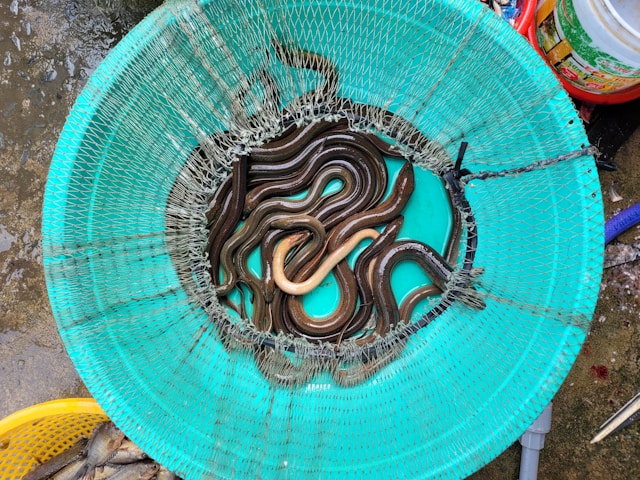
There isn't one single scientific name for "eel", because about 1,000 species of eels worldwide belong to the large order "Anguilliformes", meaning "eel-shaped", which encompasses 164 genera and 24 families. It is a diverse group of elongated, snake-like, ray-finned fishes that includes the True freshwater eel or Common freshwater eel (family Anguillidae), True Marine eel, including Moray eel (family Muraenidae), Conger eel (family Congridae), and Snake eel (family Ophichthidae), each with its own distinct scientific name, with different genera, like:
This sleek and slender creature can be found in freshwater, brackish water and saltwater environments, adapting to various habitats and lifestyles.
Freshwater eels or Common freshwater eels, also known as True eels, belong to the family Anguillidae and the genus "Anguilla", with common examples like the European eel, known as "Anguilla Anguilla". The first part of its scientific name, the genus "Anguilla", originates from the Latin word "anguis", meaning "snake" or "serpent". The second part, the species name "Anguilla", translates to "little snake". It indicates the long and slender body shape that eels possess. This choice of name perfectly captures the serpentine appearance and sinuous movements of this remarkable aquatic creature.
But not all "eels" are true eels, though the term "eel" also refers to other unrelated eel-shaped fish or "false eels", with specific scientific names, like:
These eel-like creatures can also be found in freshwater, brackish water and saltwater environments, and even on land, adapting to various habitats and lifestyles. So the scientific name depends on the specific type of eel, and this diversity within the scientific nomenclature illustrates the vastness and complexity of nature's creations.
Eels are mysterious aquatic creatures that have fascinated humans for centuries. Here are some incredible facts and features about eels that will leave you in awe.
The appearance and anatomy of eels are truly fascinating. Eels have long, snake-like bodies and pointed or flattened heads. Their streamlined bodies are covered in a thick skin and a layer of thick mucus, which gives them their characteristic slimy, smooth texture. Eels have very tiny scales, which are hidden deep under their thick, protective skin and mucus layer, making them appear scaleless. They have sensitive cells called the lateral line system, which run along their bodies. One intriguing feature of an eel's appearance lies in its head and mouth structure. They typically have small, well-developed eyes located towards the top of their heads, and they possess an incredible sense of smell thanks to their well-developed nostrils located on the upper side of their pointed snouts. Sometimes eels have a wide jaw structure that sets them apart from their underwater counterparts. Instead of prominently displayed teeth like sharks or piranhas, eels have a pair of strong jaws filled with small, backwards-facing, sharp teeth, which are hidden deep within their mouths. Furthermore, eels lack pelvic fins, but they usually have dorsal fins and anal fins, which merge with the caudal (tail) fins, running along their body and around the tail, creating a single fringe. While freshwater eels have small, rounded pectoral fins just behind their gills, electric eels lack pectoral fins and have a small or reduced caudal fin with their single ribbon-like fin that runs along the length of their back. Additionally, the electric senses of some species of eel reveal that they also use low-voltage shocks to communicate with each other, and can also be used as a self-defence mechanism against predators. Depending on their species and habitat, eels range in colour from deep-sea black and grey to mottled brown and greenish-olive or yellowish hues in freshwater eels for camouflage to vibrant colours in tropical species. For example, the electric eels' thick, scaleless skin is generally dark grey to brown, and its underside is a yellow-orange colour.
However, their size also varies widely by species and can range from tiny (5 cm deep-sea eels) to very large (over 12 feet giant moray eels), with common freshwater eels like the American eel typically around 2 to 3 feet in length and can grow to impressive sizes, some species reaching lengths of over 5 feet. Additionally, their weight also varies significantly by species, ranging from as little as 30 g for small species to over 65 kg for large species (conger). But Common freshwater eels, such as American eel, typically weigh between 0.5 and 4.5 kg and European eel, typically weigh between 4.5 and 6.8 kg, while Giant moray eels can reach 30 kg.
Furthermore, larval eels are known as leptocephali, which sets them apart from other fish species. These larvae can be transparent or nearly translucent and leaf-shaped or ribbon-like before metamorphosing into their adult form, giving young eels the appearance of being almost invisible in the water. This adaptation allows them to blend seamlessly into their surroundings, making it easier for them to evade predators in their early life stages.
When it comes to the anatomy, their keen eyesight assists them in navigating through complex environments such as coral reefs, rocky crevices or hidden burrows where they often reside while keeping most of their body concealed. With their unique dental arrangement, they can latch onto prey securely while preventing escape or injury during the feeding process. Additionally, their olfactory systems are highly developed, enabling them to detect minute traces of scent molecules dissolved in water. With this keen sense, eels can navigate vast ocean currents and find hidden food sources over great distances. They demonstrate an extraordinary ability to track prey and avoid predators using only their sense of smell. Furthermore, eels' lateral line system detects tiny vibrations in water, and they can change colours to match the surface around them. These elongated creatures can adapt to various environments, including freshwater, brackish water, saltwater and even land! So their bodies are designed for agility and stealth, allowing them to manoeuvre through tight spaces and quickly dart away from predators when necessary. Additionally, the outer layer of thick mucus helps them glide through the water effortlessly and navigate tight spaces, reducing friction and allowing them to move swiftly. This layer also helps protect them from predators by making it difficult for them to be held onto or swallowed whole. The eel's single fringed fin undulates in a wave-like motion when it swims, propelling it forward with ease. Their well-developed muscular tail also aids in propulsion as they twist and turn through their aquatic habitats.
Rather than having gills like most fish, they have developed a specialised organ called a labyrinth or gill slit. These slits are located on the lower side of their bodies and allow them to breathe air when oxygen levels are low or when water becomes stagnant. This adaptation enables them to survive in places where other fish cannot. Eels also have a unique ability to breathe through their skin, allowing them to stay submerged in oxygen-deprived waters where other fish would struggle to survive. Interestingly, eels possess incredible sensory organs or electric senses similar to those of sharks and rays, which aid them in navigation and communication. Their secret, shocking talent lies in three abdominal pairs of electric organs that make up most of their long body. The specialised cells known as electroreceptors or Ampullae of Lorenzini enable them to detect weak electric fields generated nearby by living organisms. This ability comes in handy when navigating dark or murky waters or during hunting expeditions when prey might be hidden from sight. To further complicate matters, most eels are nocturnal creatures, preferring the cover of darkness when hunting for prey or avoiding predators. Beneath their sleek exterior, eels possess a remarkable skeletal structure that enables them to flex and twist their bodies in extraordinary ways. Unlike most other fish, eels have more vertebrae in their spine, giving them increased flexibility and allowing them to curl up into ball-like shapes if necessary. This adaptability not only helps eels to squeeze through narrow crevices but also contributes to their exceptional agility when hunting prey or evading predators.
Eels are fascinating creatures that can be found in various habitats and have a wide distribution around the world. They are known for their ability to adapt to different environments, which allows them to thrive in both freshwater, brackish water and saltwater ecosystems. Still, the majority of species found at sea depend on their specific species and stage of life. Eels are catadromous, meaning they primarily live in rivers, streams and estuaries. These creatures can also be found on land or near land. In freshwater, eels can be found in rivers, streams, lakes, wetlands and even ponds. They are often seen hiding among tubes, snags, masses of plants or burrowing into the sandy or muddy bottoms of these bodies of water and other types of shelters. In saltwater, eels can be found in coastal areas such as estuaries or mangrove forests. These areas provide the perfect mix of freshwater and saltwater for eels to survive. They are often found near structures like rocks or rocky crevices, coral reefs, hidden burrows or hiding among vegetation where they can find shelter and protection from predators, and they make remarkable migrations to spawn in the ocean. Eels have also been observed in deeper ocean depths, where they reside amongst coral reefs or sandy seabeds. While many eels can be found in the shallow waters of the ocean and burrow into sand, mud or rocks, other species live in deeper water on the continental shelves.
Eels possess a specialised organ called a labyrinth or gill slit. These slits, located on the lower side of their bodies, allow them to breathe air when oxygen levels are low, or when water becomes stagnant, or there are high salinity levels. This adaptation enables them to survive in places where other fish cannot. Eels also have a unique ability to breathe through their skin, allowing them to stay submerged in oxygen-deprived waters where other fish would struggle to survive.
The distribution of eels is truly global, with different species found in regions such as Europe, North America, South America, Africa, Asia, Oceania and even Australia. Interestingly, eel distribution varies greatly depending on the species, regions and specific requirements for survival. Some eel species prefer warm tropical water, while others inhabit colder regions such as Scandinavia. For example, European eels (temperate species) are commonly found throughout Europe's coastal waters as well as inland bodies of water such as rivers and lakes and are widely distributed within European freshwaters across numerous countries, including France, Spain, Germany, Sweden and part of North Africa. On the other hand, American eels (temperate species) are found in rivers and lakes throughout North America, and their distribution spans from Newfoundland down to Florida along the Atlantic coast and stretches across various river systems in North America to the Caribbean. These astonishing creatures showcase an extraordinary feat of endurance. Furthermore, tropical species are found in the Indian Ocean, Western Pacific Ocean and the Atlantic waters, with some extending into temperate areas. Even within a particular species' range, individual preferences for specific habitats may differ.
One interesting aspect of eel distribution is their ability to travel great distances during certain phases of their life cycle. Some species of eel are born in the ocean, then travel thousands of kilometres to freshwater to mature into fully-formed adults and then migrate thousands of miles to the sea or ocean to reproduce. This incredible journey showcases the adaptability and resilience of these unique creatures. For example, the American eel begins its life in the southwestern Sargasso Sea, located near Bermuda in the Atlantic Ocean, before migrating thousands of kilometres to rivers, streams, lakes and estuaries across the North American coast from Greenland to South America for growth and maturation, returning to the same spot, the Sargasso Sea, to reproduce. This migration process is influenced by factors such as temperature, salinity and availability of food sources. It is believed that they navigate using Earth's magnetic field as a guide, although this remains a scientific mystery yet to be fully understood.
One of the most fascinating creatures that are found in various freshwater, brackish water, saltwater habitats and even land worldwide, is the "Eel". These slithering wonders, about 1,000 species, belong to the order Anguilliformes, which encompasses two types of eel:
Though the term "Eel" also refers to other unrelated Eel-like Fish or Eel-shaped fish, or "Feels eels", such as:
Among them, specific types of eel and subspecies are:
One of the most well-known species is the European eel (Anguilla anguilla). With their elongated bodies and smooth skin, European eels can grow up to 5 feet long and weigh over 4 kg or even 9 kg. They are typically found in diverse aquatic environments and live most of their adult lives in swamps, marshes, slow-moving rivers, streams, lakes, reservoirs, coastal lagoons and estuaries before migrating to the ocean to reproduce. The European eel can adapt its body shape depending on its habitat, with a rounder body for faster movement in freshwater and a thinner shape for more efficient swimming in saltwater. These adaptive characteristics allow them to thrive in various environments throughout Europefrom freshwater, estuaries and coastal lagoons, where the European eel begins its life journey to the northwestern Sargasso Sea to spawn near Bermuda in the Atlantic Ocean. They embark on an epic migration spanning freshwater and brackish water across Europe and parts of North Africa and return to the same spot, the Sargasso Sea, where they were born to reproduce. It is believed that they navigate using Earth's magnetic field as a guide, although this remains a scientific mystery yet to be fully understood.
Another intriguing type of eel is the American eel (Anguilla rostrata). With their elongated bodies and smooth skin, American eels can grow up to 5 feet long and weigh over 4 kg or even 7.3 kg. These remarkable creatures live predominantly in rivers, streams, lakes, coastal areas, estuaries, and bays along the Atlantic coast but migrate to the ocean upon reaching maturity to reproduce. The American eel can adapt its body shape depending on its habitat, with a rounder body for faster movement in freshwater and a thinner shape for more efficient swimming in saltwater. These adaptive characteristics allow them to thrive in various habitats throughout North America, from freshwater, estuaries and coastal areas, where the American eel begins its life journey to the southwestern Sargasso Sea to spawn near Bermuda in the Atlantic Ocean. They embark on an epic migration spanning thousands of kilometres of freshwater and brackish water across the North American coast from Greenland to the Caribbean to Venezuela, South America and return to the same spot, the Sargasso Sea, where it was born to reproduce. These astonishing creatures showcase an extraordinary feat of endurance.
The Japanese eel (Anguilla japonica) is yet another remarkable example that has captivated researchers for years. Similar to other eel species, these organisms exhibit a catadromous life cycle, meaning they breed in seawater before migrating upriver as larvae or elvers. The Japanese culture has long cherished this special creature for culinary purposes, especially in dishes like unagi sushi.
The Spotted Garden eels (Heteroconger hassi) or the Sharp-nose Garden eels (Gorgasia taiwanensis) reside primarily in warm tropical waters around coral reefs. They are known for their habit of living in large colonies. Unlike other types of eels, these peculiar creatures dig burrows into sandy sea floors or seabeds, where they spend most of their time hiding away while exposing only their heads and upper bodies above ground to feed on plankton and catch passing prey, resembling plants in a garden. Garden eels are known for their amusing swaying motion caused by ocean currents, as they remain anchored firmly by their tails.
The Electric Eel (Electrophorus electricus) is a unique creature renowned for its remarkable electric shock abilities. They can generate the strongest shocks up to 860 volts. Contrary to what their name suggests, they are not true eels but belong to the knifefish order. These astonishing creatures produce electricity through specialised organs in their bodies, enabling them to navigate murky waters and communicate with other electric eels. Found primarily in freshwater habitats across parts of South America, such as Brazil and Guyana, these electric eels are capable of generating powerful shocks that stun prey and deter predators.
However, Snipe eels (true eels) are known for their long, slender bodies, snouts, bird-like beaks with curving tips, and unique feeding method of sweeping their open jaws to entangle shrimp and crustaceans in their tiny, backwards-pointing teeth. They belong to the family Nemichthyidae and the order "Anguilliformes".
Ribbon eels (true eels) are known for their long, slender bodies, distinctive flared nostrils, unique ribbon-like dorsal fins, striking colour and sex changing abilities throughout their lives (black to blue, yellow to solid yellow). They belong to the family Muraenidae and the order Anguilliformes.
Shortfin Spiny eels (false eels) are known for their unique, elongated snouts, secretive bottom-dwelling habits (often burying in substrate) and distinctive dorsal spines (a series of sharp spines precede their dorsal fin), giving them their name. They belong to the family Mastacembelidae and the order "Perciformes".
Hagfish eels, often called Slime eels due to their elongated snake-like appearance, which are known for their extraordinary ability to produce a massive amount of defensive slime, have jawless, eel-like bodies, and a unique feeding style of burrowing into dead fish to eat them from the inside out, often tying themselves in knots to gain leverage. They belong to the family Myxinidae and the order "Myxiniformes".
They are all distinct from other eel-like fish that evolved their shape independently.
Eels possess remarkable characteristics that make them adept predators in their respective habitats. Their slender, slippery bodies allow them to swim swiftly through the water while remaining agile enough to navigate through tight spaces or crevices. They have sensitive cells called the lateral line system that run along their bodies to detect tiny vibrations in the water. All types of eels can breathe air using their skin when oxygen levels are low or when they need to cross land obstacles. This unique adaptation allows them to survive even in environments with limited oxygen supply. Most adult eels have reduced or non-functional eyes because they primarily rely on their acute sense of smell and electrical receptors called ampullae of Lorenzini to locate prey and navigate their surroundings. Eels are generally nocturnal hunters but can exhibit some diurnal behaviour depending on their environment. Additionally, they have sharp teeth for capturing prey effectively. Many species of eels generate electric currents that possess specialised electric organs called electrocytes, located on both sides of their bodies. These electrolytes allow them to produce weak electric pulses for various purposes such as communication, sensing prey or even self-defence. Eels have mastered the art of using electricity in their environment and have evolved to become proficient hunters by stunning potential prey with well-timed discharges.
Furthermore, eels have proven themselves as impressive migratory species. They can seamlessly transition between freshwater and saltwater environments. This flexibility allows them to navigate through vast distances during their annual migrations. Most species begin life as tiny larvae from spawning grounds in open ocean waters to rivers and lakes, where they reach adulthood. These journeys can span thousands of miles. This astonishing migration is known as catadromy, where adult eels return to spawn in the same ocean where they were born. After spawning, adult eels die, and the resulting larvae drift on ocean currents and travel back towards coastal areas or the freshwater habitats, where they spend much of their adult lives to complete their life cycle. The specifics of this migration vary among different species, but studying this phenomenon has helped researchers unravel some of nature's greatest mysteries. For instance, the European eel begins its life journey in the Sargasso Sea near Bermuda in the Atlantic Ocean and embarks on an epic migration spanning rivers and streams across Europe before returning to the same spot where it was born to reproduce.
Eels can be found in a variety of habitats around the world. One of the most common habitats for eels is rivers, streams, lakes, swamps, marshes and ponds, where they seek shelter amongst rocks or rocky crevices, hidden burrows into mud, hiding among vegetation, and underwater debris. These dark corners protect them from predators while also offering ample opportunity for hunting their prey. In addition, eels are highly adaptable creatures and can tolerate a variety of water conditions, allowing them to thrive in diverse ecosystems.
Eels also inhabit the estuaries, where freshwater from rivers mixes with saltwater from oceans or seas, where they seek shelter amongst rocks or rocky crevices, hidden burrows in sand, mud, hiding among vegetation, and underwater debris. Eels are known to be highly adaptable and can tolerate a wide range of salinity levels, enabling them to effortlessly transition between freshwater and saltwater habitats as they migrate from one area to another. These dynamic environments provide eels with a constant supply of food as they serve as nurseries for various marine species like shrimp, crabs and small fish, all important parts of an eel's diet.
Another common habitat for eels is the deep sea or ocean waters, where they seek shelter amongst rocks or rocky crevices, coral reefs or sandy seabeds, hidden burrows in sand, hiding among vegetation, and underwater debris. These deep-sea eels are often found in trenches or on the ocean floor, where they navigate through the darkness of narrow crevices and corners using their slippery bodies and keen senses rather than relying on sunlight like other marine creatures. They also possess strong jaws lined with sharp teeth, which they use to catch prey that lives in these depths.
Eels, known for their snake-like appearance and slimy, smooth texture, are fascinating creatures that inhabit both freshwater and saltwater environments. Despite their unappealing exterior, eels have a unique and intriguing diet that sets them apart from other aquatic creatures. The diet of eels varies depending on the species, their habitat and size. They are carnivorous creatures that have a diverse diet, consuming primarily smaller fish, crustaceans (shrimp, crabs, crayfish), insects, worms, insect larvae and molluscs (snails, clams, mussels), amphibians (frogs and salamanders). Eels are also opportunistic predators, meaning they prey on whatever is available in their environment. Though their diet typically consists of small fish, invertebrates, sea urchins, squid, octopus, and jellyfish, others consume insects, worms, and insect larvae, and some species consume even amphibians and birds (ducklings). In addition, electric eels are specialised fish predators like catfish. These species are cannibalistic. They eat other eels, including their own species and small mammals.
Eels are generally nocturnal hunters but can exhibit some diurnal behaviour depending on their environment. Some species even venture onto land during rainy nights to feed on frogs or other small land-dwelling creatures. Eels generally prefer live prey that is easy to subdue. They are capable of swallowing prey whole due to their flexible jaws and small, sharp teeth. Eels can consume large amounts of food in one sitting. They have stretchy stomachs that allow them to swallow prey larger than their body size. This diverse diet allows eels to adapt to different environments and thrive in various ecosystems, making them highly successful hunters.
Another interesting aspect of the eel's prey is its ability to catch unwary animals using specialised hunting techniques. Eels employ an ambush style of hunting where they bury themselves in sand or mud, partially exposing their heads while camouflaging the rest of their bodies. By remaining hidden and motionless for extended periods, the eel waits patiently for unsuspecting prey to come within striking distance. This strategy enables the elusive creature to capture its meal with remarkable precision. Eels display an extraordinary sense of smell that allows them to locate potential food sources from great distances. This keen sense is particularly crucial for newly hatched eel larvae, which rely heavily on detecting the scent trails left by zooplankton and other microscopic organisms, while juvenile eels often start with smaller prey like insect larvae andworms.
Eels are fascinating creatures with unique behaviour and an intriguing lifestyle. They can survive in various aquatic environments. Unlike most fish, eels can tolerate both saltwater and freshwater habitats, but they are most commonly associated with rivers and streams. Some species are even able to migrate between the two environments by using eel highways or underwater structures such as dams or pipes. These elongated fish have a reputation for being mysterious and elusive, often hiding in underwater crevices or burrowing into the mud or sediment of rivers and oceans. But they can be aggressive if provoked. Eels can survive in low oxygen levels or high salinity levels. Some species of eels can spend extended periods out of the water by breathing through their skin or gulping air at the water's surface, making them adaptable to various habitats worldwide. They swim using lateral body waves and can move backwards. One interesting aspect of eel behaviour is their ability to migrate great distances. They begin their journey from the open ocean as tiny larvae and then make a remarkable journey back to coastal areas and inland, where the next generation will mature. This incredible journey, known as catadromous migration, highlights the tenacity and adaptability of these elusive creatures. For example, the European eel starts its life in freshwater and then travels thousands of miles to the Sargasso Sea in the Atlantic Ocean, near Bermuda, to reproduce. Eels navigate vast distances using various cues, including magnetic fields and ocean currents. It's remarkable how these slimy creatures can traverse obstacles and adapt to different environments throughout their migration. Eels can change colour based on their surroundings. They have the unique ability to blend in with their environment by adjusting the pigmentation of their skin. This allows them to camouflage themselves and avoid detection from predators or potential prey. Eels can also jump out of the water to defend themselves. It's a remarkable example of how animals have evolved, developing specialised features that enhance their survival chances in various habitats.
The lifestyle of eels is also intriguing. Despite being mostly solitary animals, eels do gather during certain times to spawn. Some eel species travel thousands of miles from freshwater rivers, streams, lakes and estuaries to the vast open ocean or depth of the sea where they spawn and die. Then, eels begin their journey as tiny larvae (the eggs hatch into tiny larvae) and drift out to sea thousands of kilometres with ocean currents to travel back to coastal waters or freshwater habitats to complete their life cycle. Unlike most fish species that are either male or female, eels can change sex throughout their lives. They are primarily nocturnal creatures, preferring the cover of darkness when hunting for prey in pairs or avoiding predators. Their flexible bodies allow them to wriggle into tight spaces where they can ambush unsuspecting prey. These creatures have a keen sense of smell and taste, allowing them to locate prey even in murky waters. Furthermore, they possess an intriguing sensory organ known as the Ampullae of Lorenzini, which enables them to detect electrical fields around them. This sixth sense allows them to navigate through dark underwater environments with precision and find prey that might be hiding or camouflaged. Eels have a varied diet that includes small fish, crustaceans, molluscs, insects and even other smaller eels. During daylight hours, they often hide in crevices, rocks, or burrows in sand or mud, often found in "eel pits", conserving energy until nightfall when they emerge once again to search for sustenance. Eels can survive in extreme conditions, such as low oxygen levels or high salinity levels and polluted waters, while some species of eels breathe through their skin, allowing them to stay submerged in oxygen-deprived waters or can spend extended periods out of the water, where other fish would struggle to survive. These elongated fish have slimy-slippery skin that not only aids their movement through water but also acts as protection against parasites and predatory threats. Additionally, some eel species exhibit electric shock capabilities used for navigation or self-defence purposes. For example, electric eels can generate electric shocks of up to 860 volts to stun prey or defend themselves from predators. These adaptabilities have allowed eels to thrive in diverse ecosystems across the globe.
One of the most fascinating aspects of eels is their mysterious reproduction process. Eels' unique life cycle involves migrating across vast distances. They migrate during specific stages in their life, such as reaching sexual maturity or when it's time to spawn. Adult eels can travel thousands of kilometres from their freshwater habitats to the depths of the oceans to spawn or reproduce. Here, these remarkable creatures display signs of complex parental care; they release millions of eggs and sperm into the open ocean water, forming a massive spawning event known as the eel frenzies. After this process takes place, both male and female eels sadly die shortly after this single spawning event, where external fertilisation occurs. This means that once an individual eel has reached maturity, usually between 5 and 20 years in the wild, it only has one chance to reproduce before its time comes to an end.
After fertilisation, the eggs hatch into tiny transparent larvae or nearly translucent, called leptocephali. These tiny larvae are leaf-shaped or ribbon-like to evade predators in their early life stages that float to the surface and drift out to sea thousands of miles from their birthplace with ocean currents for months or even years before eventually finding their way to travelling back to coastal areas and different freshwater habitats. Once settled in these habitats, they undergo a metamorphosis, where they grow from larvae into juvenile eels known as glass eels and will spend most of their adult lives completing their life cycle. From there, they develop into pigmented elves and go through stages where they change colours into yellow or brownish, change body shapes, and even develop organs such as blind eyes or a well-developed sense of smell and strong muscles designed for endurance swimming. They venture into rivers or lakes to mature into fully-formed adult eels before returning to spawn in the vastness of the open sea or the depth of the ocean.
After a long growth phase as yellow eels and just before commencing their spawning migration, eels show the first signs of sexual maturation and pre-adaptation to the oceanic condition; they become silver. Unlike most fish species that are either male or female, eels can change sex throughout their lives. This unique characteristic is known as sequential hermaphroditism. Eels start as males and transition into females as they grow older. This ability allows them to maximise their reproductive success by mating with different individuals throughout their lifetime, and when it's time for them to reproduce, they migrate back downriver to the ocean, travelling thousands of miles if necessary. As they grow larger and stronger, eels undergo an incredible journey known as catadromous migration, where they hatch in the ocean but spend most of their lives in coastal waters and freshwater before returning to spawn in the same ocean, where they were born. This means that these enigmatic creatures undertake incredible journeys from deep-sea spawning areas to sometimes far-flung river systems where they mature and grow for several years. This journey from saltwater to brackish water or freshwater to saltwater habitats is not only physically demanding but also poses numerous challenges in behaviour.
The lifespan of an eel varies depending on its species and environment, but most live anywhere from 5 to 20 years, often reaching 15 to 20 years. Like most eel species, American and European eels don't fully develop gonads until their last life stage, usually between 7 and 25 years old. However, there have been instances where certain species of eels have been known to live for over 30 years, with some reaching over 80 years, like New Zealand Longfin Eels.
Eels are fascinating creatures that inhabit various aquatic environments worldwide. Though they may seem mysterious and elusive, eels are not without their fair share of predators and threats. While adults are threatened by overfishing, habitat destruction, barriers to migration, pollution and environmental changes, juveniles are highly vulnerable.
One of the most prominent predators and threats to eels is humans. Overfishing has significantly impacted many species of eel, leading to declining populations in various regions worldwide. In some countries, eel fishing is lucrative, leading to unsustainable practices such as catching juvenile eels before they can mature and reproduce. Additionally, habitat loss and barriers also pose significant challenges for these creatures. While dams, weirs and barriers restrict their essential migration routes, the destruction of wetlands destroys their breeding grounds and feeding habitats. For instance, sediment runoff from land destruction can suffocate young eel or larvae who rely on clean water for survival. Furthermore, pollution and environmental changes negatively impact eel health and survival.
Apart from human activities, eels also have to contend with natural predators in the water. Large fish species like sharks, barracudas, groupers, pike, striped bass and largemouth bass are known to prey on young eels. Large fish-eating birds like eagles, ospreys, herons, cormorants, gulls, and kingfishers are skilled at spotting adult eels near the water's surface and swiftly swooping down for a quick meal. Additionally, raccoons and seals have been observed consuming large quantities of eels during their migrations upriver or along coastlines. These predators significantly contribute to mortality rates among eel populations, depending on the specific environment they inhabit. Furthermore, some larger species of eel are cannibalistic, and they eat other small eels, including their own species and even young glass eels.
However, another significant threat to eels comes from alligator snapping turtles. These massive turtles have a strong bite force and can easily consume smaller eels that come too close to their territory. Sea snakes also prey on eels, which they can find when they slide through a reef's crevices. Female sea snakes tend to go for bigger eels in deeper waters because female sea snakes are bigger than their male counterparts. Males are more likely to attack smaller prey in shallow waters. For example, adult American eels are a primary food source for adult rainbow snakes.
The population number of eels has been a subject of concern for scientists and conservationists alike. Eels are remarkable creatures, known for their ability to traverse vast distances in both freshwater and saltwater habitats with a complex life cycle that spans across continents. So the exact, total global numbers are impossible to calculate due to their mysterious, elusive nature and complex migratory life cycle. However, their numbers have been declining rapidly in recent years. This decline can be attributed to various factors, including overfishing, habitat destruction, pollution, parasites, barriers to migration and climate change. As a result, many eel species are now considered endangered or critically endangered, particularly the critically endangered European eel (Anguilla anguilla), which has experienced a severe decline in recruitment (the number of young eels reaching coastal waters), dropping by approximately 90% to 98% since the 1970s.
Overfishing has had a particularly devastating impact on eel populations. Eels are highly valued in many cuisines worldwide, resulting in high demand and excessive fishing pressure. It is also used in traditional medicine. Commercial fishing has intensified. In some countries, eel fishing is lucrative, leading to unsustainable practices such as catching juvenile eels before they can mature and reproduce.
Habitat destruction is another major threat to eels. As natural habitats such as rivers and wetlands are drained or modified for agricultural or urban development purposes, eels lose their breeding grounds and feeding areas. Additionally, pollution poses significant threats to eel populations. As more rivers become dammed or polluted, it becomes increasingly difficult for eels to complete their migration cycle. In addition, parasites (Anguillicola crassus) impair their health and reproduction.
Moreover, climate change affects alterations in ocean currents and can impact the long-distance migrations of juvenile eels, which also plays a role in the declining population numbers of eels, while rising temperatures also affect the reproductive success of these mysterious creatures, as they rely on specific environmental cues to spawn and reproduce.
Eel, a type of fish found in both freshwater and saltwater environments, is often overlooked and underappreciated. However, understanding the importance of eels is crucial for maintaining a balanced ecosystem.
Eels are enigmatic creatures that have a unique charm and can be an intriguing addition to any aquarium. With their long, snake-like bodies and piercing eyes, eels have a unique allure that captivates both beginners and experienced aquarists alike. One of the most fascinating aspects about these peculiar creatures is their ability to adapt to various environments, allowing them to thrive in both freshwater and saltwater tanks. The eel's elongated body and graceful movements offer a mesmerising display that constantly draws the attention of curious visitors.
One of the most popular species kept in aquariums is the electric eel, known for its ability to generate the strongest electric shocks. Contrary to popular belief, electric eels do not generate electricity, but use it as a sophisticated hunting tool. These masterful predators have evolved specialised organs known as electrolytes, which allow them to produce electric shocks of up to 860 volts! This unique adaptation serves as both a means of defence against predators and a way to stun prey before devouring it whole. Watching these incredible predators move effortlessly through the water while emitting electrical discharges to stun their prey is truly mesmerising.
Another captivating aspect of keeping eels in an aquarium is observing their intricate feeding habits. Eels are primarily carnivorous and will go to great lengths in search of food. Their strong sense of smell aids them in locating potential meals hiding within crevices or buried under sand substrates. Observing an eel's coordinated effort as it stalks, pounces, and consumes its prey offers an awe-inspiring sight that showcases nature's brilliance firsthand.
However, it's important to note that keeping eels in an aquarium requires careful consideration and preparation. First and foremost, eels need ample swimming space due to their elongated bodies. A tank with sufficient length and width should be provided to accommodate their natural habits and behaviours. Moreover, as carnivorous animals, eels require a protein-rich diet consisting of live foods such as earthworms or small fish. It's crucial for aquarists not only to meet their nutritional needs but also to ensure they receive enough exercise for optimal health.
Despite their unique appeal, it's essential to remember that eels may not be suitable for every aquarium enthusiast. Their specialised care requirements demand attention and dedication from owners who are willing to provide them with a proper environment conducive to growth and well-being. Nevertheless, those who take on the challenge of keeping these mysterious sea creatures will undoubtedly experience something like no other as they observe the secret world of eels unfold before their very eyes.
Eels are fascinating creatures that have intrigued scientists and researchers. With about 1,000 species of eels that belong to 8 suborders, 164 genera, and 20 recognised families, ranging from tiny to very large, and are distributed across freshwater, brackish water, saltwater environments, and even land. But about 800 species of eel are classified under the class Actinopterygii, and divided into 4 main suborders:
They are all distinct from "False eels", which belong to diverse families and orders like:
Their classification involves several suborders, with finer distinctions based on fin rays, teeth, and skull structures; however, some placements, such as freshwater eels, are still debated.
While these families share similar morphological characteristics, such as long, slender bodies, snake-like movements through water and a lack of pelvic fins (long dorsal and anal fins often merge with the caudal fin), their evolutionary trajectories have diverged over time, exhibiting a range of shapes, sizes and colours. Their classification has also been a subject of debate among taxonomists due to their unique characteristics and complex life cycles. Eels have distinct larval forms called leptocephali, which bear little resemblance to adult eels. This metamorphosis adds an extra layer of complexity in unravelling their evolutionary history.
The classification of eels within the animal kingdom has also been subject to debate among researchers. In traditional classification systems, eels were grouped under the class "Actinopterygii" (ray-finned fishes). Studies analysing genetic data have suggested that eels may belong to a separate superclass called "Cyclostomata" or "Agnatha". This reclassification challenges our understanding of eel evolution and highlights how new technologies and research methods continue to reshape our knowledge of the natural world. However, eels are considered one of the oldest living fish species on Earth, with fossil records dating back over 100 million years. While European and American eels emerged as separate species 3.5 million years ago, they can still breed with each other.
One interesting aspect of eel evolution is their ability to adapt to different habitats. For example, some eel species have migrated from rivers into the ocean during their reproductive cycle. This unique behaviour allows them to spawn in specific areas of the open ocean before returning to their original habitat. Their adaptation has allowed them to expand their range and occupy diverse ecological niches. While most eel species are found in saltwater habitats, some can also thrive in freshwater environments or even travel between the two during different stages of their life cycle. Interestingly, some eel species can breathe atmospheric oxygen through their skin when faced with low dissolved oxygen levels. This adaptation allows them to survive in environments where other fish may struggle to respire properly. Additionally, despite being typically slender and snake-like in appearance, some species can grow quite large; the European conger is known for reaching lengths exceeding 3 meters! However, eels' remarkable evolutionary features and ability to adapt to various conditions have contributed to their success as a highly versatile group of fish.
When we think of eels, most of us conjure up images of slimy creatures lurking at the bottom of murky waters. However, what many people don't realise is the fascinating relationship that eels have had with humans throughout history. From being a culinary delicacy to mystical symbols in various cultures, eels have played significant roles in human society.
In ancient times, eels were highly prized for their rich flavour and unique texture. They were often served at lavish banquets and considered a luxury food item reserved for royalty and aristocrats. The famous Roman gastronome, Apicius, wrote elaborate recipes featuring eel dishes, showcasing their popularity even back then.
Beyond their culinary appeal, eels hold a place in mythology and folklore across different cultures. In Japanese folklore, the mythical creature known as the kappa is described as an amphibious creature resembling a mix between an ape and an eel. This mischievous water spirit was believed to lurk in rivers and ponds, possessing incredible strength and cunningness.
Even today, eels continue to captivate our imagination as mysterious creatures that dwell in the depths of our oceans and freshwater bodies. Their elusive nature adds an air of mystery to their connection with humans – reminding us that despite all our advancements in science and technology, there are still aspects of our natural world that remain enigmatic.
The conservation status of the eel has been a subject of concern for many years. These secretive and enigmatic creatures are found in freshwater and marine habitats worldwide, facing a severe conservation crisis. Several species of eels are now "threatened" or "endangered". Temperate species like the European eel (Anguilla anguilla) listed as "critically endangered" by the International Union for Conservation of Nature (IUCN), while the American eel (Anguilla rostrata) and the Japanese eel (Anguilla japonica) are both listed as "endangered", primarily due to overfishing, barriers to migration (dams), pollution, habitat degradation, and climate change, are all contributing factors to their decline and impacting their unique life cycle. Other tropical eel species are also threatened, though data are lacking for some, highlighting an urgent global concern for the genus Anguilla.
One major issue facing eels is their complex life cycle. Eels start their lives as transparent leaf-shaped larvae called leptocephali in the Sargasso Sea. They then migrate thousands of miles back to rivers and lakes where they grow into yellow or brown juvenile forms known as elvers. It takes several years for these elves to grow into sexually mature adults before returning to the Sargasso Sea to spawn and die. This lengthy journey exposes them to various threats along the way.
Moreover, the demand for eels in both Asian and European markets has skyrocketed over the past few decades due to their high value as food delicacies, especially glass eels (juveniles). This has led to intensive fishing pressure on eel populations worldwide. In some regions, such as Europe, regulations have been implemented to limit fishing quotas and restrict the catch of immature eels to conserve these species. Additionally, dams, weirs, and other structures block their essential migration routes from rivers to the Sargasso Sea for spawning, while contaminants like PCBs and parasites (Anguillicola crassus) impair their health and reproduction. Furthermore, alterations in ocean currents affect their long-distance migrations.
Efforts are being made globally to conserve eels and restore their populations. These include implementing fishing restrictions, restocking, improving water quality, removing barriers, such as dams that prevent migration and undertaking captive breeding programs. However, it's an uphill battle due to the challenges associated with studying and managing an elusive species like the eel.
Electric eels and regular eels may share a similar appearance and both belong to the fish family,y but their differences are striking.