
The emu is a large flightless bird endemic to Australia, where it is the tallest native bird. It is the second-largest living bird in the world by height after its relatives, the ostriches and the third-tallest after its African ratite relatives, the common ostrich and Somali ostrich. This bird is an iconic symbol of Australian wildlife and culture, appearing in many popular Australian items such as the coat of arms, currency, coins, product packaging and postage stamps. Emus exist in both wild and domesticated populations throughout Australia. They have a unique set of characteristics that make them instantly recognisable by their grey, brown and black feathers, small heads, short bills, short necks compared to the ostriches, short wings, and long legs with strong feet that help them travel great distances. Emus are highly social birds, and are omnivorous animals that feed on a variety of plants, seeds, fruits, insects and small vertebrates. These birds are mostly found in grasslands, woodlands, open shrublands, wetlands and deserts. Still, their natural range has been reduced due to human activities such as land clearing for agricultural purposes. Today, emus continue to thrive throughout many parts of Australia. These birds have also been introduced to New Zealand and parts of Hawaii, as well as other areas across the globe, where they are popular due to their hardiness and low maintenance care requirements.
Not only are emus an important part of the Australian ecosystem, but their eggs are an important food source for many Indigenous communities across Australia. Their feathers have been used by native tribes for thousands of years in decoration and to make traditional clothing such as cloaks, headdresses, capes and skirts. These curious birds even appear in Aboriginal Dreamtime stories as a symbol of strength and courage. They have also been celebrated in Aboriginal art for centuries, with ancient artwork depicting them as powerful spiritual creatures. Their remarkable endurance has made them an important part of Aboriginal culture, which has traditionally been used for hunting and gathering food sources in their homeland’s arid landscapes. In modern times, their meat is enjoyed as an alternative source of protein because it is low in fat compared to other meats, like beef or pork. Many people consider them a symbol of resilience due to their ability to thrive in harsh environments across much of the continent.
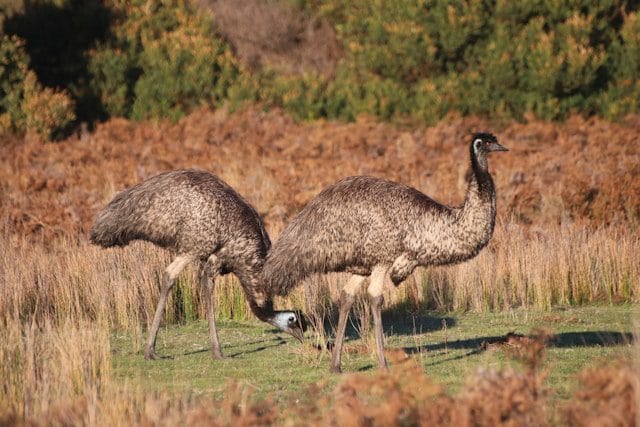
The emu is an iconic bird native to Australia. The word "Emu" comes from the Portuguese word "Ema", which means "large bird", belonging to the family Dromaiidae and the genus "Dromaius". So, the scientific name for an emu is "Dromaius novaehollandiae". "Dromaius" comes from the Greek word, meaning "racer" or "runner" and "novaehollandiae" is the Latin word for "New Holland", so the translation is believed to be "fast-footed New Hollander". The emu can run at speeds of up to 50 kilometres per hour for short bursts, making it one of the fastest runners on Earth. Classified under the genus "Dromaius", this remarkable species is not only the second-largest living bird but also belongs to the "ratite" family, which includes other large and flightless birds such as ostriches, kiwis, cassowaries and rheas.
The emu is one of the most amazing creatures on Earth, which is native to Australia. It has some fascinating facts, along with its unique features, which make it one of the most beloved birds:
The emu is best known for its impressive appearance and anatomy. It is a large flightless bird and has a body like a chicken, but the head and wings like an eagle. They have small, black heads, robust bills, small eyes with two sets of eyelashes, long necks, a pair of small wings, and long legs. The head has a distinctive white tuft of feathers, and the bills have downward-curved upper mandibles. However, emu's necks are small compared to those of ostriches, and their wings are also small compared to their body size, reduced to less than 20 cm. Interestingly, emu's couple of long, powerful legs have three-toed feet, adorned with double-clawed. This bird has dusky brown to grey-brown plumage with black tips or bronze and greenish-purple tints and a light blue hue on their wings and back. Emus are also known for their striking bluish-black skin on their necks and are mostly free of feathers. After moulting, these birds are dark, but sunlight fades their soft feathers, and they become paler at the end of the season. Both sexes have similar appearances, though males tend to have darker plumage with bluer head and throat, while females often have a distinctive patch of blue skin on their head/ear. Additionally, females are generally a bit larger and wider across the rump than males, especially during breeding season.
The emu is the second-largest bird in the world after its cousin, the ostrich. They can stand at an impressive height of up to 6.2 and 6.5 feet and weigh as much as 55 and 60 kilograms. Female emus (hens) are typically slightly taller, wider and heavier than males, standing around 5.7 to 6.5 feet high, with a length of about 4.7 to 5.5 feet from bill to tail, and typically weighing around 55 to 60 kg. On the other hand, male emus stand around 5 to 6.2 feet high, with a length of around 4.6 to 5.4 feet from beak to tail and weigh between 50 and 55 kg. Though their weights vary and can reach from 50 kg to 70 kg for adults, females average around 37 kg compared to males' 31.5 kg.
When it comes to their anatomy, emus have a tough protective layer of feathers that is dark brown with a layer of white underneath, which helps keep them cool during hot Australian summers and provides them with excellent insulation against cold temperatures. Their waterproof coat of feathers helps them survive in heavy rainstorms. Emus' powerful eyesight (two-eyed vision) helps them locate small prey from great distances away, and their eyelashes help to protect their eyes from dirt and dust in their native environment. Their small, wide beak assists them in finding food from dense grasses or searching for insects underground. Emus possess an impressive ability to dig sand or loose soil with their robust beaks, an adaptation perfect for uncovering food sources hidden beneath the surface. The tongue of an emu is long, thin and pointy at the end, which is perfect for catching bugs. Unlike many of their avian counterparts, emus lack a keel bone for attachment of flight muscles, showcasing a fascinating adaptation to life on the ground. Emu's short, strong wings allow them to balance while running or hop across the ground, and can be used as weapons in self-defence. Their long, powerful legs help them flee from danger quickly or reach the top speeds for short bursts of time. Its strong legs with three-toed feet also help it walk on uneven surfaces such as sand or rocks without slipping over long distances and enable it to reach speeds up to 50 km per hour with relative ease. They also have sharp, double-claws for hunting, foraging for food and defending themselves from predators. Emus also possess a large crop, which allows them to store food and helps them survive arid conditions when food sources are scarce. Their impressive physiological traits, such as the emu's keen sense of direction and incredible endurance, demonstrate how species can thrive in diverse environments from arid deserts to lush forests.
Emus are native to Australia, where they are widespread. This bird lives in various habitats, including eucalyptus forests, desert woodlands, desert shrublands, savannahs, semi-arid grasslands, bushland, sand plains, snowy mountains, wetlands and coastal areas. These powerful birds are highly adapted to life in Australia’s harsh habitats and have been living there for thousands of years. Emus require plenty of water for survival, so they often inhabit areas near water sources such as rivers or ponds, where food sources like seeds and fruits are abundant. They prefer areas with plenty of open spaces for running, searching for food and mating. Emus have ventured into agricultural areas for additional food sources when needed. But they avoid densely populated areas, dense forests or rainforests and arid areas.
When its come to distribution, the emu is found only in Australia. Their subspecies once existed on Tasmania, Kangaroo Island and King Island, but they are now extinct. In the wild, emus can be found on the coasts and inland of mainland Australia as well as on some offshore islands. Due to their adaptability, they have also become accustomed to human settlements such as farms, orchards, and suburban areas. These birds can survive in temperatures as low as -7°C or as high as 40°C. They are mainly found in Australia, some parts of New Zealand and New Guinea. In New Guinea, they occupy lowland rainforests with plenty of shade from trees for nesting purposes during hot days.
The emu or Common emu is the single surviving species (Dromaius novaehollandiae), is widespread across Australia. It has several recognised subspecies and extinct relatives. The Common emu has traditionally been divided into three mainland living subspecies based on location and slight colour differences:
They all fall under the single species "Dromaius novaehollandiae", differentiated by their regional subspecies or historical island population. But the mainland subspecies, D. novaehollandiae novaehollandiae, remains the Common.
On the other hand, extinct relatives are also known for being Australia's tallest native bird, similar to their cassowary cousins:
Emus belong to a group of large, flightless birds called Ratites (like ostriches, rheas, kiwis, cassowaries), characterised by their powerful, long legs and flat breastbones (lack of a keel on their sternum), which is the anchor for powerful flight muscles. These birds, as in most ratites, are the second-largest flightless birds. They have brownish-grey, shaggy feathers that are less water-resistant than those of other birds. The head and neck are sparsely covered with black feathers with whitish-blue skin underneath. Emus are strange and naturally curious creatures. However, they are very social birds, live in small groups or pairs and spend a lot of time with their family. Emus communicate with each other through vocalisations like grunting or drumming. However, their courtship rituals are characterised by the elaborate displays of the males. During this time, they become aggressive, especially females. Emu fathers are deeply involved in parenting; after the female lays eggs, he incubates them for about 8 weeks and takes care of them after hatching. Chicks have a cream and brown striped colouration that acts as camouflage. They are fast runner and can reach speeds of about 48 to 50 km/h. Their long legs enable them to walk considerable distances or outrun danger. Interestingly, they are also strong swimmers. These birds can thrive in forests, woodlands, shrublands, grasslands, savannas, bushlands, wetlands and even deserts after rain. However, emu's food types change with the season, but they typically eat growing shoots of plants, fruits, seeds, flowers, insects, small animals and even animal droppings.
Emus occur in all Australian states except Tasmania, Kangaroo Island and King Island. They live in various habitats across Australia, both inland and near the coast, ranging from woodlands to heathlands, sand plains to snowy mountains and wetlands. Emus are also found across most of Victoria, although they avoid heavily populated areas, dense forests or rainforests and arid areas, generally absent from the central district.
The emu has an impressive diet to match its stature. With a varied diet of both plant matter and prey animals, these birds can survive and thrive in many different climates. A major part of an emu’s diet consists of various types of plants such as fruits, seeds, flowers, young shoots, roots, leaves, nuts, grasses, shrubs, and herbs. They seek out the most nutritious part of the plant to eat to help maintain their huge body weight. Emus are omnivorous creatures that feed on as well as insects like grasshoppers, beetles, spiders, caterpillars, and ants. They have also been known to hunt smaller prey and will occasionally consume small animals such as rodents (like mice), lizards, snakes, snails, skinks, and even small birds and eggs from other birds that they find around their habitats. They may also consume carrion and animal droppings if there is no other food available. They are opportunistic feeders who can take advantage of whatever resources are available in their environment.
As they search for food, they often swallow stones, sand or soil, which helps them grind food in their stomachs and provides minerals that may be lacking in their diets. Emus also drink large amounts of water every day from creeks, rivers, ponds and other sources found in their habitats. They require a lot of clean and fresh water, typically consuming around 9 litres per day, but can increase to 18 litres or more depending on the environment they live in. Emus can go for a week without eating. In areas where there is no food, they rely on stored fat reserves from earlier meals to survive. Emus also have a large crop, which allows them to store food and helps them survive arid conditions when food sources are scarce. In captivity or at wildlife parks, emus can also be fed nuts or grains by humans.
Emu primarily forage during the day and may hunt at night if necessary. They walk for up to 25 km a day in search of food. Their powerful legs provide them with enough speed to chase down their prey if necessary. They have sharp claws for perfectly catching their prey, which they then swallow whole. They also use their beaks to scrape away soil to uncover food items like roots, bulbs and fungi hidden beneath the surface. When feeding on ground-dwelling prey, they will use their powerful legs to stamp down hard on any potential meal before consuming it with their beak. This omnivorous diet gives them access to plenty of nutrition while still providing some balance to their local ecosystems.
Emus are nomadic birds, and as in most ratites, they are the second-largest flightless birds. Emus cannot fly because they lack a keel on their sternum, which is the anchor for powerful flight muscles, and their wings are too small to be used for flight. But they are excellent in walking, pacing, and are incredibly fast runners, reaching speeds of up to 50 km/h in short bursts. These birds can jump 4 to 5 feet in the air and are excellent swimmers. Their webbed feet allow them to move quickly through the water, making them adept at crossing rivers and streams when necessary. They have an extraordinary ability to survive in harsh environments. Emus use their powerful claws to dig burrows for shelter during extreme weather conditions or times of danger. They defend themselves from predators by running or kicking aggressively, and also use hissing or strutting as threats. Emus can drink up to 3 gallons (18 litres) of clean and fresh water per day during hot weather, but they can go without water for days or even weeks at a time as they rely on their diet of plants and insects to keep them hydrated. These birds drink large amounts of water when available, sometimes drinking continuously for 10 minutes, and will travel far to find water. They have adaptations to cope, like recycling nasal moisture in cold, but still need daily access. Emus have an efficient cooling system that allows them to withstand hot temperatures during dry spells and keep warm in cold weather. They may even wallow in muddy puddles for cooling. Additionally, emus also engage in grooming, like preening, dust bathing, feather picking, and shaking. They are strange and curious creatures, so they love to explore new things. Interestingly, emus are friendly, while they can recognise individual people and remember them over time.
Emus are mostly solitary, but live in small groups (a mob) or pairs and spend a lot of time with their family. They are very social birds during breeding season and form loose groups for food. Emus communicate with each other through vocalisations like honking or grunting (for males), booming or drumming (for females) sounds, and distress calls. Their loud calls can be heard for miles around. During mating season, female emus fight for male emus, and they may also engage in courtship displays such as chasing each other in circles or running side by side while shaking their heads from side to side to woo a potential partner. After mating, the female lays 5 large green eggs in one nest, which are incubated by the male for weeks without eating or drinking, and raises chicks, after which the male loses significant weight. Emus are active during the day (diurnal). They rest and sleep at night, but may wake to feed or defecate. Emus are omnivorous, and they eat plants, fruits, seeds, flowers, leaves, growing shoots, grasses, insects (like grasshoppers), small vertebrates, even animal droppings, and small stones to aid digestion. During dry months when food is scarce, they will forage for animal remains or dig up roots with their long talons. Interestingly, emus travel long distances, following rain for food. Their diet helps maintain the balance of the natural ecosystems in which they live. These birds adapt and thrive in diverse environments with plenty of water sources nearby, such as woodland forests, shrublands, savannas, bushland, grasslands, mountain areas, wetlands and deserts after rain, while they avoid heavily populated areas, dense forests or rainforests and arid areas.
The reproduction process of emus is complicated because they need to coordinate their movements and vocalisations with those of other emus to create a successful baby. This bird's laying normally begins at 2 to 3 years and can be productive for more than 20 years. A female emu will lay eggs approximately every 3 days and can lay up to 50 eggs in one year, in a season which is typically between November and March. These birds become more territorial during mating time. During the breeding season, female emus fight for male emus, and they may also engage in courtship displays, where emus chase each other in circles or run side by side, and shake their heads from side to side to attract a potential mate. While pairs form, an emu hen lays her clutch of around 5 to 15 large, dark green, avocado-like eggs within a communal nest and leaves. In the wild, the nest (a shallow depression or scrape) has been built by the male on the ground, where multiple females contribute. Interestingly, these eggs are incubated by the male for about 50 to 56 days (around 8 weeks) without eating, drinking or defecating, surviving on his stored body fat and then raising the chicks alone, taking care of them for several months to 2 years after hatching.
It's necessary to speak now, emus also have a complex mating system that is largely monogamous in social structure but involves promiscuity (mating outside the pair bond) or extra-pair copulations (polyandrous) to increase reproductive success, where females often mate with multiple males and males seek other mates while incubating. So, after laying eggs, the female moves on to find another mate and may lay another clutch in a different male's nest, while the male emu takes sole responsibility for incubation and chick-rearing. Furthermore, females can reproduce 1 without a mate, and their babies can live for up to 10 years.
However, once chicks hatched, the male becomes highly protective and aggressive towards all other emus, including the mother and drives away other females. Emu chicks have a cream and brown striped colouration that acts as camouflage. Baby emus are adorable and helpless at first, but they can feed themselves immediately and stay with their father. The male emu raises the chicks, teaching them to find food and defend themselves. Chicks quickly learns how fend for themselves, and they fledge around 3 weeks after hatching. They reach full size after around 6 months, but can remain as a family unit until the next breeding season. Genetic studies show many chicks aren't fathered by the incubating male, highlighting this mix of social monogamy and genetic promiscuity.
When it comes to their lifespan, emus can live up to 10 to 20 years in the wild, and they typically only survive 20 to 30 years in captivity, with some individuals living over 50 years, allowing for long-term egg production in farming.
The male and female emu pair up for several months, during which the male builds a rough ground nest (a shallow depression or scrape) with natural bedding, which is lined with of grass, leaves, bark, and twigs, often near a shrub, rock, low brush, or a tree for some cover, in a spot chosen and prepared by the male. The nest is a simple platform, about 1 to 2 meters wide, which often contains the eggs of several females. The nest is usually placed in an area where the emu has a clear view of its surroundings.
Emu eggs boast a deep green to turquoise or emerald blue-green hue that contrasts sharply with their dark-speckled surface, resembling a giant avocado standing out among avian eggs. These egg incubated by the male emus and are the longest incubating eggs at 50 days. Each egg typically weighs between 500 and 700 grams and measures around 5 inches in length, making it the second-largest bird egg after that of the ostrich. An emu’s egg is equivalent to about 12 to 15 chicken eggs and boasts one bright yolk. Its thick shell is not only visually appealing but also incredibly durable, thicker than that of domestic chicken or duck eggs, providing robust protection for the developing embryo within, and it is essential as emus nest on the ground in more open habitats where predation risks are higher.
This durability, large size and natural colour also make them sought after in artisanal crafts, where they are polished and transformed into stunning decorative pieces. Additionally, Indigenous Australian cultures view these eggs as symbols of fertility and renewal, often incorporating them into art or traditional practices, a testament to their cultural importance beyond mere biology.
These eggs also possess an impressive nutritional profile that has caught the attention of chefs and health enthusiasts alike. Emu eggs are rich in protein and nutrients like omega-3 fatty acids; these eggs are low in cholesterol compared to chicken eggs. Culinary creatives are experimenting with them in gourmet dishes; their size allows for unique presentations, like single-serve baked creations or innovative sauces that benefit from the luxurious creamy texture of the yolk, similar to a duck egg. Moreover, their taste is similar to a chicken egg, and their unique, mild, tasty flavour profile can elevate dishes from the ordinary to extraordinary. Many chefs experiment with emu egg recipes to create rich custards or savoury quiches that tantalise palates with new tastes. As more people explore sustainable food sources, emu farming is gaining traction due to its lower environmental impact compared to traditional livestock farming.
As unique as they are, the emu faces many threats from predators, both natural and manmade. The most common predators for an emu are dingos, foxes, eagles (like the wedge-tailed eagle), hawks, snakes, and Tasmanian devils, while introduced species like monitor lizards, feral cats, and dogs are major threats to emu eggs and chicks. These animals pose a threat to their eggs, chicks and adults during nesting season, which can lead to large losses that can be difficult to recover from. These birds have long legs with three forward-facing toes, which help them fast walk and run (reaching a sprint of up to 50 kph in short bursts) to escape predators such as foxes, dingos and raptors, while their powerful kick can deter or kill predators like dingoes, and their wings can also be used as weapons in self-defence. Additionally, emus may hiss to try to frighten off threats. Nowadays, they also face competition in livestock grazing animals like sheep and cattle, which compete with them for food sources, such as grasses and shrubs.
Human activities are also a challenge to their survival, like habitat destruction and fragmentation by clearing land for agriculture, which poses a direct threat to their nests, while roadkill has been known to occur where roads cross through areas where they roam freely. Even humans often hunt them for their meat, oil and feathers or take away their habitat by building homes on what used to be their land. Unfortunately, these actions have caused a decrease in the population numbers of the wild emus we currently find today.
The population of these birds varies from decade to decade, mainly being dependent on rainfall. In 2009, the emu population was estimated to be between 625,000 and 725,000 mature individuals. Today, there are now estimated to be over 840,000 emus spread across Australia’s mainland coastline and islands. Females tend to outnumber males by two-thirds, resulting in a lopsided population balance. With a population of around 600,000 individuals, these birds are essential to the Australian ecosystem as they help disperse seeds and control pests. In addition, a growing captive population of approximately 10 to 15 thousand individuals is kept as pets or for commercial purposes such as meat production or egg collection.
The emu is not just a large, flightless bird native to Australia; it plays a crucial role in its ecosystem and the economy.
The emu is a popular attraction for zoo visitors of all ages due to their impressive size and unique characteristics. These large, flightless birds are not only fascinating for their stature but also for their social behaviours. Observing them in a zoo setting offers a unique insight into how they interact with other species and environments, showcasing their playful nature. Whether they’re engaging in a friendly chase or curiously pecking at visitors who come too close, emus provide endless entertainment that captivates both children and adults alike.
When in captivity, these birds require plenty of space to roam around as they are used to wide open spaces in the wild. They also enjoy a diet of fruits and insects with occasional grains, grass or vegetables offered as treats to stay healthy. These birds are also social creatures and prefer living among other emus or with other species like kangaroos or goats. In addition, providing them with plenty of shade during hot days will help keep them comfortable at all times. Zoos provide visitors with an opportunity to observe their interesting behaviour up close. The sight of this gentle giant is sure to leave anyone in awe!
Beyond their amusing antics, emus also serve as important ambassadors for wildlife conservation. A visit to the zoo can spark conversations about habitat preservation, particularly since emus are native to Australia and face various challenges in the wild due to habitat loss, hunting and climate change. Zoos offer educational activities about the emu for visitors to take action towards protecting our planet's biodiversity. Engaging displays allow us not just to appreciate the emu’s uniqueness but also to underline our responsibility toward preserving such incredible species for future generations.
The emu is a large flightless bird native to Australia, known for its long legs and second largest bird. This bird belongs to the family Dromaiidae, genus "Dromaius" and the order "Casuariiformes" (with cassowaries), while it is classified under the superorder "Palaeognathae" which encompasses other large flightless birds like ostriches, rheas, and kiwis. This classification highlights its evolutionary lineage that diverged from flying avian ancestors around 80 million years ago during the Cretaceous period. Emus are remarkable not only for their size, which they can reach up to 6.3 feet in height, but also for their adaptability.
Emus showcase a fascinating evolutionary narrative marked by remarkable adaptations for survival in Australia's diverse ecosystems. Unlike many other large birds that evolved in more temperate climates, emus possess a range of features, like long legs built for endurance running, with vestigial wings, and feathers that provide efficient thermoregulation abilities that allow them to thrive in arid environments. Their diet is eclectic, ranging from seeds and fruits to insects and small animals, allowing them to exploit various ecological niches effectively. The development of powerful legs not only facilitates their speed but also supports behaviours vital for reproduction and territory defence, illustrating the interplay between physical traits and ecological roles they play today as vital seed dispersers in Australian bushland. Interestingly, genetic studies have revealed that emus share a more recent common ancestor with extinct species like the moas of New Zealand than with modern-day ostriches. This line of descent emphasises how geographical isolation can significantly shape evolution.
The relationship between emus and humans is a fascinating interplay of coexistence, curiosity, and cultural significance. Emus, with their quirky personalities and striking appearance, have captivated the attention of people for centuries. In Australian Indigenous cultures, these flightless birds hold considerable symbolic value; they appear in Dreamtime stories and serve as vital players in traditional hunting practices. Their role extends beyond folklore, as many groups continue to emphasise sustainable harvesting techniques that honour both the bird and its habitat.
The growing interest in eco-tourism has brought emus into closer contact with communities, challenging traditional perceptions of purely wild animals. Many farmers find themselves coexisting harmoniously with these birds, who often help control insect populations, while also providing feathers for crafts or even meat and eggs for culinary experimentation. This interaction cultivates a deeper appreciation for their ecological role, shifting perspectives from mere exploitation towards sustainable coexistence.
Interestingly, the emu's adaptation to human environments has sparked unique opportunities for interaction. In various farming contexts across Australia and beyond, emus are now raised not just for their meat but also for oil known to possess skin-nourishing properties. This diversification reflects a growing trend toward ethical sourcing and farm-to-table practices that prioritise animal welfare, while embracing the allure of unusual agricultural products. As urban areas expand into rural landscapes, encounters with these gentle giants can lead to unexpected connections, children giggling as they come face-to-face with an inquisitive emu or farmers developing bonds through daily feedings.
Furthermore, recent studies suggest that interactions between emus and humans can promote psychological well-being, be it through therapeutic programs featuring animal interactions or simply the joy of observing these fascinating creatures in sanctuaries. This evolving relationship portrays a picture of coexistence rooted in shared experiences rather than simple utility, encouraging us all to appreciate the emotional richness available when bridging the gap between species.
The International Union for Conservation of Nature (IUCN) currently classifies the emu as "Least Concern" on their Red List of Threatened Species. In Australia, there are between 625,000 and 725,000 wild emus. Globally, they have been farmed for their meat, leather and fat.
However, they are still impacted by habitat loss due to human activities such as deforestation and land clearing for agriculture. They also suffer from predation by feral animals such as cats and foxes that have been introduced into their habitats. Additionally, they can become victims of roadkill accidents when crossing roads in search of food or water sources. Today, the conservation status of the emu is secure due to successful breeding programs throughout Australia and New Zealand.
While both emus and rheas are large, flightless birds found in the Southern Hemisphere, they possess distinctive traits that set them apart.
This variance highlights intriguing evolutionary strategies shaped by environmental pressures faced by each species, a testament to nature’s remarkable adaptability!