
Just as the sly or cunning fox is known to outsmart its prey, so too is this creature an adept survivor in the wild. They are also known for their intelligence and playful nature. This combination of factors has made them popular symbols of change and hope. There are many different species of foxes. The red fox is the most common and is found in North America, Europe, Asia, northern Africa and Australia. With its reddish-brown fur and black-tipped tail, the fox is easily identifiable among other members of the animal kingdom. In many parts of the world, including North America, foxes are considered pests due to their tendency to scavenge for food or hunt small animals like rodents. However, these creatures also play an essential role in maintaining the balance of ecosystems by preying on rodents that can damage crops or spread disease.
Foxes are also fascinating creatures with a complex social structure and various vocalisations, making them unique among mammals. They have various vocalisations and can be heard barking, whining, hissing and growling. Foxes also make a high-pitched scream called a "screech". They are typically shy animals that live in forested areas, rural areas, tundra, deserts and even cities. Foxes are survivors, managing to thrive even in the face of persecution by humans. Including rodents, they feed on small animals such as birds, frogs and rabbits. They are also known to eat fruits and vegetables. Foxes are typically monogamous and mate for life.
The scientific name for the fox is "Vulpes". The Vulpes is a recognised genus of the family Canidae and the sub-family 'Caninae', which also includes wolves and domesticated dogs. The word "fox" occurs in the common names of all species of the genus Vulpes, but also appears in the common names of other canid species. The members of this genus "Vulpes" are naturally referred to as true foxes, which comprises 12 distinct species, meaning they form a proper clade (due to their smaller size, longer tail and specific skull characteristics), including:
True foxes are distinguished from members of the genus 'Canis', such as wolves, coyotes, jackals and domesticated dogs. However, the red fox (Vulpes vulpes) is the largest of the true foxes, the most common species, and one of the most widely distributed members of the order Carnivora, being present across the entire Northern Hemisphere, including most of Europe, Asia and North America.
Foxes are incredibly fascinating creatures. Here are some interesting facts about them:
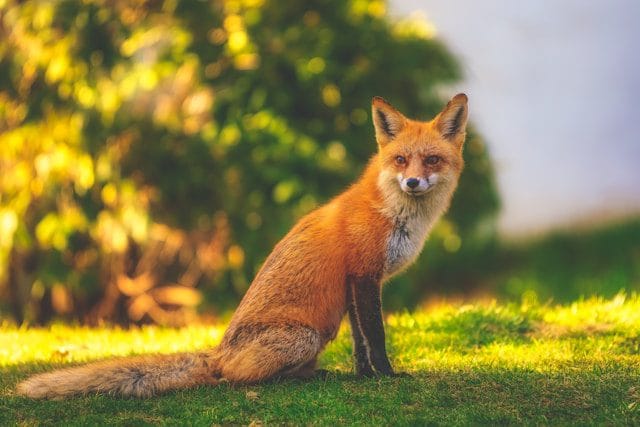
Foxes exhibit a striking combination of elegance and cunning in their appearance, often evoking an almost mythical quality. They are one of the most recognisable animals in the world. Foxes are small to medium-sized canids with elongated, slender bodies and long muzzles with black whiskers. They have a flattened skull, upright triangular, pointed ears, vertically oriented pupils, a pointed, slightly upturned black nose or snout, powerful jaws, and sharp teeth. Foxes also have a long, bushy tail (known as a Brush), a distinctive black stripe down their spine, and short, slender legs with paws and finely tuned, retractable claws. They have long, thick, soft fur that varies in a spectrum of colours by species, from the iconic fiery reddish-brown to subdued greys and earth tones to the exotic silver, while arctic white hues are found in others, each adaptation seamlessly mirroring their unique habitats. For example, the most common adult red foxes have reddish-brown fur with a white throat, chest and underbelly, black-tipped, erect ears, and black lower legs (like opera gloves), often with a distinctive white-tipped bushy tail.
The average measure of any fox is 1.2 to 2 feet in height at the shoulder and 1.6 to 3 feet in body length, with tails measuring 11.8 to 22 inches, which are often as long as 40% of their total body length. Most adults weigh about 4.5 to 6.5 kg, but the smallest and largest individuals may approach 1.5 and 14 kg.
Anatomically, foxes are marvels of evolution tailored for agility and stealth. The body of a fox is built to offer it strength and speed. Their fur colours allow them to seamlessly blend into diverse habitats, whether it's a woodland landscape or an arid desert. A double-layered coat, comprised of an underfur for insulation and guard hairs for protection against the elements, equips them well for survival in varying climates. Foxes' keen senses, particularly keen eyesight, sharp hearing and acute smell, facilitate hunting in low visibility conditions, emphasising their role as both predator and prey within ecosystems. Their sharp canine teeth facilitate quick captures and efficient feeding on small mammals, birds and fruit when hunting opportunities arise. The structure of their short, strong, slender limbs allows for extraordinary flexibility and speed, while they can make high jumps or quick turns to evade threats or catch small mammals. Foxes possess highly flexible joints and sharp retractable claws that enhance their ability to navigate challenging terrains with remarkable ease, giving them the ability to run up to 23 miles per hour with major added agility and extra grace. The unique structure of their paws aids in silent movement; foxes have soft footpads that provide traction while hunting at dusk or dawn, a testament to their crepuscular nature. The flexible spine enhances agility during pursuit, allowing for rapid twists and turns while navigating complex terrain. Their bushy tails serve not just as a balance tool while navigating through diverse terrains but also as a visual signal to other foxes during communication. This blend of physical attributes highlights how these creatures elegantly navigate complex environments, embodying survival strategies that have fascinated observers for centuries.
Foxes live in a wide range of diverse habitats around the world except Antarctica. Due to their high adaptability, they thrive in dense forests, rolling grasslands, mountains, hot arid deserts, and the Arctic tundra. They also adapt well to human-dominated environments such as bustling urban landscapes (cities and even large communities), suburban and rural areas, fields, and farms. Interestingly, the red fox (Vulpes vulpes) has carved out a unique niche for itself (for shelter) in cities and farms worldwide, where it navigates human-dominated spaces with surprising grace. Urban foxes have learned to scavenge from trash cans and take advantage of gardens rich in small mammals, showcasing their intelligence and flexibility. In contrast to their adaptability, certain species like the Arctic fox (Vulpes lagopus) demonstrate remarkable specialisation. These resilient animals endure harsh Arctic climates, relying on layers of thick fur for insulation against frigid temperatures while seamlessly blending into their snowy surroundings with a white winter coat. This evolutionary trait not only aids in hunting but also offers protection from predators. However, foxes also occupy woodlands, scrublands, wetlands, and prairies, utilising diverse food sources.
Foxes are among the most widely distributed of all terrestrial mammals, being found in virtually every continent and much of Europe, temperate Asia, Northern Africa, North America and Australia except Antarctica. It has established itself throughout much of that continent. Furthermore, the distribution of different fox species reveals fascinating patterns. While some species, like the fennec fox, thrive in sandy deserts of North Africa, has oversized ears to dissipate heat, others, such as the grey fox, inhabit temperate forests across North America. Each species exemplifies nature's inventive spirit, highlighting how distinct adaptations can lead to survival across various ecosystems.
While over 37 species are considered foxes, there are 12 different types of fox species are existing. These fox species fall under the genus Vulpes, and each of these types also has its subspecies. They live in many places around the world, and have different shapes, sizes and fur colors but they are all related. These fox species are called "true foxes", such as:
In a more restricted sense, the name "true fox", which refers to about 12 species of foxes within the genus Vulpes, among them the Red fox (Vulpes vulpes), is the largest and most widespread species, inhabiting both the Old World (Europe, Asia) and the New World (North America), while the Fennec fox (Vulpes zerda), is the smallest.
The Red fox (Vulpes vulpes) is the most widespread species of fox in the world. It is native to Western Europe and has a range throughout most of Asia, northern Africa, North America and Australia, with about 47 recognised subspecies. They can be found in woodlands, farmlands, uplands and urban areas. One of the most noticeable characteristics of the red fox is its fluffy white-tipped tail. It has rusty-red, thick, soft, long fur to protect against harsh climates. They also have a white throat, chest, and underbelly, black-tipped, pointed ears, a narrow, upturned black snout, black whiskers on their muzzle, and black lower legs (resembling opera gloves). The Red foxes are about 3 feet in length and 2 feet in height and weigh between 3.6 and 6.8 kg. As a keystone species, the red fox is an important part of many ecosystems because they eat rabbits, rodents, birds, invertebrates, berries and fruits. Red foxes are generalist predators, meaning they eat a variety of prey items, which makes them very important in controlling populations of mesopredators (mid-sized predators). In North America, red foxes have been expanding their range northward and westward in recent decades. This has been attributed to a decrease in coyote populations (the red fox's main predators) as well as climate change.
The Fennec fox (Vulpes zerda) is the smallest species of fox, with a sandy-coloured coat for camouflage and exceptionally large ears for heat dissipation.
The Arctic fox (Vulpes lagopus) has thick, dense fur that changes from brown in summer to white in winter for insulation and protection against the elements, equipping it well for survival in varying climates.
However, other types of known species are the Grey fox, South American fox, Bat-eared fox and Crab-eating fox, and they belong to different genera.
The Grey fox (Urocyon cinereoargenteus) has a "salt-and-pepper" grey coat, with rusty-yellow coloured neck, legs and feet. They also have a black-tipped bushy tail.
The characteristics of foxes altogether illustrate not just a creature adept at survival but also one artistically designed by nature itself to captivate our imaginations.
With their striking, long, thick, soft fur, often seen in shades of orange, red, and even silver or black depending on the species, foxes captivate the eye with their vibrant colouration, allowing them to adapt beautifully to diverse habitats. Their vibrant pelage not only provides camouflage but also serves as insulation in frigid or hot climates, showcasing an exquisite marriage between beauty and functionality. They have upright-pointed ears, enabling acute hearing to detect even the faintest rustle in grass or foliage, and their keen eyesight is adapted for twilight activity. Foxes' narrow, upturned snouts equipped with an acute sense of smell make them exceptional hunters by night; those heightened senses are complemented by sensitive black whiskers that help to navigate dark environments. Their elongated muzzle houses efficient dental structures adapted to grasp and consume an omnivorous diet, showcasing the perfect blend of beauty and utility in nature's design. Their slender bodies and distinctive facial markings give them elegance and an expressive demeanour, making them easy to appreciate the cleverness often attributed to these animals, while their fluffy tail, sometimes nearly as long as their bodies, is not just for aesthetics; they serve multiple purposes, from providing balance while navigating through dense woods to acting as a warm cover during chilly nights. Foxes have relatively short legs, dark feet and nimble paws equipped with finely tuned retractable claws, which are unusual for canids. They are digitigrade, which means they walk on their toes. These animals are survivors in both urban landscapes and wild wildernesses alike. They tend to avoid other animals and humans, but these animals are often hunted for sport.
Beyond a few proverbs related to the natural animal, the fox represented first and foremost a character type, being perceived as quick-witted, clever and cunning. These mammals are smart, but shy and secretive creatures. Foxes are territorial animals and mark their territory with urine and droppings. They also have some behaviours like stalking and pouncing on prey, running sideways and walking on their toes. Foxes are solitary and stick to themselves, only coming together for breeding purposes. Most species, including the well-known red fox, enter into monogamous pair bonds during the breeding season, often around January or February. After a gestation period of roughly 53 days, the female typically delivers a litter of 2 to 12 kits, though litters can be as few as 1 or as numerous as 12 under ideal conditions. Intriguingly, this time, the cooperative care was shown by both parents. in nurturing and protecting their offspring until they’re ready to venture out on their own at about three months old. Interestingly, vixen (female fox) and dog (male fox) have been observed teaching hunting skills through playful interaction, a crucial part of ensuring that the next generation knows how to survive independently in diverse environments.
Over 37 species of foxes can be found inhabiting every continent except Antarctica. In the Old World, the ranges of the fox over virtually all of Europe, temperate Asia, and northern Africa and in the New World, it inhabits most of North America. Introduced to Australia, it has established itself throughout much of that continent. For example, Red foxes are found in Europe, Asia, northern Africa, and occur over most of North America, ranging from Baffin Island, Canada and Alaska to the southern United States, except for coastal western Canada, Oregon, California, the Great Plains, the southwestern desert and the extreme southeastern United States.
Foxes are small to medium-sized, dog-like mammals. They are omnivorous with a diverse diet, and their diet primarily consists of small mammals such as rodents (mice, voles, rats, chipmunks, woodchucks, rabbits and hares), small ground birds (waterfowl, quails, gamebirds, poultry birds, waders), eggs, amphibians, reptiles, crabs, insects, worms (cutworms, earthworms) and even carrion. Foxes are also opportunistic predators, which means that they will eat whatever is readily available to them. So they will also eat fruits, berries, grains, seeds, nuts, and scavenged food. Urban foxes frequently scavenge human food scraps and pet foods from bins or trash cans, while rural foxes may hunt young lambs or poultry.
However, foxes are known for caching food, burning surplus prey in the ground or under leaves for later consumption. They typically need about 0.5 to 1 kg of food daily.
Foxes are skilled hunters. They hunt by stealth and ambush their prey. Foxes usually stalk their prey until they are close enough to pounce on it. Their short, slender legs enable swift sprints through dense foliage or open fields when stalking prey and then leaping with force to trap their prey under their front paws. Foxes' elongated snouts house highly sensitive olfactory receptors that make them superb hunters, and they can detect scents of their prey from over a mile away, even when they are hidden. This unique combination of design traits positions them as opportunistic feeders.
There are mainly dozens of different species of fox, each with its unique habits and behaviour and those species names are Red fox, Arctic fox, Tiny fennec fox, Bengal fox, Kit fox, Pale fox, Cape fox, Tibetan fox, Swift fox, Ruppell’s fox, Corsac fox, Blandford’s fox, etc. They are considered to be shy and elusive animals, but can be very sly and cunning predators. Foxes are mainly nocturnal (night-time) hunters, being most active from dusk until dawn (crepuscular). They are known for their mischievous behaviour and for being very resourceful. Their behaviour can vary depending on the time of year and the availability of food. In the spring and summer months, foxes may be more active during the day as they search for food. In the fall and winter months, they may become more nocturnal as they seek out a warm place to rest, but they can also be active during the day. Foxes have several ways of defending themselves, including running away, fighting back or pretending to be dead. They are also very active animals and enjoy playing games. Foxes exhibit a unique blend of curiosity and wariness towards humans. They make good pets but require a lot of attention and exercise.
When it comes to their lifestyle, foxes are solitary animals that only come together for breeding purposes. They are territorial animals and also occupy well-defined home ranges that are marked with their territory, including urine, scat and anal gland secretions. While some species may be seen roaming solo and like to have their own space, they can also be social animals and enjoy spending time with their family and friends. These tight-knit groups engage in grooming rituals and vocal communications that reflect their strong social bonds, showcasing behaviours akin to sibling cooperation and communal care for young kits. They are known for their elaborate communication skills, utilising a variety of sounds such as barks, screams, yips, and even purrs to convey different messages. Foxes may be seen during the day, especially when raising young. They are adaptable creatures and can live in a variety of different environments. This adaptability not only illustrates their intelligence but also highlights a unique relationship with human environments. Urban foxes have learned to navigate city life by scavenging leftovers and utilising parks as hunting grounds. While in the wild, they live in dens dug into the ground or in hollow trees. Foxes are opportunistic, cunning omnivorous feeders and will eat a variety of foods that range from small rodents to insects and fruits. They can adapt their hunting techniques depending on the prey available, a skill that demonstrates both strategic thinking and resourcefulness. Whether employing stealthy ambush tactics or orchestrating elaborate chases with fellow members of their pack, every hunt showcases an extraordinary mix of instinct and learned behaviour.
The reproduction of foxes showcases fascinating strategies that enhance their survival in the wild. Foxes generally breed once a year, and their mating season occurs in late December and March, peaking in January and February. During this time, males attract females through a series of vocalisations, like barks, and females make eerie screams with intricate displays. While some species are monogamous, others may be promiscuous. Once paired, a female fox (a vixen) usually gives birth underground to a litter of 1 to 12 kits in May or June after a gestation period of about 51 to 53 days and though 4 to 6 litters is average. The nurturing instinct of foxes is remarkable, with males and females collaborating to care for the babies. Females raises her young in dens or earth, often utilising abandoned woodchuck or badger burrows, which are lined with fur and moss, while the male fox (tod or dog) tirelessly hunts to provide nourishment for his family, providing them warmth and security until they are ready to explore their environment.
These kits or cubs are born blind, deaf, and covered in fine, dark-brown or grey fur. These helpless kits rely entirely on their mother for nutrition and warmth. As these kits grow, their eyes open at 9 to 14 days old, and their playful nature emerges at about 4 to 5 weeks old. This time, they begin to emerge from the den to play and explore. The pups (juveniles) engage in mock fighting and chasing, honing essential survival skills that will aid them upon reaching independence around 3 to 4 months of age. Their playful interactions are not just cute antics but vital learning experiences. They practice hunting skills and develop social structures that will guide them into adulthood. This early play also strengthens bonds within family units. Foxes are known for forming tight-knit groups, with older siblings often helping to rear their younger kits, a behaviour that enhances survival rates in the wild. Within just 12 weeks of age, pups are weaned and begin accompanying their parents on hunts, honing skills essential for survival, although they begin consuming solid food brought by their parents earlier. In late summer or autumn, these young ones are usually self-sufficient and established their own territories, but often stay close to home for support as they navigate the challenges of independence.
In terms of lifespan, wild foxes typically live 1 to 3 years, with few surviving past 4 to 6 years due to predators, hunting, disease and environmental factors. But urban foxes often have an even shorter lifespan, frequently 12 to 18 months, due to road traffic and other hazards. However, those fortunate enough to find refuge in urban areas can thrive much longer, sometimes reaching around 10 to 15 years in captivity, as they adapt adeptly to human landscapes while maintaining their cunning instincts. This intricate balance between reproduction and adaptability underscores the resilience of fox populations across diverse habitats.
Foxes, with their cunning nature and adaptability, face a range of predators and threats that pose a significant challenge to their survival. They are considered crafty mid-level predators (mesopredators), but their primary threats come from other predators, such as larger canids, felids, and raptors. On the ground, they are preyed on by coyotes, wolves, mountain lions (cougars), leopards, and lynxes, especially in areas where their territories overlap. Even bobcats can be included as threats, and other large animals like bears are also prey on them. From the skies, large birds of prey, eagles and hawks are savvy hunters, often swooping down on fox kits that are left vulnerable during foraging expeditions. These interactions not only highlight the intricate balance within ecosystems but also showcase the relentless competition among apex predators.
Foxes also face threats from humans who may hunt them for their fur or kill them as pests. They also face several challenges from humans. Human activity has compounded these challenges through habitat destruction and urbanisation. As natural landscapes shrink or transform into sprawling cities, foxes find themselves navigating an increasingly perilous world fraught with dangers, such as vehicle collisions or encounters with domestic pets, such as dogs. Pesticides and rodenticides present an insidious threat as well; while they target other species, these chemicals unwittingly find their way into the food chain and can poison unsuspecting foxes seeking out rodents.
Additionally, environmental factors play a critical role in shaping fox populations. Climate change is altering prey availability, affecting how well these adaptable omnivores thrive in their environments. Parasitic infestations from ticks and fleas have surged due to warmer temperatures, further stressing their health and survival rates. Furthermore, they are susceptible to sarcoptic mange, rabies and canine distemper. Thus, while foxes are renowned for their cunning nature and agility, they are not immune to the cascading effects of changed landscapes brought about by both natural predators and anthropogenic pressures.
There is no precise, singular global count, but the global population of foxes are estimated to be around 10 million individuals. This number varies greatly depending on the species and region. For example, the most popular wild canid Red fox, is the most widespread species with an estimated population of over 7.2 million individuals worldwide. There are roughly 350,000 foxes in the UK and over 1 million each in the US, Russia, and China. On the other hand, Arctic foxes have a much smaller population of only around 200,000 individuals due to their harsh arctic habitat.
Foxes play an integral role in maintaining the balance of their ecosystems, serving as both predators and prey.
They inspire a sense of wonder about nature's complexity through their behaviours, such as playful interactions or innovative scavenging techniques, which invite us to appreciate the intelligence found in wildlife.
When people think of zoos, they often picture big cats, primates swinging from trees, and maybe even elephants. However, one animal that might not immediately come to mind is the fox. Despite this, foxes have become an increasingly common sight in many zoos worldwide. Part of the reason for this trend is simply that foxes are fascinating animals. With their bushy tails, pointed ears and piercing eyes, they are instantly recognisable and captivating to observe. Additionally, foxes are incredibly adaptive creatures that can thrive in a wide range of environments, from forests to grasslands to urban areas, making them a great fit for zoos with varying habitats.
However, some zoos have taken on the challenge of housing these beautiful creatures and providing them with a safe and healthy environment. Zoos need to ensure that their fox habitats mimic the natural surroundings of these animals as closely as possible. This can be done by incorporating features such as rocks, trees, and brush into the enclosure. They must also provide ample space for the foxes to roam around and engage in natural behaviours, such as digging and climbing. Furthermore, having foxes in a zoo can provide visitors with a unique opportunity to learn about these elusive animals up close.
In zoos, foxes serve as ambassadors for lesser-known species under threat from habitat loss and climate change. For many visitors, encountering a red fox can spark interest, inspiring conversations about ecosystems that rely on these silent yet crucial players. Educational programs often illuminate how urban sprawl disrupts their natural territories, urging guests to consider their impact on local environments. Thus, witnessing a fox in captivity invites reflection, a gentle nudge toward appreciating wildlife's complexities while fostering stewardship for vulnerable habitats outside the zoo’s walls.
The classification of foxes primarily falls within the family Canidae, which includes dogs, wolves, jackals and coyotes. Within this diverse group, foxes are most commonly classified under the genus 'Vulpes', with 12 extant species of "true foxes", including the Red fox (Vulpes vulpes), which is the most common, widespread and recognised species globally; other true foxes, such as the Fennec fox, Arctic fox, Bengal fox, and Kitfox, etc. However, there are also several types of foxes, and they are classified under different genera, including the Grey fox, which belongs to the genus Urocyon and represents separate lineages within the family Canidae; others, such as the South American fox, which belongs to the genus Lycalopex, the Crab-eating fox, which belongs to the genus Cerdocyon, and the Bat-eared fox, which belongs to the genus Otocyon. On the other hand, wolves and dogs belong to the genus 'Canis', and they are not technically related to the fox.
The Vulpes classification is more specific, as it includes all the "true foxes". Their adaptability is a testament to their evolutionary success; foxes have honed specific traits, allowing them to thrive across various environments, from arid deserts to remote wilderness areas and urban landscapes. Unlike their larger counterparts that often hunt in packs, foxes are primarily solitary hunters with keen senses and an uncanny ability to adapt their hunting techniques based on prey availability. This adaptability has also led to unique evolutionary traits, such as diverse coat colours and a varying diet that includes everything from fruits to small mammals.
From an evolutionary perspective, the story of the fox is one of resilience and ingenuity. Fossil records suggest that modern foxes diverged from a common ancestor with dogs and wolves approximately 10 million years ago during the Pleistocene epoch. The Red fox, specifically, is believed to have originated in Eurasia. Through natural selection, they developed unique physical features such as a slender build, bushy tails for balance and advanced communication skills, including a variety of vocalisations, that enhance social interactions when in pairs or small groups. What sets them apart is not just their survival tactics but also their remarkable capacity for behavioural plasticity; they have been known to alter diets based on seasonal changes or human encroachment in their habitats, an adaptive trait that reflects an ongoing evolution shaped by environmental pressures and human influence.
Foxes have long been companions of human culture, weaving through folklore, art and even urban environments with an enigmatic charm. Unlike other wild animals that may shy away from human presence, foxes exhibit a unique blend of curiosity and adaptability that positions them as both elusive creatures and engaging neighbours in our shared ecosystems. In cities around the world, they've become symbols of resilience, navigating through the complexities of urban living while retaining their wild instincts.
In urban areas where human expansion encroaches upon wild habitats, foxes have also demonstrated remarkable adaptability. They navigate the intricate landscape of urban life with ingenuity, scavenging for food amid discarded waste while maintaining their quiet presence in parks and gardens or exploring bustling streets at dawn. This ability to thrive alongside humans has sparked both fascination and frustration; while some embrace their presence as a charming glimpse into nature’s resilience, others see them as pests invading suburban sanctuaries. This duality fuels a complex narrative: on one hand, they inspire wonder with their playful antics; on the other, they challenge us to rethink what coexistence truly means.
Interestingly, this connection is not solely based on survival; it reflects a deeper nuance of coexistence and respect for boundaries. As urbanisation continues to encroach upon their habitats, humans are increasingly tasked with navigating the delicate balance between conservation and coexistence. Communities embracing fox-friendly practices, such as planting native flora or adopting "fox zones" where human activity is limited, can foster an awareness not just of these animals’ needs but also of our interconnectedness within ecosystems. By reframing our perspective from adversaries to collaborators in nature’s intricate web, we encourage empathy and stewardship for foxes, not only preserving their unique traits but also enriching our wildlife-loving spirit.
The majority of fox species are not considered "threatened" or "vulnerable" globally. The conservation status of most fox species, including the widely distributed Red fox (Vulpes vulpes), the Bengal fox (Vulpes bengalensis), and the Fennec fox (Vulpes zerda), is classified as "Least Concern" on the IUCN Red List due to their large population and adaptability. Although the Arctic fox (Vulpes lagopus) is also classified as "Least Concern" by the IUCN Red List, but they face threats from climate change.
However, specific populations, such as the Island fox (Urocyon littoralis), face threats from habitat loss, persecution, and disease. In some areas, they have been eliminated. Foxes play an important role in ecosystems as predators, and their loss can seriously affect other species. There are many things that people can do to help protect foxes, including supporting measures that protect their habitat, discouraging persecution and promoting responsible pet ownership.
While foxes and jackals belong to the Canidae family, their behaviours and adaptations highlight fascinating differences that set them apart.