
The Nightingale is a small passerine bird, often revered for its enchanting song, which has long captured the hearts of poets, musicians, and nature enthusiasts alike. With its unassuming brown plumage, the Nightingale may not win any beauty contests at first glance, but it’s the melodious voice that sets it apart. Their song serves not just as a beautiful serenade but also as an intricate form of communication among individuals, a vital part of mating rituals and territory establishment, conveying emotion and depth, reminiscent of human expression. Often found in dense thickets and gardens across Europe, Asia, and parts of Africa, this elusive bird tends to remain hidden among the foliage during daylight hours, emerging only under the cover of night.
Beyond their auditory allure, Nightingales possess a fascinating ability to mimic sounds from their surroundings, including other bird species and even human-made noises. This adaptability in vocalisation suggests a complex interaction with their environment, offering insights into how these creatures navigate and interact within their ecosystems. Interestingly, the Nightingale's nocturnal singing habit adds a layer of mystery; unlike many birds that sing at dawn or dusk, these avian nightingales serenade under the moonlight, creating a magical ambience that has inspired countless stories and artworks throughout history. Their songs remind us of the beauty hidden in the quiet moments of nature, encouraging us to pause and listen more intently to the world around us.
Their ability to produce over 200 distinct song variations has led to their symbolic association with love, beauty, and longing in various cultures. In ancient times, it was revered as a harbinger of spring, signifying renewal and the awakening of nature after winter’s slumber. Moreover, these birds are also known for their remarkable migratory patterns, travelling thousands of miles from Europe to Africa each year. This journey not only highlights their resilience but also underscores the interconnectedness of ecosystems, showing how a single species can bridge vast landscapes and cultures, carrying with it tales of both struggle and beauty.
The Nightingale is more than just a bird; it is a living testament to the power of song and the universal themes of life that unite us all. But, as habitats continue to change and urbanisation encroaches on natural landscapes, the Nightingale’s presence becomes a poignant reminder of the delicate balance within ecosystems and the need for conservation efforts to protect these melodic messengers.
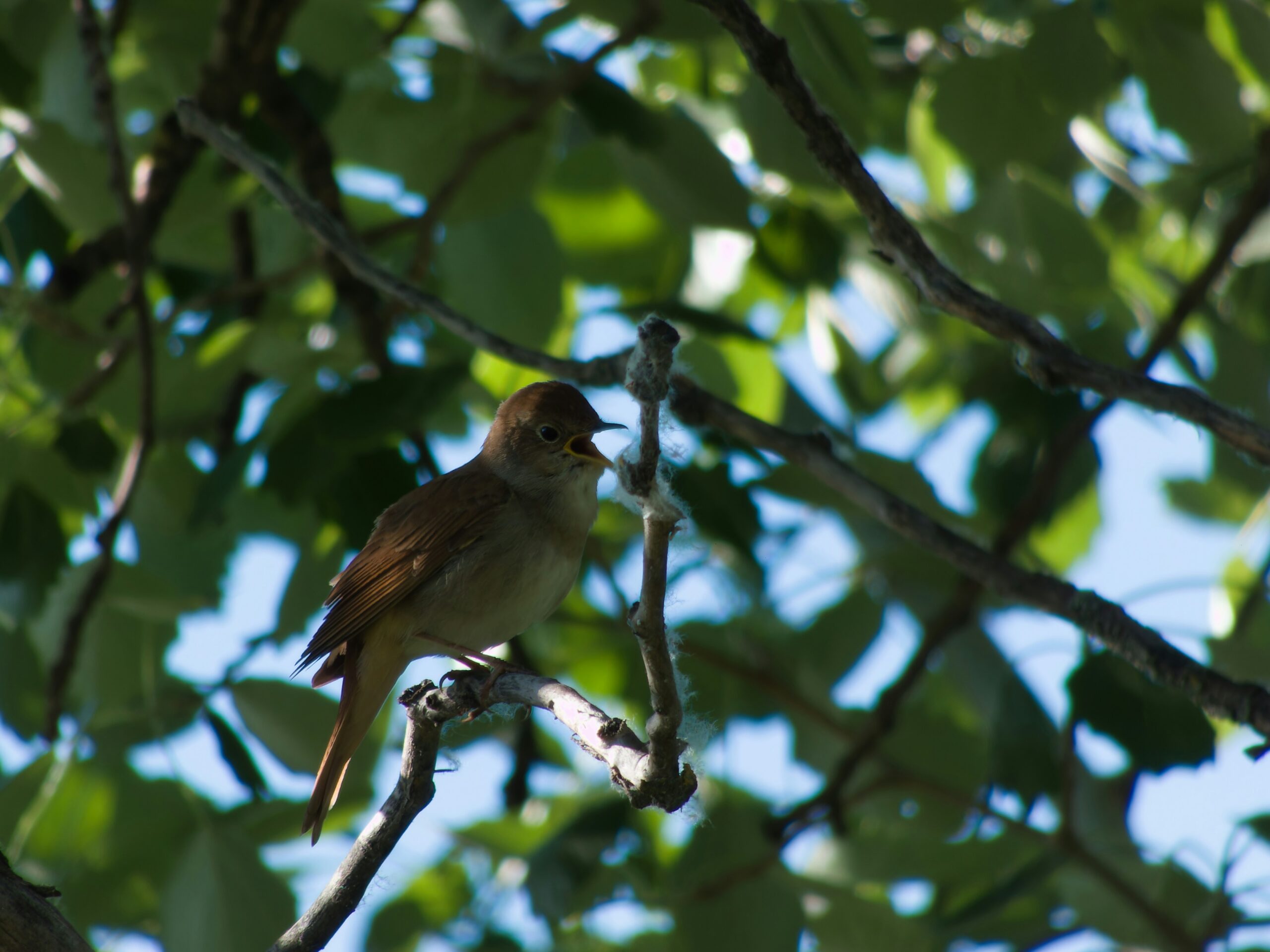
The scientific name of the nightingale, "Luscinia megarhynchos", beautifully encapsulates both its taxonomic classification and its rich vocal heritage. This small songbird, belonging to the family Muscicapidae, which includes other thrush-like birds, is renowned for its enchanting melodies, particularly during the breeding season. The genus name "Luscinia" derives from the Latin word for "night" or "nightingale", emphasising its nocturnal singing prowess. In contrast, the species name "megarhynchos" translates to "large bill", which is an apt description of its distinctively shaped beak designed for producing its rich, complex songs.
Beyond their enchanting melodies, this small passerine is also an exemplar of adaptation and migration, thriving in diverse habitats ranging from dense forests to urban gardens across Europe, Asia, and parts of Africa. As these birds migrate vast distances, they carry their melodic heritage with them, contributing to a rich tapestry of avian culture that evolves over centuries. Its ability to sing both day and night sets it apart from many other birds, creating an ethereal atmosphere in the quiet hours. This unique trait has led to centuries of admiration, influencing poetry and music from ancient times to modern-day compositions. Researchers have delved into the complexities of their songs, revealing that each note can convey a plethora of emotions and even signal health and vitality, making them a subject of interest in studies on animal communication.
As researchers continue to explore the intricacies of their behaviour and vocalisation patterns, the nightingale remains a testament to the profound connections between nature, art, and science.
The nightingale is a small passerine bird renowned for its enchanting song and possesses a fascinating array of characteristics that extend beyond their vocal prowess.
The nightingale, a small passerine bird, captivates with its striking appearance and graceful form. These birds are adorned in warm, earthy tones of plain browns and soft greys above, except for reddish tail, and their underparts are typically lighter, often featuring a subtle, creamy hue that contrasts with their more vibrant upper plumage. It also has large, expressive eyes, slightly rounded wings, a long, slender tail and sturdy legs. Unlike many birds whose beauty lies in their vibrant plumage, the Nightingale's charm resides in its vocal prowess. This small brown bird captivates listeners with its complex vocalisations that can include over 200 distinct phrases. Each note it sings is a testament to nature's artistry, inviting listeners to pause and appreciate the profound depths of expression. Its song, often heard during twilight hours, has inspired poets and musicians for centuries, evoking themes of love, loss, and the beauty of nature.
The common nightingale typically measures around 15 to 17 centimetres in length with a wingspan of about 8 to 10 inches and weighs about 17 to 24 grams. This nightingale is slightly larger than the European robin.
Anatomically, the nightingale is perfectly adapted for its role as a masterful songbird. Its vocal organ, known as the syrinx, which is located at the base of the trachea, is highly developed, enabling a remarkable range of melodies that can evoke deep emotions in listeners. This intricate structure allows for complex vocalisations, from melodious trills to haunting notes that linger in the air. It also enables a remarkable ability to mimic sounds from its environment, contributing to its legendary status in folklore and poetry. The nightingale is equipped with a robust respiratory system that plays a crucial role in its remarkable singing abilities. These anatomical features make the nightingale not just a singer but an artist of avian communication, capable of delivering intricate performances that can vary by region and even individual. Interestingly, researchers have found that the song patterns are influenced by environmental factors and social interactions, suggesting that these birds may be more socially aware than previously thought. In essence, the nightingale embodies a fascinating blend of beauty and biological ingenuity, making it a true marvel of nature.
Moreover, its unassuming, brownish plumage camouflages it perfectly among leaves and twigs, allowing it to evade predators while still delivering its melodious, beautiful songs. Their colouration also reflects the softness of their vocalisations, creating a harmonious connection between their appearance and their melodious nature. However, its dark and soulful eyes seem to convey a sense of curiosity about the world around it. The nightingale’s rounded body and relatively long tail contribute to its elegant silhouette, while its delicate yet sturdy legs allow for nimble movements as it flits through underbrush. Moreover, the bird’s lightweight bones and muscular build facilitate agile flight, essential for navigating dense foliage while searching for insects and berries. As dusk falls, the nightingale's enchanting song not only echoes through woodlands but also serves as a reminder of nature's profound beauty and the interconnectedness of all living things.
Nightingales are renowned for their melodious songs, but their habitats offer a fascinating glimpse into their lives beyond music. These birds thrive in dense undergrowth, thickets, woodland edges, deciduous forests, scrublands, hedgerows, open areas and even urban gardens, where their melodious songs can be heard echoing through the trees. Their preference for lush vegetation provides ample cover and nesting sites, allowing them to remain hidden from predators while they sing. Their habitats also provide an abundance of insects, which serve as their primary food source. In addition to their lush breeding grounds, nightingales are increasingly being spotted in urban settings, where pockets of green space serve as vital refuges for them. Their affinity for moisture-laden environments often leads them to riverbanks and lush gardens, where the symphony of their melodious calls can be heard echoing through the foliage during the twilight hours.
Interestingly, these birds undertake remarkable migrations, travelling thousands of miles from their breeding grounds in Europe and parts of Asia to wintering habitats in north Africa, showcasing their adaptability to diverse environments. A symphony of song often marks their journey; male nightingales use their vocal prowess during migration to attract mates and establish territory upon arrival.
The distribution of nightingales is primarily influenced by habitat availability and climatic conditions. These birds are predominantly found across Europe, Asia, Eurasia, and parts of Africa. While they are most commonly associated with Europe and parts of Asia, their presence is also noted in urban environments, where the occasional nightingale has been known to set up residence in well-kept gardens and parks, showcasing their remarkable ability to coexist with human activity. Recent studies suggest that nightingales can modify their singing patterns in response to city noise, demonstrating their resilience and ability to adapt to changing environments. This shift highlights not only the bird's resilience but also the importance of preserving natural spaces within cities. As urbanisation encroaches on traditional habitats, the nightingale's ability to thrive in human-altered landscapes serves as a poignant reminder of nature’s adaptability.
The nightingale, celebrated for its enchanting song, comprises several subspecies that exhibit fascinating variations in appearance, behaviour, and habitat. This bird primarily belongs to the genus "Luscinia", with two notable subspecies:
Each has unique characteristics that enhance its charm and are adapted to its respective environments.
Among the most notable is the European Nightingale, also known as the Common Nightingale (Luscinia megarhynchos), a small bird native to Europe and parts of Asia. It is characterised by its warm brown plumage with a pale underbelly and distinctive vocal abilities, often captivating listeners with rich, complex melodies that can be heard during both day and night. Their melodious vocalisations are particularly prominent during the breeding season, when males serenade to attract mates and establish territory, creating an enchanting soundscape that has inspired poets and musicians for centuries. The European nightingale thrives in dense, shrubby areas, thickets along riverbanks, woodlands and gardens, preferring environments rich in cover where they can forage for insects and berries. They have a broad distribution, spanning from Europe to Western and Central Asia. They are migratory, spending their winters in warmer climates, such as sub-Saharan Africa, before returning to Europe and parts of Asia for the breeding season. This migration not only highlights their aptability but also serves as a reminder of the interconnectedness of ecosystems across continents.
The Common Nightingale has several subspecies found across Europe, Africa, and Asia, including Central Asia. It has three recognised subspecies, and one of these, the Western Nightingale (Luscinia megarhynchos megarhynchos), is found in Western Europe, North Africa, and parts of Asia Minor, while the Caucasian Nightingale (Luscinia megarhynchos africana), covering the Caucasus region and parts of Eastern Turkey, extending into southwestern Iran and Iraq, before migrating to East Africa for the winter. On the other hand, the Eastern Nightingale or Rufous Nightingale (Luscinia megarhynchos golzii) occupies Central Asia, with a range that extends from the Aral Sea eastward into Mongolia. It breeds across Europe, Western Asia, and Central Asia, before migrating to East Africa in winter.
Another most recognised subspecies is the Thrush Nightingale or Sprosser (Luscinia luscinia), which occupies regions from Eastern Europe and Western Asia to Central Asia, in addition to Denmark and Ukraine, before migrating to southern Africa for the winter. This subspecies is also found in temperate Asia, but it tends to inhabit more open and shrubby environments compared to its Western counterpart. This nightingale exhibits a slightly more vibrant colouration and is known for its unique song variations that differ by region, illustrating the adaptability of these birds to their respective environments.
The Indian Nightingale or Asian Koel (Eudynamys scolopaceus) is a species of cuckoo, not a true nightingale. This bird is called the "Indian nightingale" due to the male’s loud and melodious "koo-Ooo" call, especially during the breeding season in spring. The male has glossy blue-black plumage, while the female is brownish with white spots. The Asian koel is a brood parasite, meaning it lays its eggs in the nests of crows, reed warblers, and other hosts, who raise its young. It boasts a slightly different song quality and prefers the subtropical climates of the Indian Subcontinent, Pakistan, China, and Southeast Asia, residing in thickets, dense forests, overgrown fields and open woodlands, where it uses its song not only to attract mates but also to establish territorial dominance. This bird is a widely used symbol in Indian and Nepali poetry.
The nightingale, often celebrated for its enchanting song, embodies a unique blend of characteristics that set it apart in the avian world. Typically measuring around 15 to 17 centimetres in length, its plumage is a warm blend of brown, ochre, and white, which allows it to blend seamlessly into its surroundings, offering both beauty and practicality. This camouflage helps protect them from predators while they nest on the forest floor or in dense shrubbery or among the underbrush. These small, brownish birds are generally nocturnal singers, which is a rarity among avian species. Their nocturnal serenade is not merely for show; it serves as a means of communication during the mating season, allowing males to assert their territory and attract females under the cover of darkness. Moreover, male nightingales can produce a repertoire of over 200 different song variations, and their rich, varied vocalisations convey deep emotions, often inspiring poets and musicians throughout history, solidifying the nightingale’s status as a symbol of love, longing, beauty and emotional depth in culture and literature.
Furthermore, nightingales have a unique way of learning their songs. Males listen to and imitate the calls of other birds in their vicinity, showcasing an impressive capacity for adaptation and creativity. These birds prefer to remain hidden among foliage during daylight hours, which adds an element of mystery to their enchanting songs. Their nocturnal singing, meanwhile, lends an ethereal quality to moonlit landscapes. The melodious notes can be heard from male nightingales during spring, both day and night.
Interestingly, nightingales have been observed exhibiting complex social structures; they can engage in duets with their partners, creating a harmonious interplay that showcases both individual talent and cooperative behaviour. At the same time, they are often solitary during the breeding season, but they may gather in small flocks during migration, travelling long distances between breeding and wintering grounds, showcasing not only a fascinating duality in their social dynamics but also highlighting their resilience and endurance in the face of changing climates and environments. Found across Europe, Asia, and parts of Africa, these birds thrive in diverse habitats, ranging from dense shrubs and thickets to dense woodlands and urban gardens, which provide ample cover, nesting sites and food, allowing them to remain hidden from predators while still being able to project their songs. Additionally, they are known for their territorial nature, fiercely defending their chosen breeding grounds against rivals. This defensiveness reflects a strong survival instinct, ensuring that their offspring have the best chance to thrive. This strategic choice of habitat highlights not only their instinctual understanding of safety and survival but also showcases a remarkable adaptability to their environment. Interestingly, their vocal repertoire varies significantly between regions, with some subspecies developing unique dialects that reflect local influences, making the Nightingale not just a bird of song but a symbol of hope and tenacity in the face of challenges.
In terms of habitat, nightingales thrive in diverse habitats, ranging from dense underbrush or thickets and woodlands to overgrown gardens and hedgerows, favouring areas with ample cover for nesting, food and allowing them to sing freely while remaining concealed from predators. They are often found in temperate forests and scrublands, where their songs resonate through the foliage during the breeding season. Interestingly, their preference for specific habitats can influence their vocal behaviour; in denser areas, their songs may become more complex to penetrate the layers of vegetation. Moreover, nightingales migrate seasonally, travelling thousands of miles from their breeding grounds in Europe and Asia to their wintering grounds in Africa. This remarkable migration not only showcases their physical endurance and resilience but also highlights their importance as seed dispersers and as controllers of insect populations in their habitats. This adaptability showcases not just their survival skills but also the profound connection between their environment and the artistry of their song.
The diet of the nightingale is as captivating as its melodious song, revealing a complex relationship with its environment. These small, elusive birds primarily feast on a diverse array of insects, including caterpillars, beetles, flies, ants, spiders, and other small invertebrates, which provide essential proteins during the breeding season, making them vital players in their ecosystems by helping to control pest populations. However, they are not strictly insectivorous; nightingales also indulge in fruits and berries, which not only provide essential nutrients but also serve as a crucial energy source for their demanding vocal displays and territorial battles, particularly in autumn. This omnivorous flexibility in their diet not only showcases their adaptability but also highlights their role in seed dispersal, contributing to the health of their ecosystems.
Moreover, their preference for specific feeding locations, often dense thickets or shrubbery and wooded areas, reflects a strategic choice that offers both nourishment and protection from predators. Nightingales forage on the ground, flipping leaves and debris with their agile movements to uncover hidden delicacies. These birds often sing from high perches while searching for food. Studies suggest that the quality of their song can indicate their foraging success; a well-fed nightingale tends to produce richer and more varied melodies.
Interestingly, the nightingale's feeding habits are deeply intertwined with its migratory patterns. As they travel thousands of miles between their breeding grounds in Europe and wintering areas in Africa, they adjust their diet based on the seasonal availability of food sources. This flexibility allows them to thrive in different ecosystems, emphasising the bird's resilience amid changing environments and showcasing the importance of varied habitats that support both insect populations and fruit-bearing plants. Ultimately, the nightingale’s diet serves as a reminder of the delicate balance between species and their habitats, underscoring the need for conservation efforts to preserve these vital ecosystems.
The nightingale, often celebrated for its enchanting song, exhibits fascinating behaviours that extend beyond its melodic prowess. These small, brownish birds are primarily nocturnal singers, which is unique among avian species. They can sing both day and night, but their nocturnal serenade is particularly enchanting during spring, when males engage in elaborate vocal performances to attract mates and establish territory. This unique behaviour allows them to fill the darkness with intricate melodies that can captivate anyone fortunate enough to hear them. This adaptability has made them not only a symbol of poetic inspiration but also a testament to nature's versatility in the face of change. Their song, which can include a variety of trills, whistles, and gurgles, is not only a testament to their vocal prowess but also a form of communication that conveys emotional depth, reflecting joy, distress, or even the presence of predators. Nightingales can learn and adapt their songs based on social interactions. Observers have noted that male nightingales can sing over 200 different variations, showcasing not just their vocal talent but also their adaptability in responding to the environment around them. This adaptability also highlights the nightingale's intelligence and social complexity, as they often mimic the calls of other bird species, enriching their repertoire. Their elusive nature adds to their charm; often hidden among foliage, nightingales are more frequently heard than seen, prompting a sense of curiosity and wonder among those who encounter them.
Additionally, the nightingale's foraging behaviour is a testament to its intelligence and resourcefulness. These birds often sing from high perches while searching for food, using their vibrant vocalisations to both attract mates and establish territory. Interestingly, studies suggest that the quality of their song can indicate their foraging success; a well-fed nightingale tends to produce richer and more varied melodies. This interplay between diet and vocal performance emphasises the intricate connection between survival strategies and social behaviours in the avian world, inviting us to reconsider the ways we perceive these enchanting creatures beyond their songs.
In terms of lifestyle, nightingales are solitary creatures, preferring to stake out their own territories during the breeding season, but they may gather in small flocks during migration. The male nightingale sings primarily during the breeding season, using its rich repertoire to attract mates and defend territory, showcasing not only its vocal talent but also its survival instincts. Their songs are not merely for mating; they serve as a complex form of communication among individuals, conveying everything from territory claims to alarm calls. Additionally, nightingales fiercely defend their chosen breeding grounds against rivals. This defensiveness reflects a strong survival instinct, ensuring that their offspring have the best chance to thrive. This strategic choice of habitat highlights not only their instinctual understanding of safety and survival but also showcases a remarkable adaptability to their environment.
However, their interaction with the environment is deeply intertwined with their survival strategies. They seek habitats rich in dense underbrush where they can find ample food and shelter, while remaining concealed from predators. The Nightingale thrives in varied habitats, from thickets to woodlands, dense shrubs to hedgerows, and even urban gardens, demonstrating an ability to harmonise with both natural and human-influenced environments. These small birds feast on a diverse array of insects such as beetles, caterpillars, ants, and flies, which they hunt with remarkable agility, but when energy demands peak, nightingales supplement their diet with ripe fruits and berries, showcasing their opportunistic feeding habits. This flexibility not only supports their nutritional needs but also highlights their importance as seed dispersers and as pest controllers in their habitats. Found across Europe, Asia, and parts of Africa, this elusive creature typically remains hidden among dense foliage during the day, revealing its true self only at dusk and dawn when it serenades the world with melodious notes. Interestingly, nightingales are also known for their migratory patterns, travelling long distances between breeding grounds in Europe and Asia to wintering grounds in parts of Africa. This journey reflects not only their physical endurance but also their reliance on specific environmental cues, such as changes in temperature and daylight, to navigate the seasons. Each aspect of the nightingale's behaviour and lifestyle paints a portrait of a bird finely tuned to its surroundings, embodying the delicate balance between artistry and survival in nature.
Nightingales, renowned for their enchanting melodies, possess a fascinating approach to reproduction that reflects their intricate relationship with nature. Breeding typically begins in early spring when males take to the treetops, filling the air with complex melodious notes to attract potential mates. Their vocal prowess can last for hours, showcasing their vitality and genetic fitness, which serve not only as a courtship tool but also as a means to establish territory. On the other hand, the female selects her partner based not only on song quality but also on the male's ability to defend his territory. Once paired, the female meticulously constructs a nest, often hidden among dense foliage to safeguard her eggs from predators, using grass, leaves, and feathers, showcasing her instinctual design prowess.
After a gestation period of about 2 weeks, the female lays a clutch of 3 to 6 eggs, which she incubates with unwavering dedication. The chicks hatch after about 13 days, and are born altricial, blind and helpless, requiring constant care from their parents. The parents work tirelessly, bringing insects, worms and other protein-rich food to feed their young. Interestingly, nightingale chicks grow remarkably fast, fledging within two weeks of hatching. This rapid development is essential for survival, as it allows them to leave the nest before predators become a significant threat. Remarkably, nightingales can reproduce multiple times within a season, an evolutionary strategy that enhances their chances of passing on their genes.
In terms of lifespan, as these birds transition into adulthood, nightingales typically live around 2 to 3 years in the wild, although some individuals have been known to reach up to 10 years under optimal conditions. This relatively short lifespan is counterbalanced by their prolific breeding habits, ensuring that the nightingale's melodic legacy continues through generations. Their life cycle encapsulates a delicate balance between vulnerability and resilience, making the nightingale not just a symbol of beauty but also a remarkable testament to the rhythms of life in the natural world.
Nightingales, celebrated for their enchanting melodies, face a myriad of threats in their natural habitats. Among the most insidious are predatory birds like sparrowhawks, crows and jays, which capitalise on the nightingale's tendency to sing from exposed perches. This beautiful songbird’s vulnerability is amplified during nesting season when its young are particularly defenceless. The risk is not limited to avian predators; ground-dwelling mammals such as cats, which have adapted to urban environments and pose a serious risk to these birds with their stealth and hunting instincts, particularly during the vulnerable nesting season when adult birds are preoccupied with their young, while foxes also pose significant dangers, often stalking these birds with stealthy precision.
Human activity compounds these threats, as habitat destruction and urbanisation encroach on their territories. The transformation of dense woodlands into agricultural land disrupts their breeding grounds, pushing nightingales into smaller, fragmented spaces. This loss of habitat not only diminishes nesting opportunities but also reduces the availability of essential food sources, further endangering these melodious birds. Moreover, climate change introduces unpredictable shifts in weather patterns that can disrupt migration routes and breeding cycles. Nightingales depend on specific conditions to thrive, and as seasons become erratic, their synchronised life processes are thrown into chaos. Additionally, the rise of artificial light pollution alters their nocturnal behaviours, affecting their mating calls and leading to decreased reproductive success, while causing disorientation during migration. Invasive species can further complicate their plight by outcompeting native flora that provides essential cover and food sources.
However, their ability to blend seamlessly into their surroundings serves as an effective defence mechanism against predators, but the nightingale's remarkable adaptability in voice and song might not be enough to compensate for these challenges. In an era where their beautiful songs are celebrated, it’s crucial to recognise the silent struggles they face and advocate for conservation efforts that protect their habitats and ensure their haunting melodies continue to resonate through our landscapes.
The nightingale, often celebrated for its enchanting song, is a species that has sparked both admiration and concern among ornithologists and bird enthusiasts alike. While the exact global population number of nightingales can be elusive due to their migratory nature, estimates suggest that there are between 43 million and 81 million mature individuals across Europe and parts of Asia. The European breeding population of the Common Nightingale consists of approximately 10.7 million to 20.3 million pairs, while the closely related species, the Thrush Nightingale, has a smaller population estimated at 12 million to 22 million mature individuals. This figure, however, masks a more nuanced reality, as local populations can fluctuate dramatically based on environmental conditions, habitat availability, and human impact.
These elusive songbirds, primarily found in Europe and parts of Asia, have seen fluctuations in their numbers due to habitat loss and changes in agricultural practices. As urbanisation encroaches upon their natural habitats, the nightingale's once-thriving populations face significant threats, leading conservationists to sound the alarm about their dwindling numbers. Interestingly, recent studies suggest that the nightingale's population dynamics may also be influenced by climate change. Warmer temperatures can alter migration patterns and breeding seasons, prompting these birds to adapt or risk declining further. Some researchers propose that citizen science initiatives, where enthusiasts monitor and report nightingale sightings, could provide crucial data to track these shifts and help formulate effective conservation strategies.
Moreover, the Nightingale's migratory patterns add another layer to their population dynamics. Each year, millions embark on long journeys from Europe to Africa, which not only exposes them to various threats but also provides opportunities for genetic exchange across populations. This movement underscores the importance of international conservation efforts; protecting their migratory routes is crucial for maintaining healthy populations.
Interestingly, the nightingale's resilience is noteworthy; despite facing these challenges, they have adapted to urban environments where they can often be heard singing from parks and gardens. This adaptability offers a glimmer of hope for conservation efforts, suggesting that with appropriate habitat restoration and protection measures, their populations could stabilise. Engaging local communities in these initiatives not only aids in preserving the nightingale's habitat but also enriches cultural connections to nature, as these birds have long inspired poets and musicians alike. Thus, while the numbers present a sobering picture, there remains a potential for recovery if concerted efforts are made to protect this beloved species.
The Nightingale bird, often celebrated for its enchanting song, holds a deeper significance that transcends its melodic prowess.
In the heart of the zoo, the Nightingale bird emerges as a hidden gem, captivating visitors with its melodious tunes. Often overshadowed by more flamboyant species, this small, brown, unassuming bird possesses a vocal range that rivals even the most celebrated musicians. The Nightingale’s song, which resonates through the air like an intricate symphony, serves not only as a call to potential mates but also as a form of communication that transcends mere survival. Observing these birds in such an artificial environment provides a unique opportunity to witness how their songs evolve throughout the day, reflecting their moods and the changing ambience around them.
In addition to their enchanting melodies, Nightingales are emblematic of resilience and adaptability. Their presence in a zoo setting highlights the delicate balance between nature and human intervention. Here, they thrive amidst carefully curated habitats that mimic their natural environments, offering insights into conservation efforts for species facing habitat loss in the wild. Engaging with these birds encourages visitors to reflect on the importance of preserving their natural habitats, fostering a deeper appreciation for biodiversity. Each note sung by the Nightingale serves as a reminder of the beauty that exists in our world and the collective responsibility we share to protect it.
The nightingale, a small passerine bird belonging to the family Muscicapidae, which is a group of terrestrial species often referred to as chats. While formerly classified in the thrush family, Turdidae, they are now considered part of the Muscicapidae group due to modern scientific understanding. Within the Muscicapidae family, the nightingale is also classified under the genus "Luscinia" and the order "Passeriformes", with the common nightingale (Luscinia megarhynchos) being the most famous representative. Interestingly, the nightingale's vocal prowess is not merely for show; it's a form of communication among individuals, which plays a vital role in attracting mates and defending territories. Their songs can vary significantly across regions, suggesting a rich tapestry of local adaptations influenced by habitat and social dynamics. This vocal evolution has fascinated ornithologists, leading to studies that reveal how variations in song can indicate the health and genetic fitness of individual birds.
However, this small passerine bird is primarily categorised into two main species:
Known for their melodious songs, these birds have inspired poets and musicians throughout history, reflecting their deep cultural significance. Interestingly, genetic studies have revealed that nightingales are more closely related to thrushes than previously thought, highlighting an evolutionary lineage marked by adaptation and vocal prowess.
From an evolutionary perspective, nightingales are thought to have diverged from a common ancestor with other members of the thrush family over millions of years, adapting to various habitats across Europe, Asia, and North Africa. This avian marvel’s remarkable ability to mimic other species' calls showcases a sophisticated adaptation strategy. This mimicry not only enhances their allure during mating rituals but also serves as a survival mechanism, allowing them to blend into their diverse habitats, ranging from thickets and woodlands to open fields and urban gardens. Current research suggests that these birds may have evolved their singing abilities in response to environmental factors, such as habitat complexity and urbanisation, which influence acoustic communication. The nightingale stands as a symbol of resilience and adaptation, embodying the delicate balance between natural selection and cultural evolution in the avian world. Moreover, the migratory patterns of nightingales illustrate their resilience; these birds undertake extensive journeys between Europe and Africa each year, navigating challenges that test their evolutionary strategies. This blend of adaptability and artistry not only enriches our understanding of avian evolution but also reminds us of the intricate connections between species and their environments.
The nightingale, with its enchanting song and elusive presence, has long captivated human hearts and imaginations. This small bird, often hidden among dense foliage, serves as a metaphor for the beauty of nature that thrives just out of reach. Its melodious voice has inspired poets, musicians and has also been woven into the fabric of literature and art throughout history. From ancient Greek myths to modern poetry, these birds have been immortalised as symbols of love, longing, and the ephemeral nature of life. The nightingale’s song, often heard at twilight, offers a reminder to pause and appreciate the simple yet profound moments that connect us to the natural world.
Interestingly, the nightingale's songs have been shown to influence human behaviour beyond artistic inspiration. Research suggests that listening to their enchanting melodies can enhance mood and reduce stress, providing a natural form of therapy. This bond goes deeper; as humans have cultivated gardens and preserved habitats, they’ve unwittingly created sanctuaries for these songbirds. In return, nightingales enrich our lives, reminding us of the importance of preserving biodiversity and fostering harmony between our urban environments and the natural world.
Interestingly, the relationship between nightingales and humans extends beyond mere appreciation of their song. In many cultures, these birds are seen as harbingers of change or messengers from the spirit world. Their annual return heralds the arrival of spring, a time for renewal and hope. Conservation efforts to protect their habitats reflect a growing recognition of the interconnectedness between humans and wildlife. As urban environments expand, initiatives aimed at preserving green spaces not only benefit nightingales but also enhance our own quality of life, fostering a deeper bond with the natural world we often take for granted. In nurturing these avian poets, we inadvertently nurture our own souls.
The Nightingale, known for mesmerising song and elusive nature, faces a precarious future as its conservation status raises alarms among ornithologists and nature enthusiasts alike. While the International Union for Conservation of Nature (IUCN) currently lists the Nightingale as of "Least Concern", this designation belies the challenges it confronts in an ever-changing environment. Once abundant across Europe and parts of Asia, habitat loss due to urbanisation and agricultural expansion poses a significant threat to these enchanting birds, leading to declining populations across various regions. As forests and shrublands shrink, the Nightingale's breeding grounds diminish, forcing them into increasingly fragmented environments where survival becomes a challenge. This loss not only impacts their population numbers but also affects the rich tapestry of ecosystems they help sustain through their role in pollination and pest control.
Recent studies have highlighted the impact of climate change on Nightingale's migratory patterns. As temperatures rise, these birds are arriving earlier each spring, potentially disrupting their mating rituals and food availability. Furthermore, shifting weather patterns can lead to mismatches between their breeding cycles and the peak abundance of insects, which serve as crucial nourishment for their young. Interestingly, localised populations are experiencing alarming drops. This paradox highlights the importance of targeted conservation efforts that go beyond mere classification. For instance, initiatives focusing on restoring natural habitats, like dense thickets and scrubland, can create safe havens for these birds to thrive. Moreover, engaging local communities in conservation practices not only fosters a sense of stewardship but also revitalises cultural connections to these remarkable singers, ensuring their legacy continues for generations to come.
The Nightingale and the Cuckoo, while both celebrated in literature and folklore for their distinct songs, embody contrasting narratives in the avian world.
Together, these two birds reflect the duality of nature: one celebrates the beauty of creation while the other showcases the raw realities of survival.