
The ostrich is a flightless, heaviest and the largest of all living birds. They are exclusively native to Africa and can be found at zoos on many continents. Ostriches exist in both wild and domesticated forms. They are most notable for their long neck and legs, as well as their ability to run at high speeds. Ostriches are omnivorous birds that eat a variety of plants and animals. They typically live in dry areas and can also be found near water sources, such as lakes and rivers. Ostriches are social creature that lives in groups (flocks or herds) of 5 to 50 individuals. They can’t fly, so they bury their heads in the sand when they are scared. Ostriches also utilise their first running capabilities to escape predators. Male ostriches are usually black with white wings and tail feathers, while females are greyish-brown. They are also interesting because they lay the largest eggs of any bird. The ostrich is hunted and farmed for its meat, skin and feathers. Their meat is lean and low in cholesterol, and their skin is used to make leather products. However, in a world increasingly concerned with biodiversity and conservation, understanding the ostrich’s role in its ecosystem offers valuable insights into the interconnectedness of wildlife and the habitats they inhabit.
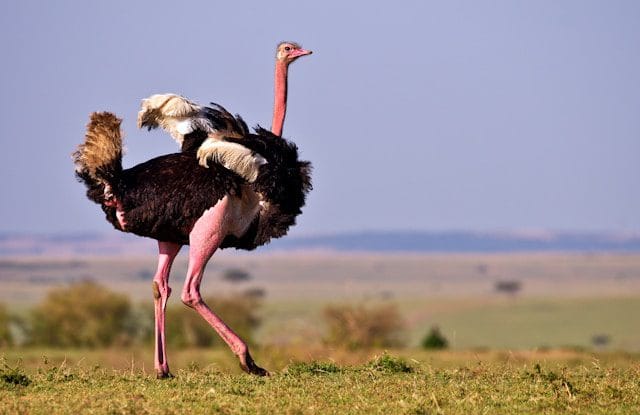
The scientific name for the ostrich is "Struthio". Belonging to the family Struthionidae, there are two living species of ostrich: the Common ostrich (Struthio Camelus) and the Somali ostrich (Struthio molybdophanes). This name comes from the Greek words for "camel-sparrow", which are thought to describe 'the long neck' and 'the legs' of the Ostrich. The Ostrich is a member of the ratite family, which includes emus, rheas, cassowaries, kiwis, and the extinct elephant birds and moas. It is the largest bird that is native to Africa. The ostrich is the flightless and heaviest bird in the world, but this bird is also the fastest bird on land.
Ostriches are one of the most interesting and amazing creatures on the planet. Here are some facts and features that make them so unique:
An ostrich is a large, tall, flightless bird that is native to Africa. Both sexes have bulky bodies with loose, puffy, soft and smooth feathers that give them a "Shaggy" look. The plumage of male ostriches is mostly black and white, while the plumage of female ostriches is mostly greyish-brown. The male ostrich also has two long, curved feathers that protrude from its back. They have white patches on the wingtips and on the tail. Ostriches are known for their ability to camouflage themselves in their environment. Despite their size, their wings are small, but they have long necks and long, muscular legs. Ostriches also have a small head with large eyes and a short, wide, flat beak on top of their long neck. Their prominent brown eyes measure about 2 to 3 inches in diameter and are protected by sweeping, long, dark eyelashes. Ostriches' necks and heads are bare or covered in fine, wispy feathers, but their legs are naked (unfeathered). This bird has only two toes on each foot, and each toe has a claw that can grow up to 12 inches long. Their skin colour varies by subspecies and can be light or dark grey, pinkish, or reddish. When they feel threatened, they will sometimes lie down on the ground and blend in with the sand, or they bury their heads in the sand when they are scared.
Ostriches can grow up to 9 feet tall, 5.91 feet long and usually weigh between 90 to 150 kilograms with a wingspan of about 6.5 feet. Male ostriches reach in height of about 6.9 to 9 feet and weigh between 90 to 150 kg, while female ostriches are typically shorter than males, ranging from 5.7 to 6.2 feet in height and weighing between 90 to 110 kg.
When it comes to their anatomy, ostriches' skeletal structure consists of axial and appendicular bones, including a cranium, vertebral column, and a flat sternum without the deep keel seen in flying birds, and their unique pubic bones are fused to hold the gut. Their distinctive plumage plays an essential role during courtship displays; while males flaunt their striking black feathers to attract mates, females have subdued earth tones that enhance camouflage. Despite their size with small wings, ostriches can't fly, but they are excellent runners. Ostriches' powerful leg muscles allow them to run so fast, and for defence. Adults have a unique double petella, and their elastic joints and tendons store energy, which gives them a unique spring in their step. They can kick powerfully to ward off predators. The ostrich is the fastest bipedal (two-legged) land animal capable of running at speeds of up to 43 miles per hour and can cover up to 16 feet in a single stride. Their two toes on each foot also help them balance when running at high speeds. They have a small neopulmonic region, which is more rigid than other birds, though they still use gas propulsion to breathe efficiently. When the ostrich runs, it also uses its short wings for balance, stability, and quick turns rather than flight. Their wings have 16 primary, four alular, and 20 to 23 secondary feathers, which are also used for cooling.
However, their big eyes are positioned on either side of their head, giving them nearly 360° vision, and help them see predators from far away. Additionally, ostriches have very sensitive hearing, which also helps them to detect predators from far away, while their beak shape is an adaptation for their largely ground-foraging diet in the African savannah and desert regions. Like other birds, ostriches' beaks can also be used for preening, defensive pecking, and in courtship display, but their beaks are primarily used for pecking at and gathering food from the ground, such as plants, roots, seeds, insects, and small animals. They do not have teeth, so their beak is not used for chewing or grinding food. Instead, food is collected in a crop in the throat and then swallowed whole. They have 3 stomachs that help them digest a varied diet more effectively. They swallow small stones, sand, and pebbles (gastroliths) with their beaks to break down tough plant matter. These stones are stored in a muscular stomach called the gizzard, where they act as grinding tools. Unlike most birds, they have separate urination and defecation processes to separate their urine and faeces, which they store in different parts of the digestive tract. Additionally, the males, unlike most birds, have a retractable copulatory organ.
Ostriches are the largest birds in the world, and their poop reflects that. Their poop is used to mark their territory or attract mates. Sometimes, the poop is eaten by the ostriches to get rid of any parasites that may be living in their digestive system. Their poop is not typical bird poop. It is large, solid and full of seeds, and it can be a bit smelly. This makes it perfect for use as a fertiliser or as fuel for fires. In some parts of the world, ostrich poop is even used to make jewellery. Some people use it to make art out of it. Some people make sculptures and paintings using ostrich poop as their medium. If people are thinking about using ostrich poop for their next art project, there are a few things they should know first. It is important to let the poop dry completely before using it. Otherwise, it will be too smelly and sticky to work with. Their poop has been used for centuries as a natural fertiliser by many farmers and gardeners. It is an excellent source of nutrients for plants and helps to improve the quality of the soil. Ostrich poop is also a great natural source of nitrogen, phosphorus and potassium, which are essential nutrients for plants. It can be applied to gardens and fields to help promote plant growth.
The ostrich is the world's largest flightless bird that is native to Africa. They thrive primarily in the arid and semi-arid regions of Africa, showcasing a remarkable adaptability to diverse environments. Ostriches typically live in areas with plenty of food and water. They prefer open savannahs, woodlands, grasslands, shrublands, forests and even deserts, where their long legs enable impressive speeds of up to 43 miles per hour, allowing them to evade predators. Interestingly, their habitat is not limited by water sources; instead, ostriches need only sparse vegetation, which they forage upon, revealing a fascinating relationship between their physical attributes and survival strategies. Now, ostriches can be found in many zoos and farms around the world. They can also be found in dry and open countries.
The majority of ostriches live in sub-Saharan Africa, where they are found in countries such as Angola, Botswana, DRC, Namibia, South Africa, Zambia and Zimbabwe. Some subspecies are native to the Horn of Africa, where they are found in countries like Ethiopia, Kenya, Somalia and Djibouti. This bird used to be native to the Arabian Peninsula and was present across Asia as far east as China and Mongolia during the Late Pleistocene and possibly into the Holocene. Beyond their native African territories, ostriches have been introduced to various parts of the world, including Australia and parts of South America, primarily for farming and ornamental purposes. Ostriches are also found in small numbers in the Middle East. This expansion poses intriguing questions about their adaptability in non-native ecosystems. While they thrive in captivity, the ecological implications of their presence in new environments remain a subject of study. Observations suggest that they can outcompete local species for resources, highlighting the need for careful consideration of their distribution and impact on biodiversity in different regions.
Ostriches, the world's largest birds, boast a fascinating array of subspecies that reflect their adaptability to diverse habitats across Africa. There are two main living species of ostriches:
The Somali ostrich (Struthio Molybdophanes) was previously considered a subspecies of the Common ostrich (Struthio camelus), but is now recognised as a distinct species. However, the Common ostrich is divided into several subspecies that are distributed throughout the African continent:
Each subspecies thrives in remarkably unique ecosystems, from the savannas and grasslands where they forage for seeds and insects to desert regions that test their resilience. These birds are distinguished by their size, the colour of the neck, head, and thighs and by their eggs.
The Common ostrich (Struthio camelus) is the largest and heaviest living bird, found predominantly in native savannas and deserts of Africa. These flightless giants embody resilience through their ability to thrive in harsh environments where few other species can survive. Weighing up to 150 kg, with some individuals reaching up to 9 feet tall, this flightless bird relies on its powerful legs for both speed and defence. Remarkably, the ostrich can sprint at speeds of up to 43 miles per hour, making it one of the fastest-running birds on land, which showcases a stunning blend of power and agility that belies its size. This ability allows it to evade predators in the wilds of Africa, while also proving beneficial during territorial displays. During non-breeding seasons, Common ostriches often form mixed-gender groups referred to as herds that comprise up to 100 individuals. These flocks provide safety in numbers, while exhibiting intriguing behaviours such as complex mating rituals with their synchronised running that is as tantalising as they are intricate and communal nesting, where females lay their eggs in a shared mound that benefits from collective vigilance against threats. In addition to their physical prowess and social intricacies, ostriches play an essential role in their ecosystems by aiding seed dispersal, ensuring that diverse plant life thrives alongside them.
The Somali ostrich (Struthio Molybdophanes) is one of the lesser-known species of ostriches, primarily found in the arid landscapes across Somalia and neighbouring regions. This remarkable bird also exhibits unique adaptations that allow it to thrive in harsh environments where few other animals can survive. Its striking plumage showcases a captivating blend of grey, brown and black feathers, designed for both camouflage and thermoregulation. Unlike its relatives, the Somali ostrich has a distinct blueish hue to its neck and thighs, along with a smaller body size, traits that both attract mates and help it camouflage against predators. This subspecies exhibits remarkable resilience with its strong body and long legs, perfectly designed for sprinting across vast distances of dry land in search of food, primarily vegetation and seeds. Their incredible speed, capable of reaching up to 43 miles per hour, is both grace and power, also tailored for survival in challenging ecosystems where short bursts can mean life or death. By foraging through the vegetation, this bird aids in seed dispersal, contributing to plant diversity and stability within its desert habitat. During breeding seasons, these birds form small or loose flocks that enable them to maintain vigilance against threats while exhibiting their complex communication behaviours. Additionally, the Somali ostrich has developed an intricate communication system, involving low-frequency vocalisations that allow them to sense potential danger from afar, a testament to their adaptability and survival instincts in a challenging ecosystem.
The Northern Common Ostrich (S. c. camelus) roams parts of North Africa, distinguished by their lighter plumage and a more slender build. They often inhabit arid regions where they develop a unique coping mechanism to withstand extreme temperatures, actively seeking shade during the hottest parts of the day.
The Southern Common Ostrich (S. c. australis) found in South Africa exhibits a distinctive feather pattern with black plumage and white wing tips, aiding in thermoregulation and allowing it to blend seamlessly with its environment.
The Maasai ostrich (S. c. massaicus) stands out not just for its impressive size but also for its vibrant plumage and unique adaptations. These birds thrive in harsh environments due to their exceptional leg strength and swift running capabilities, often reaching speeds up to 43 miles per hour. This remarkable speed is essential for evading predators in the open grasslands of East Africa.
The Arabian Ostrich(S. c. syriacus) is now tragically extinct, but once roamed parts of the Arabian Peninsula. Its adaptation to desert life reflected unique physical traits that allowed it to thrive in extreme conditions.
Ostriches are the largest, heaviest and most flightless birds in the world. They have long legs and a long neck that protrudes from a round body. Males have a bold black-and-white colouring that they use to attract females. Females, on the other hand, are light brown. These birds have powerful eyesight, allowing them to spot danger from great distances and react swiftly. When threatened, they will often try to bury their head in the sand instead of fighting back. Ostriches are bigger than any other bird in the world. Unlike many different birds, ostriches cannot fly; instead, they have transformed their formidable presence on land into a survival strategy that thrives on both speed and strength. Ostriches are great runners and can reach up to 43 miles per hour; it has evolved to escape predators with astonishing agility. Their one stride can be 10 to 16 feet long. Furthermore, their communal nesting behaviour showcases remarkable cooperation; several females lay their eggs in a shared mound that benefits from collective vigilance against threats. Interestingly, ostriches exhibit intriguing parental roles; males and females take turns incubating eggs and protecting chicks, a behaviour that's relatively rare among birds. Ostrich eggs make them very resistant to breakage during handling and transportation, while also serving as a basis for the making of curios.
When it comes to their common habitats, ostriches are only found natively in the wild in Africa. For instance, the Common ostrich is native to large areas of sub-Saharan Africa and can be found in Africa's grasslands and savannahs, while the Somali ostrich is native to the Horn of Africa, including Somalia, Ethiopia, Kenya, and Djibouti. They can be found in arid and semi-arid grasslands, dense thornbush and woodlands.
The ostrich, the world’s largest flightless bird, engages in a fascinating diet that reflects its unique ecological niche. This bird is an omnivore. Unlike typical avian diets that lean towards seeds or insects, ostriches thrive on a variety of tough plant materials and animal matter. Their diet consists of grasses, roots, stems, seeds, flowers, buds, leaves, and even the fruit and vegetables found in their vast African savannah habitat. Ostriches are not very picky eaters and will prelly much of anything they can get their beaks on. They also consume insects, lizards, rodents, snakes, small animals and even grubs. This adaptability not only helps them thrive in the harsh savannah but also underscores the intricate web of life they participate in. Moreover, ostriches get most of the water they need from the plants they eat, although they drink water when available. Interestingly, they can go without water for days and can even tolerate temperatures as high as 140° Fahrenheit.
However, the social nature of ostriches influences their foraging patterns. In the wild, ostriches typically hunt in pairs or small groups using their powerful, strong legs and sharp claws to take down their unsuspecting prey. When feeding, ostriches group together, which slightly reduces the attack of predators.
Ostriches can digest coarse fibrous materials through their specialised 3 stomachs. The gizzard, a muscular part of their stomach, grinds down the tough plant material with the help of ingested small stones, sand, and pebbles (gastroliths), which are swallowed by their beak and stored in the gizzard. This evolutionary adaptation provides a compelling insight into how they maximise nutrient extraction from seemingly unpalatable sources. By transforming low-quality forage into energy, ostriches not only sustain themselves but also promote plant health by aiding in seed dispersal, thus maintaining the delicate balance of their habitat. Furthermore
Ostriches are the largest and heaviest of all living birds on Earth. Despite their size, ostriches are quite timid creatures. When threatened, they often try to bury their heads in the sand or lie flat on the ground to hide themselves rather than fighting back. Feeling threatened, they will hiss, growl and flap their wings aggressively to scare off the danger. Furthermore, if an ostrich feels that it is truly in danger, it can be a fierce opponent. Its long legs allow it to deliver powerful kicks that can kill predators such as lions or hyenas. If that does not work, they will run away as fast as they can. Ostriches can not fly but can run very fast, capable of reaching up to 43 miles per hour, making them one of the fastest-running birds on land. Additionally, these birds stay clean by bathing themselves in sand and also enjoy water baths. In their natural environments, ostriches are known to associate with other grazing animals like wildebeest and zebras. Moreover, their communal nesting behaviour showcases remarkable cooperation; several females lay their eggs in a shared mound, which is created by a single dominant male that benefits from collective vigilance against threats. Ostriches are curious animals and have been known to approach humans out of curiosity.
Ostriches are social birds typically living in small to large groups of 5 to 50 individuals, which are referred to as herds or flocks, though some flocks can be much larger. Within these groups, they exhibit intriguing behaviours such as synchronised running and communal nesting. These birds are known for their matriarchal societies where females typically dominate decision-making and nesting activities. Ostriches communicate using a variety of vocalisations, including growls, hisses and roars. However, they are very territorial, and their distinct mating rituals further highlight their sophisticated social structures. Dominant males perform elaborate displays involving bowing and flapping their wings with impressive, low booming sounds to attract females, while signalling territory dominance and defending their areas against rivals. They are polygamous, and a single dominant male creates a communal nest in a scraped hole in the ground where one "major" female lays her eggs first. Their communal nests further highlight fascinating aspects of cooperative breeding; multiple females often lay eggs in a single nest, which can hold up to 50 eggs, reinforcing social bonds in an otherwise fiercely competitive environment. Interestingly, the dominant male and the "major" female take turns incubating the eggs; the male incubates at night and the female during the day, a rare phenomenon among birds, which speaks volumes about their cooperative breeding strategies. They are mostly active during the day, although they will sometimes forage for food at night. Their diet consists mainly of plant matter, but they will also eat insects, lizards and small animals. They can go without water for long periods up to 4 days. Ostriches live in Africa, where they inhabit grasslands, savannahs and deserts.
The reproduction of ostriches is a fascinating process that results in some of the largest eggs and the birth of unique and adorable baby ostriches. They reach sexual maturity around 3 to 4 years old. During breeding season, male ostriches often perform elaborate displays to attract mates, which can include synchronised running, bowing, wing flapping, shaking tail feathers, drumming on the ground and low booming calls to attract potential females. These flightless birds are polygamous. A dominant male will mate with multiple females within his territory and create a communal nest in a scraped hole in the ground where all the hens lay their eggs. The dominant male forms a strong bond with one "major" female, and the primary dominant female (major) lays her eggs first, followed by the other "minor" females. The communal nest can hold anywhere from 15 to 60 eggs, though the "major" female positions her own eggs in the centre, where they are safest from predators. A female will lay between 7 and 10 eggs in a single clutch. Ostrich eggs weigh up to 1.4 kg and measure about 15 cm long.
Once the eggs are laid, females will carefully cover them with sand and leaves to keep them warm and protected. Ostrich eggs are incubated by both parents; the dominant male and the primary dominant female take turns incubating their eggs. The black-feathered dominant male incubates the eggs at night, providing camouflage in the darkness, while the drab, brown-feathered "major female" incubates during the day to blend in with the sand, which lasts about 42 days.
When the chicks hatch, they are about the size of a chicken but grow quickly, up to 30 cm per month. They are precocial, meaning they are born fully feathered and can walk shortly after hatching. Ostrich chicks are born with fawn-coloured feathers, dark brown spots and white pin feathers. These chicks are already quite large and able to fend for themselves within a few days. Their pin feathers eventually fall out and are replaced by adult plumage within a few months, while they can be as tall as their parents within a year. Chicks stay with their parents for about a year before they become fully independent. They still rely on their parents for food, water and protection from predators.
Ostriches have a long life span, typically living for 30 to 40 years in the wild, and in captivity, some individuals have been known to live for as long as 50 to 70 years.
Ostrich eggs are not just the largest eggs of any living bird in the world; they also encapsulate remarkable biological and cultural significance. Weighing around 1.4 kg, measuring up to 6 inches in length and over 5 inches wide, making it the largest single cell produced by any living land animal. This impressive dimension nourishes new life, with an average of about 40% of the yolk being filled with nutrients designed to support a developing chick over a lengthy incubation period of around 42 days. Each egg has a tough shell composed primarily of calcium carbonate, which provides formidable protection to the developing embryo against predators and environmental extremes, allowing oxygen exchange while retaining moisture, an evolutionary marvel that highlights nature's balance between protection and nourishment. This resilience means that each egg can withstand significant pressure; in fact, it can support the weight of an adult human without breaking.
An ostrich egg is equivalent to about 2 dozen chicken eggs in volume and is only 1 to 4% the size of the female. An ostrich hen does not lay an egg every day. She can lay 1 or 2 eggs a week during their specific breeding season, which is almost 40 days long and terminates in June or July each year. Under natural conditions, a female ostrich lays 12 to 18 eggs and under farm conditions, young females produce 10 to 20 eggs in the first year and from 40 to 130 eggs annually (most often 40 to 60 eggs) in subsequent years. Ostriches can lay eggs until 40 years of age.
Beyond biology, ostrich eggs have permeated human culture across centuries. These vast eggs have been used not just as food but also by humans as a container and decorative artwork in various crafts. The eggshells are prized for their durability and unique aesthetic qualities. Their smooth white surfaces invite intricate carvings and decorative paintings that carry cultural stories and heritage. Interestingly, in recent years, ostrich eggshells have even been integrated into modern jewellery designs. In many African cultures, they symbolise fertility and prosperity, featuring prominently in ceremonies and rituals.
Intriguingly, some recent trends have seen chefs experimenting with cooking techniques tailored specifically for this gigantic delicacy, like crafting gourmet omelettes or incorporating chunks into luxurious brunch dishes, that beckon adventurous diners to step outside traditional culinary boundaries. Ostrich eggs are loaded with healthy micronutrients and macronutrients that make them a great choice for human health. One egg contains around 2,000 calories. Compared to a chicken egg, it has more magnesium and iron but fewer vitamins E and A. These eggs also taste similar to chicken eggs. It has a slightly sweeter flavour and a fluffier texture when compared to chicken eggs. The texture of ostrich eggs is super creamy, and the flavour is richer than regular chicken eggs. It has a really pleasant mouth feel and could make a group cooking get-together fun and adventurous! But in reality, the eggs are not commonly eaten.
Ostriches, despite their impressive size and speed, are not immune to predation. They face a unique array of predators and threats in their natural habitat. These gentle giants are preyed upon by several predators, including lions, leopards, hyenas, and cheetahs, who utilise their camouflage and pack mentality to stalk these large birds. These animals often prey on young ostriches. Youngs are particularly vulnerable to attack, as they cannot outrun or defend themselves against predation.
Feeling threatened, ostriches will hiss, growl and flap their wings aggressively to scare off the danger. While ostriches can run up to 43 miles per hour, their tactic often involves employing sharp kicks as a defence mechanism against attackers. Adult ostriches use their powerful legs to kick predators such as lions and hyenas away from their nests. If that does not work, they will run away as fast as they can.
Surprisingly, their greatest threat may come not from carnivores but from habitat loss due to human encroachment, which disrupts their breeding grounds and food sources. Ostriches are increasingly vulnerable to poaching for their meat, eggs, leather and feathers, which are prized in the fashion industry. This exploitation not only reduces their numbers but also affects the genetic diversity vital for the species' resilience. Moreover, climate change looms on the horizon, bringing unpredictable weather patterns that alter the landscapes they depend upon. This convergence of natural and human-driven challenges paints a concerning picture for these remarkable birds, highlighting the urgent need for conservation efforts to secure their future in a rapidly changing world.
The exact ostrich population is not precisely quantified, but some estimates suggest a total population of around 300,000 to 1,200,000 for the common ostrich, while other sources provide a lower estimate of about 150,000 wild birds. The overall species is not considered threatened, but the population is declining due to threats like habitat loss and hunting for their eggs, meat, leather and feathers. Interestingly, climate change is also impacting wild populations.
The global ostrich population is an intriguing testament to both nature's design and human influence. Wild ostrich numbers are primarily concentrated in Africa, where they roam across savannahs and arid regions. However, conservation efforts and farming have added layers to their demographic landscape. In agricultural settings, ostrich farming has surged, creating a unique economic niche that not only supports local communities but also raises questions about sustainable practices and animal welfare.
As their natural environments evolve, ostriches face challenges, from competition with livestock to habitat loss. This is a reminder of the delicate balance between wildlife conservation and agricultural development, suggesting that innovative solutions are essential for maintaining healthy populations. The rising popularity of ostrich meat and leather also presents new opportunities for conservationists to advocate for responsible sourcing, potentially turning this majestic bird into a flagship species for biodiversity efforts.
Ostriches, the largest living birds on Earth, are much more than just their impressive size; they play an integral role in the ecosystems of their native African landscapes.
Ostrich is a responsible choice that delivers taste and health while ensuring animal welfare and greatly reducing environmental impact. They are raised commercially for meat, eggs, skin, and feathers.
Observing an ostrich in the zoo offers a unique window into the life of one of nature’s most fascinating flightless birds. With their long legs and towering height, these birds command attention as they gracefully trot around their enclosure. Their striking plumage, feathers that shimmer with shades of black and white, adds an extravagant flair to their presence, making them appear almost regal amidst the commonplace fauna.
Each ostrich has its unique temperament. In captivity, they exhibit their unique personalities: some are boisterous and some are curious explorers who eagerly approach zoo staff or guests, while others appear more aloof and introspective, maintaining a watchful distance. This blend of characteristics enriches the overall zoo experience and prompts reflection on the diversity within species—even among those typically seen as mere curiosities behind glass enclosures. Unlike many of their feathered relatives, these colossal birds are surprisingly social creatures, often forming small groups that interact in fascinating ways. Observing them reveals a complex hierarchy where individuals communicate through subtle body language and vocalisations, a dance of gestures that hints at their intelligence.
In many zoos, ostriches are part of interactive exhibits that educate visitors about African ecosystems and conservation efforts. The opportunity to learn about their natural habitat, a mix of savannahs and open woodlands, highlights the challenges they face in the wild due to habitat loss and poaching. Zookeepers often share insights on their ecological importance; for example, these formidable birds are known for consuming pests like locusts and various seeds, thereby helping maintain balance in their native habitats. Furthermore, engaging talks about ostrich adaptations illustrate how evolution tailors species to fit specific environments. By spotlighting such marvels within a zoo setting, visitors leave with not just entertainment but enriched knowledge about wildlife stewardship and our shared responsibility toward preserving diverse ecosystems across the globe.
The ostrich, a flightless bird native to Africa, is uniquely positioned within the avian family not only for its impressive size but also for its distinctive classification. Classified under the order Struthioniformes and the family Struthionidae, ostriches exhibit remarkable adaptations that trace their lineage back millions of years. Also part of the larger order Palaeognathae, ostriches belong to a group of flightless birds that also includes emus, kiwis and rheas. Unlike most birds, which possess a lightweight skeletal structure optimised for flight, ostriches have evolved heavy bodies paired with powerful legs designed for running at speeds up to 43 miles per hour. This adaptation reflects their evolutionary path away from flight towards survival strategies that prioritise speed and agility on land.
Delving into the evolutionary timeline reveals intriguing insights about her ancestry. Ostriches diverged from their common ancestors, shared with other birds, around 80 million years ago during the Late Cretaceous period. The fossil record indicates that these birds once roamed across continents far beyond Africa before distinct lineages adapted to their locales. For instance, some fossils suggest an ancestral lineage that gave rise to giant species in South America and Australia; however, as the climate fluctuated and habitats shifted over millennia, ostriches remained unique in developing traits suited for open plains. Notably, studying the genetic variations among different ostrich populations helps illuminate how isolation can lead to distinct characteristics across regions, reinforcing the concept of speciation driven by geographical barriers, even among seemingly similar creatures nearby.
The relationship between ostriches and humans has evolved remarkably over the centuries, reflecting a unique blend of admiration, utility and even mystique. Historically revered in various cultures for their majestic size and striking appearance, ostriches have been featured in art, mythology, and folklore. The ancient Egyptians regarded them as symbols of purity and balance; their feathers adorned the headdresses of pharaohs, emphasising status and power. This deep-rooted connection set the stage for an ongoing fascination that transcends mere practicality.
In some parts of the world, ostrich poop is even used to make jewellery. Some people use it to make art out of it, while some people make sculptures and paintings using ostrich poop as their medium. Their poop has also been used for centuries as a natural fertiliser by many farmers and gardeners. It is an excellent source of nutrients for plants and helps to improve the quality of the soil. Ostrich poop is also a great natural source of nitrogen, phosphorus and potassium, which are essential nutrients for plants. It can be applied to gardens and fields to help promote plant growth.
In modern times, ostriches continue to weave themselves into human endeavours, particularly in agriculture and tourism. As a source of high-quality meat, eggs, leather and feathers, they contribute significantly to local economies while offering sustainable alternatives to other livestock sources. Moreover, ostrich farms have established themselves as unique tourist attractions, offering visitors a glimpse into these incredible birds' life cycles while providing interactive experiences like feeding or riding among them. However, this relationship is not without ethical considerations; the challenge lies in balancing economic benefits with animal welfare concerns. Such dynamics invite ongoing dialogue about how best to honour these creatures that inspire both commerce and culture alike.
While their numbers are robust in regions like the savannahs of southern Africa, ostrich populations have experienced significant fluctuations due to habitat loss, hunting, and climate change in certain areas. Today, the Common ostrich is classified as "Least Concern" by the IUCN. This means that the species is not currently threatened with extinction. However, localised populations are facing increasing threats that could tip them toward more precarious statuses. Some subspecies, the Somali ostrich is listed as "Vulnerable", and the North African ostrich is listed as "Critically Endangered". In areas like Northern Africa and parts of Saudi Arabia, overexploitation for feathers, skin, meat and eggs remains a pressing issue that challenges conservation efforts.
Interestingly, ostriches are also at the epicentre of sustainable farming discussions. Their feathers, skin, eggs, and meat offer lucrative opportunities for agriculture that can align with conservation efforts if managed responsibly. Innovative eco-tourism projects have begun to highlight ostriches in their natural environments while promoting community engagement, turning protection into profit rather than conflict. By fostering symbiotic relationships between farmers and wildlife advocates, we can create a future where both people and these magnificent birds thrive together in a balanced ecosystem.
The ostrich and the emu are both flightless birds that are native to Africa and Australia. These two birds are often confused with each other, but there are some key differences between them.