
Owls are birds that have been the subject of folklore in many myths and stories. Though in many cultures they are often associated with wisdom and knowledge. Owls are also popular symbols of Halloween. They are also known for their nocturnal habits and mysterious nature. There are many different species of owls, all of which have unique physical and behavioural characteristics. Owls are predators, and they use their sharp claws and beaks to capture prey. They have large eyes and ears that help them to see and hear their prey. Owls hunt by flying silently through the air. They can be found on every continent except Antarctica. For instance, the Barn Owls (Tyto alba) are perhaps the most widespread of all land birds, found on every continent and many island groups, except Antarctica. Most owls live in forests or woodlands, but some can be found in more open areas. Owl nests in tree cavities or on ledges. Some owls, such as the great horned owl (Bubo virginianus), will take over the nests of other birds. They eat small animals such as mice, voles, birds, reptiles and insects.
Owl
Strigiformes
13-84 cm in length, 4.5 in-2 ft tall, wingspan 1-6.6 ft
35 gm-4.6 kg
5-12 years
The scientific name for the owl is "Strigiformes". There are more than 225 species of owls, all of which are part of the order Strigiformes, and are divided into two families: Strigidae (the typical or true owls) and Tytonidae (consisting of barn owls). Each species within these families boasts a unique scientific name that reflects its distinct characteristics and evolutionary history. For instance, the Great Horned owl, belonging to the family Strigidae, is scientifically named "Bubo virginianus", highlighting its robust stature and origins linked to North America. Interestingly, these names often derive from Latin or Greek roots that describe specific traits or behaviours. "Bubo" signifies a deep call or 'hooting sound', while "virginianus" points to 'Virginia', the state where this majestic bird was first documented.
Owl's scientific name can offer insights into their ecological roles and habitats. The "Tyto alba", known as the Common Barn owl, which belongs to the family Tytonidae, illustrates this well; its name not only denotes its widespread presence but also hints at its affinity for open fields and agricultural areas where it hunts rodents. Moreover, studying these names can deepen our appreciation of biodiversity; each designation serves as a reminder of the adaptation strategies owls have employed.
Owls are nocturnal predators that have some of the most incredible hunting abilities in the animal kingdom. Here are some amazing facts and features about these fascinating birds.
Owls possess a striking appearance that sets them apart from other birds of prey. They may look small and fragile, but they are quite strong and have many unique features. Owls have large heads, broad, round faces, large, forward-looking, round eyes, sharply curved and hooked beaks, long and strong wings, sharp talons, and short tails. They have a prominent facial disc, a circular arrangement of feathers around the eyes. However, owls have varied plumage colours and patterns. Most owls have mottled brown, grey, or white plumage, with streaks or spots, while some species of owls have colour variations. For example, the tawny owls' plumage ranges from greyish to reddish-brown. Owl's plumage is typically soft and velvety. They have different types of feathers from other birds, and they also have feathers on their feet. The total length of the species can vary from 13 to 75 cm (22 to 30 in), females can weigh from 1.75 to 4.6 kg, and males can weigh from 1.2 to 3.2 kg.
Owls come in a wide variety of shapes and sizes. The Blakiston Fish Owl (Bubo Blakistoni) is the world's largest and one of the rarest owl species, weighing over 4 kg and can be more than 3 feet tall with an impressive 6-foot wingspan. On the other hand, the Elf (Micrathene whitneyi) is the smallest owl, weighing as little as 34 grams with a wingspan of 20 cm and measuring some 5 inches around the same diminutive length. Although slightly heavier, the Lesser-Known Long-Whiskered Owlet (Xenoglaux lower) and Tamaulipas Pygmy Owl (Glaucidium Sanchez). However, the Great Grey Owl (Strix nebulosa) can be 2 to 3 feet tall, with a wingspan of about 4 to 5 feet and can weigh between 1.30 to 1.9 kg, while the Great Horned Owl (Bubo virginianus) can be 1.4 to 2 feet tall, with a wingspan of about 3 to 5 feet and can weigh between 1 to 1.5 kg.
When it comes to their anatomy, owls can turn their head up to 270° because they have 14 neck bones, but they can’t move their eyes because their eyes are fixed in their Sockets, and they must turn their entire head to see a different view. Their eyes occupy a significant amount of space in their skulls due to binocular vision, while their facial disc, a circle of feathers around the eyes, acts like a satellite dish to collect and focus sound (funnel sounds) to the ears. They enhance their exceptional hearing abilities by funnelling sound into their ears. This unique feature allows owls to pinpoint the location of prey even in complete darkness. Their varied plumage colours and patterns provide remarkable camouflage against diverse backdrops, allowing these predators to blend seamlessly into their surroundings. Some species of owl have ear tufts, which also help to camouflage them.
Additionally, owls' different types of feathers have a special structure (fringed feathers) that helps them to fly silently and keep them warm. The special feathers help muffle their wing beats and allow them to sneak up on their unsuspecting prey. Many owls have a reversible toe, which can point either forward or backwards, helping them grip branches. However, their sharp talons help them catch their prey, which have a very powerful grip that can crush the bones of their prey with ease, while owls' sharply curved and hooked beaks help them kill, tear and eat their prey.
All over the world, owls have adapted to living in a wide variety of environments. There are more than 200 species of owls, and they come in a large variety of shapes and sizes; each has its unique habitat. These nocturnal birds are found in a variety of habitats, including woodlands, forests, marshes, grasslands, prairies, rainforests, deserts, tundra, mountains, rocky areas, and even urban areas. Most owls live in old nests of other birds and tree cavities, others in caves, rock crevices, on cliffs, and ledges, and still others in open fields and buildings. Some owls nest in natural holes, like the Elf Owl, which nests in holes in cacti, while some owls even use abandoned nests built by other animals, like the Little Owl, which might nest in abandoned rabbit burrows. This adaptability not only illustrates their ecological versatility but also highlights their role as indicators of environmental health; a decrease in owl populations often signals underlying issues within their ecosystems.
No matter where they live, owls need a few things to survive. They need a suitable place to nest, perch and a sufficient food supply. They also need plenty of places to hide from predators. For instance, the Eastern Screech Owl cleverly camouflages itself among tree bark, blending seamlessly into its surroundings during the day, while species like the Barn Owl and Short Eared Owl inhabit open grasslands or agricultural landscapes, which provide abundant prey and nesting sites and where they soar silently over fields in search of small mammals. On the other hand, the Small Owl thrives in open plains where small mammals abound.
The distribution of owls is equally fascinating. They are found on every continent except Antarctica and have adapted to diverse climates from Arctic tundra to deserts and forests to grasslands. Owls are one of the most popular birds in North America and are also found in many parts of the world, including South America, Africa, Asia, Europe and Oceania. Each region hosts unique species adapted to local conditions, such as the Great Horned Owl, for instance, which roams across North America's woodlands and thrives in both rural areas and cities alike, down to the mountains and deserts of Patagonia in South America, while the diminutive Elf Owl are adapted to desert environments and dwells in the arid southwestern U.S. However, the Short-eared Owl is found on every continent except Antarctica and Australia. On the other hand, the Eurasian Eagle Owl inhabit rocky, mountainous regions with nearby woodlands and wetlands throughout much of Europe and Asia, with a range that extends into parts of northern Africa, but the Indian Eagle Owl is found in the Indian subcontinent, and the Tawny Owl is absent from some islands and treeless uplands in Great Britain. Additionally, the majestic Snowy Owl embodies resilience by inhabiting the frigid tundras of the Arctic Circle during the breeding season but migrates southward when food becomes scarce, a survival tactic few birds master so elegantly, while the elusive Blakiston's Fish Owl clings to life along the rivers of Eastern Asia, where it relies on specific riparian habitats. As stewards of their environments, owls serve as indicators of ecological health; their presence often signals a rich biodiversity.
Furthermore, the geographic distribution also reveals intriguing patterns in owl populations. While some species like the Barn Owl roam vast expanses globally, from farmlands to rural areas, except for polar and desert regions, parts of Asia, and some islands, others have narrowed ranges closely tied to specific climatic conditions. Conversely, many owl species have a wide distribution across continents, like the Short-eared Owl and the Great Horned Owl. Additionally, the African spotted eagle owl has an extremely large range, found in most of sub-Saharan Africa and parts of the Arabian Peninsula. Despite this wide distribution, many owl populations face threats from habitat loss due to agriculture and urbanisation.
Owls are fascinating creatures that exhibit a diverse array of types and subspecies, each with unique characteristics adapted to their local habitats. There are 200 to 250 extant species of owls from the order Strigiformes, which is subdivided into two distinct families:
However, common types of owls include the Barn Owl (Tyto alba), Great Horned Owl (Bubo virginianus), and Snowy Owl (Bubo scandiacus). Other common types of owls are the Eastern Screech-Owl (Megascops asio) and various species within the Scops Owl genus (Otus).
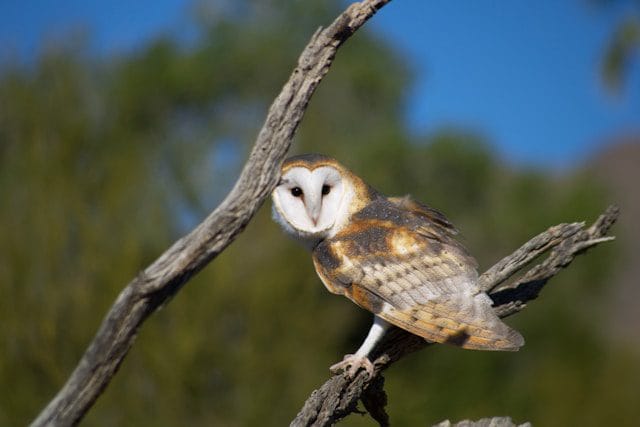
The Barn Owl (Tyto alba) has a distinctive white, heart-shaped face, dark brown eyes, and a ghostly appearance. They are medium-sized owls with large heads, long, strong legs, and powerful talons. The Barn owl prefers open fields and grasslands, where it silently glides to hunt its prey under the cover of night. This owl is the most widely distributed species of owl in many parts of the world and one of the most widespread of all species of birds. It lives almost everywhere, except for Polar and desert regions, in Asia north of the Himalayas, and on some islands. But they are found in some parts of Indonesia and on many Pacific Islands, though they are absent from the vast majority of Indonesia and most Pacific Islands. Moreover, Barn Owls have three subspecies that are sometimes considered to be a single species, known as the Barn Owl or Common Barn Owl.
They are all from the Tytonidae family, though the Bay Owl in the genus "Phodilus" also include the family. "Tyto", the largest genus of birds in the Tytonidae family, and particularly these species of owls in that genus.
The Great Horned Owl (Bubo virginianus) is the most common in North America and South America. It is a large, powerful owl, ranging from 18 to 25 inches in length, with a wingspan of 40 to 60 inches. Females are slightly larger than males, and their weight can range from about 2.5 to 5.5 pounds depending on the subspecies. It is easily recognisable by its feathered ear tufts and mottled grey-brown plumage with barred underside, making it an expert at camouflage. They also have a reddish facial disk, large yellow eyes, and a distinctive white throat patch. Their flight is remarkably silent due to the serrated edges of their feathers. Great Horned Owls are sometimes called "hoot owls" because of their distinctive, far-carrying hooting call. This bird is a nocturnal hunter with a varied diet, which includes mice, rabbits, other birds, and even skunks. Native to the Americas, these owls are adaptable and live in a wide variety of habitats, including forests, grasslands, deserts and urban areas. They don't build their own nest, but take over abandoned nests on cliff ledges or in tree hollows.
The Snowy Owl (Bubo scandiacus), also called the polar or Arctic owl, is known for its pure white plumage.
The Eastern Screech-Owl (Megascops asio) is a small, common owl found throughout eastern North America with a large head and "ear tufts".
The Scops Owl (Otus genus) is a group that includes many species, such as the Oriental Scops Owl (Otus sunia) and the Common Scops Owl (Otus scops).
The Spotted Owlet (Athene brama) is a common species in the Indian subcontinent that has adapted well to urban and suburban environments.
Owls exhibit fascinating characteristics tailored to their environments. Most owls have huge heads, sharply hooked beaks, acute hearing and vision, stocky bodies, soft feathers, short tails and a reversible toe that can point forward or backwards. Owl's eyes face forward as humans do. Most owl species are active at night, not in the daytime. Despite being physically similar, each species of owl has unique characteristics that set it apart from the rest. The feathers of some species form a disk-type face or ear tufts that help locate prey by reflecting sound to the ears. Owls hunt mostly small mammals, insects and other birds, although a few species specialise in hunting fish. They are found in all regions of the Earth except the polar ice caps and some remote islands. However, each owl species possesses unique characteristics that reflect its habitat, equipping them for survival. For instance, the Snowy Owl excels in Arctic conditions, utilising its thick plumage for insulation and keen eyesight to hunt lemmings on the tundra. Their exceptional hearing allows them to detect prey beneath the snow. On the other hand, the Eastern Screech Owl, a small yet charismatic species, finds refuge in deciduous forests, where it uses its ability to blend with tree bark to avoid detection during the day, while the Burrowing Owl, with its quirky ground-dwelling habits, often inhabits prairie dog towns and other burrowing mammals’ digs. These varied adaptations highlight the remarkable resilience of owls, showcasing their ability to inhabit different terrains while maintaining their pivotal role in the ecosystem as silent nocturnal hunters.
Owls are famously adaptable birds, thriving in a variety of habitats around the globe. From dense forests and arid deserts to woodland areas and grasslands to open fields and urban environments, their unique physiology enables them to occupy niches that might seem unlikely for such nocturnal predators. Owls are one of the most popular birds in North America and are also found in South America, Europe, Asia, Africa, and Oceania. They live everywhere in the world except Antarctica.
Owls are carnivorous predators and are nocturnal hunters who hunt their prey at night and even in low-light conditions. Their diet consists mostly of small mammals such as mice, voles, shrews, moles, rats, rabbits, hares and other rodents. Owls' diet varies depending on the species and their location. Some owls are known to eat small mammals, reptiles, amphibians, and other birds. While certain species of owl have been known to catch and eat fish, like the Tawny Owl. Other species of owl, such as the Flammulated Owl, primarily eat insects and invertebrates, like beetles and crickets. Even some larger owls may take prey as large as herons and have been known to take down full-grown deer. However, their diet is adapted to their specific environments and available food sources.
Owls are skilled hunters that use a range of techniques to catch their prey. Most owls hunt at night, using their sharp eyesight and hearing to locate their prey in the dark, while some owls will perch on a high branch and wait for their prey to come close enough to catch their prey. Once they have spotted their target, they will swoop down and grab it with their sharp talons and use their sharp beaks to kill and eat their prey. On the other hand, some owls are silent flyers; they have an advantage when stalking their prey. They use their sharp talons or claws to grasp their prey and their sharp-hooked beaks to tear it apart. Owls typically swallow their prey whole, including indigestible parts like bones, fur, and feathers. They typically eat the head and the wings first, then the rest of the body and then regurgitate the indigestible parts in the form of a compact pellet.
Owls have long been associated with wisdom, mystery and magic. They are also known to be very shy and elusive creatures. There are more than 200 owl species, and they come in a wide range of sizes and colours. Each has its unique behaviour and lifestyle, but all share some common behaviours and lifestyle features. One of the most fascinating things about owls is their hunting habits. Most owls hunt at night (nocturnal), using their sharp eyesight and hearing to locate their prey, while others are active during the day (diurnal) or at dawn and dusk (crepuscular). They have unique hunting strategies, like silent flight, due to the serrated edges on their wing feathers that muffle sound. Some owls, such as the Barn owl, can even hunt in complete darkness. They also have special feathers that help them fly quietly, so they can sneak up on their prey. Owls kill their prey with sharp beaks and powerful talons before swallowing it whole if possible, and they regurgitate indigestible parts of their prey in the form of "pellets", which can be found on the ground. They also have unique defensive behaviours, like fluffing or ruffling their feathers to appear larger, lowering their head, and spreading their wings or even attacking predators when cornered. Interestingly, owls may bathe in shallow water or rain. Though they are often feared, owls are gentle creatures that avoid contact with humans whenever possible.
When it comes to their lifestyle, owls typically live alone or in pairs. They are also known for their wide range of distinctive calls, including hoots, whistles, screeches, hisses, and clicking noises. Each species of owl has a different call, which they use to communicate with each other. Some calls can be quite loud and eerie, while others are soft. Their hooting calls often relate to territorial calls and courting, with males typically having a lower-pitched hoot. But when threatened, they may hiss or even attack if cornered. Owls may also "clap" their wings together as part of a threat display, or they may fall onto their back and strike with their feet. Many smaller birds "mob" owls, attacking and harassing them, especially if they are in areas with many of the smaller birds' nests. However, owls mate for life and build their nests in a variety of locations, including old nests of other birds, tree cavities, rock crevices, on cliffs, ledges and even buildings. Some owls nest in natural holes, while some owls even use abandoned nests built by other animals. Moreover, they tend to breed when prey is abundant, and exhibit a unique parental care, with both parents typically caring for their young, but if food is scarce, the oldest chick may be fed first, and younger, weaker ones may not survive. Owls primarily feed on small mammals, but they will also eat reptiles, fish, amphibians, other birds and insects. Owls usually swallow their prey whole. They live in a variety of habitats, including forests, grasslands, deserts and urban areas.
These fascinating creatures have a complex and unique lifecycle that is full of interesting reproductive behaviours. Their breeding season can vary by species and region. Owls' breeding often coincides with a period of high food availability, which is crucial for raising their young. They reach sexual maturity at around 2 years of age. Owls are monogamous creatures. They generally mate for life, though if one mate dies, the other will find another mate. Owl reproduction is a fascinating process that begins with the male owl wooing the female. He will present her with gifts, such as prey and perform impressive courtship displays. If she is impressed, they will mate. Instead of building nests, owls lay their eggs in hollows or on ledges. Owls typically produce 3 to 5 eggs per clutch, with 2 being the average. The female owl will incubate the eggs for 28 to 34 days and hatch them, while the male brings her food.
Once the chicks (owlets) hatch, they are altricial, meaning they are born blind and helpless. Owlets are covered in white feathers and have dark eyes. The parents take turns hunting and caring for them until they are old enough to fend for themselves. But they exhibit a unique parental care; if food is scarce, the oldest chick may be fed first, and younger, weaker ones may not survive. However, young stay together and may wander as a group away from the nest, begging with high-pitched squeals, so the parents can find them to deliver food. They fledge at about 6 to 8 weeks of age, but will stay in the nest before learning to fly and becoming independent. This time, parents teach them how to hunt and survive in the wild. The owlets gradually venture at around 12 weeks of age, and at about 13 weeks oldthey instinctively leave to find their own home range. This is called dispersal, and by 14 weeks, almost all the owlets have left their parents' home range.
The lifespan of an owl varies by species and size. They have a relatively long lifespan for birds, with some species living between 10 to 20 years in the wild, and have been known to live much longer in captivity. For example, Barn owls have an average life expectancy of 4 years in the wild, whereas the Eurasian Eagle owl is around 20 to 25 years, with some individuals reaching up to 60 years in captivity.
Owls are one of the most fascinating predators in the animal kingdom, but they are not without their predators, either. Owls face predators like larger birds of prey (hawks and eagles), which are two of the most common predators of owls. These larger birds of prey can take down an owl with a case by their sharp talons and powerful beaks. While other common predators of owls include foxes, coyotes, wildcats, raccoons, badgers, weasels, other birds (such as crows), and even larger owls (the Great Horned Owl and Eurasian Eagle-Owl), may prey on young or smaller owls, snakes can prey on their eggs and young. Additionally, domestic animals, such as cats and dogs, can also prey on young or injured owls.
However, these nocturnal birds are also among the most threatened due to habitat loss and fragmentation, collisions with vehicles, illegal hunting, climate change, pesticides, and other factors. Owls are facing several threats from the loss of habitat as forests are cleared for agriculture and development. They are often killed by cars, particularly when crossing roads. Additionally, illegal hunting and poaching also contribute to their decline. However, climate change is another potential threat to owls as it alters the distribution of their prey species and affects the habitats where they live. Owls are also at risk from pesticides, which can poison them or reduce the availability of their prey. These birds can also be susceptible to parasites and diseases. Furthermore, new species can outcompete or negatively impact native owl populations, such as the Barred Owl competing with spotted owls in some areas.
The Global population of owls is thought to be between 6 million and 25 million, but very little is known about their overall conservation status. Owl populations are declining around the world, and this is cause for concern. There are many different species of owl, around 250 species, and the population of each species can vary. For example, the global population of the Eurasian Eagle-Owl is estimated to be between 100,000 and 499,999 individuals, while the global population of the Barn Owl is estimated to be between 4 million and 1 billion. Other species have smaller populations, such as the Elf Owl with approximately 72,000 individuals, the Enggano Scops Owl with 2,500 and 9,999 individuals. On the other hand, the Eurasian Pygmy Owl is estimated between 500,000 and 1,199,999 individuals, while the global population of the Great Grey Owl is estimated at 120,000 individuals.
The overall population of owls is thought to be declining in some areas, but it is not known how much this decline is affecting the global population. There are many reasons for the decline in owl populations, including habitat loss and fragmentation, collisions with vehicles, illegal hunting, human activities, climate change, and other factors. Owls are important predators in their ecosystems, and their decline can have serious consequences.
Owls are often revered as symbols of wisdom, but their importance extends far beyond mere folklore. Ecologically, they play a crucial role in maintaining the balance of ecosystems.
The presence of owls in the zoo offers a unique glimpse into the nocturnal world that many people rarely encounter. These fascinating birds, often shrouded in myth and mystery, embody an elegant stillness during the day while showcasing their remarkable adaptations for nighttime hunting. Observing an owl perched silently on its branch invites visitors to ponder not just its striking features, such as large, forward-facing eyes, but also its role within the ecosystem. Each species tells its own story; the majestic Great Horned Owl is a fierce predator dominating its territory, while the elusive Barn Owl hones incredible hearing to locate prey in darkness.
Engaging with owls at the zoo transcends mere observation and opens up avenues for education about conservation efforts and habitat preservation. Many zoos participate in breeding programs aimed at protecting endangered species of owls from dwindling populations due to habitat loss and environmental changes. As guests learn about these magnificent creatures, they leave with not only awe but also a deepened sense of responsibility toward wildlife protection. In this shared experience between humans and owls, there lies an opportunity for connection, a reminder that we are stewards of nature who can advocate for these enchanting emissaries of the night sky.
Owls, belonging to the order Strigiformes, showcase a fascinating classification that reflects both their diverse adaptations and evolutionary history. This order comprises approximately 200 species categorised into two main families: Strigidae (the true owls) and Tytonidae (the barn owls). The distinct morphological traits of these birds, such as their flat faces and large eyes, are not merely for looks; they are vital adaptations that enhance their nocturnal hunting capabilities. Their specialised ears, which are offset in position, allow them to pinpoint prey with astonishing accuracy even in the dead of night.
The evolution of owls is as intriguing as their biology. Fossil evidence suggests that these remarkable creatures emerged during the Palaeocene epoch, approximately 60 million years ago. As they evolved alongside ancient forests, owls adapted to various ecological niches across different habitats worldwide, from dense woodlands to open plains. Recent studies indicate that genetic divergences among owl species may have been driven by dramatic climate changes affecting forest structures across continents. As ecological indicators, owls play crucial roles in maintaining ecosystem balance by controlling rodent populations, a characteristic that highlights their significance beyond mere beauty or intrigue.
The relationship between owls and humans is steeped in rich symbolism and folklore, transcending cultures and spanning centuries. Historically regarded as harbingers of wisdom, these enigmatic creatures have often found themselves at the centre of mythology. In Greek culture, the owl was sacred to Athena, the goddess of wisdom, serving as a powerful emblem that bridged knowledge with mystery. However, the owl's relationship with humans is not solely rooted in admiration; it also carries shades of caution and intrigue. In many cultures, these enigmatic birds were once feared as harbingers of death or omens of misfortune, reflecting the complex emotions towards these creatures.
Although our fascination with these nocturnal birds continues to flourish through art and literature, as seen in Harry Potter's beloved Hedwig, there is also a growing awareness that our actions impact these creatures profoundly. Even owls are now celebrated in fashion, serving as a reminder of the beauty found in nature’s mysteries. Their ability to thrive in silence resonates with our increasingly fast-paced world; they teach us that sometimes stillness is where we find clarity and insight. Yet amidst this dichotomy lies an essential truth: owls serve as vital indicators of environmental health. Their presence can signify a balanced ecosystem, prompting efforts from conservationists and nature enthusiasts alike to protect their habitats, a testament to how intertwined our fates truly are.
Furthermore, efforts to protect owl habitats highlight a burgeoning respect for biodiversity, a recognition that preserving these majestic hunters can lead us toward greater ecological harmony. By fostering this bond with owls, we may unlock new ways of seeing ourselves reflected in the wild: wise not just through accumulated knowledge but through an understanding of our intricate connection to the environment around us.
The conservation status of owls varies widely by species, with many being threatened by habitat loss, fragmentation, human encroachment, and climate change. Many species are classified under various levels of threat, with the IUCN Red List highlighting that nearly 30% of owl species face imminent risks. While some species, like the Forest Owlet, are "endangered" and their population restricted to small, fragmented forests in central India, other owls' conservation status is considered vulnerable, near threatened, or of least concern. But specific subspecies, like the northern Spotted Owl and Mexican Spotted Owl, have legal protection under "endangered" species acts in some countries. However, the Snowy Owl is listed as "vulnerable", while the Spotted Owl (as a whole species) in North America finds its survival challenged by deforestation and habitat fragmentation, and is listed as "near threatened" by the IUCN due to declining populations. As old-growth forests diminish, so do these magnificent birds' nesting opportunities, prompting urgent calls for conservation action.
Interestingly, while some species teeter on the brink of extinction, like the "critically endangered" Philippine Eagle-Owl, others have adapted surprisingly well to urban environments. According to the International Union for Conservation of Nature (IUCN), the conservation status of other owls, like the urban-dwelling Barn Owl, is listed as "least concern". Their status can vary significantly at regional and local levels, and urban-dwelling populations often face specific threats that lead to them being classified as "vulnerable" or "endangered" in certain areas. Additionally, the burrowing Owl and Ferruginous Pygmy Owl are also listed as "least concern". This means that they are not currently facing any major threat to their survival. They thrive in agricultural landscapes where they find ample hunting opportunities and play an important role in the ecosystem by serving as predators of small mammals and rodents. However, there is always a possibility that this could change in the future if their habitat continues to decline. With proper conservation measures in place, we can help protect these amazing creatures and ensure that they will be around for future generations to enjoy.
When comparing owls and potoos, it’s fascinating to explore the unique adaptations that have evolved in these nocturnal birds.