
Rattlesnakes are feared and revered for their distinctive rattling sound and potent venom. These venomous pit viper snakes are found primarily in the Americas, and are known for their iconic warning system, "the rattle" at the end of their tail, which is composed of hollow, body segments that vibrate to create sounds and send shivers down the spine of anyone who hears it. This unique adaptation serves as a powerful communication tool, allowing the snake to alert potential predators or intruders to stay away. What's fascinating is that not all rattlesnakes rattle before striking, turning their silent nature into a lethal surprise for unsuspecting prey. They also possess unique beauty with intricate patterns on their scales and mesmerising movements. With its iconic diamond-or triangle-shaped heads and markings, the rattlesnake is a master of camouflage and stealth, making it an elusive yet formidable predator in its natural habitat. Contrary to popular belief, these fascinating reptiles do not seek out human interaction or pose a threat unless provoked.
Their specialised heat-sensing pit is located between their eyes and nostrils, allowing them to detect the exact location of warm-blooded animals. Their ability to sense infrared radiation makes them formidable hunters, and they rely on this thermal sensitivity to locate prey even in complete darkness. With lightning-fast strikes, they immobilise small animals using potent venom, showcasing the epitome of tactical precision and calculated aggression. Their venom is hemotoxic, attacking the circulatory system, and they can inject it through hollow fangs. Rattlesnakes' sophisticated hunting tactics demonstrate the cunning nature of these creatures as they navigate their environment with deadly accuracy. Despite their formidable nature, rattlesnakes are also vulnerable to habitat loss and human persecution. Intriguingly, the rattlesnake's venom is being studied for potential medical applications due to its complex chemical composition, which has been found to contain various toxins that can cause different effects on their victims.
Rattlesnakes are also remarkable for their complex social behaviours. They employ intricate mating rituals and communication methods through body postures and movements. Unlike many snakes, rattlesnakes are ovoviviparous, meaning they give birth to live young rather than laying eggs. Researchers have discovered that some species of rattlesnake exhibit maternal care behaviour, which is rarely seen in reptiles, where the mother protects her brood until they shed their first skin. Furthermore, the diverse range of species within the genera "Crotalus" and "Sistrurus" showcases the evolutionary flexibility of rattlesnakes, with each species catering to specific ecological niches within their habitats. They have remarkable adaptability to diverse environments, from deserts to forests. This flexibility reflects an impressive resilience honed through millions of years of evolution.
Beyond its fearsome reputation, this enigmatic reptile plays a crucial role in maintaining ecological balance. As an apex predator, the rattlesnake helps control rodent and rabbit populations, thus preventing potential agricultural and environmental damage. Their presence in ecosystems also reflects the adaptability of these ancient reptiles, which serves as an indicator of overall ecosystem health in a rapidly changing world, making them a valuable species for conservation efforts.
Rattlesnake
Crotalus cerastes
1.6-8.2 feet
2-6.5 kg
16-22 years
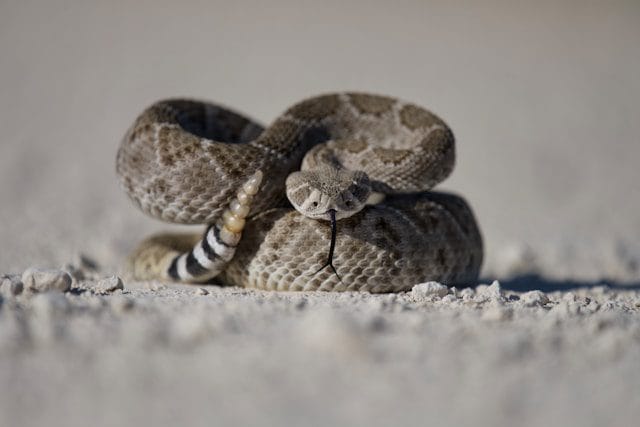
The scientific name of the rattlesnake is "Crotalus". The etymology of Crotalus is derived from the Greek word castanet or rattle, which perfectly encapsulates both its appearance and behaviour. Though different species of rattlesnakes have distinct scientific names. For instance, Crotalus atrox, commonly known as the Western diamondback rattlesnake, is one of the largest and most widespread species; the Eastern Diamondback rattlesnake is scientifically named Crotalus adamanteus, the Sidewinder rattlesnake is scientifically named Crotalus cerastes, and Crotalus horridus, known as the timber rattlesnake. These specific classifications highlight the diversity within this compelling genus and underscore the importance of understanding these unique creatures on an individual basis.
Rattlesnakes are venomous pit vipers belonging to the family Viperidae. These reptiles also belong to the genera Crotalus and Sistrurus that fall under the subfamily Crotalinae.
The larger genus Crotalus includes some of the most venomous pit vipers found in the Americas. With their distinct rattle at the end of their tails, these rattlesnakes have captured the intrigue of researchers and amateur herpetologists alike. Their distinctive features set them apart from other snakes and serve as a warning signal to potential predators. Additionally, the striking patterns and colours found in various species of Crotalus add to their mystique, making them a subject of ongoing study. On the other hand, the genus Sistrurus includes smaller species of ground rattlesnakes, like the Massasaugas (Sistrurus catenatus) or Pygmy rattlesnakes (Sistrurus miliarius). These species have a smaller stature, unique nine large scales (symmetrical plates) on their heads, and small rattles that produce high-pitched buzzing sounds. They produce around 10 young at a time, and act as a more primitive group compared to Crotalus.
Interestingly, the taxonomy of rattlesnakes spans multiple subspecies and geographic distributions, making them a diverse and fascinating group of reptiles. Their adaptation to various habitats and ability to survive in extreme conditions have captivated scientists for generations. While many people associate rattlesnakes with danger and fear, they play a crucial role in maintaining ecological balance within their habitats. Their potent venom not only helps them capture prey but also serves as an important defence mechanism against predators. Furthermore, their venomous nature has piqued interest in developing innovative antivenom therapies and understanding predator-prey dynamics.
The rattlesnake, a fascinating creature found in the Americas, possesses some truly remarkable features and facts that make it one of the most intriguing reptiles in the world.
In addition to these incredible traits, rattlesnakes play a crucial role in maintaining ecological balance by controlling small mammal and rodent populations. Their unique features and behaviours make them an intriguing subject for wildlife enthusiasts and researchers alike, highlighting the complexity and wonder found within the natural world.
The appearance and anatomy of the rattlesnake are truly fascinating. They are thick-bodied venomous snakes. Their distinctive triangular-shaped head, vertically elliptical pupils, striking diamond-shaped body patterns, and a rattle at the tail tip make them easily recognisable. The iconic rattle at the end of their tail consists of loosely interlocking segments that vibrate together, creating a buzzing sound when shaken. On the other hand, newborns are born with a single "button", and segments are added with every shed. Interestingly, the rattlesnake's distinctive rattle is made of keratin, the same material found in human hair and nails. They have heat-sensing "pits" located between their eyes and nostrils, while their vertical "cat-eyed" pupils also give them an intimidating and menacing look. Rattlesnakes also have hollow retractable fangs, small recurved teeth, an extendable glottis, and a chemically sensitive forked tongue. They are highly camouflaged in earthy tones, but their colouration varies greatly depending on their habitat, ranging from earthy browns and greys to vibrant reds and muted browns to greens and yellows. Their bodies are covered in scales, and most are mottled or patterned with a series of dark diamonds, hexagons, or crossbands on a lighter background, which gives them a rough (heavily keeled) texture.
In addition to their striking visual characteristics, rattlesnakes also possess an intriguing external and internal anatomy designed for survival in diverse environments. Their iconic rattles at the end of their tail serve as both a buzzing warning signal to potential predators and a means for communication among other snakes. Furthermore, the segments of the rattle that are added each time the snake sheds its skin are a mesmerising symbol of growth and resilience. These venomous pit viper snakes' heat-sensing organs, known as pit organs, are located on either side of their snout and allow them to detect the presence of warm-blooded prey in low-light conditions or even in complete darkness. These specialised organs can detect temperature differences as small as 0.003° Celsius. This unique adaptation gives these snakes a hunting advantage and self-defence, underscoring their formidable abilities as predators. Interestingly, their forked tongues act as a highly sensitive chemical sensor to track prey, detect predators and find mates in their environments. While their vertically slitted pupils have excellent low-light vision and some colour perception, the adaptability of their colouration also helps them blend into their surroundings when they lie in wait for unsuspecting prey. Rattlesnakes have a series of hollow, retractable fangs connected to venom glands with a venom-conducting tube in their upper jaw, allowing them to inject potent venom into their prey with remarkable precision and speed, while their small, recurved teeth aid in eating prey. Their ability to unhinge their jaws allows them to swallow prey much larger than themselves, while their extendable glottis allows them to breathe when ingesting prey. Additionally, the intricate pattern of rattlesnakes' scales not only provides protection from the harsh environment they inhabit but also aids in thermoregulation by allowing heat exchange with the environment. The aspects of the rattlesnake's appearance and anatomy highlight its remarkable adaptation for thriving in diverse ecosystems.
Their potent venom is a complex mixture of toxins, proteins and enzymes, which serves both as a lethal weapon for consumption and to digest their prey. Rattlesnakes' more potent venom is the hemotoxic, which can quickly incapacitate their prey for consumption by destroying their red blood cells and disrupting blood clotting. This deadly arsenal not only helps them subdue their prey but also aids in the digestion process by breaking down tissues and organs damaged before consumption. On the other hand, some rattlesnakes produce neurotoxic venom, which targets the nervous system, making them both highly effective hunters in their natural habitats making them the most effective hunters in their natural habitats.
Rattlesnakes are native exclusively to the Americas. They are versatile reptiles that are adaptable to a wide range of habitats, including deserts, forests, grasslands, prairies, wooded areas, scrub brush, rocky hillside, swamps and coastal dunes. These serpents tend to inhabit rocky terrain and canyons where they can find overwintering den sites (hibernacula for the brumation cycle) and ambush hunting grounds that shelter dozens to hundreds of snakes. Rattlesnakes often utilise open fields with dense rodent populations and animal burrows (like prairie dog holes) for shelter. They also inhabit sandy creosote areas and arid brushlands where they rely on facial infrared-sensing pits to hunt small mammals. Although often associated with arid landscapes, some rattlesnake species (such as the Eastern Diamondback) also inhabit humid regions, including tropical rainforests (pine-oak forests) and coastal marshes, where they take advantage of heavy ground debris for camouflage. Interestingly, some rattlesnake species have also been spotted at high elevations in mountainous regions, demonstrating their versatility in habitat adaptation.
Furthermore, some species of rattlesnakes exhibit unique habitat preferences; for instance, the timber rattlesnake favours deciduous forests where it relies on camouflage and ambush techniques to capture its prey, while the diamondback rattlesnake predominantly inhabits arid desert regions where it has adapted to conserve water and regulate its body temperature effectively. On the other hand, the sidewinder rattlesnake thrives in sandy desert environments by using its unique sideways sidewinding motion. While their preference for specific habitats reflects their hunting behaviours, these adaptable creatures play a crucial role in controlling small mammal and rodent populations, maintaining ecological balance within their respective ecosystems.
Rattlesnakes are found across the Americas, thriving in a wide variety of ecosystems from southern Canada to central Argentina. They have adapted to survive in various environments, from the deserts of the American Southwest and northern Mexico to the forests of Central America and South America. However, their distribution is primarily influenced by factors such as climate, prey availability, and suitable shelter options, making them integral parts of their ecosystems. While most diverse and abundant in arid deserts, these venomous pit viper snakes occupy environments ranging from sea level coastal plains to mountains over 2,775 m (9,104 feet) in elevation. Their ability to thrive in such disparate regions can be attributed to their efficient thermoregulation and hunting strategies.
Rattlesnakes, a diverse group of venomous pit viper serpents, belong to the family Viperidae and the genera "Crotalus" and "Sistrurus". The "Crotalus" genus contains over 30 species, which are known for their potent venom and distinctive rattle at the end of their tails. They are found in various habitats across North America, Central America and South America. Rattlesnakes have several common types and subspecies, each with its unique characteristics and habitats. The common types or subspecies of rattlesnakes are the Western Diamondback Rattlesnake (Crotalus atrox), the Eastern Diamondback Rattlesnake (Crotalus adamanteus), the Sidewinder Rattlesnake (Crotalus cerastes), the Timber Rattlesnake (Crotalus horridus), the Mojave Rattlesnake (Crotalus scutulatus), and the Prairie Rattlesnake (Crotalus viridis).
The Western Diamondback rattlesnake is one of the most widespread species, found in rocky areas, deserts, grasslands and rocky hillsides throughout the southwestern United States and northern Mexico. It is recognised for its large size, potent hemotoxic venom and diamond-shaped pattern along its back.
Additionally, the Eastern Diamondback is also renowned for its large size, potent venom and distinctive diamond-shaped markings along its back. This subspecies can be found in the southeastern United States, particularly in pine-oak forests, coastal forests and scrublands.
Another intriguing type is the Sidewinder Rattlesnake, adapted to thrive in sandy deserts by using a unique sideways movement called sidewinding, found in the southwestern United States and northwestern Mexico. This adaptation helps them navigate through loose dunes with ease and adds to their mystique as one of the most special types of rattlesnakes.
Another notable type is the Timber rattlesnake, which is indigenous to eastern North America and bears distinctive colour patterns along its body. It prefers pine forests, agricultural fields, swamps, river floodplains, rocky outcrops, wooded areas or hilly forested regions in Northeastern America, showcasing its ability to adapt to diverse habitats beyond just desert environments. It is recognised for its broad triangular head, large size, alternating brownish-black bands along its body and potent venom. This species plays an essential role in maintaining an ecological balance within its forested habitats.
On the other hand, the Mojave Rattlesnake is known for its potent neurotoxic venom. These snakes prefer high desert habitats and lower mountain slopes in the southwestern United States and central Mexico. Its distinct feature is a greenish tinge to its scales.
The Speckled Rattlesnake, also known as the Mitchell's rattlesnake or White rattlesnake, is native to the southwestern United States and adjacent northern Mexico. This medium-sized snake is found mostly in rocky areas. It is active at night and feeds on small mammals.
The Prairie Rattlesnake, also known as the Great Plains rattlesnake, is a venomous pit viper species native to the western United States, southwestern Canada, and northern Mexico. Currently, they have two recognised subspecies, the Prairie rattlesnake (Crotalus viridis viridis) and the nominated Hopi rattlesnake (Crotalus viridis nuntius).
Characterised by their triangular-shaped heads and segmented rattle at the end of their tails, rattlesnakes are well adapted to a variety of habitats, including deserts, grasslands, forests, swamps and rocky hillsides. They are skilled predators that primarily feed on small prey such as mice, rats, rabbits, birds, amphibians and other reptiles. Utilising their heat-sensing pits located between their eyes and nostrils to detect prey, they strike quickly with long fangs to inject potent venom into their victims before consuming them whole or defending themselves when threatened. Each type of rattlesnake boasts unique characteristics tailored to its specific habitat. Some species, like the Mojave Rattlesnake, have potent neurotoxic venom, while others, such as the Timber Rattlesnake, have a more potent hemotoxic venom which affects blood and tissue. Despite being feared by many due to their venomous nature, rattlesnakes play a crucial role in maintaining ecological balance by controlling small mammal and rodent populations, serving as an essential link in various food chains.
These fascinating reptiles can be found in a variety of habitats ranging from deserts and forests to coastal marshes and rocky mountainsides, illustrating their adaptability to diverse environments. Each type of rattlesnake exhibits specific characteristics that help it thrive in its respective habitat. While some are adapted to arid environments and have heat-sensing pits to detect prey in the dark, others are more suited to wooded areas and rely on camouflage to ambush unsuspecting prey. For example, the Sidewinder Rattlesnake is uniquely adapted for moving across sandy desert terrain thanks to its distinctive sideways sidewinding motion, while the Timber Rattlesnake favours deciduous forests where it relies on camouflage and ambush techniques to capture its prey. With their extraordinary predatory skills and intricate ecosystems, they play a crucial role in managing prey populations while also being prey themselves.
The diet and predatory behaviour of the rattlesnake represent a fascinating and crucial aspect of its survival in the wild. Rattlesnakes are primarily carnivorous, and their diet consists mainly of small prey such as mice, rats, squirrels and rabbits. However, they are also known to consume insects, birds, bird eggs, amphibians and occasionally other reptiles. This diverse diet enables the rattlesnake to adapt to various environments and ensures that it has a consistent food source. Remarkably, some rattlesnake species have been observed to consume their shed skin after moulting, which not only provides essential nutrients but also helps conceal their presence from potential predators. However, recent research has shown that rattlesnakes are opportunistic feeders, adapting their diet based on the availability of prey in their environment. This flexibility allows them to thrive in diverse habitats, including deserts, forests, coastal dunes and high elevations in mountainous regions.
Interestingly, the hunting behaviour of rattlesnakes involves a combination of stealth, patience and venomous strikes. They rely on their sophisticated heat-sensing pit organ that aids in locating warm-blooded prey from radiated heat even in darkness or obscured terrain, allowing them to navigate and hunt effectively in low-light conditions when their primary sources of food are most active. Once they have located their target, they often lie in wait patiently for the right moment to strike with impressive precision using their venom-injecting fangs. The deadly venom quickly immobilises the prey, allowing the rattlesnake to consume it at its leisure. This sophisticated predation strategy highlights the unique predatory prowess of these iconic reptiles. Their ability to consume such a variety of prey is facilitated by their flexible jaws and impressive digestive systems, while it's fascinating to note that rattlesnakes can go for long periods without eating and are capable of consuming prey much larger than their head due to their ability to dislocate their jaw.
In addition to its remarkable hunting abilities, the rattlesnake's diet plays a vital role in regulating local ecosystems by controlling small mammal and rodent populations. Its venomous bite is not only a formidable tool for subduing prey but also serves as a powerful deterrent against potential threats. Furthermore, recent studies have revealed that climate change may significantly impact the dietary preferences of rattlesnakes, potentially leading to shifts in their ecological roles within specific habitats.
Rattlesnakes are shrouded in mystery and fascination due to their distinctive rattling sound and venomous bite. Their behaviour and lifestyle are a complex interplay of survival tactics and environmental adaptation. These ectothermic ambush predators live solitary lives centred around thermoregulation and infrequent feeding, relying on heat-sensing pits and venom to hunt. Unlike many other snake species, rattlesnakes are not inherently aggressive; instead, they use their iconic rattle as a defensive warning when threatened and avoid confrontation. Contrary to popular belief, rattlesnakes do not always make a noise before striking; they may attack silently if they feel threatened or cornered. This intriguing behaviour serves as both a defence mechanism and a form of communication within the snake community. However, these cunning predators possess a remarkable ability to camouflage themselves in their natural habitat, using their muted colours to blend seamlessly with the surrounding foliage or vegetation and desert rocks, which makes them expert ambush predators or evade potential threats. They wait for hours or days and lie in wait for the perfect opportunity, and then use their heat-sensing pits and venom to strike their unsuspecting prey. But at night, they lose the ability to use their infrared pits effectively and may not use their rattle before striking if startled. In colder regions, they congregate in large dens and huddle together, which is called brumation, to survive the winter. This behaviour highlights the adaptability of these reptiles and underscores the complex interactions between environmental factors and animal behaviours. Despite being commonly associated with danger and fear, rattlesnakes are often elusive and shy animals that do their best to avoid human encounters and will only strike if provoked or cornered.
In terms of lifestyle, rattlesnakes are solitary animals, preferring to live alone and avoid crowded areas. But these ectothermic creatures rely on external sources of heat to regulate their body temperature by basking in the sun or seeking shade. This dependency makes them particularly vulnerable to fluctuations in environmental conditions, causing them to hibernate (brumate) during colder months, and they congregate in large communal dens (hibernacula) to conserve energy and survive harsh conditions. Rattlesnakes are predominantly nocturnal creatures, using the cover of darkness to hunt for food and avoid some predators. They are excellent hunters, relying on their heat-sensing pits to track thermal signatures in complete darkness and flickering tongues (which are processed by the Jacobson's organ in the roof of their mouth) to collect scents of approaching food sources or warm-blooded prey such as rodents (rats, mice, rabbits), small birds, other reptiles and even small mammals. These solitary creatures are well adapted to a life of stealth and patience, often lying in wait for hours or days for unsuspecting prey to come within striking distance before delivering their venomous bite. Additionally, a single large meal takes them a long time to digest. An adult rattlesnake only needs to eat once every 2 to 3 weeks, which means they can also control their metabolism to survive for long periods without food, allowing them to thrive in diverse environments from deserts to forests. Intriguingly, rattlesnakes also display a fascinating level of social interaction, particularly during breeding season when they communicate through intricate mating rituals involving tactile stimulation and chemical cues, while females give live birth rather than laying eggs and demonstrate significant levels of parental care. Female rattlesnakes generally reproduce only once every 2 to 4 years, as they require extensive time to rebuild their fat reserves. They can store sperm after mating for several breeding seasons before choosing to fertilise their eggs, resulting in the potential for delayed fertilisation of eggs. However, these cunning reptiles are highly adaptive and often found in a variety of habitats such as deserts, forests, grassland, coastal marshes, and even mountain regions. Depending on the season and temperature, they are predominantly active at night (nocturnal) or active at dawn and dusk (crepuscular), while during peak daytime heat, they hide in burrows or rock crevices. Furthermore, these venomous serpents play a crucial role in maintaining ecological balance by controlling small mammal and rodent populations, serving as a food source for larger predators, a testament to the complex interconnections within ecosystems.
The reproduction and birth of baby rattlesnakes are fascinating aspects of these enigmatic creatures' lifespans. Depending on the species and climate, rattlesnakes mate in spring (March to May), late summer, or occasionally in the fall, as they emerge from brumation. During this time, they exhibit various mating rituals where males follow pheromone trails (chemical cues) left by females and engage in combat dances to win females or dominance. These pit vipers reproduce through internal fertilisation, where the male transfers sperm to the female using paired reproductive organs called hemipenes. Unlike many reptiles, rattlesnakes are ovoviviparous or viviparous, meaning they do not lay eggs externally. Embryos incubate inside membranous sacks within the mother's body and hatch just before or during live birth. Female rattlesnakes can store sperm after mating over the winter months to delay fertilisation of eggs until spring. Interestingly, some species are capable of parthenogenesis, meaning they can reproduce without fertilisation. After a gestation period of 3 to 7 months, the female rattlesnake gives birth to live young instead of laying eggs. Due to the massive energy toll of gestation, most female rattlesnakes reproduce only once every 2 to 4 years. Depending on the exact species, they may produce a litter of 1 to 32 babies in late summer or early fall (averaging about 8 to 15 young per brood), each contained within a thin, membranous sac that they quickly emerge from. This viviparous method of reproduction sets rattlesnakes apart from their reptilian counterparts and showcases their adaptive nature.
Baby rattlesnakes, known as neonates, are born 7 to 18 inches long and fully venomous, capable of hunting for themselves shortly after birth. These miniature versions of the adults have a distinctive single "button" rattle and venomous hollow fangs. Despite being born with these survival tools, many newborn rattlesnakes fall victim to predators or environmental stressors. The mother (or sometimes a communal group of females) actively guard their newborns for 1 to 2 weeks and stays near the nest site until they undergo their very first skin shed. They add a new segment to their keratin rattle each time they shed their skin, which occurs about 1 to 4 times a year. These neonates reach adulthood anywhere from 18 months to 10 years, which heavily depends on the climate, food abundance and species. For example, the Western Diamondback Rattlesnake reaches sexual maturity at 3 years, while the Timber Rattlesnake (a colder climate species) mature much more slowly and takes 7 to 10 years compared to their smallest desert counterparts.
The lifespan of a rattlesnake can vary significantly depending on various factors such as environmental conditions, predation, food availability, vehicle strikes, and disease. Despite this challenging start, rattlesnakes have an average lifespan of about 10 to 20 years in the wild, with some individuals living 25 to 30 years in captivity under optimal conditions. This relatively long lifespan for a snake is crucial in maintaining ecological balance within its natural habitat. Throughout their lives, rattlesnakes play an essential role in controlling small mammal and rodent populations, acting as both predator and prey in their ecosystems, contributing to the intricate web of life in which they exist. Aside from reproduction and babies, the lifespan aspect sheds light on the challenges faced by these intriguing creatures as they navigate the complexities of survival in varied ecosystems.
Rattlesnakes, despite their formidable venomous reputation, face a myriad of predators and threats in the wild. Although they are skilled hunters, these serpents must constantly navigate the dangers posed by larger predators such as birds of prey, mammalian carnivores, cannibalism and larger venom-resistant snakes. Birds of prey such as eagles, hawks, falcons and owls are significant predators of both young and adult rattlesnakes, using their sharp talons, keen eyesight and swooping down from above to snatch them. On land, agile roadrunners use extreme speed to peck them in the head. On the other hand, some mammalian predators such as foxes, coyotes, badgers, bobcats, mountain lions, and feral pigs also pose a threat to rattlesnakes by frequently preying on them or raiding their nests for eggs. Even some large non-venomous snakes, such as Kingsnakes and Eastern indigo snakes, which are resistant to venom, regularly hunt and consume rattlesnakes. Moreover, newborns (neonates) are highly vulnerable to smaller predators, including skunks, raccoons, opossums, weasels, crows, and even bull ants or fire ants. Some research suggests that up to 70% of newly hatched rattlesnakes fall victim to predation within their first year of life. But sometimes large hoofed mammals or ungulates like deer, antelope, cows and horses may trample these snakes when startled. However, these ambush and apex predators play a crucial role in controlling rattlesnake populations and maintaining the balance of their ecosystems.
Perhaps one of the most insidious threats to rattlesnakes comes from human activity or human persecution. Humans are the largest single threat due to road mortality and direct killing. Rattlesnakes often fall victim to indiscriminate killings by humans who fear them or view them as pests. Unfortunately, some non-venomous mimics like gopher snakes are frequently killed due to mistaken identity. Additionally, habitat destruction is another significant threat to rattlesnake populations globally. Encroachment on their natural habitats through urban development and agricultural expansion has significantly diminished their populations in some areas. Furthermore, illegal collection for the exotic pet trade has significantly impacted rattlesnake populations. As ecosystems continue to deteriorate due to climate change and human intervention, the dwindling numbers of these iconic reptiles represent a stark reminder of the delicate balance in our natural world.
In recent years, efforts have been made to raise awareness about the importance of conserving rattlesnake habitats and promoting coexistence with these unique creatures. It is crucial for us as stewards of our planet to understand and appreciate the role that rattlesnakes play in their ecological communities and work towards safeguarding their survival for generations to come.
Rattlesnakes, known for their notorious rattle and venomous bite, have long fascinated and frightened people with their presence. However, despite their fearsome reputation, rattlesnake populations have been the subject of much debate and concern in recent years. Across the 36 known species native only to North, Central and South America, their total numbers range in millions, though exact figures are not tracked due to their cryptic, solitary nature. However, populations of species like the Western Diamondback Rattlesnake number in the hundreds of thousands, while isolated groups like the New Hampshire Timber Rattlesnake are down to dangerously low numbers.
Interestingly, the rattlesnake population can vary significantly from region to region due to factors such as habitat availability, climate conditions, human interference, predation, food availability, vehicle strikes, and disease. While precise figures are hard to come by, experts believe that rattlesnake populations are declining due to habitat loss. In some areas where their natural habitats remain intact, rattlesnake populations thrive. Furthermore, the most insidious threats to rattlesnakes come from human encroachment and human persecution. Additionally, climate change has become an emerging factor affecting rattlesnake populations. Changes in temperature patterns and precipitation levels directly impact the distribution and behaviour of these reptiles, potentially leading to shifts in population numbers across different regions.
The decrease in rattlesnake numbers is troubling not only for ecological reasons but also because these creatures play a crucial role in maintaining balanced ecosystems. As apex predators, they help control small mammal and rodent populations, contributing to the overall health of their habitats. Their decline could lead to imbalances in natural food chains and ecosystem functioning. Furthermore, as climate change continues to impact habitats worldwide, the future of rattlesnake populations remains uncertain. So we must shift our perspective on these enigmatic creatures from fear-inducing pests to vital components of healthy ecosystems that require conservation efforts.
Rattlesnakes, often feared and misunderstood, play a crucial role in maintaining the delicate balance of the ecosystem.
Consequently, it becomes clear that the importance of rattlesnakes extends beyond their immediate ecological impact to potentially life-saving innovations in medicine.
With their distinctive rattle and venomous reputation, rattlesnakes have long captivated visitors at zoos around the world. These slithery reptiles are often housed in carefully curated exhibits designed to showcase their natural behaviours and habitats. However, while some may view them as merely a fearsome attraction, rattlesnakes play a crucial role in educating the public about the value of wildlife conservation and the importance of respecting all creatures, no matter how intimidating they may seem.
Within the confines of a well-designed reptile exhibit, zoo patrons can witness the intricate beauty of rattlesnakes up close. By providing a platform for experienced staff to educate visitors on proper snake-handling techniques and dispel common myths and misconceptions about these animals, zoos can cultivate appreciation and respect for rattlesnakes. Additionally, by showcasing rattlesnakes in a safe space that mimics their natural habitat, zoos have the potential to raise awareness about habitat destruction and promote efforts to protect wild populations.
When encountering rattlesnakes at the zoo, visitors must understand that these creatures are not mere spectacles for entertainment but ambassadors for their species as a whole. By shedding light on their importance in nature and fostering empathy towards these often-maligned animals, zoos play a crucial role in shaping public perception of rattlesnakes and ensuring their continued survival in the wild.
The classification and evolution of rattlesnakes are fascinating topics that shed light on the evolutionary history of these iconic reptiles. These serpents are a highly specialised group of New World pit vipers comprising roughly 30 to over 50 valid species that diverged during the Neogene period. They are defined by their hollow keratin tail rattles and heat-sensing facial pits. Belonging to the family Viperidae and the subfamily Crotalinae, rattlesnakes fall under the genus Crotalus (True rattlesnakes), which contains 30 to over 50 species, and Sistrurus, which contains Pygmy rattlesnakes and Massasaugas. The two genera differ primarily in head scalation:
One intriguing aspect of their classification is the geographical distribution of different species. For instance, the timber rattlesnake (Crotalus horridus) thrives in the eastern regions of North America. At the same time, the western diamondback (Crotalus atrox) dominates arid landscapes in the western United States and Mexico. This distribution highlights how environmental pressures have played a crucial role in shaping their evolutionary paths, leading to diversified adaptations for survival.
Evolutionarily, rattlesnakes have undergone remarkable adaptations to thrive in diverse environments and ecosystems, resulting in various species with unique traits such as colouration, venom potency, rattle size and thermal-sensing pits that enable them to locate prey with incredible precision. Their diversification is heavily rooted in the pine-oak woodlands of the Mexican Highlands, which acted as an evolutionary "species pump" before spreading across North and South America. Additionally, the rattle of these reptiles evolved only once. It is believed to have originated from the widespread ancestral snake defensive behaviour of tail-vibrating, which was later amplified acoustically by the keratin structure as an aposematic warning signal against predators.
Furthermore, the evolutionary journey of rattlesnakes is marked by their ability to adapt to changing environments and develop specialised traits for survival. The diversification within the genus Crotalus and Sistrurus showcases how different species have evolved unique characteristics tailored to their ecological niches. For example, the Sidewinding and Mojave rattlesnake, adapted for sandy deserts and the Timber rattlesnake thriving in hardwood forests, each species has evolved traits that make them well-suited for specific habitats, underscoring the amazing adaptive capacity of these ancient reptiles.
Rattlesnakes have long been feared and misunderstood by humans, often viewed as aggressive and deadly creatures. However, the reality is much more complex. These reptiles play a crucial role in maintaining ecological balance by keeping rodent populations in check, which helps to prevent crop damage and disease spread. Despite this important contribution to the ecosystem, human encroachment into rattlesnake habitats has led to increased encounters between the two species, often resulting in conflict.
Furthermore, recent research has shown that rattlesnakes are not inherently aggressive towards humans and will typically only strike when threatened or provoked. Many human-rattlesnake interactions occur due to unintentional encounters rather than deliberate aggression on the part of the snake. As such, education and awareness campaigns aimed at fostering coexistence with these creatures may help reduce instances of unnecessary harm to both humans and rattlesnakes.
Ultimately, understanding the nature of the relationship between rattlesnakes and humans is essential for promoting peaceful cohabitation. By dispelling myths and fostering mutual respect, these two species can share their environments harmoniously while preserving the vital roles that each plays in maintaining healthy ecosystems.
Rattlesnakes are exclusively native to the Americas. Despite their notorious reputation, they play a critical ecological role in maintaining balanced ecosystems. While broadly classified by the IUCN Red List as "Least Concern" due to widespread distributions, rattlesnake populations face severe localised declines from habitat destruction, human persecution, vehicle strikes, illegal pet trade and climate change. Several species are already listed as Threatened or Endangered, making their preservation a pressing issue for biodiversity. For example, the Timber Rattlesnake is of Least Concern globally, but it is listed as endangered or threatened in the US states. On the other hand, the Western Diamondback Rattlesnake is of Least Concern or Not Currently Threatened despite high mortality rates from localised roundups and bounty controls, while the Prairie Rattlesnake is Least Concern with a stable population in many central North American plains, and the Eastern Diamondback Rattlesnake is not federally listed despite suffering catastrophic historic declines.
Despite their fearsome reputation, the rattlesnake populations can vary significantly from region to region due to factors such as habitat loss, human interference, vehicle strikes, illegal pet trade and climate change. Habitat loss and fragmentation are among the primary factors contributing to the decline of many rattlesnake species, with urban development and agriculture encroaching on their natural territories. Additionally, humans are the largest single threat due to road mortality and direct killing. While high vehicle casualties occur, especially among pregnant females moving to open territories, rattlesnakes are often victims of persecution due to fear and misunderstanding, leading to deliberate killing or relocation efforts that disrupt their populations. Climate change also poses a significant threat to rattlesnakes, as shifts in temperature and precipitation patterns can impact their ability to survive and reproduce. Furthermore, illegal collection for the pet trade and traditional medicines further exacerbate the challenges faced by these already vulnerable creatures.
This not only threatens the existence of these fascinating reptiles but also disrupts the delicate balance of nature. As apex predators in their respective habitats, rattlesnakes help control prey populations and contribute to overall ecosystem health. Therefore, efforts to educate the public about the importance of coexisting with these creatures are crucial for their long-term survival.
While Rattlesnakes and Russell's vipers are both highly dangerous, thick-bodied vipers with similar hemotoxic venom, their distinctive warning signals, some features, and behaviour indicate their unique adaptations to different environments.