
Rhinoceros, often called "rhinos", are the second-largest living land animals after elephants on Earth. These mammals are native to Africa and Asia. They once roamed many parts of Europe, Asia, and Africa and were known to early Europeans, who depicted them in cave paintings. There are 5 living species of rhinoceros, and all of them are endangered. The two African species include:
While the three Asian species include:
These rhinos have one or two horns on their snout. The black rhinoceros is smaller than the African white rhinoceros. Both African rhinos and the Sumatran rhino in Asia have two horns, while the Indian and Javan rhinos are single-horned. Their horns are made of keratin, a kind of protein. They are made of the same material as human hair and fingernails; they have no medicinal value, but they are valuable economically. All rhinoceroses are threatened by poaching for their horns, which are used in traditional medicine and for ornamental purposes. For instance, the Indian or Greater rhino is a valuable animal; its horn is used in traditional medicine.
With their massive frames, thick, armour-like skin and iconic horns, these majestic animals evoke a sense of ancient strength and resilience. Rhinos can weigh up to 3,500 kg and can run up to 56 km per hour. However, beneath their imposing exterior lies a surprisingly gentle nature and a complex social structure. Rhinos are predominantly herbivorous, eating leaves, branches, grasses, various plants, flowers, and fruits. They spend their days grazing on grasses and shrubs, which play a crucial role in maintaining the ecosystems they inhabit. Rhinos are also essential to their ecosystems because they help to spread seeds around as they travel. Their presence helps shape the landscape, promoting biodiversity by enabling other species to thrive.
However, there are only about 27,000 rhinos left in the world. The African black rhinoceros is the most critically endangered, with only about 5,000 individuals remaining in the wild. In recent years, efforts to conserve rhino populations have taken on new dimensions, driven by innovative strategies that blend technology with community engagement. For instance, drones and GPS tracking are now utilised to monitor rhino movements and combat poaching more effectively. Additionally, local communities are increasingly becoming key players in conservation efforts, recognising that protecting these magnificent creatures is essential not only for biodiversity but also for their livelihoods.
Rhinoceroses are the second-largest living land mammals on the planet, and they are members of the family Rhinocerotidae, which consists of only four extant genera:
The Rhinocerotidae family includes five rhinoceros species, two of which are found in Africa and three in Asia. The African species are the black and white rhinos, while the Asian species include the Indian, Javan and Sumatran rhinos.
So, the scientific name for all rhinos is "Rhinocerotidae", which encompasses five extant species currently recognised, each of which has its own specific binomial scientific name:
Each name reflects unique characteristics that highlight their ecological roles and adaptations within their environments. For instance, the two-horned White Rhinoceros adapted to grazing on grasslands, and the two-horned Black Rhinoceros has a more browsing lifestyle, suited to diverse habitats ranging from savannas to scrublands. Contrastingly, the single-horned Indian Rhinoceros is often associated with the lush grasslands of the subcontinent, while the single-horned Javan rhinoceros thrives in forests, mountains, marshy areas and regions of thick bush with access to water holes and mud puddles, and the two-horned Sumatran Rhinoceros, the smallest of the group, thrives in dense forests.
Rhinoceroses or rhinos are some of the most fascinating creatures on earth, and they have unique features that distinguish them from other animals. Here are some amazing facts and features about them:
Rhinoceroses, often misunderstood as mere behemoths of the savanna, exhibit a fascinating blend of strength and vulnerability in their appearance and anatomy. The appearance of rhinos can vary, but most have a large, bulky body with one or two horns. However, rhinos have a barrel-shaped torso, an elongated, bulky skull, small eyes, mobile ears, short, small tufted tails, stocky legs and broad feet with three weight-bearing digits. They are perissodactyls, meaning rhinos have an odd number of toes, and each foot has a large pad. Additionally, rhinos also have two distinct lip structures:
All 5 rhino species have 24 to 34 specialised teeth, mostly high-crowned molars and premolars in the back. While African rhinos lack front teeth, Asian rhinos (both species) have lower incisors or "tusks" that are long and sharp. These animals also boast one or two distinct, large horns on their noses. For instance, the African rhinos have two horns, while the Indian and Javan rhinos are known for their single horn. On the other hand, the Sumatran rhino has two horns. Furthermore, rhinos come in several colours, ranging from black and white to the grey tones of the White rhinoceros and the brownish tones of the Indian rhinoceros. They also have thick, layered skin, particularly around the neck and joints, resembling natural armour. The skin is made up of layers of collagen, which can measure up to 2 inches in thickness in some species. For instance, the Greater One-Horned rhino or Indian rhino has skin folds that look like plated armour, while the Javan rhino is very similar to the Greater One-Horned, but has a scale-like mosaic, less apparent skin folds and a smaller head. Interestingly, each species boasts unique adaptations: for instance, the African species typically possesses a more pronounced hump on its back, while the Sumatran rhino is covered in long hair and is closely related to the extinct woolly rhino.
However, rhinos vary in size and weight depending on the species. For instance, the White rhino is the largest among the 5 species, while the Indian rhino is the second-largest rhino species after the White rhino. On the other hand, the Sumatran rhino is the smallest of all rhino species. An adult White Rhino has a total body length between 12 and 14 feet, a standing shoulder height of 5 to 6 feet, and weighs between 1,800 and 2,700 kg. The White rhino is the larger of the two African species. The adult Black rhino is 10 to 12.5 feet in total body length, stands 4.5 to 5.5 feet high at the shoulder, and weighs from 800 to 1,400 kg. On the other hand, the adult Indian rhino is about 11.2 to 12.11 feet in total body length, stands 5.4 to 6.5 feet high at the shoulder, and weighs between 1,600 and 2,600 kg. The adult Javan rhino is about 6.5 to 11.5 feet in total body length, stands 4.6 to 5.5 feet tall at the shoulder, and weighs between 900 and 2,300 kg. The adult Sumatran rhino can range in total body length between 7.7 and 10.4 feet, stands roughly up to 3.3 and 5 feet tall at the shoulder, and weighs between 600 and 950 kg.
When it comes to their anatomy, the rhino's most outstanding anatomical feature is its horn. They have one or two large horns on their nose, which are made up of keratin, the same substance as human hair and nails. These horns serve many purposes for rhinos, such as defence against predators, a tool for digging in the ground and as a status symbol among males. Additionally, their thick, sensitive skin not only serves as protection against predators but also acts as a shield against harsh environmental elements. Rhinos' skin folds and wrinkles also help regulate body temperature and retain moisture in the hot climates where rhinos typically roam. They often roll in mud to create a protective layer against sunlight and insect bites. Interestingly, the texture of a rhino's skin is not just for show; it is home to various microorganisms, such as oxpeckers, that help maintain skin health by feeding on parasites and providing a unique example of mutualism in nature. This partnership highlights the intricate balance within ecosystems, where even the mightiest creatures rely on smaller allies for health and well-being. Furthermore, their keen sense of smell and acute hearing compensate for their poor eyesight, allowing them to find food in dense vegetation, detect predators and even detect pheromones from potential mates, ensuring that these majestic beasts can find each other even in dense habitats. These herbivores use their strong upper lips to pick up food from the ground or trees and bushes. For instance, the White rhinoceros utilises its broad, flat, square-shaped upper lip to graze and to efficiently consume large amounts of grass, while the Black rhinoceros is more of a browser, using its pointed, prehensile or hooked upper lip to reach, grasp, curl around, and pull leaves, shoots, twigs, and fruits from shrubs, bushes and trees in denser bushland. While their long and sharp lower incisors, working as "teeth" or "tusks", are used for defence or fighting and feeding in addition to their lip manipulation, rhinos' 3 premolars and 3 molars on each side of their upper and lower jaws help them grind or break down tough vegetation, often with prominent enamel ridges. They also have a four-chambered stomach that helps them digest their tough plant materials properly. Additionally, rhinos' short, sturdy legs with weight-bearing, broad, odd-toed feet allow them to charge at speeds of up to 56 km per hour when threatened, while their large, padded soles of each foot cushion the weight of the animal. Their short, tufted tails, which resemble a "pig's tail", also serve several important functions. The tail aids in survival, communication, and comfort, while it helps deter insects. Moreover, beneath their robust exterior lies an intricate network of muscles and bones that support their massive bodies. Rhinos' muscular build is essential for their survival, enabling them to fend off predators and compete for resources. Interestingly, they have relatively small brains compared to their size, leading to common misconceptions about their intelligence. However, studies have shown that rhinos exhibit complex social behaviours and have strong memories, particularly regarding their territories and relationships with other rhinos.
Despite their size, rhinoceroses are prey for lions, tigers and other predators. With their prehistoric appearance and robust physiques, they evoke a sense of both awe and urgency in conservation discussions. These majestic creatures are not just impressive due to their size; they also play a crucial role in their ecosystems. By grazing on grasses and shrubs, rhinos help maintain the balance of their habitats, promoting biodiversity and supporting various other species.
A rhinoceros is a large, hoofed mammal with one or two horns on its snout. The iconic horn is made of keratin, the same material that human hair and nails are made of. Their horns grow continuously throughout their life. Rhino's horn is not a true horn, and it's not attached to the skull, but is attached and instead grows from a patch of skin on the head, making it both a symbol of strength and a target for poaching. The horn is used for defence, foraging and digging for food. The horns of males are also used to fight with other males for dominance. A rhinoceros can lose its horn in a fight, but it will grow back. They often rub their horns on trees and rocks to naturally shape them. Their horns can be trimmed without causing pain. Each species boasts distinct horn shapes and sizes, with some possessing two horns while others have just one. Their horn can be up to 3 inches and 5 feet long and weigh up to 1.5 and 4 kg. The longest rhino horn is found on the White rhinoceros. The White rhino's larger front horn can grow up to 5 feet long, while the smaller back horn can grow up to 1.9 feet long. The average weight of their horn is around 1.5 to 3 kg, with the larger front horn specifically averaging roughly 4 kg. White rhino's horn can grow up to 9 cm per year, and the horns take around 3 years to fully regrow after being cut, while the Black rhino's larger front horn can grow up to 4.7 feet long, and the smaller back horn is up to 1.9 feet long. Their horns typically weigh between 1.5 and 3 kg. On the other hand, the larger front horn of the Sumatran rhino can grow up to 2.7 feet long, which can weigh up to 3 kg, and the smaller back horn is often just a stub or knob, which can grow up to 3 inches long. Conversely, the Indian rhino's single horn is typically 2.1 feet long and can weigh up to 3 kg, while the Javan rhino's single horn is up to 10 inches long.
The rhinoceros is the second-largest living land mammal, inhabiting diverse ecosystems across Africa and Asia. They live in a variety of habitats with water sources for wallowing that include tropical and subtropical grasslands, savannahs, shrublands, dense moist forests, deserts and xeric shrublands that depend on the species of rhinos. All of the rhinos live in warm climates, and each species has adapted uniquely to its environment. They require large areas for grazing or browsing, often in floodplain grasslands or dense, mountainous jungles.
The White rhino and the Black rhino are native to South Africa, Namibia, Kenya and Zimbabwe. The White rhino lives in open savannahs, grasslands and shrublands, which have water holes, mud wallows, shade trees and grasses they graze on, while the Black rhino occupies a variety of habitats, including semi-desert savannahs, forests, woodlands and wetlands, where they browse shrubs, bushes and trees. However, the Indian, Javan and Sumatran rhinos are native to South and Southeast Asia. The preferred habitat of an Indian rhino or Greater One-Horned rhino is primarily areas that contain tall grasslands, riverine forests and wetlands located in the foothills of the Himalayas and the Brahmaputra and the Ganges valleys, while the Javan rhinos prefer lowland tropical rainforests and dense jungles that offer cover and abundant foliage. On the other hand, the Sumatran rhino inhabits tropical and subtropical forests, with marshy areas and regions of thick bush and bamboo. These species live in both highland and lowland secondary rainforests, swamps and cloud forests. This preference for specific habitats not only highlights their ecological roles as herbivores but also underscores the delicate balance within these ecosystems, where their grazing and browsing behaviour helps maintain vegetation structure and promotes biodiversity.
The distribution of rhinoceroses is now severely restricted due to habitat loss, poaching and climate change. Most wild African rhinos are now found in South Africa, Namibia, Zimbabwe and Kenya, but a few of them can be found in Botswana, Chad, Eswatini, Malawi, Mozambique, Rwanda, Tanzania, Uganda and Zambia. Black rhinos were once found throughout sub-Saharan Africa except for the Congo Basin. The Asian rhinos can currently be found in India, Nepal, Bhutan and Indonesia, and their location depends on the species. For instance, the Indian rhinos are found in India and Nepal. In India, this species is mainly found in the Brahmaputra valley of Assam, and in Nepal, they are found in the Terai grasslands, while the Javan rhinos are now found in only one location: the Ujung Kulon National Park on the western tip of Java, Indonesia. Once they roamed in the islands of Sumatra, Borneo, the Malay Peninsula, as far as China, India, Bangladesh, Myanmar and Vietnam. On the other hand, the Sumatran rhinos are found exclusively in Indonesia on the islands of Sumatra and a few remaining in Indonesian Borneo or Kalimantan. Once, they were found in Malaysian Borneo. However, rhinos, once spanning across large swaths of Africa and Asia, have had their range diminished to fragmented populations confined to national parks and reserves. For instance, the Indian rhinos are now found in the Kaziranga National Park, Jaldapara National Park, Gorumara National Park, etc. Nearly 85% of the global Indian rhinoceros population is concentrated in Assam, where Kaziranga National Park contains 70% of the rhino population, highlighting the critical need for habitat preservation.
A rhinoceros, commonly abbreviated to "rhino", is the second-largest living land animal after elephants on Earth. This mammal is native to Africa and Asia. It is a member of any of the 5 extant species of odd-toed ungulates in the family Rhinocerotidae, which consists of only four extant genera and falls into 2 main categories or types, "African" and "Asian", totalling 10 distinct subspecies:
The White rhinoceros is the most common among 5 extant species, while the well-known species is the Black rhinoceros. On the other hand, the Indian rhino is another well-known species, while the Javan and Sumatran rhinos are considered less well-known species. Each of these species has different characteristics and habitats.
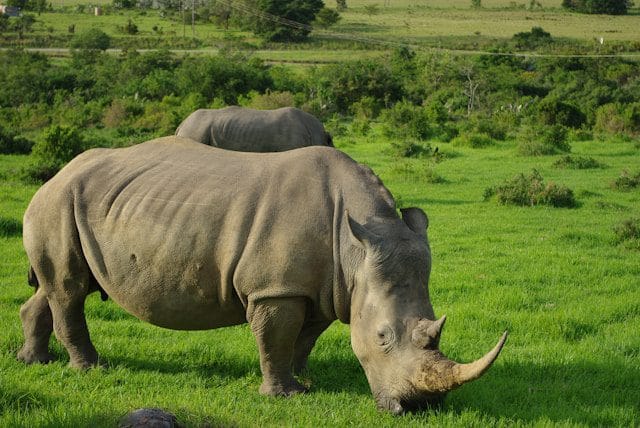
The White rhinoceros (Ceratotherium simum), also known as the "square-lipped rhinoceros", is the largest among the 5 extant rhino species. White rhinos have short legs, long heads and a wide, flat, square-shaped upper lip, which is used for grazing on short grasses in open savannas. This type of lip is specialised to help secure the grass. They use their heads to swing from side to side, cropping the grass close to the ground. The most noticeable hair fringes are on the ears and the tips of their tail. They are grey in colour and have two horns which grow continuously throughout their life. The larger front horn can grow to be 5 feet long, while the smaller back horn can grow to be 1.9 feet long. These species have a total body length between 12 and 14 feet and a standing shoulder height of 5 to 6 feet. The White rhino is the larger of the two African species; adults weigh between 1,800 and 2,700 kg. However, it is the most social of all rhino species. The white rhino spends about half of its day eating and can consume up to 54 kg of grass per day. They drink water whenever they can find it. If water is available, they drink twice a day, but they can survive for up to 5 days without water.
Native to Africa, the White rhino is divided into 2 subspecies:
The Southern subspecies is the most abundant, with over 17,000 individuals, while only 2 females (Najin and Fatu) of the Northern subspecies remain. The majority of Southern white rhinos mainly live in South Africa, Zimbabwe, Kenya, and Namibia, but have also been reintroduced to Botswana, Uganda, Eswatini, Mozambique, and Zambia, while the Northern white rhino is found in Kenya's Ol Pejeta Conservancy. While the Southern subspecies is the most widespread of the rhinoceros in the world, the Northern subspecies only has a handful of individuals surviving in zoos and nature reserves.
Another well-known species is the Black rhinoceros (Diceros bicornis). This species is a browser, rather than a grazer. They use their more pointed, prehensile or hooked upper lip to feed on leaves from shrubs, bushes and trees, and expertly navigate through thorny foliage. These rhinos are also attracted to salt licks. The solitary nature of the Black rhino reflects its preference for more bushy environments. They are grey in colour and have two horns, which grow continuously from the skin at their base throughout the rhino's life (like human fingernails). The larger front horn is typically 4.7 feet long, while the smaller back horn can grow up to 1.9 feet long. They have a total body length of 10 to 12.5 feet and stand 4.5 to 5.5 feet high at the shoulder. These species weigh from 800 to 1,400 kg.
Native to Africa, the Black rhino is divided into 3 main surviving and 1 extinct subspecies:
The Black rhino is found in Eastern and Southern Africa. The majority of the Black rhino population (98%) is concentrated in four countries: South Africa, Namibia, Zimbabwe, and Kenya, while South Africa houses 40% of the total Black rhino population, but some Black rhinos have also been introduced to Botswana, Chad, Eswatini, Malawi, Rwanda, Tanzania and Zambia.
The Indian rhinoceros (Rhinoceros unicornis), also known as the Greater one-horned rhinoceros, thrives in tall grasslands, riverine forests and wetlands, which are located in the foothills of the Himalayas, the Brahmaputra and the Ganges valleys. It is the second-largest rhino species after the White rhinoceros. But this species is also the second largest animal after the Asian elephant. The Indian rhino has one horn on its snout and has thick, wrinkled grey-brown skin with armour-like pinkish skin folds. Their bulls have huge neck folds, and they have very little body hair, besides the eyelashes, ear fringes and tail brushes. The Indian rhino has a highly prehensile, pointed upper lip that is used to curl around stems of grasses or branches to pull them into its mouth. They are considered mixed feeders, using their specialised lips for both browsing and grazing on taller grasses. Their upper legs and shoulders are covered in wart-like bumps. This species has no subspecies, and its single black horn is typically 2 feet long and can weigh up to 3 kg. The Indian rhinoceros stands 5.4 to 6.5 feet tall at the shoulder, about 11.2 to 12.11 feet in total body length, and weighs between 1,600 and 2,600 kg. They are excellent swimmers and can run at a speed of up to 56 km/hour for a short time on land. These species are mainly found in India and Nepal, but also roam in Bhutan, Bangladesh and Pakistan.
The Javan rhinoceros (Rhinoceros sondaicus), often referred to as the "ghost of the jungle", is adapted to dense rainforests. It is also known as the Sunda rhinoceros or lesser one-horned rhinoceros. The Javan rhino is a sporadic member of the family Rhinocerotidae. This species is dusky grey and has a mosaic, armour-like skin. Its skin has several loose folds, giving the appearance of armour plating. The Javan rhino is very similar in size to the black rhino and similar in appearance to the closely related greater one-horned rhinoceros. Similar to the black rhino, this rhino has a long, pointed, prehensile upper lip to pull down branches, select shoots, and strip leaves from twigs, while it has a much smaller head and fewer apparent skin folds. It has a small single horn up to about 10 inches long. Javan rhinoceros stands 4.6 to 5.5 feet tall at the shoulder, about 6.5 to 11.5 feet in total body length, and weighs between 900 and 2,300 kg. It is the critically endangered of all 5 extant species, with only 60 to 70 individuals remaining in the wild.
Native to Asia, there were 3 recognised subspecies of the Javan rhino, but only 1 subspecies survives today:
The Sumatran rhino (Dicerorhinus sumatrensis), often nicknamed the "hairy rhino" or "singing rhino", is the smallest of the five extant rhinoceros species. It is the only Asian rhino species with two horns. They have fringed ears (covered with patches of short, dark, stiff hair around their ears), wrinkles around their eyes, and a prehensile upper lip to manipulate woody branches and pull vegetation into their mouth. They are also covered in reddish-brown long hair that can be quite shaggy. These species are more closely related to the extinct woolly rhinos than any of the other rhino species alive today. The Sumatran rhinos' hide is dark red-brown and has a thick, often stiff, tuft or clump of hair at the end of its tail. This species is particularly elusive and solitary. The larger front horn of the Sumatran rhino can grow up to 2.7 feet long, while the smaller back horn can grow up to 3 inches long. The Sumatran Rhino can weigh between 600 and 950 kg. It stands 3.3 to 5 feet tall at the shoulder and about 7.7 to 10.4 feet long. It is the most critically endangered species, with fewer than 50 individuals left. The Sumatran rhinoceros is found only in the Indonesian islands of Sumatra and Borneo.
Native to Asia, the Sumatran rhino historically consisted of 3 subspecies, though only 2 subspecies are likely still surviving:
Rhinoceroses are massive, herbivorous megafauna characterised by thick, protective skin folds, one or two dermal horns, and a weight often exceeding 1 ton or 1,000 kg. For instance, White rhinos are the largest, with males weighing up to 3 to 5 tons or 3,000 to 5,000 kg. What all rhinos have in common is a broad chest, poor eyesight, excellent hearing and smell, acting as vital, protective grazers or browsers in their habitats, and a fondness for rolling in the mud. Rhinoceroses are universally recognised for their massive bodies, three-toed, short, stumpy legs and iconic horns (made of keratin, the same protein as human hair and nails, not bone), which are used for defence, digging for water, and foraging. Each species has a different horn configuration. The Javan and the greater one-horned rhinos only have one horn, whereas all the other rhino species have two horns. In some species, the horns may be short or not obvious. Rhino's thick skin, like armour, moves through thorny shrubs. Some species have wide, flat, square-shaped mouths with flexible, broad lips for "mowing" grasses, while some have pointed, prehensile or hooked lips, adept at browsing shrubs, bushes and trees. For instance, White rhinos' short legs, long heads reaching almost to the ground, and their wide mouths are used in combination with a side-to-side head movement to eat massive quantities of grass and foliage. However, rhinos' keen sense of smell compensates for relatively poor eyesight, allowing them to navigate their surroundings effectively. They take mud baths to regulate temperature and protect against sunburn. Despite their formidable appearance, rhinos exhibit surprisingly complex social behaviour. They are generally solitary, though females with calves form pairs. For instance, Black rhinos are known for their solitary nature, while White rhinos often form small groups, showcasing varying levels of social interaction. Interestingly, rhinoceroses communicate through a variety of vocalisations, body postures and even scent markings, which play a crucial role in establishing territory and social hierarchy within their environment.
Rhinos are primarily found in Africa and Asia. Their habitats range from savannas to swamps and rainforests, underscoring the adaptability of these majestic creatures. For instance, the African species primarily inhabit savannas and grasslands, while the Indian rhino prefers the grasslands and forests. On the other hand, the Javan rhino prefers dense jungle habitats, which offer both cover and food sources, while the Sumatran rhino thrives in dense, mountainous forests. The rhinoceros's survival heavily depends on these specific habitats, as they provide not only nourishment but also protection from poachers, a constant threat across their ranges. Unfortunately, habitat destruction poses a severe threat to these species, as agricultural expansion and urban development encroach on their natural environments.
Rhinos are large, herbivorous animals whose diet is similar to that of other members of their species. Their diet consists mostly of vegetation, such as leaves, twigs, shoots, bush grass, shrubs, plants, stems, bushes, grasses, bamboo, wood bark, and branches from trees and other plants. Rhinos will also eat fruits, berries, seeds, nuts, pollen, buds, flowers, sap and roots, but the specific preferences can vary significantly between species and their environment. For instance, the White rhino is known for grazing on short grasses that are about 3 to 4 inches tall, utilising its broad, flat, square-shaped upper lip to efficiently consume large amounts of grass, while the Black rhino, with its more pointed, prehensile or hooked upper lip, is adept at browsing shrubs, bushes and trees. On the other hand, Indian rhinos are considered mixed feeders, using their highly prehensile, pointed upper lip for both browsing and grazing on taller grasses, leaves, stems, branches, fruits and aquatic plants. Javan rhinos are the most adaptable feeders, with their long, pointed, prehensile upper lips, they prefer to eat leaves, shoots, twigs, fallen fruits, tall grasses and shrubs. Sumatran rhinos also possess prehensile upper lips, and as browsers, they eat a variety of available plants, shrubs, woody branches, twigs, bark, bamboo, and fruits.
Interestingly, rhinos are known to be very selective in their feeding habits, choosing to eat the best and most nutrient-rich part of the plant. Their keen sense of smell and acute hearing compensate for their poor eyesight, allowing them to find food in dense vegetation and detect predators. These herbivores use their strong, wide, flat, straight upper lips or pointed, prehensile (hooked) upper lips that function similarly to a finger or a small trunk, enabling them to pick up or to grab food from the ground or trees and bushes. While rhinos' long and sharp lower incisors, "teeth" or "tusks", are used for feeding in addition to their lip manipulation, their 3 premolars and 3 molars on each side of their upper and lower jaws also help them grind or break down tough vegetation, often with prominent enamel ridges. Additionally, they have a four-chambered stomach that helps them digest their tough plant materials properly.
Furthermore, rhinos play a crucial role in their habitats as "megaherbivores", influencing plant community dynamics through their selective feeding habits. By grazing and browsing on certain plants, they promote biodiversity, allowing less dominant species to flourish. They are also essential to their ecosystems because they help to spread seeds around as they travel. By consuming fruits and foliage, they facilitate the growth of various plant species through their dung, which provides nutrients for the soil. Additionally, their foraging behaviour creates pathways that benefit other wildlife, further enhancing ecosystem health. However, as habitat loss and poaching threaten their populations, the ripple effects on their diets and the surrounding ecosystems underscore the urgent need for conservation efforts.
Rhinoceroses are often perceived as solitary creatures, but their social interactions reveal a complex web of behaviour. While they typically prefer solitude, particularly the males, females and their young exhibit a strong maternal bond, where mothers are fiercely protective, nurturing their calves with attentive care. Rhinos make an array of funny noises when they're communicating. During confrontations, they growl and make 'trumpet calls', while also communicating with other rhinos through their poo and urine. Furthermore, rhinos' behaviour is also influenced by their environment, particularly in terms of foraging. As herbivores, they spend much of their time grazing or browsing on vegetation, and they have adapted unique feeding strategies that vary by species. While African White rhinos graze on short grasses, Asian Great one-horned rhinos are mixed feeders that prefer shrubs, bushes and trees; on the other hand, Black rhinos, Javan and Sumatran rhinos are browsers. Furthermore, rhinos are most active during early morning, late afternoon, and night. They are known for their wallowing behaviour, where they bathe in mud to regulate body temperature, protect against sunburn and even deter parasites from their skin. Additionally, they can sleep standing up or lying down. Rhinos can be found dozing under a tree during hot days and lying down with their feet curled up during deep sleep. They often rub their skin and horns against trees and rocks to soothe itching and naturally shape them. Rhinos are generally shy and quiet animals, but they can be very aggressive if threatened or disturbed, charging at speeds up to 30 mph.
Their social structures vary significantly depending on environmental factors and individual personalities, showcasing their adaptability. Besides mating and raising calves, most rhinos are solitary animals with limited tolerance for others, the exception being the White rhino. While it is not unusual to see a lone white rhino male or a single female and calf, they are the most gregarious of the 5 rhino species. In areas with abundant resources, they can often be seen in small groups called crashes that are led by a dominant male. The group shares food, water holes, wallows, defends each other from predators, and helps young rhinos learn how to survive. Black rhinos have been identified as solitary animals for many years, except for mating pairs and females (cows) with calves. Mothers stay with their calves up to 2 years, and they communicate with their calves through a series of low-frequency vocalisations that can be heard over long distances. Rhinos have large home ranges that they defend from rivals. They are very territorial animals, marking their territory with urine and dung. Males are primarily solitary and territorial, but recent studies have found that females and sub-adults can be fairly social and share ranges. They make various sounds to communicate with each other, including snorts, grunts, squeaks, and bellows. For instance, Black rhinos "snort" when they're angry, make "sneeze-like calls" as alarms, "scream" if they're scared, and "woof" when relaxed. Another behavioural adaptation of Black rhinos is that they have a mutually beneficial relationship with tick birds and egrets. These small birds land on the rhinos and eat parasites off their skin. The rhinos get to be free of itchy parasites, and the birds get a free meal. Rhinos are primarily found in Africa and Asia, and their habitats range from savannas to swamps and rainforests, underscoring the adaptability of these majestic creatures. They are herbivores, and their dietary preferences shape their habitat choices, which influence the ecosystem dynamics, as their feeding habits help maintain plant diversity and create pathways for other species. Their dung serves as a nutrient-rich fertiliser, supporting the growth of grasses and attracting other herbivores. Furthermore, rhinos' wallowing habit creates water holes that benefit various animals during dry spells, allowing individuals to interact and establish dominance hierarchies within their territories. Interestingly, their large footprints create water catchments during rain, aiding smaller wildlife. Thus, the rhinoceros emerges not merely as a majestic creature but as an integral part of its ecosystem, demonstrating the delicate balance between behaviour, lifestyle and environmental stewardship.
The rhinoceros is an interesting animal with a unique reproductive process. They reproduce sexually through a slow, intense process, and female rhinos usually have 1 calf every 2 to 5 years. These animals typically reach sexual maturity between 3 and 12 years, but the sexual maturity of rhinos varies by species and sex. For instance, Black rhinos reach sexual maturity at 6 to 7 years for females and 10 to 12 years for males. Female (cow) rhinos are usually solitary, only joining males when ready to mate, which occurs every 25 to 30 days for black rhinos. Females typically enter estrus only once every 2 to 3 years, making the timing of mating crucial for the species' survival. They are polygamous animals and mate in late winter or early spring. Both males and females mate with multiple partners. Rhinos can breed at any time of year, but most calves are born between December and March. However, their long courtship rituals often involve elaborate displays of strength and dominance that can last several days, during which males trailing females, often accompanied by fighting, chasing, engage in vocalisations, and sparring or head-butting contests to establish hierarchy. Males check for receptive females by tasting their urine. The winners establish territories that they will then defend from other males. For example, White rhinos are territorial, and a dominant male (bull) will guard females within his territory. However, the mating itself is intense and can last 30 to 60 minutes, with the male mounting the female multiple times. Once fertilisation occurs, the gestation period can last an astonishing 15 to 16 months, one of the longest among terrestrial mammals, and females give birth to a single calf at a time, although twins are exceptionally rare. Their extended pregnancy allows for the development of robust calves, which are crucial for survival in the wild.
Newborns are surprisingly large, often weighing between 30 and 45 kg. They are capable of standing and walking shortly after birth. The bond between mother and calf is profound, as the mother provides not only nourishment but also protection against predators. As they grow, calves exhibit playful behaviours that not only strengthen their physical abilities but also teach them critical survival skills. Mother rhinos nurse their calves for 18 to 24 or 36 months, but begin to wean them off milk at around 6 months old. Calves stay close to their mother for the first few years of their lives, learning what foods to eat, how to avoid danger, how to survive in the wild and social behaviours. Rhinos have two primary life cycles:
Rhinos face challenges like tumours in their reproductive tracts that limit their breeding lifespan.
However, rhinoceroses' lifespans are similar across species, though their lifespan vary by species and environmental factors, like habitat conditions, food availability, and protection from poachers, which play a significant role. Rhinos generally live 35 to 50 years in the wild, with many species reaching over 40 years. In captivity, some rhinos live long, and they can live up to 50 to 55 years, but the legitimacy of this record is under dispute. The life expectancy of White rhinos in the wild is about 40 to 50 years, and in captivity, 55 years. The lifespan of Black rhinos in the wild is 35 to 50 years, and in captivity, they can live 44 to 45, the oldest recorded black rhino lived to be 57 years old. There is no average lifespan for Indian rhinoceroses in the wild or captivity, though they are expected to live a maximum of 40 to 45 years in the wild, and in captivity, it extends to 47 years. The lifespan of a Javan rhino is unknown; it is probably between 30 and 45 years in the wild, but they can live 10 to 20 years in captivity. On the other hand, the lifespan of a Sumatran rhino is around 30 to 40 years in the wild, but they are known to live up to 32 to 33 years in captivity.
Rhinoceroses, with their formidable size and thick armour-like skin, might seem invulnerable in the wild, but they face a myriad of threats that extend beyond natural predators. In their natural ecosystems, rhinoceroses have few direct predators. The two species most often reported to prey upon, usually young ones if separated from their mothers and sick adults, are lions in Africa and tigers in Asia. However, leopards, hyenas, Nile crocodiles and wild dogs are also known to kill African rhino calves on occasion. More insidiously, competition for resources with other large herbivores, such as elephants and buffalo, can lead to increased stress and diminished health for rhinos. Sometimes young male elephants, especially if in musth, have been known to attack and kill rhinos. However, in the wild, adult rhinos have no significant natural predators due to their size and thick hide, except humans.
The most pressing danger comes from human activities. Rhinos fall victim to poachers who hunt and kill them for their keratin horns. African hunters sold the horns on the black market for a high price. The major demand for rhino horns is in Asia, where they are used in traditional Chinese medicine and ornamental carvings. On the other hand, sophisticated syndicates target rhinos, with hundreds killed annually as symbols of status, particularly in South Africa. This insatiable appetite has led to alarming declines in rhino populations, pushing these magnificent creatures closer to extinction. Those remaining rhinos live in fragmented, isolated areas and are prone to inbreeding, as healthy genetic mixing is more difficult among smaller groups. This isolation leaves them vulnerable to disease (parasites and illnesses like anthrax can impact populations) and reduces their ability to adapt to environmental changes. Additionally, the loss of habitat due to agricultural expansion, urban development and logging has also created a precarious situation where rhinos find themselves squeezed into smaller territories, making them more vulnerable to poachers. Furthermore, climate change also poses an indirect threat, altering habitats and food availability, which can impact their survival rates.
Moreover, the ecological role of rhinos makes them crucial in maintaining the health of their environment, creating a ripple effect that can impact other species. Rhinos disperse seeds, and their grazing habits help shape the landscape, promoting biodiversity by allowing new plants to thrive. As these majestic creatures navigate a world fraught with peril, their plight serves as a poignant reminder of the delicate balance within ecosystems and the urgent need for conservation efforts that address both human-induced challenges and the natural dynamics of their environments. Conservation efforts have begun to adapt, focusing not just on protecting rhinos from poachers but also on restoring habitats and promoting coexistence with local communities.
The global population of rhinoceroses has seen dramatic fluctuations over the decades, primarily due to poaching and habitat loss. There are five species of rhinos, and their population vary by species and region. Today, the population of all 5 species of rhinoceros is estimated at around 26,700 to 27,500 individuals left in the wild, a stark decline from 500,000 at the start of the 20th century. While populations of White and Black rhinos in Africa are showing signs of recovery due to intense conservation efforts, they remain threatened by poaching, primarily in South Africa, and in 2023, 586 rhinos were poached.
The White rhinos are considered "near threatened" by the IUCN Red List, and their population is estimated at 15,752 individuals in 2024, experiencing a slight decline. This species is heavily poached for its horns, which are used in traditional Asian or Chinese medicine and ornamental carvings. There are two subspecies of white rhino:
As of late 2023, the Southern white rhino population is estimated to be between 17,464 and over 20,000 individuals. South Africa holds the largest population, followed by Namibia, Kenya, and Zimbabwe, while the Northern white rhinos are classified as "critically endangered" and possibly extinct in the wild. As of May 2026, there are only two female Northern white rhinos (Najin and Fatu) remaining. On the other hand, the Black rhinos are also considered "critically endangered" by the IUCN Red List. These species numbers have increased from a low of 2,410 individuals in 1995, and today, there are 6,788 individuals in the wild across Africa.
In Asia, the Indian or Greater one-horned rhinos are considered "vulnerable" by the IUCN Red List, but these species have made a strong comeback from fewer than 200 individuals in 1900 to over 4,000 individuals. Today, there are around 4,075 Greater one-horned rhinos in northeastern India and the Terai grasslands of Nepal, while the Javan and Sumatran rhinos are considered "critically endangered" by the IUCN Red List. There are about 100 Javan and Sumatran rhinos surviving in just one country, Indonesia. The Javan rhino remains only 50 individuals, but there are fewer than 34 to 47 Sumatran rhinos left in the wild today. This drastic reduction is also driven by climate change, highlighting the interconnectedness of wildlife preservation and sustainable land management practices.
Rhinoceroses are crucial in maintaining their habitats' ecological balance, acting as "megaherbivores" and keystone species.
Moreover, rhinos are considered keystone species; their presence is vital for the survival of numerous plants and animals within their environments. Without them, entire ecosystems could suffer, leading to a decline in biodiversity.
Rhinoceroses are among the most iconic and majestic creatures on Earth. Unfortunately, they are also among the most endangered species in the world. Due to poaching, habitat loss and other human activities, rhinos have been driven to the brink of extinction in many parts of Africa and Asia. Now, these majestic creatures have been a part of zoos for decades, providing visitors with an up-close look at one of the world's largest land animals.
In response to this crisis, many zoos around the world have taken up the cause of protecting these magnificent animals. Zoos provide a haven for rhinos that would otherwise be vulnerable to hunters or other dangers. They also offer opportunities for researchers to study and learn more about these amazing creatures, helping us better understand their needs and how we can help them survive. Zoos that feature rhinos often provide them with a large enclosure that mimics their natural habitat. This gives visitors a chance to observe rhinos in an environment that is as close to their natural surroundings as possible. As they roam around and interact with each other, visitors can witness the beauty and power of these incredible creatures.
Observing rhinoceroses in a zoo setting provides an unparalleled opportunity for education and engagement. Many zoos are now integrating innovative programs that allow visitors to learn about rhino behaviour, social structures, and conservation efforts aimed at protecting them in the wild. Interactive exhibits can create a deeper connection between people and these magnificent animals, fostering empathy and inspiring action. By showcasing the complex lives of rhinos, like their surprisingly affectionate relationships with one another, zoos can transform simple visits into meaningful experiences that spark conversations about wildlife conservation and environmental responsibility.
Furthermore, zoos play a critical role in breeding programs designed to bolster dwindling populations. Through careful genetic management and research, these institutions not only contribute to species survival but also act as ambassadors for rhinos globally. Each birth represents a glimmer of hope against poaching and habitat loss, reminding us that every effort counts in the fight to save these iconic creatures from extinction. In this way, a trip to see rhinoceroses in the zoo transcends mere observation; it becomes a call to action to protect our planet's incredible wildlife heritage.
This classification highlights rhinos' unique evolutionary lineage as odd-toed ungulates. Rhinoceroses are part of the order Perissodactyla and belong to the family Rhinocerotidae, which showcases their close genetic ties to other odd-toed ungulates like horses and tapirs. Within the Rhinocerotidae family, there are 5 extant species across 4 genera, which are located in Africa and Asia, and fall into 3 groups:
Today, only 5 species continue the line, and they are found in Africa and Asia.
Two of the extant species are native to Africa:
Three of the extant species are native to South and Southeast Asia:
All these rhinos are part of the larger Rhinocerotoidea superfamily, which branched into 4 extinct prehistoric families, such as the Amynodontidae (aquatic/hippo-like rhinos), Hyracodontidae (running rhinos), Paraceratheriidae (extinct, giant, hornless rhinoceroses), and Eggysodontidae (small, rhinoceros-like odd-toed ungulates), and the only extant (living) family or modern family, the Rhinocerotidae (true rhinoceros).
Each species reflects unique adaptations to its environment, from the formidable size of the white rhino, which can weigh over 2,000 kilograms, to the smaller, more agile Sumatran rhino, with its shaggy coat designed for humid tropical forests. On the other hand, the white rhinoceros has evolved a broad, flat mouth suited for grazing on grasses, while the black rhinoceros possesses a pointed or hooked lip designed for browsing shrubs and trees. Their evolutionary journey has been influenced by changing climates and habitats, leading to distinct physical traits such as the number and shape of horns, which serve not only as tools for foraging but also as symbols of dominance in social interactions.
The evolutionary history of rhinoceroses reveals a lineage dating back over 50 million years, showcasing a remarkable ability to adapt to diverse ecological niches. Fossil evidence indicates that early rhino ancestors were considerably small, hornless, dog-sized (for example, Hyrachyus resembling small, hornless horses or tapirs) and roamed vast areas of North America, Europe and Asia. Evolving in the early Eocene, they diversified into diverse forms, including the massive, long-necked Paraceratherium, which is the largest terrestrial mammal ever, and the hairy Woolly rhinoceros, before modern species specialised (browsing or grazing) around 20 million years ago. As environmental conditions shifted, some prehistoric species, like the woolly rhinoceros, adapted to cold climates during ice ages, showcasing the resilience of this family. Today, however, rhinos face unprecedented threats from habitat loss and poaching, pushing them towards potential extinction. This ongoing struggle highlights the importance of conservation efforts; understanding the evolutionary context of rhinoceroses can inspire new strategies for protecting these iconic animals from further decline. The interplay between their biological heritage and contemporary challenges invites us to reflect on our role in safeguarding the future of these magnificent creatures and preserving biodiversity as a whole.
The relationship between rhinoceroses and humans is a complex tapestry woven with threads of admiration, exploitation and conservation. Historically, these majestic creatures have been revered in various cultures, symbolising strength and resilience, while inspiring art, folklore, and conservation efforts, capturing the imagination of cultures around the world. Yet, this reverence has been overshadowed by dark realities:
The allure of rhino horns, steeped in myths of medicinal properties and status symbols, has pushed these magnificent animals to the brink of extinction. This tragic irony lies in the fact that while humans once celebrated rhinos as symbols of power, they now threaten their very existence.
Conversely, a growing movement seeks to redefine this relationship through conservation efforts that engage local communities. By empowering indigenous populations to protect their natural heritage, these initiatives illustrate that humans can act as stewards rather than destroyers. Innovative approaches, such as eco-tourism and community-based wildlife management, highlight the potential for coexistence, where both rhinos and humans thrive. This collaborative approach not only fosters a sense of ownership among locals but also enriches the cultural significance of rhinos, transforming them from mere targets of exploitation into revered guardians of the land.
As we navigate this intricate relationship, it becomes clear that the future of rhinoceroses hinges on our ability to reimagine our role as caretakers rather than conquerors. Each step taken toward sustainable coexistence serves as a testament to our capacity for empathy and respect for the natural world. The challenge lies in balancing our desires with the needs of these majestic animals, forging a legacy where both can flourish side by side.
The conservation status of rhinoceros species is a poignant reflection of humanity's relationship with wildlife and the intricate balance of ecosystems. The White rhino is the most common of the 5 extant species, while the Black rhino is 2nd in prevalence. Currently, all 5 species, the White, Black, Indian, Javan and Sumatran rhinoceroses, are facing varying degrees of threat, primarily due to poaching, habitat loss and climate change. While the White rhinos are considered "near threatened" by the IUCN Red List of Threatened Species, the Indian rhinos are considered "vulnerable", and the other 3 rhinos out of the 5 rhinoceros species are considered "critically endangered":
The primary threats they face stem from poaching for their horns, driven by demand in traditional medicine and luxury markets, causing severe declines in Southern white rhino and Javan rhino numbers. As well as habitat loss due to human encroachment, reduced availability of habitats, particularly for Asian and Sumatran species. Additionally, climate change has contributed to the gradual reduction of some species’ range. The plight of the Northern White rhino, with two females remaining, highlights the urgent need for innovative conservation strategies that transcend traditional methods.
Innovative approaches in conservation are increasingly focusing on community involvement and technology. For instance, local communities are being empowered through eco-tourism initiatives that provide sustainable livelihoods while fostering a protective attitude toward rhinos, besides anti-poaching units, habitat protection, and breeding programs. Additionally, advancements in tracking technologies, such as drones and GPS collars, have revolutionised anti-poaching measures, enabling real-time monitoring of these majestic creatures in their natural habitats. Yet, the ongoing battle against illegal wildlife trade reminds us that the fight for rhinos is far from over; it requires unwavering commitment and global collaboration. As we champion these ancient giants, we must recognise that their survival is intricately tied to broader ecological health and the preservation of biodiversity on our planet.
The two-horned rhinoceros and its single-horned counterpart present a fascinating study in contrast to the rhinoceros family. While both species share a robust physique and thick skin formed from folds that provide protection, their distinctive horns epitomise their unique adaptations to different environments.