
Wolves, the majestic and mysterious creatures that roam the wild, have been the subject of numerous legends and myths throughout history. Their complex social structure and remarkable hunting abilities make them one of nature's greatest predators. Wolves are known for their fierce independence and adaptability to various environments, unlike their domesticated canine relatives. With their piercing yellow eyes, powerful, sleek builds and haunting howls that echo through the night, they evoke a mixture of fear and admiration. Found in a wide range of habitats, from forests to tundra, across North America, Eurasia, and even parts of Africa, they have successfully established themselves with a complex social structure. Wolves are carnivores, and these apex predators are known for their intelligence and astonishing hunting skills, which are another aspect worthy of admiration.
A wolf is the largest member of the dog family. Their close-knit family units, known as a pack. Each pack has its unique dynamics and hierarchy, with individual roles and responsibilities carefully assigned. The pack typically consists of an alpha male and female who lead the group, along with their offspring. The rest of the pack members work together to ensure the survival and success of their group. They display cooperation during hunts and bring down prey much larger than themselves. Wolves have developed sophisticated communication systems, including facial expressions, body language, vocalisations and even scent marking to navigate these intricate social dynamics within their pack.
They use a variety of vocalisations such as howling, growling, whimpering and barking, each serving different purposes like marking territory or rallying pack members when separated and communicating with each other over long distances. They have different howl patterns which can signify their identity within the pack. Howling serves multiple purposes. Wolves use howling to establish territory boundaries, locate pack members and even communicate with other packs in distant areas. The haunting melodies that echo through the night not only showcase their unity but also remind them of the strength they possess within their tightly-knit family units. It is this collaborative nature combined with their resilience that has allowed wolves to adapt to diverse habitats across various continents, truly demonstrating their status as apex predators.
While commonly portrayed as villains in folklore and pop culture alike, wolves play a crucial role in maintaining ecosystem balance. As apex predators at the top of the food chain, they help control populations of herbivores such as deer, elk and moose, which can otherwise overgraze habitat vegetation. By doing so, they indirectly support an entire web of species while preserving biodiversity.
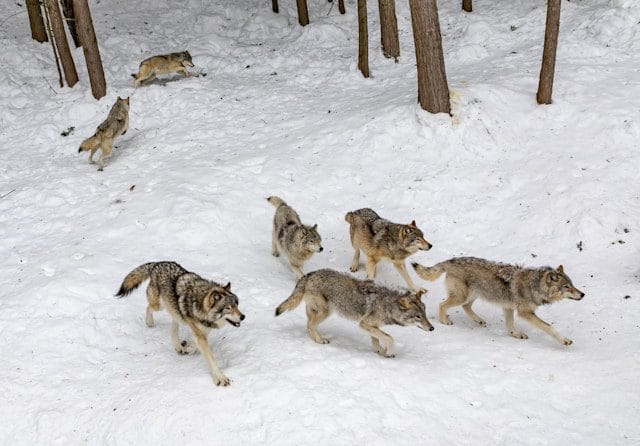
The scientific name of wolves is "Canis lupus". They belong to the family Canidae, and the genus name Canis is fitting for these animals. The Latin term "Canis", which refers to their genus, includes both domestic dogs and wild wolves. Meanwhile, "lupus" signifies the species-specific epithet that distinguishes them from other members of the "Canis" genus.
Despite some distinct differences in appearance and behaviour, they are closely related to domestic dogs and other wild canines such as foxes, coyotes and jackals. These include a strong pack mentality, sharp teeth designed for efficient hunting, an acute sense of smell for tracking prey over vast territories, and exceptional hearing capabilities that allow them to communicate effectively within their group.
One fascinating aspect of wolves' scientific classification is their ability to interbreed with other canids. For example, grey wolves (Canis lupus) have been observed mating with domestic dogs (Canis lupus familiaris), resulting in hybrid offspring known as wolfdogs or wolf hybrids. This interspecies breeding demonstrates both how closely related wolves and dogs are and how adaptable these creatures can be.
Interestingly, various subspecies within the "Canis lupus" species showcase remarkable adaptations to different environments around the world. For instance, we have the Arctic wolf (Canis lupus arctos), known for its thick white fur that allows it to blend seamlessly into snowy landscapes. On the other hand, we have the Ethiopian wolf (Canis simensis), which is a close relative but was assigned a different scientific name due to its distinct physical characteristics and habitat.
Wolves are undoubtedly fascinating creatures that have captured the imaginations of humans for centuries. They possess a remarkable ability to adapt and thrive in various habitats. Here are some incredible facts and features about them:
Wolves are majestic creatures that possess a unique appearance and anatomy. They have high muscular, streamlined bodies, lean, narrow chests with large, deep rib cages, heavy, broad skulls tapering to a narrow muzzle, long tails, and long legs with large feet. Wolves also have piercing eyes, small, triangular ears, broad snouts, powerful jaws, large canine teeth, and haunting howls. A wolf's howl can be heard up to 10 km away. The elegance of a wolf's appearance is enhanced by its keen senses, particularly acute hearing and vision. One distinct characteristic of wolves is their piercing almond-shaped eyes, which come in various shades ranging from pale yellow to amber and even green, that tend to be more closely set on the face and are slanted, with the corners of the eyes lining up with the outer base of the ears. This forms a 45° angle on the face from the eyes to the ears. Their tail is bushy, and their coat has a thick, dense underfur. Wolves' fur colours vary from light to dark grey with black and white interspersed, brown and red, with some individuals being solid black and solid white. They have long legs and large feet with big paws, averaging between 4 and 5 inches long. Each feet have four toes with non-retractable claws in an oval shape. Every aspect of a wolf's appearance is carefully crafted by nature to equip it perfectly for survival in its respective environment.
The number of the wolf's bones depends on the sex of the wolf. A female grey wolf has 320 bones. A male grey wolf has 321 bones. The average size of a wolf's body is 4.1 feet long, 2.6 feet at the shoulder, and its tail is usually 2 feet long. The average weight of a male wolf is around 100 pounds, and a female wolf is around 80 pounds. Wolves vary in size depending on where they live. In the north, wolves are usually larger than those in the south. For example, the body length of a grey wolf ranges from 3 to 5 feet, with the tail adding 1 to 2 feet. Females usually weigh between 60 to 100 pounds, while males typically weigh between 70 to 145 pounds.
When it comes to their anatomy, wolves' lean, muscular bodies are built for speed and endurance, while their long legs allow them to take longer steps and run better. A wolf's feet are built for travel, and their paws are equipped with thick pads that provide insulation on cold surfaces and aid in silent movement through various terrains. They can reach speeds up to 35 to 40 miles per hour while maintaining agility and precision during sudden direction changes. Wolves' fur, which is found in various colours, provides insulation in harsh climates. They have 2 layers of fur: the outer, guard layer is composed of long, coarse hairs that shed water and snow and contain pigments that give the wolf's coat its colour. The inner layer is thick, soft grey wool, which traps air and insulates the wolf from the elements. Their fur varies in colour across different regions, ranging from white, grey, black and even shades of brown. This variation also helps them blend into their surroundings.
Another striking feature of the wolf's anatomy is that its strong jaw muscles are developed for gripping and tearing into their prey. Its jaw can clamp down with a force of 1,500 pounds per square inch or more. Their canines, towering up to 2 inches in length, play a crucial role in hunting and self-defence. Interestingly, they also possess specialised molars designed for crushing bones with incredible force. Additionally, their ears are positioned higher on their heads compared to domestic dogs, allowing them to detect sounds over long distances accurately. Wolves can hear sounds up to about 80 kHz, though their hearing range extends up to 25 kHz. They can detect howls and other sounds from distances of up to 10 miles in open terrain and as far as 6 miles in the forest. Wolves also have exceptional eyesight adapted for both day and night vision. These sharp eyes allow them exceptional vision, aiding them in hunting prey as well as detecting threats from afar. The wolf's sense of smell is 100 times better than that of a human.
Wolves are highly adaptable creatures and can be found in a wide range of habitats across the World. From dense forests to grasslands, tundra to woodlands, mountains to deserts, and taiga, wolves have successfully carved out their place in various ecosystems of the Northern Hemisphere. Their presence is dependent largely on the availability of prey, winter conditions, landscape factors, and human activity, as they require large, contiguous territories with sufficient food to thrive. The wide range of habitats in which wolves can thrive reflects their adaptability as a species. Despite popular belief, wolves are not only restricted to remote wilderness areas; they have managed to survive and thrive near human settlements and even within cities, such as the remarkable case of the famous wolf pack residing in Yellowstone National Park.
The distribution of wolves is also influenced by social factors within their packs. As highly social animals, wolves form tight-knit family groups known as packs. These packs typically consist of an alpha male and female who lead the group and dominate reproductive rights. The rest of the pack comprises offspring or related individuals who participate in hunting and other cooperative activities. This social structure affects how wolves distribute themselves across habitats since territories need to provide for the needs of a whole pack rather than just individual wolves. Therefore, a suitable habitat includes enough prey resources while also offering cover for denning sites and sufficient space for territorial boundaries between different packs. For instance, Grey wolves have a circumpolar range across the Northern Hemisphere but are now found in fragmented populations in wilderness areas of North America, Europe, and Asia, with major populations in Canada, Alaska, Eastern Europe, Russia, China, and the Indian subcontinent. Now, wolves are found even in parts of Africa. Their historical range has significantly shrunk due to human persecution, and they now inhabit from the tundra to desert, the Great Plains to temperate forest, mountains to woodlands, and even shrublands to some wetlands. Wolves and their prey have adapted to a wide variety of climates and habitats.
Wolves, belonging to the Canidae family, are highly adaptable and resilient creatures found across the globe. They are known for their haunting howls and their majestic presence that have captured the imagination of humans for centuries. However, the common types of wolves include the Grey Wolf (Canis lupus), which is the most widespread, and the Red Wolf (Canis rufus).
The Grey Wolf (Canis lupus) has a wide distribution across North America, Europe and Asia. They are known for their beautiful grey fur and piercing yellow eyes, but their colour can vary from pale grey to black, depending on their location. The grey wolf exhibits remarkable hunting abilities as well as intelligent pack behaviour. They are highly adaptable and can be found living in diverse habitats such as forests, grasslands, mountains, tundras and even urban areas. Grey or black wolves are the most common, and the relative abundance of each colour phase varies over time and from place to place. Most adult male wolves in Interior Alaska weigh from 85 to 115 pounds, but they occasionally reach 145 pounds.
Another type is the Red Wolf (Canis rufus), which is historically considered a subspecies, but is now often classified as a distinct species. It is a critically endangered species native to the southeastern United States. They are primarily located on the Albemarle Peninsula in North Carolina. The wild population of red wolves lives predominantly in swamps and forests of the Alligator River National Wildlife Refuge and the Pocosin Lakes National Wildlife Refuge. Red wolves are generally smaller than grey wolves but possess incredible agility and adaptability in navigating their marshy habitats. These strikingly beautiful creatures have red-tinged fur with long legs adapted for running swiftly across grassy slopes. They survive on small rodents like grass rats and rabbits.
However, there are several subspecies of the grey wolf, including the Arctic wolf, Northwestern wolf, Eastern wolf, Eurasian wolf, Indian wolf, and Arabian wolf, among many others, each adapted to unique characteristics and habitats. Historically, there were many more recognised subspecies, but modern genetic studies suggest fewer distinct types, though specific populations are still often identified by their location and unique characteristics, like the Mexican wolf, Great Plains wolf, and Iberian wolf.
One notable subspecies of grey wolf is the Arctic wolf (Canis lupus arctos), also known as the white wolf. Living in the harsh Arctic regions of Canada and Greenland, these wolves have adapted to survive in freezing temperatures and snowy environments with ease due to their specialised adaptations, such as shorter ears and legs that help them conserve body heat. Their whiter thick fur helps them camouflage in their snowy surroundings while hunting prey such as muskoxen, Arctic hares and even seal pups.
The Northwestern wolf (Canis lupus occidentalis), also known as the Mackenzie Valley wolf, is a large subspecies found in western North America.
The Eastern wolf (Canis lupus lycaon), also known as the eastern timber wolf or the timber wolf, is found in eastern North America.
The Mexican wolf (Canis lupus baileyi) is a subspecies of grey wolf found in the southwestern United States and Mexico. It is an endangered subspecies.
The Great Plains wolf (Canis lupus nubilus) historically ranged across the Great Plains. This subspecies is now found in some parts of the midwestern and eastern United States.
The Eurasian wolf (Canis lupus lupus), also known as the common wolf, is a subspecies of grey wolf native to parts of Europe and Asia. This subspecies is highly adaptable. It was once widespread throughout Eurasia before the Middle Ages.
The Iberian wolf (Canis lupus signatus) is smaller and darker than other European wolves. They are native to the Iberian Peninsula. This subspecies is genetically distinct due to isolation.
The Indian wolf (Canis lupus pallipes) is found in the Indian subcontinent. This subspecies is smaller with a shorter fur coat due to a warmer climate. On the other hand, the Himalayan wolf lives in the high-altitude regions of the Himalayas.
The Arabian wolf (Canis lupus arabs) is the smallest subspecies, adapted to the desert life of the Arabian Peninsula.
Wolves are also found in parts of Africa, most notably the African Golden wolf (Canis lupaster) and the Ethiopian Wolf (Canis simensis).
The African Golden wolf (Canis lupaster) is widespread across North Africa, the Sahel, and parts of East Africa. They are found in various habitats, including arid and semi-arid deserts, wooded areas, and high altitudes. These wolves face threats from habitat destruction driven by human expansion. It is listed as of least concern by the IUCN.
The Ethiopian Wolf (Canis simensis) is found only in the Afro-alpine regions of the Ethiopian highlands. It is a critically endangered species and gravely endangered by habitat loss and outbreaks of diseases like rabies and canine distemper, often spread by domestic dogs.
Wolves have high muscular, slender bodies, a broad skull tapering to a narrow muzzle, long legs and long tails. The tail is bushy, and the coat has a thick, dense underfur. Colours vary from light to dark grey with black and white interspersed, with some individuals being solid black and solid white. Wolves are often misunderstood and steeped in myth. One defining characteristic is their intricate social structure. Wolves are complex, highly intelligent animals who are caring, playful and above all devoted to family. These clever animals exhibit a social structure called packs of around 15 to 30 animals, where they work together to support one another during hunting and raising young pups. These majestic creatures demonstrate exceptional teamwork when hunting prey. The pack mentality prevails, as they work together to bring down large mammals like deer, elk and moose through strategic group efforts. By strategically targeting the weakest members of prey species or even using the terrain to their advantage, wolves exemplify the art of survival. When they are successful, wolves do not eat in moderation. However, they are not strictly carnivores; wolves can also consume a variety of plant materials when necessary. This versatility not only enables them to survive in fluctuating conditions but also plays a crucial role in maintaining the ecological balance of their habitats, making them a keystone species in many ecosystems. Their cooperative nature extends beyond hunting; wolves live within established hierarchies led by an alpha male and female who maintain order within the pack. Interestingly, communication within the pack includes an intricate language of howls, other vocalisations, body language, and scent marking, which strengthen bonds and ensure group cohesion. They are known to roam large distances, and some individuals have been documented travelling up to 550 miles. While hunting, a pack can travel around 12 miles in a single day and cover vast territories that can range from 50 to 1,000 square miles. Wolves can thrive in a range of environments, from frozen tundras to arid deserts, showcasing their versatility. This adaptability not only underscores their ecological importance but also calls into question the balance between predator and prey in ecosystems, offering us a deeper understanding of nature's intricacies.
Wolves' habitats vary greatly depending on their specific subspecies as they adapt to different environments around the world. The wide range of habitats in which wolves can thrive reflects their adaptability as a species and includes temperate forests, woodlands, mountains, tundra, taiga, grasslands, deserts and urban areas. The Grey Wolves, also known as the Timber Wolves, can be found inhabiting dense forests across North America and parts of Europe, and Asia. On the other hand, their subspecies, Arctic wolves, are found in harsh cold climates like the Arctic regions of Canada and Greenland. Meanwhile, the unique Ethiopian Wolves have adapted to high altitudes above 11,000 feet within the alpine ecosystems of Ethiopia's mountains. These varying habitats highlight the remarkable capacity of wolves to adapt to a range of conditions while flourishing within their respective niches.
Wolves are primarily carnivorous predators. They primarily prefer to eat large hooved mammals such as elk, moose, deer, caribou, bison, and other ungulates. However, their prey selection is not solely limited to these animals. Wolves can adapt and adjust their diet depending on the availability of prey in their ecosystem. In certain regions where ungulate populations are scarce, wolves can turn to smaller animals like beavers, rabbits, hares, marmots, squirrels, mice, muskrats, grouse, along with fish, birds and even fruits and berries. Depending on the local availability, wolves mainly prey on medium-sized wild ungulates such as white-tailed deer, red deer, reindeer, roe deer and wild boar. Some coastal wolves, called "sea wolves", are known to eat fish and also prey on birds. Additionally, wolves are opportunistic eaters and will also scavenge carrion and sometimes eat domestic livestock or garbage. In the wild, even wolves will live for a short time as vegetarians, especially in times of scarcity. Sometimes wolves eat wild blueberries and other fruit to supplement their primarily meat-based diet. However, just because they can survive on a vegetarian diet doesn't mean it's what is best for their long-term health and well-being. So, as soon as prey fills an area, they will go back to eating meat.
Wolves employ a remarkable strategy to isolate and bring down prey called pack hunting. They often hunt in coordinated packs to increase their chances of success. They display remarkable teamwork and communication skills when pursuing their prey. Wolves can pursue prey at 56 to 64 km per hour. By working together, they strategically surround the targeted animal and create confusion within its ranks before one or more wolves make the final attack. Contrary to common perception, wolves do not target healthy adult animals as their primary source of sustenance. Instead, they tend to focus on weaker or injured individuals within a herd. This strategy is both practical and efficient for the preservation of both the wolf pack and the overall health of the prey population. By removing sick or older animals from the group, wolves contribute to maintaining a strong gene pool and reducing the spread of diseases among prey species.
When they are successful, wolves do not eat in moderation. A single kill can feed a pack for several days, leading to a feast-or-famine lifestyle. Adults can eat 20 pounds of meat in a single meal. Wolves eat significant pieces of the muscle of their prey. Ribs are typically eaten, bones are often partially consumed, and nearly all the hide is commonly eaten. Even the muscles that make up the lining of the stomach are eaten.
The availability of prey can change with the seasons, and wolves' specific prey available varies by geographic location. For example, Arctic wolves may hunt caribou, while Pacific Northwestern wolves eat seals and sea lions. Though their diet differs depending on whether the wolf is hunting alone or with a pack. Moreover, the flexibility in their diet choices highlights the adaptability of wolves as intelligent hunters who tailor their hunting strategies based on local conditions for optimal success. Understanding these intricate dynamics between predators and prey helps us appreciate the crucial role that wolves play in maintaining a balanced ecosystem. By stabilising animal populations through selective predation and ecological influence, wolves ultimately contribute to creating healthier habitats for various plant and animal species coexisting within their territory.
Wolves are known for their complex social structure and fascinating behaviour patterns. They live in highly organised family units called packs, with a dominant alpha pair leading the group. These intelligent animals are caring, playful and above all devoted to family. Only a select few other species exhibit these traits so clearly. Just like elephants, gorillas and dolphins, wolves educate their young, take care of their injured and live in family groups. The family-oriented nature of wolves also sets them apart from other animals. They care deeply for each other and work harmoniously to raise their pups. The nurturing behaviour extends beyond parenting, too; they prioritise the well-being of each member of the pack. Additionally, their haunting howls echo through the night. Apart from the howling sound, wolves also use facial expressions for communication and to show anger and emotions. Wolves are strong swimmers and can swim long distances, sometimes up to 12 km between islands, to find food or new territory. They are known to roam large distances, perhaps 12 miles in a single day. Wolves utilise their incredible speed and endurance to chase down prey over long distances. They are highly adaptable creatures that can thrive in various environments, ranging from frozen tundras to arid deserts. Wolves primarily eat large ungulates, but they can turn to smaller animals like beavers, rabbits, rodents, along with fish, birds and even fruits and berries, when ungulate populations are scarce. The flexibility in their diet choices highlights the adaptability of wolves as intelligent hunters who tailor their hunting strategies based on local conditions for optimal success. Moreover, they are opportunistic eaters and will also scavenge carrion and sometimes eat domestic livestock or garbage. Wolves are not inherently aggressive towards humans; they typically avoid them. In fact, they have developed a fear of hunters and poachers.
However, their powerful hunting skills are another captivating aspect of wolf behaviour. They often hunt in coordinated packs to increase their chances of success. They display remarkable teamwork and communication skills when pursuing their prey. Wolves can pursue prey at 56 to 64 km per hour. By working together, they strategically surround the targeted animal and create confusion within its ranks before one or more wolves make the final attack. Wolves do not target healthy adult animals as their primary source of sustenance. Instead, they tend to focus on weaker or injured individuals within a herd. When they are successful, wolves do not eat in moderation. This strategy is both practical and efficient for the preservation of both the wolf pack and the overall health of the prey population. By removing sick or older animals from the group, wolves contribute to maintaining a strong gene pool and reducing the spread of diseases among prey species.
One of the most captivating aspects of their lifestyle is their reliance on teamwork and cooperation within their pack. Wolves live and hunt in packs of around 6 to 10 animals, but the size can range from as few as 2 wolves to as many as 15. Occasionally, a pack can increase to 30 members until some individuals break off to find new territory and form their own pack. Within a pack, there are male and female hierarchies, and each individual has a role to play, from hunting together to raising their young. They communicate through an intricate system of body language, scent marking and vocalisations, such as barking, growling and howling. Wolves mate for life, forming strong bonds with their partners. The close bond within the pack is evident in the care shown towards each other, as well as in their coordinated hunting strategies. Moreover, wolves can thrive in various environments such as forests, tundra, grasslands and even arctic regions. They are incredibly skilled predators who work together in organised groups to bring down large prey such as deer, elk, moose, caribou and bison. They form strategic plans and execute them with precision, often displaying remarkable persistence until their target is exhausted. When they are successful, a single kill can feed a pack for several days, leading to a feast-or-famine lifestyle. Adults can eat 20 pounds of meat in a single meal. Wolves eat significant pieces of the muscle of their prey. Ribs are typically eaten, bones are often partially consumed, and nearly all the hide is commonly eaten. Even the muscles that make up the lining of the stomach are eaten. However, their prey availability can change with the seasons, and wolves' specific prey available varies by geographic location. Though their diet differs depending on whether the wolf is hunting alone or with a pack. The lifespan of a wolf varies depending on several factors, such as prey availability and overall health conditions. In the wild, wolves typically live between 6 to 8 years on average, although some individuals have been known to survive up to 13 years or more under favourable conditions. Interestingly, wolves living in captivity tend to have longer lifespans due to reduced threats from natural predation and access to regular healthcare.
By delving into the behaviour and lifestyle of wolves, we gain insight into a world where cooperation, communication, and family values reign supreme. These captivating creatures teach us about loyalty, teamwork, and dedication-qualities that remain as impactful today as they were centuries ago in the wilds where wolves roam freely.
Wolves typically mate for life, forming a monogamous relationship that lasts throughout their entire reproductive lifespan, which can be up to 10 years. This bond is crucial for the successful raising of their young, as both parents play an active role in caring for the pups. Unlike some other animals, wolf packs usually consist of a dominant breeding pair called the alpha male and female, who are responsible for the majority of mating within the pack, ensuring that they produce strong offspring and maintain their dominance. These alpha wolves become parents once per year during their breeding years. However, wolves breed once a year during late winter or early spring (between January to April). They typically reach sexual maturity between the ages of 1 and 2, at which point they start to form social bonds and establish territories. A mature female wolf comes into estrus once a year. Most female wolves first breed when 2 years old, but usually produce fewer pups than older females. Wolves reproduce when a male copulates with a female by mounting her. After a successful mating, when the cubs are about to be born, the pair chooses a den, usually a simple sheltered space, for example, under the lower branches of a spruce.
The female wolf gives birth to her litter after a gestation period of around 60 to 63 days. Litters are born in May or early June, and they can range in size from 4 to 6 pups on average, although larger litters have been observed. On average, a wolf pack will give birth to only one litter in a year, but in areas of high prey abundance, more than one female in a pack may give birth. In some years, for some packs, most or all pups die. In other years, most or all survive. The wolves that survive their first 6 to 9 months, most are dead by 3 or 4 years of age.
The wolf life cycle also consists of 3 main stages, including newborn, juvenile and adult wolves. The wolf pups are usually born in a den and reared by the entire wolf pack. They are born blind and deaf, and they weigh about 1 pound. The pups open their eyes after 10 to 14 days and quickly develop keen senses within weeks. These tiny bundles of fur are completely dependent on their parents for survival. Both parents take an active role in raising their young, with other members of the pack also contributing by regurgitating food or helping with babysitting duties. At first, they live only on milk from their mother, but over time, these pups grow rapidly. They begin to explore their surroundings at around 3 weeks old and are weaned at about 6 weeks. Since the cubs are too young to hunt, adult wolves bring meat to them in their stomachs, and the cubs lick around the mouths of the adults. When they return from the hunt, they regurgitate the food for the pups. These cubs reach the age of an adult wolf after 1 year. Once cubs are sexually mature, most wolves leave their birth pack to search for a new territory or to join an existing pack.
The lifespan of wolves varies, with most wild wolves living around 6 to 8 years, though some individuals have been known to survive up to 13 years under favourable conditions in the wild. In the wild, human hunting and trapping, starvation, diseases and parasites (canine parvovirus, distemper, rabies, blastomycosis, Lyme disease, lice, mange and heartworm), and conflicts with other wolves can affect wolves' lifespan. In contrast, wolves in captivity can live longer, up to 15 to 17 years, where they receive regular food, medical care and protection from predators.
The wolf's reputation as a fearsome apex predator is well-earned, but even they face threats and have their predators to contend with. Wolves have few natural enemies other than human beings. Some of the most common wolf enemies in nature include large Bears, Mountain lions, and Siberian tigers. While wolverines, coyotes, bobcats, Eurasian lynx, and golden eagles are prey on wolf pups or weaker adults. Wolves are apex predators, so they don't have many natural enemies.
Another significant predator of wolves is other wolves themselves. In some areas with low prey or where wolf populations are dense, intra-specific competition can become intense. Wolves may fight each other for territory or mating rights, leading to injuries or even death. Additionally, alpha males may kill the offspring of subordinate pack members to assert dominance and ensure the survival of their genetic lineage.
However, the biggest threats to wolves are human activity. Through habitat destruction, hunting and trapping, humans have significantly impacted wolf populations around the world. As human settlements expand into traditional wolf territories, conflicts arise, leading to increased killings of these majestic creatures. Including habitat destruction and vehicle collisions, cruel traps and deadly poisons, are the top threats to wolves. These animals are primarily found in wild landscapes, and as remote areas become developed and fragmented, vital habitat is lost. Additionally, they can live up to 13 years in the wild, but most die long before that age. Wolves are susceptible to diseases like canine parvovirus, distemper, and rabies, as well as parasites that can affect wolves, such as lice, mange and heartworm. Additionally, in some regions, where feral dogs compete with wolves for resources, they transmit diseases like canine distemper to them. Furthermore, climate change can negatively affect wolf populations by disrupting ecosystems and reducing the availability of prey.
The population of wolves has been a topic of great interest and concern over the years. While the exact figures vary across regions, it is clear that wolves have faced significant challenges in maintaining their populations. Factors such as habitat loss, illegal hunting and conflicts with humans have all contributed to declines in wolf numbers.
However, it's not all gloom for these magnificent creatures. In certain areas where conservation initiatives have been implemented successfully, wolf populations have been making a steady recovery. For instance, in Yellowstone National Park, the reintroduction of wolves in 1995 has had significant positive effects on both ecosystem balance and tourist appeal.
There are an estimated 200,000 to 250,000 wolves left in the world. The vast majority of these are grey wolves. From tundra to desert, Great Plains to temperate rainforest, wolves and their prey have adapted to a wide variety of climates and habitats. The largest concentrations of wolves now reside in the world's northern regions, such as Alaska, Canada and Russia. Canada hosts the world's largest wolf population, with more than 50,000 wolves inhabiting its vast landscape. Wolves are heavily hunted and trapped throughout the country. However, they are often killed when they stray from the protection of national and provincial parks. Additionally, the Eurasian wolf population comprise the next largest group, though they lag far behind the grey wolf. They alone likely exceed 100,000, with approximately 65,000 in North America (US and Canada), 17,000 in Europe, and 81,500 in Asia. Eastern wolves are a distinct, smaller group, with fewer than 500 remaining in the wild.
Wolves have long been feared and misunderstood creatures, often portrayed as villains in fairy tales and folklore. As apex predators, they play a crucial role in maintaining the balance and health of their ecosystems.
The wolf is an iconic symbol of the wild, known for its strength and cunning. In the wild, they roam vast territories, and their powerful howls echo through dense forests. These majestic creatures are symbols of untamed wilderness and primal freedom. Yet, when we encounter a wolf in a zoo, its presence takes on a different meaning altogether. Stripped of its natural habitat and confined within man-made enclosures, the wolf becomes a poignant symbol of captivity and forgotten freedom.
In a zoo setting, the dynamic nature of the wolf is transformed into something static and confined. Observing a wolf behind bars elicits mixed feelings within us. On the other hand, it presents an opportunity for close encounters with this elusive predator that we would otherwise never experience. While zoos claim to educate visitors about wildlife conservation, keeping a wolf in captivity seems contradictory to this goal. The bounded space provided in zoos often fails to meet their physical and psychological needs. However, it also forces us to confront our role in their entrapment, our desire for amusement at the cost of their liberty. As visitors stroll by the enclosure, catching glimpses of the restless animal pacing back and forth, thoughts about what could have been flood our minds: running freely across open meadows or hunting with its pack under moonlit skies.
But beyond our sentimentality lies a more profound reflection on humanity's relationship with nature itself. The sight of a wolf locked away highlights how we have transformed once boundless landscapes into restricted spaces for wildlife. It serves as an indictment of our disregard for preserving natural habitats and protecting biodiversity as more species face extinction each year.
While some argue that wolves in zoos have access to regular food, medical care and protection from predators, it cannot outweigh the importance of their freedom, which they naturally enjoy in their native habitat. Zoos need to rethink their purpose when considering the welfare of animals like wolves, both physically and mentally. Instead of showcasing them behind bars and glass enclosures for spectators' amusement, efforts should be directed towards conservation programs that protect these magnificent creatures where they truly belong, in the wild, where they can thrive freely. Ultimately, encountering a wolf in a zoo holds up a mirror to society's treatment of both animals and the environment as mere commodities instead of invaluable members integral to Earth's delicate balance.
Wolves are fascinating creatures that have captured the imaginations of humans for centuries. They belong to the family Canidae and Mammalia class under the order "Carnivora", which also includes domestic dogs, foxes, jackals and coyotes. Within this family, wolves are classified under the genus "Canis" and the species "Lupus". Interestingly, there are several subspecies of wolves found across different parts of the world, each with its unique characteristics and adaptations.
The evolution of wolves is a story that spans millions of years. The common ancestor of modern-day wolves can be traced back to a primitive small carnivorous mammal called Miacids, which ranged from gopher-sized to dog-sized animals and appeared in the Lower Tertiary about 52 million years ago. Over time, descendants of Miacids evolved into various branches that eventually led to different species within the Canidae family. Around 2 million years ago, one branch gave rise to what we now recognise as wolves.
Understanding the classification and evolution of wolves helps us appreciate their place in the natural world and how they have adapted over time. Each subspecies has distinct traits that enable it to thrive in its specific environment, from the Arctic tundra inhabited by Arctic Wolves to the dense forests where Eastern Timber Wolves roam. This incredible diversity reflects both their ability as an apex predator and their adaptability in various ecosystems throughout history.
Wolves, with their enchanting howls and mesmerising presence, have long captivated the human imagination. While historical associations may depict wolves as villains or menacing creatures, recent research has shed new light on their relationship with humans. Contrary to popular belief, despite their ferocity, wolves have demonstrated remarkable adaptability in coexisting alongside humans and even forming an innate sense of loyalty, often with familial bonds.
In Northern Eurasia, a remarkable partnership has emerged between Ingush shepherds and wolves. These indigenous shepherds have developed a deep understanding of wolf behaviour through millennia of cohabitation. They take advantage of the wolves' superior predatory skills to protect their herds from predators like bears and other rogue wolves that pose a threat to their livestock. This harmonious symbiotic relationship nurtures mutual respect between humans and wolves, where each understands the vital role they play in maintaining ecological balance.
Moreover, wolves embody deep cultural and spiritual meanings for many communities, inspiring myths, art, and literature throughout human history. Their complex social structures and behaviours draw parallels with human societies, allowing us to reflect on our own communal ties and survival strategies. In various cultures, wolves symbolise resilience, strength, loyalty, transformation, and social harmony, values that resonate with human endeavours.
Furthermore, studies have revealed that when raised in captivity under controlled circumstances, some modern-day advancements can be witnessed in human-wolf relationships. For instance, rescued wolf dogs demonstrate an untapped potential for forming incredibly strong emotional connections with humans who offer them love and care. This highlights the importance of nurturing opportunities where positive interactions can occur between humans and previously misunderstood members of the animal kingdom.
Wolves, once abundant across North America, Europe, and Asia, have seen their populations decline significantly over the years due to a combination of factors, including habitat loss and hunting. This has led to various species of wolves being classified with different conservation statuses. For example, the grey wolf (Canis lupus) is listed as "Least Concern" by the International Union for Conservation of Nature (IUCN), thanks to successful conservation efforts in certain regions. However, other species, such as the red wolf (Canis rufus) and subspecies, such as the Mexican grey wolf (Canis lupus baileyi), are both considered "critically endangered".
In recent years, there has been a growing recognition of the importance of wolves in maintaining balanced ecosystems. Wolves play a vital role as apex predators, regulating populations of prey species such as deer, elk and moose. This can help prevent overgrazing and maintain healthy vegetation patterns in ecosystems, like forests. Additionally, studies have shown that reintroducing wolves into areas where they were previously extirpated can have positive cascading effects on various other species within those habitats. Despite increasing awareness about their ecological significance, threats persist for wolves around the world. Human-wildlife conflict remains a major challenge in many areas where people perceive wolves as a threat to livestock or safety. Furthermore, continued habitat loss and fragmentation due to human activities pose serious risks to remaining wolf populations.
Wolves and dogs share a common ancestry, but their differences are more striking than their similarities.
Ultimately, understanding these differences can deepen our appreciation for the unique qualities that make both wolves and dogs fascinating creatures in their own right.